
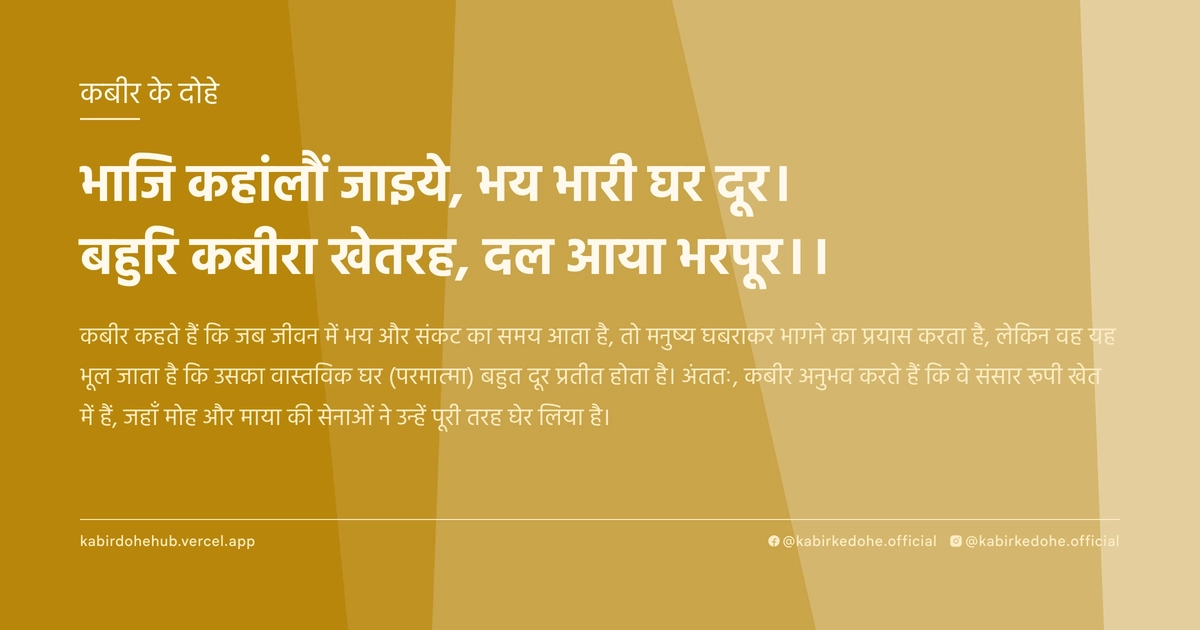
भाजि कहांलौं जाइये, भय भारी घर दूर।
बहुरि कबीरा खेतरह, दल आया भरपूर।।
Bhaaji kahanlaun jaiye, bhay bhaari ghar door. Bahuri Kabira khetrah, dal aaya bharpoor.
इस पृष्ठ पर इस कबीर दोहे का अर्थ (meaning), हिंदी व्याख्या और अंग्रेज़ी अनुवाद, दार्शनिक विश्लेषण और व्यावहारिक जीवन सीख दी गई है। यह दोहा भय (Fear) विषय से जुड़ा है — Kabir doha meaning and explanation in Hindi and English.
अर्थ (Meaning):
कबीर कहते हैं कि जब जीवन में भय और संकट का समय आता है, तो मनुष्य घबराकर भागने का प्रयास करता है, लेकिन वह यह भूल जाता है कि उसका वास्तविक घर (परमात्मा) बहुत दूर प्रतीत होता है। अंततः, कबीर अनुभव करते हैं कि वे संसार रूपी खेत में हैं, जहाँ मोह और माया की सेनाओं ने उन्हें पूरी तरह घेर लिया है।
Kabir questions where one can flee when overwhelmed by intense fear and the realization that the spiritual home is distant. He observes that in the field of worldly existence, the armies of desire, attachment, and illusion have arrived in full force, leaving the soul surrounded and breathless.
व्याख्या (Interpretation):
इस दोहे का शाब्दिक अर्थ एक ऐसे व्यक्ति की व्याकुलता है जो संकट से बचने के लिए भाग रहा है। आध्यात्मिक स्तर पर, 'घर' आत्मा का मूल स्रोत या ब्रह्म है, और 'दूर' होना अज्ञानता के कारण उत्पन्न अलगाव की भावना है। 'खेत' यहाँ भौतिक संसार का प्रतीक है जहाँ कर्मों के बीज बोए जाते हैं। 'दल' या सेना माया और इंद्रियों के उन प्रलोभनों को दर्शाती है जो मनुष्य को सत्य से विमुख करते हैं। यह निर्गुण भक्ति का सार है कि जब तक अहंकार जीवित है, ईश्वर दूर लगेंगे, जबकि वे वास्तव में भीतर ही हैं। यह विरोधाभास दर्शाता है कि पलायन समाधान नहीं है, बल्कि आत्म-साक्षात्कार ही एकमात्र मार्ग है।
Literally, the verse depicts a soul in panic, seeking refuge from an invisible terror. Metaphorically, the 'home' represents the primordial state of oneness with the Divine, while the perceived 'distance' is the veil of Maya. The 'field' symbolizes the arena of Samsara where the soul performs its karmic duties. The 'army' refers to the relentless onslaught of ego, sensory cravings, and societal conditioning. In the context of Nirgun Bhakti, this highlights the paradox: the soul feels exiled from God despite being an extension of the Divine. The struggle is not against an external enemy, but against the illusion of separation (Dwaita) that makes the journey home seem impossibly long.
दार्शनिक विश्लेषण (Philosophical Analysis):
कबीर का यह दोहा उस समय के सामाजिक-धार्मिक परिवेश पर प्रहार करता है जहाँ लोग मोक्ष के लिए तीर्थयात्रा या बाहरी कर्मकांडों का सहारा लेते थे। कबीर स्पष्ट करते हैं कि भय से भागना या स्थान बदलना आध्यात्मिक समाधान नहीं है। यह अद्वैत वेदांत के उस सिद्धांत से मेल खाता है जहाँ यह माना गया है कि जीव और ब्रह्म एक ही हैं, परंतु माया के कारण जीव स्वयं को अलग और असहाय महसूस करता है।
सूफीवाद के 'फना' के सिद्धांत की तरह, यहाँ भी अहंकार के विनाश की बात है। जब तक 'मैं' (अहंकार) मौजूद है, तब तक भय बना रहेगा क्योंकि भय केवल उस व्यक्ति को लगता है जो स्वयं को शरीर मानता है। कबीर यहाँ यह समझा रहे हैं कि संसार एक युद्धक्षेत्र है जहाँ मन की चंचलता और वासनाएँ एक संगठित सेना की तरह हमला करती हैं।
ritualism (कर्मकांड) का विरोध करते हुए कबीर कहते हैं कि मंदिर या मस्जिद जाने से वह 'घर' नहीं मिलेगा, क्योंकि घर भीतर है। यह मनोवैज्ञानिक रूपांतरण की प्रक्रिया है जहाँ साधक को यह स्वीकार करना होता है कि वह माया के घेरे में है। जब तक हम बाहरी शत्रुओं को खोजते रहेंगे, हम आंतरिक शत्रु (काम, क्रोध, लोभ, मोह) को नहीं पहचान पाएंगे।
भक्ति आंदोलन के दौरान कबीर ने यह संदेश दिया कि ईश्वर किसी विशेष स्थान पर नहीं, बल्कि चेतना के उच्चतम स्तर पर उपलब्ध है। यहाँ 'दल' का आना वास्तव में एक चेतावनी है कि यदि हमने सजगता (Mindfulness) नहीं अपनाई, तो हम माया के जाल में पूरी तरह फंस जाएंगे।
अंततः, यह विश्लेषण हमें इस निष्कर्ष पर ले जाता है कि मुक्ति पलायन (Escape) में नहीं, बल्कि उपस्थिति (Presence) में है। जब हम भागना बंद कर देते हैं और अपनी स्थिति का तटस्थ अवलोकन करते हैं, तब माया की सेना अपनी शक्ति खो देती है और 'घर' की दूरी समाप्त हो जाती है।
Kabir's verse critiques the prevailing religious climate of his era, where seekers sought liberation through external pilgrimages and rigid rituals. He asserts that fleeing from fear or changing one's physical location is a futile spiritual strategy. This aligns with Advaita Vedanta, which posits that the Atman and Brahman are identical, yet the illusion of duality (Maya) creates a perceived distance between the seeker and the Source.
Drawing parallels with the Sufi concept of 'Fana' (annihilation of the self), Kabir suggests that fear persists only as long as the ego identifies with the transient body. The 'army' mentioned is not a physical force but the collective power of sensory desires and mental projections that keep the soul tethered to the material plane.
By rejecting ritualism, Kabir emphasizes that the 'home' is not a destination reached through a map, but a state of consciousness. The psychological transformation required is the shift from 'seeking' to 'being.' Most people mistake the symptoms of spiritual unrest for external threats, failing to realize that the battle is internal.
Within the Bhakti movement, this teaching serves as a reminder that the formless Divine (Nirgun) is accessible only when the noise of the ego is silenced. The 'onslaught' of the army represents the peak of spiritual crisis, which is often a precursor to awakening—a dark night of the soul where the illusion is finally confronted.
Ultimately, the philosophical core is that liberation is found not in escape, but in absolute presence. When the seeker stops running and turns inward, the perceived distance to the Divine vanishes, revealing that the seeker, the path, and the destination are one and the same.
मूल संदेश (Core Message):
- बाहरी पलायन केवल मानसिक भ्रम को बढ़ाता है।
- भय अहंकार का प्रतिबिंब है, आत्मा का नहीं।
- संसार एक युद्धक्षेत्र है, जहाँ जागरूकता ही एकमात्र शस्त्र है।
- ईश्वर दूर नहीं, बल्कि हमारी दृष्टि के अवरोधों के पीछे है।
- स्थिरता ही माया की सेना को पराजित करने का एकमात्र तरीका है।
- External escape only amplifies internal delusions.
- Fear is a reflection of the ego, not the soul.
- The world is a battlefield where awareness is the only weapon.
- The Divine is not distant, but hidden behind our perceptual blocks.
- Stillness is the only way to dismantle the army of illusion.
व्यावहारिक उदाहरण (Practical Example):
एक समय की बात है, वाराणसी के घाटों पर माधव नाम का एक वृद्ध बुनकर रहता था। वह अपने जीवन भर की मेहनत से एक छोटा सा घर और कुछ सम्मान कमा चुका था, लेकिन उसके मन में मृत्यु का गहरा भय था। वह अक्सर सोचता था कि मरने के बाद वह कहाँ जाएगा और क्या वह ईश्वर को पा सकेगा।
माधव ने इस भय से बचने के लिए कई साधुओं को दान दिया, कठिन व्रत रखे और दूर-दूर के तीर्थों की यात्रा की। उसे लगा कि यदि वह बहुत अधिक पुण्य कमा लेगा, तो वह उस 'दिव्य घर' के करीब पहुँच जाएगा। लेकिन जैसे-जैसे समय बीता, उसका भय कम होने के बजाय बढ़ता गया। उसे लगने लगा कि वह जितना भाग रहा है, मृत्यु और अनिश्चितता उतनी ही करीब आ रही हैं।
एक दिन, वह एक पुराने मंदिर की सीढ़ियों पर बैठा था, तभी उसने एक फकीर को देखा जो शांत भाव से अपनी धुन में मगन था। माधव ने उससे पूछा, "बाबा, मैं इस संसार के भय से भागकर शांति कहाँ पाऊँ? मेरा घर (मोक्ष) बहुत दूर लगता है।"
फकीर मुस्कुराया और बोला, "माधव, तुम भाग रहे हो क्योंकि तुम खुद को इस शरीर और अपनी पहचान से चिपका हुआ महसूस करते हो। तुम जिस घर की तलाश में हो, वह कहीं बाहर नहीं, बल्कि तुम्हारे भीतर की उस शांति में है जिसे तुमने शोर में भुला दिया है।"
तभी अचानक शहर में एक दंगा भड़क उठा। लोग चिल्ला रहे थे, चारों ओर अफरा-तफरी थी। माधव घबरा गया और भागने लगा। उसे लगा कि अब उसका अंत करीब है। वह एक संकरी गली में फंस गया जहाँ चारों ओर से भीड़ उसे घेर रही थी। उसे लगा कि वह 'माया की सेना' के बीच फंस गया है और अब बचने का कोई रास्ता नहीं है।
उस क्षण, उसे फकीर की बात याद आई। उसने भागना बंद किया और अपनी आँखें बंद कर लीं। उसने महसूस किया कि बाहर का शोर तो केवल शोर है, लेकिन उसके भीतर एक गहरा सन्नाटा है। उसने अपनी सांसों पर ध्यान केंद्रित किया और खुद से कहा, "मैं यह शरीर नहीं हूँ, मैं यह डर नहीं हूँ।"
जैसे ही उसने अपनी पहचान को शरीर से हटाकर आत्मा पर केंद्रित किया, उसका भय गायब हो गया। वह भीड़ के बीच खड़ा था, लेकिन उसके मन में एक असीम शांति थी। उसे समझ आया कि 'घर' दूर नहीं था, बल्कि उसकी अपनी घबराहट ने उसे दूर कर दिया था।
जब दंगा शांत हुआ, माधव वापस अपने करघे पर लौटा। अब वह केवल कपड़े नहीं बुनता था, बल्कि हर धागे के साथ वह उस अनंत शांति को बुनता था। उसने जान लिया था कि संसार रूपी खेत में मोह की सेनाएँ तो आएंगी, लेकिन जो भीतर स्थिर है, उसे कोई नहीं हरा सकता।
माधव का जीवन बदल गया। अब वह मृत्यु से नहीं डरता था, बल्कि हर पल को एक उत्सव की तरह जीता था। उसने अपनी सारी संपत्ति गरीबों में बांट दी और एक साधारण जीवन जीने लगा, यह जानते हुए कि असली संपत्ति वह आंतरिक शांति है जिसे कोई छीन नहीं सकता।
उसने सीखा कि पलायन केवल भ्रम को बढ़ाता है, जबकि सामना करना मुक्ति का द्वार खोलता है।
Once in the ancient city of Varanasi, there lived an elderly weaver named Madhav. He had spent his life crafting fine fabrics and had earned a modest living, but his heart was plagued by a profound fear of death. He constantly worried about where he would go after his passing and whether he would ever find the Divine.
To escape this existential dread, Madhav donated lavishly to saints, observed rigorous fasts, and embarked on arduous pilgrimages to distant shrines. He believed that by accumulating spiritual merit, he could shorten the distance to the 'Divine Home.' However, as the years passed, his anxiety only intensified. He felt that the more he ran toward salvation, the faster death approached him.
One afternoon, while resting on the steps of an old temple, he encountered a wandering fakir who radiated an aura of absolute stillness. Madhav asked him, "Baba, where can I flee to find peace? The home of liberation feels so distant, and I am consumed by fear."
The fakir smiled and replied, "Madhav, you are running because you are clinging to the identity of the body. The home you seek is not a place on a map, but the silence within you that you have ignored in the noise of your cravings."
Shortly after, a sudden riot broke out in the city. Chaos erupted, and people began screaming and fleeing in panic. Madhav was seized by terror and tried to run for cover. He found himself trapped in a narrow alley, surrounded by a surging crowd. He felt as though the 'army of Maya' had finally cornered him and there was no escape.
In that moment of peak desperation, the fakir's words echoed in his mind. Madhav stopped running. He closed his eyes and stood still. He realized that the external noise was merely a vibration, but deep within him, there was an untouched silence. He focused on his breath and whispered to himself, "I am not this body; I am not this fear."
As he shifted his identity from the frightened ego to the witnessing soul, the terror vanished. Though he was physically surrounded by a chaotic mob, he felt an immense, unshakable peace. He understood that the 'home' was never distant; his own panic had created the illusion of distance.
When the unrest subsided, Madhav returned to his loom. He no longer just wove cloth; he wove the threads of consciousness into every garment. He realized that in the field of the world, the armies of attachment would always attack, but those who are anchored within remain invincible.
Madhav's life was transformed. He no longer feared death but lived every moment as a celebration. He distributed his wealth among the needy and lived a simple life, knowing that the only true wealth is the internal silence that no one can steal.
He learned that escape only nourishes the illusion, while conscious confrontation opens the door to liberation.
अभ्यास मार्गदर्शन (Practice Guidance):
- प्रतिदिन 20 मिनट 'साक्षी भाव' का अभ्यास करें: अपने विचारों और डरों को ऐसे देखें जैसे आप किसी फिल्म को देख रहे हों, उनमें शामिल न हों।
- स्व-पूछताछ जर्नल: प्रतिदिन लिखें कि आज किस बात ने आपको डराया और वह डर आपकी किस 'पहचान' (अहंकार) से जुड़ा था।
- व्यवहारिक परिवर्तन: जब भी आप किसी समस्या से भागने की इच्छा करें, तो 5 मिनट के लिए स्थिर बैठें और उस असहजता को बिना किसी निर्णय के महसूस करें।
- निदान चेकलिस्ट: क्या आप अभी भी बाहरी समाधान खोज रहे हैं? क्या आप अपनी शांति को दूसरों के व्यवहार पर निर्भर मानते हैं? यदि हाँ, तो आप अभी भी 'दूर' महसूस कर रहे हैं।
- Practice 'Witness Consciousness' for 20 minutes daily: Observe your fears and thoughts as if watching a movie, without becoming entangled in them.
- Self-Inquiry Journaling: Record daily what triggered your fear and identify which specific 'ego-identity' was threatened by that fear.
- Behavioral Shift: Whenever you feel the urge to flee from a difficult emotion or situation, sit still for 5 minutes and feel the discomfort without judgment.
- Diagnostic Checklist: Are you still seeking external solutions for internal peace? Do you link your happiness to others' behavior? If yes, you are still operating under the illusion of 'distance'.
चिंतन प्रश्न (Reflection Questions):
- आप अपने जीवन में किन परिस्थितियों से 'भाग' रहे हैं, और वह पलायन आपको वास्तव में कहाँ ले जा रहा है?
- यदि आपकी सामाजिक पहचान (पद, प्रतिष्ठा, संबंध) छीन ली जाए, तो आपके भीतर क्या बचेगा?
- क्या आपका 'डिजिटल अहंकार' आपको वास्तविक शांति से दूर कर रहा है?
- आपकी वह कौन सी गुप्त इच्छा है जो आपको इस संसार रूपी खेत में बांधे हुए है?
- क्या आप वास्तव में शांति चाहते हैं, या केवल संघर्ष का अभाव?
- What specific situations in your life are you 'fleeing' from, and where is that escape actually leading you?
- If your social identity (status, titles, relationships) were stripped away, what would remain within you?
- Is your 'digital ego' creating a distance between you and your authentic self?
- What is the hidden desire that keeps you tethered to the 'field' of worldly attachment?
- Do you truly seek peace, or are you merely seeking the absence of conflict?