
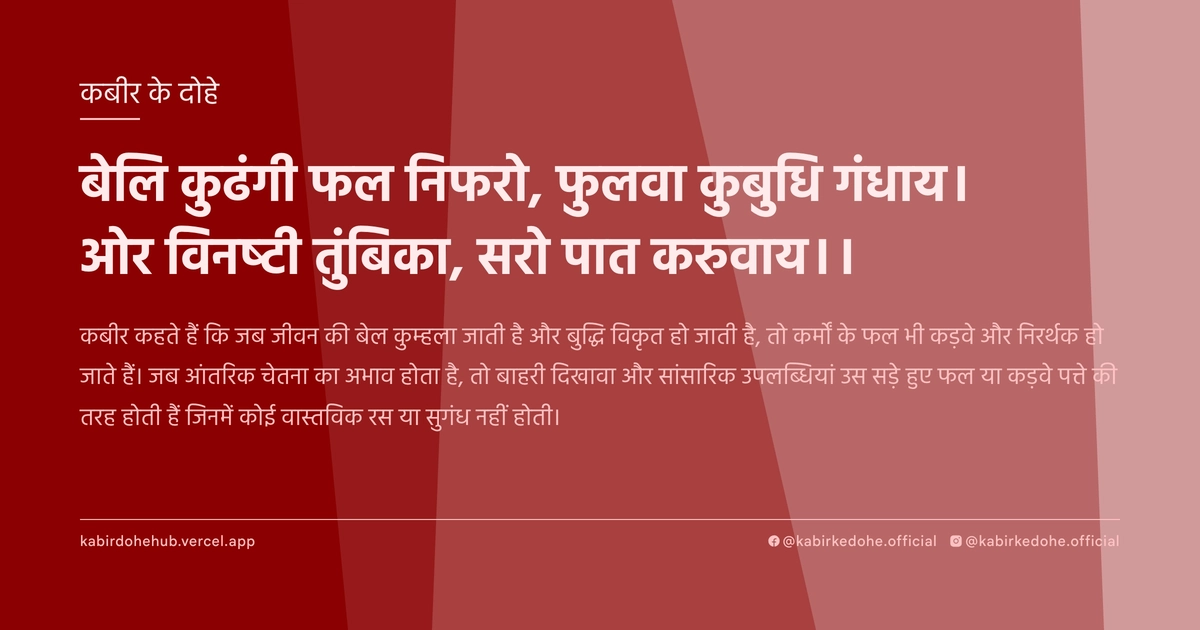
बेलि कुढंगी फल निफरो, फुलवा कुबुधि गंधाय।
ओर विनष्टी तुंबिका, सरो पात करुवाय।।
Beli kudhangi phal niphro, phulwa kubudhi gandhay. Or vinishti tumbika, saro paat karuvay.
इस पृष्ठ पर इस कबीर दोहे का अर्थ (meaning), हिंदी व्याख्या और अंग्रेज़ी अनुवाद, दार्शनिक विश्लेषण और व्यावहारिक जीवन सीख दी गई है। यह दोहा मोह (Attachment) विषय से जुड़ा है — Kabir doha meaning and explanation in Hindi and English.
अर्थ (Meaning):
कबीर कहते हैं कि जब जीवन की बेल कुम्हला जाती है और बुद्धि विकृत हो जाती है, तो कर्मों के फल भी कड़वे और निरर्थक हो जाते हैं। जब आंतरिक चेतना का अभाव होता है, तो बाहरी दिखावा और सांसारिक उपलब्धियां उस सड़े हुए फल या कड़वे पत्ते की तरह होती हैं जिनमें कोई वास्तविक रस या सुगंध नहीं होती।
Kabir asserts that when the vine of life withers and the intellect becomes corrupted by ignorance, the fruits of one's actions become tasteless and void. When the inner consciousness is absent, all outward achievements and ritualistic displays are like bitter lotus leaves or scentless flowers, possessing no true spiritual essence or divine fragrance.
व्याख्या (Interpretation):
यह दोहा प्रतीकात्मक रूप से आध्यात्मिक पतन और अज्ञानता की स्थिति का वर्णन करता है। 'बेलि कुढंगी' उस आत्मा का प्रतीक है जो माया के प्रभाव में सूख चुकी है। यहाँ 'कुबुधि' का अर्थ है वह विवेकहीनता जो मनुष्य को सत्य से दूर ले जाती है। कबीर समझाते हैं कि यदि जड़ (चेतना) दूषित है, तो शाखाएं (कर्म) कभी मीठे फल नहीं दे सकतीं। यह निर्गुण भक्ति का संकेत है जहाँ बाहरी कर्मकांडों की तुलना में आंतरिक शुद्धि को प्राथमिकता दी गई है। यह अद्वैत वेदांत के उस सत्य को दर्शाता है कि जब तक 'अहंकार' का पर्दा नहीं हटता, तब तक आत्मा का वास्तविक स्वरूप कड़वाहट और भ्रम में लिप्त रहता है।
This couplet symbolically describes the state of spiritual decay and profound ignorance. The 'withered vine' represents the soul that has dried up under the suffocating influence of Maya. 'Kubudhi' refers to the distorted intellect that steers a human away from the ultimate truth. Kabir explains that if the root (consciousness) is corrupted, the branches (actions) can never yield sweet fruits. This is a hallmark of Nirgun Bhakti, prioritizing internal purification over external rituals. It reflects the Advaita Vedanta truth that until the veil of 'ego' is lifted, the soul's true nature remains entangled in bitterness and illusion, mirroring the paradox of seeking divinity through a corrupted mind.
दार्शनिक विश्लेषण (Philosophical Analysis):
कबीर का यह कथन उनके युग के धार्मिक पाखंड और कर्मकांडीय कट्टरता पर एक गहरा प्रहार है। उन्होंने देखा कि लोग तीर्थों और मालाओं में उलझे थे, जबकि उनका हृदय ईर्ष्या और घृणा से भरा था। यह ठीक वैसा ही है जैसे कोई सूखे पेड़ पर कृत्रिम फूल लगा दे; वह देखने में सुंदर लग सकता है, लेकिन उसमें जीवन की सुगंध नहीं होती।
दार्शनिक स्तर पर, यह दोहा 'चित्त शुद्धि' की आवश्यकता पर बल देता है। सूफी मत के 'नफ्स' (अहंकार) के विनाश और वेदांत के 'माया' के निवारण के बीच एक गहरा संबंध है। जब तक मनुष्य अपनी वासनाओं और पूर्वाग्रहों को नहीं त्यागता, उसकी बुद्धि 'कुबुधि' बनी रहती है।
कबीर यहाँ यह स्पष्ट करते हैं कि मोक्ष किसी बाहरी क्रिया से नहीं, बल्कि आंतरिक रूपांतरण से आता है। जाति और धर्म के नाम पर होने वाले भेदभाव इसी 'कुबुधि' का परिणाम हैं, जो मनुष्य को उसकी मूल एकता (अद्वैत) से अलग करते हैं।
मनोवैज्ञानिक रूप से, यह दोहा संज्ञानात्मक विसंगति (cognitive dissonance) की बात करता है। जब व्यक्ति का बाहरी आचरण उसके आंतरिक मूल्यों के विपरीत होता है, तो उसका जीवन 'कड़वे पत्ते' की तरह हो जाता है, जिसमें शांति का अभाव होता है।
अंततः, कबीर यह संदेश देते हैं कि सत्य की खोज के लिए सबसे पहले अपनी बुद्धि के विकारों को पहचानना और उन्हें मिटाना आवश्यक है। बिना आत्म-साक्षात्कार के, जीवन की सारी उपलब्धियां केवल शून्य और निरर्थक हैं।
Kabir's statement is a profound critique of the religious hypocrisy and ritualistic bigotry prevalent during his era. He observed people entangled in pilgrimages and prayer beads while their hearts remained filled with envy and hatred. This is akin to attaching artificial flowers to a dead tree; it may appear beautiful, but it lacks the fragrance of living truth.
On a philosophical level, this doha emphasizes the necessity of 'Chitta Shuddhi' (purification of the mind). There is a deep resonance between the Sufi concept of annihilating the 'Nafs' (ego) and the Vedantic removal of 'Maya'. Until a human transcends their desires and prejudices, their intellect remains 'Kubudhi' or distorted.
Kabir clarifies that liberation does not stem from external acts but from internal transformation. The discrimination based on caste and creed is a direct result of this distorted intellect, which separates man from his primordial unity (Advaita).
Psychologically, this verse addresses cognitive dissonance. When a person's external conduct contradicts their internal values, their life becomes like a 'bitter leaf,' devoid of genuine peace and authenticity.
Ultimately, Kabir suggests that to find the Truth, one must first recognize and eradicate the distortions of the mind. Without self-realization, all worldly achievements are merely void and meaningless.
मूल संदेश (Core Message):
- बाहरी दिखावा आंतरिक रिक्तता को नहीं भर सकता।
- अहंकार बुद्धि को विकृत कर सत्य को ओझल करता है।
- बिना प्रेम के किया गया कर्म फलहीन और कड़वा होता है।
- आंतरिक शुद्धि ही वास्तविक आध्यात्मिक प्रगति का एकमात्र मार्ग है।
- अद्वैत का अनुभव तभी होता है जब 'मैं' का भाव मिट जाता है।
- External displays cannot fill an internal void.
- Ego distorts the intellect and obscures the ultimate truth.
- Actions performed without love are fruitless and bitter.
- Internal purification is the only true path to spiritual progress.
- The experience of non-duality occurs only when the 'I' vanishes.
व्यावहारिक उदाहरण (Practical Example):
वाराणसी के एक पुराने घाट पर माधव नाम का एक वृद्ध बुनकर रहता था। वह शहर भर में अपनी बारीकी और ईमानदारी के लिए जाना जाता था, लेकिन उसके मन में एक गहरा अहंकार था। वह मानता था कि उसकी कला उसे अन्य सभी बुनकरों से श्रेष्ठ बनाती है। वह गरीबों को दान तो देता था, लेकिन मन ही मन उन्हें तुच्छ समझता था।
एक दिन एक फकीर उसके पास आया और उसने माधव के सबसे महंगे रेशमी कपड़े को छुआ और कहा, "रंग तो गहरा है, पर इसमें वह सुगंध नहीं जो आत्मा को तृप्त करे।"
माधव क्रोधित हो गया और बोला, "यह सबसे शुद्ध रेशम है, इसमें कमी क्या हो सकती है?"
फकीर ने मुस्कुराते हुए जवाब दिया, "रेशम शुद्ध है, पर बुनने वाला मन कड़वाहट से भरा है। तुम्हारी बुद्धि ने तुम्हें श्रेष्ठता का भ्रम दिया है, जिससे तुम्हारा प्रेम सूख गया है। तुम्हारी यह कला अब केवल एक सूखा हुआ बेल है, जिसमें फल तो हैं पर रस नहीं।"
माधव को पहले तो यह बात चुभी, लेकिन रात भर वह सो नहीं सका। उसने महसूस किया कि वह जिसे 'श्रेष्ठता' कह रहा था, वह वास्तव में उसका अहंकार था जिसने उसे दूसरों से अलग कर दिया था।
अगले दिन, माधव ने अपनी कार्यशाला के दरवाजे सबके लिए खोल दिए। उसने केवल कपड़े बेचना शुरू नहीं किया, बल्कि युवा बुनकरों को बिना किसी लालच के अपनी कला सिखाने लगा।
उसने महसूस किया कि जब उसने 'मैं श्रेष्ठ हूँ' का भाव छोड़ा, तो उसके काम में एक नई चमक आ गई। अब वह केवल धागों को नहीं, बल्कि प्रेम को बुन रहा था।
उसकी कड़वाहट अब करुणा में बदल गई थी। वह अब केवल एक कुशल कारीगर नहीं, बल्कि एक शांत इंसान बन गया था।
उसका जीवन अब उस सरो-पात (कमल के पत्ते) की तरह नहीं था जो कड़वा हो, बल्कि वह उस सुगंधित फूल की तरह बन गया जिसकी खुशबू पूरे घाट पर फैल गई।
माधव ने सीखा कि बिना आंतरिक विनम्रता के, बाहरी कौशल केवल एक बोझ है।
On an ancient ghat in Varanasi lived an elderly weaver named Madhav. He was renowned throughout the city for his precision and honesty, yet he harbored a deep-seated ego. He believed his artistry rendered him superior to all other weavers. While he gave alms to the poor, he secretly viewed them with contempt.
One day, a wandering fakir approached him, touched Madhav's most expensive silk cloth, and remarked, "The color is deep, but it lacks the fragrance that satisfies the soul."
Madhav grew angry and retorted, "This is the purest silk; what could possibly be lacking?"
The fakir smiled and replied, "The silk is pure, but the mind that wove it is filled with bitterness. Your intellect has deceived you into a delusion of superiority, causing your love to wither. Your art is now like a dried vine—it has fruit, but no juice."
Madhav was initially stung by these words, but he could not sleep that night. He realized that what he termed 'superiority' was actually an ego that had isolated him from others.
The next day, Madhav opened the doors of his workshop to everyone. He stopped merely selling fabrics and began teaching young weavers his craft without any greed.
He felt that once he abandoned the notion of 'I am superior,' a new radiance entered his work. He was no longer just weaving threads; he was weaving love.
His bitterness transformed into compassion. He ceased to be just a skilled artisan and became a peaceful human being.
His life was no longer like the bitter lotus leaf, but became like a fragrant flower whose scent spread across the entire ghat.
Madhav learned that without internal humility, external skill is merely a burden.
अभ्यास मार्गदर्शन (Practice Guidance):
- प्रतिदिन 20 मिनट मौन रहकर यह विचार करें कि आपके कौन से विचार दूसरों के प्रति कड़वाहट या श्रेष्ठता पैदा कर रहे हैं।
- एक 'अहंकार पत्रिका' (Ego Journal) बनाएँ, जहाँ आप उन क्षणों को लिखें जब आपने अपनी बुद्धि को सत्य से ऊपर रखा।
- सप्ताह में एक बार किसी ऐसे व्यक्ति की निस्वार्थ सेवा करें जिसे आप सामान्यतः अनदेखा करते हैं, ताकि 'कुबुधि' का नाश हो सके।
- निदान चेकलिस्ट: क्या मैं दूसरों की सफलता पर ईर्ष्या करता हूँ? क्या मैं अपनी उपलब्धियों का उपयोग दूसरों को नीचा दिखाने के लिए करता हूँ? क्या मेरे शब्दों में मिठास है पर इरादों में कड़वाहट? यदि हाँ, तो आपकी 'बेलि' कुम्हला रही है।
- Spend 20 minutes in silence daily, contemplating which thoughts are creating bitterness or a sense of superiority toward others.
- Maintain an 'Ego Journal' to record moments where you prioritized your intellectual pride over the simple truth.
- Engage in selfless service once a week for someone you typically overlook, aiming to dissolve the 'distorted intellect' (Kubudhi).
- Diagnostic Checklist: Do I feel envy at others' success? Do I use my achievements to belittle others? Is there sweetness in my words but bitterness in my intent? If yes, your 'vine' is withering.
चिंतन प्रश्न (Reflection Questions):
- क्या मेरी सामाजिक प्रतिष्ठा मेरे वास्तविक आंतरिक चरित्र का प्रतिबिंब है, या केवल एक मुखौटा है?
- मैं किन पूर्वाग्रहों को 'बुद्धि' या 'तर्क' का नाम देकर अपने भीतर पाले हुए हूँ?
- यदि मेरी सभी उपलब्धियाँ और पद छीन लिए जाएँ, तो मेरे व्यक्तित्व में क्या शेष बचेगा?
- क्या मेरा धर्म या आध्यात्मिकता मुझे दूसरों के प्रति अधिक विनम्र बना रही है या अधिक अहंकारी?
- मेरे जीवन का वह कौन सा 'कड़वा पत्ता' है जिसे मैं स्वीकार करने से डरता हूँ?
- Is my social reputation a reflection of my true internal character, or merely a mask?
- Which prejudices am I nurturing within myself under the guise of 'intellect' or 'logic'?
- If all my achievements and titles were stripped away, what would remain of my personality?
- Is my religion or spirituality making me more humble toward others, or more arrogant?
- What is that 'bitter leaf' in my life that I am afraid to acknowledge?