
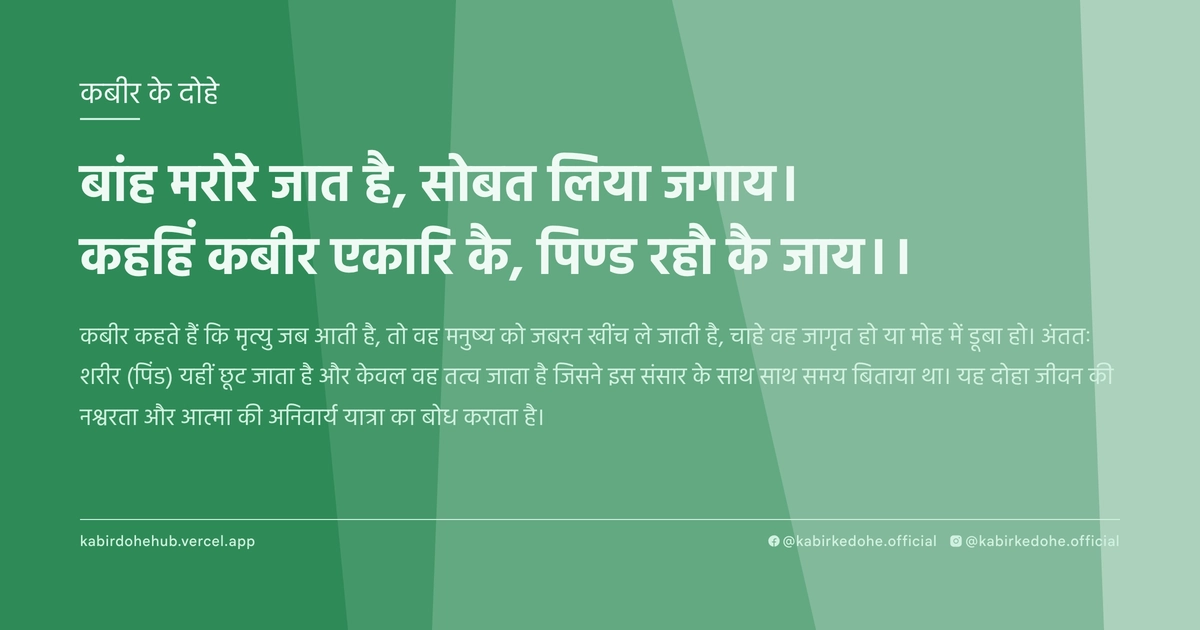
बांह मरोरे जात है, सोबत लिया जगाय।
कहहिं कबीर एकारि कै, पिण्ड रहौ कै जाय।।
Baanh marore jaat hai, sobat liya jagay. Kahahin kabir ekari kai, pind rahou kai jaaye.
इस पृष्ठ पर इस कबीर दोहे का अर्थ (meaning), हिंदी व्याख्या और अंग्रेज़ी अनुवाद, दार्शनिक विश्लेषण और व्यावहारिक जीवन सीख दी गई है। यह दोहा मृतुक्यता (Mortality) विषय से जुड़ा है — Kabir doha meaning and explanation in Hindi and English.
अर्थ (Meaning):
कबीर कहते हैं कि मृत्यु जब आती है, तो वह मनुष्य को जबरन खींच ले जाती है, चाहे वह जागृत हो या मोह में डूबा हो। अंततः शरीर (पिंड) यहीं छूट जाता है और केवल वह तत्व जाता है जिसने इस संसार के साथ साथ समय बिताया था। यह दोहा जीवन की नश्वरता और आत्मा की अनिवार्य यात्रा का बोध कराता है।
Kabir asserts that when death arrives, it forcibly pulls the individual away, regardless of whether they are spiritually awake or lost in worldly attachments. Ultimately, the physical body (pind) remains behind, and only the essence that journeyed through this world departs. This couplet serves as a stark reminder of the transience of physical existence and the inevitable journey of the soul.
व्याख्या (Interpretation):
इस दोहे का शाब्दिक अर्थ है कि मृत्यु एक बलवान शत्रु की तरह बांह मरोड़कर हमें ले जाती है। रूपकात्मक रूप से, 'बांह मरोड़ना' उस समय को दर्शाता है जब अहंकार का पूर्ण विनाश होता है और मनुष्य को अपनी विवशता का अहसास होता है। यह निर्गुण भक्ति का संकेत है, जहाँ बाहरी आडंबर और शारीरिक पहचान शून्य हो जाती है। माया का पर्दा तब गिरता है जब आत्मा को अहसास होता है कि जिसे वह 'मैं' समझ रहा था, वह केवल एक नश्वर पिंड था। अद्वैत वेदांत के अनुसार, यह अलगाव केवल एक भ्रम है; वास्तव में आत्मा ब्रह्म का ही अंश है। यहाँ विरोधाभास यह है कि जिसे हम 'खोना' कहते हैं, वह वास्तव में उस अनंत सत्य में विलीन होना है जिसे हम जीवन भर भूलते रहे।
Literally, the verse describes death as a forceful entity that twists the arm to lead the soul away. Metaphorically, 'twisting the arm' symbolizes the violent shattering of the ego and the sudden realization of human helplessness. This aligns with Nirgun Bhakti, where external rituals and physical identities are rendered void. The veil of Maya drops when the soul realizes that the 'I' it clung to was merely a perishable vessel (pind). According to Advaita Vedanta, this perceived separation is an illusion; the soul is fundamentally non-different from Brahman. The central paradox lies in the fact that what we perceive as a loss is actually a merger into the infinite truth that we spent our entire lives ignoring.
दार्शनिक विश्लेषण (Philosophical Analysis):
कबीर का यह दोहा उस कालखंड का है जब समाज कर्मकांडों और बाहरी धार्मिक पहचानों में गहराई से जकड़ा हुआ था। कबीर ने इस व्यवस्था को चुनौती देते हुए यह स्पष्ट किया कि न तो जाति, न धर्म और न ही कोई तीर्थ यात्रा मृत्यु के समय काम आएगी। उनका दर्शन 'सहज मार्ग' पर आधारित है, जो बाहरी दिखावे के बजाय आंतरिक अनुभव को प्राथमिकता देता है।
अद्वैत वेदांत के परिप्रेक्ष्य में, कबीर यहाँ शरीर और आत्मा के भेद को मिटाने की बात कर रहे हैं। वे समझाते हैं कि शरीर केवल एक वस्त्र है जिसे एक दिन उतारना ही होगा। जब तक मनुष्य शरीर को ही अपनी पहचान मानता है, वह भय और मोह के चक्र में फंसा रहता है। इस अज्ञान को मिटाना ही वास्तविक 'जागृति' है।
सूफी मत के 'फना' (अहंकार का विनाश) के सिद्धांत से यह दोहा गहराई से जुड़ा है। जिस प्रकार एक बूंद समुद्र में मिलकर अपना अस्तित्व खो देती है, उसी प्रकार आत्मा का शरीर से अलग होना एक अनिवार्य प्रक्रिया है। कबीर चेतावनी देते हैं कि यदि हम जीवन में ही इस सत्य को नहीं पहचानते, तो मृत्यु हमें जबरन खींचकर ले जाएगी, जो एक आध्यात्मिक आघात होगा।
कबीर का विरोध केवल पाखंड से नहीं, बल्कि उस मनोवैज्ञानिक जड़ता से है जो मनुष्य को यह विश्वास दिलाती है कि वह अमर है। वे इस भ्रम को तोड़कर व्यक्ति को वर्तमान क्षण में जागरूक होने के लिए प्रेरित करते हैं। उनके लिए भक्ति का अर्थ मंदिर जाना नहीं, बल्कि स्वयं के भीतर उस निराकार तत्व का अनुभव करना है जो जन्म और मृत्यु से परे है।
अंततः, यह विश्लेषण हमें इस निष्कर्ष पर ले जाता है कि मृत्यु वास्तव में एक शिक्षक है। यह हमें सिखाती है कि संसार की हर वस्तु अस्थायी है। जब हम इस सत्य को स्वीकार कर लेते हैं, तब हम भयमुक्त हो जाते हैं और उस परम सत्य (ब्रह्म) की ओर बढ़ने लगते हैं जो न कभी आता है और न कभी जाता है, बल्कि सदैव विद्यमान रहता है।
This couplet emerges from an era where society was deeply entrenched in ritualism and external religious identities. Kabir challenged this system, asserting that neither caste, nor creed, nor pilgrimages would offer sanctuary at the moment of death. His philosophy is rooted in the 'Sahaja Marg' (the natural path), prioritizing internal realization over external performance.
From the lens of Advaita Vedanta, Kabir addresses the dissolution of the duality between the body and the soul. He explains that the body is merely a garment to be discarded. As long as a human identifies solely with the physical form, they remain trapped in the cycle of fear and attachment. Eradicating this ignorance is the essence of true 'awakening'.
This verse resonates deeply with the Sufi concept of 'Fana' (the annihilation of the ego). Just as a drop loses its individual identity upon merging with the ocean, the soul's separation from the body is an inevitable process. Kabir warns that if we do not realize this truth during life, death will forcibly drag us away, resulting in a spiritual trauma.
Kabir's opposition is not merely against hypocrisy, but against the psychological inertia that convinces humans of their own permanence. He urges the individual to awaken in the present moment. For him, devotion is not about visiting temples, but experiencing the formless element within that transcends birth and death.
Ultimately, this analysis leads to the conclusion that death is the ultimate teacher. It reveals the transience of all worldly possessions. Once this truth is accepted, the individual becomes fearless and begins to move toward the Supreme Truth (Brahman), which neither comes nor goes but eternally exists.
मूल संदेश (Core Message):
- मृत्यु अपरिहार्य है, लेकिन उससे भय केवल अज्ञानता से आता है।
- शरीर एक अस्थायी निवास है; इसे अपनी पहचान न बनाएं।
- अहंकार का विसर्जन ही वास्तविक आध्यात्मिक जागृति का द्वार है।
- बाहरी कर्मकांडों के बजाय आंतरिक सत्य की खोज करें।
- जब हम नश्वरता को स्वीकार करते हैं, तब हम अनंत से जुड़ते हैं।
- Death is inevitable; fear of it stems only from ignorance.
- The body is a temporary dwelling; do not mistake it for your identity.
- The dissolution of ego is the only gateway to true spiritual awakening.
- Seek internal truth rather than clinging to external rituals.
- By accepting our mortality, we connect with the infinite.
व्यावहारिक उदाहरण (Practical Example):
वाराणसी के घाटों पर रहने वाले एक वृद्ध बुनकर थे, जिनका नाम शिवदत्त था। शिवदत्त अपनी कला में इतने निपुण थे कि उनके द्वारा बुने गए वस्त्रों की मांग दूर-दूर तक थी। लेकिन इस ख्याति ने उन्हें अहंकारी बना दिया था। वे मानते थे कि उनकी कुशलता उन्हें समय और मृत्यु से ऊपर रखती है। वे अक्सर अपने शिष्यों से कहते थे, 'मेरी कला ही मेरा अमरत्व है।'
एक दिन, शिवदत्त ने देखा कि उनका सबसे पुराना और प्रिय करघा, जिसने उन्हें जीवन भर सहारा दिया था, पूरी तरह टूट गया। उस करघे के धागे बिखर गए थे और लकड़ी सड़ चुकी थी। अचानक उन्हें अहसास हुआ कि जिस करघे को उन्होंने अपनी पहचान बना लिया था, वह अंततः नष्ट हो गया।
उसी शाम, उनके पड़ोस में एक युवा व्यक्ति की आकस्मिक मृत्यु हो गई। शिवदत्त ने देखा कि कैसे उस युवक के परिवार वाले विलाप कर रहे थे, जबकि वह शरीर अब केवल एक जड़ वस्तु बन चुका था। उस दृश्य ने शिवदत्त को झकझोर दिया। उन्हें कबीर का वह दोहा याद आया जिसमें मृत्यु बांह मरोड़कर ले जाती है।
उन्होंने महसूस किया कि वे भी उसी भ्रम में जी रहे थे। उनकी कला, उनका धन और उनका नाम—सब कुछ उस 'पिंड' (शरीर) से जुड़ा था जो एक दिन मिट्टी में मिल जाएगा। उनके भीतर एक गहरा शून्य पैदा हुआ, लेकिन उसी शून्य में उन्हें एक शांति महसूस हुई।
शिवदत्त ने अगले दिन से अपना व्यवहार बदल लिया। उन्होंने अपनी सारी संपत्ति और कौशल का उपयोग गरीबों की मदद के लिए करना शुरू किया। अब वे वस्त्र केवल लाभ के लिए नहीं, बल्कि सेवा के लिए बुनने लगे।
वे अब अपनी पहचान 'महान बुनकर' के रूप में नहीं, बल्कि 'ईश्वर के एक छोटे से सेवक' के रूप में देखने लगे। उनका अहंकार, जो कभी एक पर्वत की तरह ऊंचा था, अब एक नदी की तरह बह गया था।
जब उनके शिष्यों ने उनसे पूछा कि यह बदलाव कैसे आया, तो उन्होंने मुस्कुराते हुए कहा, 'मैंने बस यह जान लिया है कि करघा टूट जाएगा, लेकिन जो बुनने वाला है, वह कभी नहीं मरता।'
वर्षों बाद, जब शिवदत्त की मृत्यु का समय आया, तो उनके चेहरे पर कोई भय नहीं था। उन्होंने अपनी बांहें फैला दी थीं, जैसे वे उस परम सत्ता का स्वागत कर रहे हों।
उनके जीवन का अंतिम समय किसी संघर्ष की तरह नहीं, बल्कि एक सहज विदाई की तरह था। उन्होंने यह जान लिया था कि शरीर का छूटना वास्तव में एक बंधन का टूटना है।
उनकी कहानी हमें सिखाती है कि जब हम अपनी नश्वरता को स्वीकार कर लेते हैं, तभी हम वास्तव में जीना शुरू करते हैं।
In the ghats of Varanasi lived an elderly weaver named Shivdutt. Shivdutt was so skilled in his craft that his textiles were demanded far and wide. However, this fame had made him arrogant. He believed his mastery placed him above time and death, often telling his disciples, 'My art is my immortality.'
One day, Shivdutt noticed that his oldest and most beloved loom, which had supported him for a lifetime, had completely broken. The threads were frayed and the wood had rotted. Suddenly, he realized that the loom he had made his identity was ultimately destined for destruction.
That evening, a young man in his neighborhood passed away unexpectedly. Shivdutt watched as the family wailed, while the body had become nothing more than an inert object. The sight shook him. He recalled Kabir's verse about death forcibly twisting the arm to lead the soul away.
He realized he had been living in the same illusion. His art, his wealth, and his name—everything was tied to the 'pind' (body) that would one day turn to dust. A profound void opened within him, but in that void, he felt a strange peace.
From the next day, Shivdutt changed his behavior. He began using his wealth and skill to help the poor. He no longer wove fabrics for profit, but for service.
He stopped identifying as a 'great weaver' and began seeing himself as a 'small servant of the Divine.' His ego, which had once been as high as a mountain, flowed away like a river.
When his disciples asked about this transformation, he smiled and said, 'I have simply realized that while the loom will break, the Weaver beyond the loom never dies.'
Years later, when the time of Shivdutt's own death arrived, there was no fear on his face. He opened his arms as if welcoming the Supreme Being.
His final moments were not a struggle, but a graceful farewell. He had understood that the departure of the body is actually the breaking of a chain.
His story teaches us that only when we accept our mortality do we truly begin to live.
अभ्यास मार्गदर्शन (Practice Guidance):
- प्रतिदिन 15 मिनट 'शवासन' में लेटकर यह चिंतन करें कि शरीर केवल एक माध्यम है और आप उससे अलग एक चैतन्य तत्व हैं।
- एक डायरी लिखें जिसमें आप अपनी उन पांच पहचानों (जैसे पद, संपत्ति, रिश्ता) को सूचीबद्ध करें जिनसे आप सबसे अधिक जुड़े हैं, और फिर विचार करें कि यदि ये सब कल छिन जाएं, तो आप कौन रहेंगे?
- व्यवहार परिवर्तन: सप्ताह में एक बार किसी ऐसे व्यक्ति की सेवा करें जिससे आपका कोई व्यक्तिगत लाभ न हो, ताकि अहंकार की जड़ें कमजोर हों।
- निदान चेकलिस्ट: क्या आप मृत्यु के विचार से डरते हैं? क्या आप अपनी भौतिक उपलब्धियों को अपनी स्थायी पहचान मानते हैं? यदि हाँ, तो आप अभी भी 'माया' के प्रभाव में हैं।
- Spend 15 minutes daily in 'Shavasana' (corpse pose), contemplating that the body is merely a vehicle and you are a conscious element distinct from it.
- Maintain a journal listing five identities (e.g., rank, wealth, relationship) you are most attached to, then reflect: 'If these were gone tomorrow, who would I be?'
- Behavioral Change: Once a week, serve someone from whom you gain no personal benefit, thereby weakening the roots of the ego.
- Diagnostic Checklist: Do you fear the thought of death? Do you view your material achievements as your permanent identity? If yes, you are still under the influence of 'Maya'.
चिंतन प्रश्न (Reflection Questions):
- यदि आज आपकी सामाजिक प्रतिष्ठा और डिजिटल पहचान (Social Media Ego) पूरी तरह मिट जाए, तो आपके भीतर क्या बचेगा?
- आप अपनी मृत्यु की तैयारी किस प्रकार कर रहे हैं—क्या आप केवल भौतिक संपत्ति जमा कर रहे हैं या आंतरिक शांति?
- वह कौन सा डर है जो आपको अपनी 'पिंड' (शारीरिक पहचान) को छोड़ने से रोकता है?
- क्या आपकी भक्ति केवल भय पर आधारित है, या यह उस निराकार सत्य के प्रति प्रेम है?
- आप अपने जीवन के किन हिस्सों को 'अमर' मान बैठे हैं, जबकि वे पूरी तरह नश्वर हैं?
- If your social status and digital identity were completely erased today, what would remain within you?
- How are you preparing for your death—are you merely accumulating material wealth or cultivating inner peace?
- What is the specific fear that prevents you from letting go of your 'pind' (physical identity)?
- Is your devotion based on fear, or is it a love for the formless truth?
- Which parts of your life have you mistakenly deemed 'immortal' when they are entirely transient?