
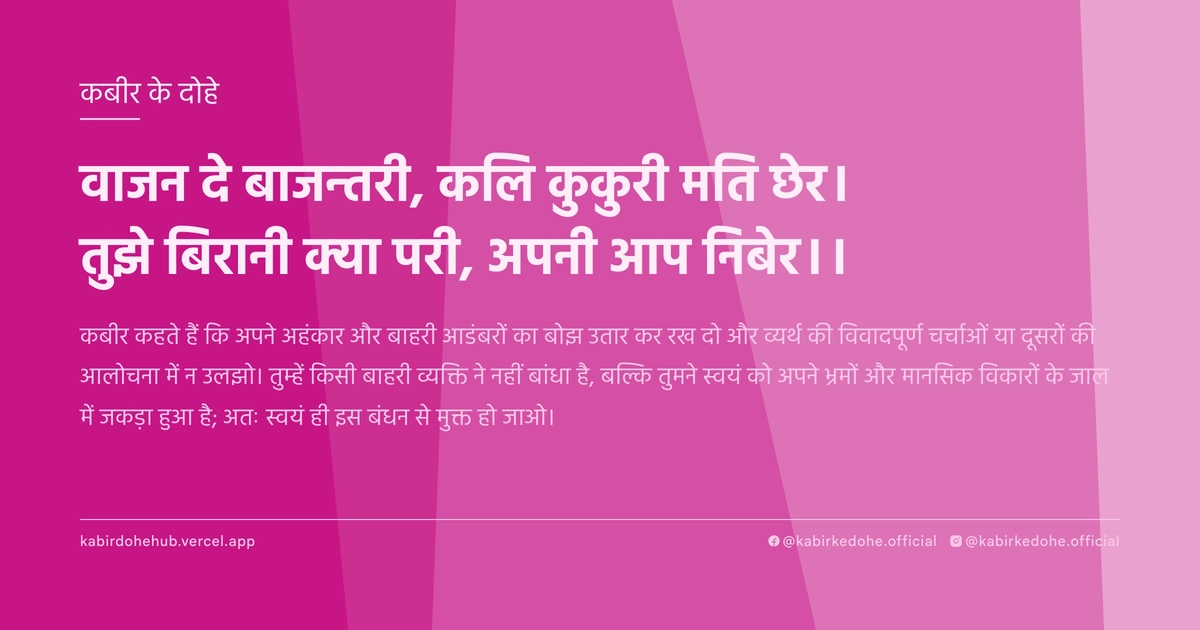
वाजन दे बाजन्तरी, कलि कुकुरी मति छेर।
तुझे बिरानी क्या परी, अपनी आप निबेर।।
Vaajan de baajantari, kali kukuri mati chher. Tujhe birani kya pari, apni aap niber.
इस पृष्ठ पर इस कबीर दोहे का अर्थ (meaning), हिंदी व्याख्या और अंग्रेज़ी अनुवाद, दार्शनिक विश्लेषण और व्यावहारिक जीवन सीख दी गई है। यह दोहा संयम (Self-discipline) विषय से जुड़ा है — Kabir doha meaning and explanation in Hindi and English.
अर्थ (Meaning):
कबीर कहते हैं कि अपने अहंकार और बाहरी आडंबरों का बोझ उतार कर रख दो और व्यर्थ की विवादपूर्ण चर्चाओं या दूसरों की आलोचना में न उलझो। तुम्हें किसी बाहरी व्यक्ति ने नहीं बांधा है, बल्कि तुमने स्वयं को अपने भ्रमों और मानसिक विकारों के जाल में जकड़ा हुआ है; अतः स्वयं ही इस बंधन से मुक्त हो जाओ।
Kabir urges the seeker to shed the heavy burden of ego and external pretenses, advising against engaging in petty disputes or the critical noise of the world. He asserts that no external force or 'other' has enslaved you; rather, you have woven your own shackles through illusion and mental agitation. Therefore, the liberation you seek must be achieved by your own internal awakening.
व्याख्या (Interpretation):
इस दोहे का शाब्दिक अर्थ है कि शोर मचाने वाले बर्तनों को किनारे रखो और कुत्ते की तरह दूसरों पर भौंकना बंद करो। रूपकात्मक स्तर पर, 'वाजन' (भार) अहंकार और सामाजिक प्रतिष्ठा का प्रतीक है जिसे मनुष्य ढोता रहता है। 'कुकुरी' यहाँ उस चंचल और प्रतिक्रियाशील मन को दर्शाता है जो बाहरी उत्तेजनाओं पर तुरंत प्रतिक्रिया करता है। यह निरगुण भक्ति का सार है जहाँ ईश्वर बाहर नहीं, बल्कि भीतर है। माया का सबसे बड़ा भ्रम यह है कि हम अपनी समस्याओं के लिए दूसरों को जिम्मेदार मानते हैं। अद्वैत वेदांत के अनुसार, जब तक 'मैं' और 'तू' का भेद है, तब तक बंधन है। जैसे ही यह बोध होता है कि बंधन स्वयं निर्मित है, आत्मा और ब्रह्म की एकता का अनुभव होता है।
Literally, the verse suggests setting aside clattering vessels and ceasing the reflexive barking of a dog. Metaphorically, 'Vaajan' (weight) represents the crushing burden of ego and the social masks one wears to appear superior. The 'dog' symbolizes the reactive, agitated mind that spends its energy in conflict and judgment. This aligns with Nirgun Bhakti, emphasizing that the Divine is not found in external rituals but in the stillness of the self. Maya manifests here as the illusion of external causality—the belief that our suffering is caused by others. In the light of Advaita Vedanta, the duality of 'self' and 'other' is the root of bondage. Once the seeker realizes that the shackles are forged by their own ignorance, the non-duality of Atman and Brahman is revealed, leading to spontaneous liberation.
दार्शनिक विश्लेषण (Philosophical Analysis):
कबीर का यह दोहा तत्कालीन समाज में व्याप्त धार्मिक पाखंड और शास्त्रार्थ की निरर्थकता पर प्रहार करता है। उनके समय में पंडित और मौलवी शब्दों के जाल बुनकर अपनी श्रेष्ठता सिद्ध करते थे, जिसे कबीर 'बाजन्तरी' या शोर कहते हैं। वे तर्क देते हैं कि सत्य शब्दों के विनिमय में नहीं, बल्कि मौन और अनुभव में है। यह दृष्टिकोण सूफीवाद के 'फना' (अहंकार का विलीनीकरण) के करीब है, जहाँ साधक अपनी व्यक्तिगत पहचान को मिटाकर परमात्मा में लीन हो जाता है।
यहाँ कबीर जाति और वर्ण व्यवस्था के उस मनोवैज्ञानिक आधार को चुनौती देते हैं जो मनुष्य को 'विशेष' होने का भ्रम देता है। जब व्यक्ति खुद को किसी विशेष समूह का हिस्सा मानकर दूसरों से श्रेष्ठ महसूस करता है, तो वह वास्तव में अपने अहंकार का भार बढ़ा रहा होता है। यह भार ही उसे वास्तविक सत्य से दूर ले जाता है।
अद्वैत वेदांत के परिप्रेक्ष्य में, यह दोहा 'अविद्या' (अज्ञान) की चर्चा करता है। हम मानते हैं कि हम शरीर या मन हैं, और यही गलत पहचान हमें दुखों के चक्र में बांधती है। कबीर स्पष्ट करते हैं कि कोई बाहरी शक्ति हमें बंधन में नहीं डालती; हमारा अपना अज्ञान ही हमारा कारागार है।
मनोवैज्ञानिक स्तर पर, यह दोहा प्रतिक्रियात्मक व्यवहार (Reactive Behavior) के त्याग की बात करता है। जब हम दूसरों की बुराई या आलोचना करते हैं, तो हम अपनी ऊर्जा को बाहरी दुनिया में नष्ट करते हैं। कबीर हमें इस ऊर्जा को आंतरिक रूपांतरण की ओर मोड़ने का सुझाव देते हैं।
अंततः, यह दोहा इस बात पर जोर देता है कि मुक्ति कोई बाहरी पुरस्कार नहीं है जिसे कोई गुरु या देवता प्रदान करेगा। यह एक आंतरिक प्रक्रिया है। जब हम स्वयं के द्वारा निर्मित मानसिक बाधाओं को पहचान लेते हैं, तो मुक्ति स्वतः घटित हो जाती है। यह 'स्व-साक्षात्कार' की वह यात्रा है जहाँ साधक स्वयं ही अपना मार्गदर्शक और गंतव्य बन जाता है।
This couplet is a sharp critique of the religious hypocrisy and the futility of sterile intellectual debates prevalent during Kabir's era. In a time where scholars and clerics sought spiritual superiority through linguistic gymnastics, Kabir dismisses such noise as 'Baajantari'—the clatter of empty vessels. He posits that Truth is not found in the exchange of words, but in the profound silence of direct experience.
His perspective closely mirrors the Sufi concept of 'Fana' (the annihilation of the ego), where the seeker dissolves their individual identity to merge with the Divine. By rejecting the need for external validation, Kabir strips away the social hierarchies of caste and creed, arguing that the desire to be 'special' or 'superior' is merely adding weight to one's spiritual burden.
From the lens of Advaita Vedanta, the verse addresses 'Avidya' (primordial ignorance). The fundamental error is the misidentification of the Self with the body or the ego-mind. Kabir asserts that no external deity or demon has enslaved the human soul; rather, the soul is imprisoned by its own delusions and attachments.
Psychologically, the poem advocates for the cessation of reactive behavior. When we engage in judgment or conflict, we leak our spiritual energy into the external void. Kabir suggests redirecting this energy inward, transforming the 'barking' mind into a witnessing consciousness.
Ultimately, the teaching emphasizes that liberation is not an external reward bestowed by a guru or a god. It is an internal realization. Once the seeker recognizes that the prison walls are made of their own thoughts and biases, the walls vanish. This is the journey of self-realization where the seeker, the path, and the destination become one.
मूल संदेश (Core Message):
- बाहरी शोर केवल आंतरिक अशांति का प्रतिबिंब है।
- अहंकार वह बोझ है जो आत्मा की उड़ान रोकता है।
- दूसरों को सुधारने की इच्छा स्वयं एक बंधन है।
- आपकी मुक्ति की कुंजी आपके अपने बोध में है।
- मौन ही सबसे शक्तिशाली आध्यात्मिक उपकरण है।
- स्वयं को जानना ही स्वयं को मुक्त करना है।
- External noise is merely a reflection of internal turbulence.
- The ego is the weight that prevents the soul from soaring.
- The desire to correct others is itself a form of bondage.
- The key to your liberation lies in your own awareness.
- Silence is the most potent tool for spiritual alchemy.
- To know oneself is to liberate oneself.
व्यावहारिक उदाहरण (Practical Example):
वाराणसी के घाटों पर रहने वाले एक वृद्ध विधवा, जानकी, का जीवन अत्यंत कठिन था। वह अन्य विधवाओं के साथ एक छोटे से आश्रम में रहती थी, जहाँ हर दिन इस बात पर विवाद होता था कि कौन अधिक 'पवित्र' है या किसने अधिक कठिन व्रत रखे हैं। जानकी अक्सर इन विवादों में पड़ जाती और दूसरों की भक्ति पर सवाल उठाती, जिससे उसका मन अशांत रहता था।
एक दिन उसने एक फकीर को देखा जो शांत बैठा था, जबकि उसके आसपास लोग उसे अपशब्द कह रहे थे। जानकी ने उससे पूछा कि वह इतनी शांति कैसे बनाए रखता है। फकीर ने मुस्कुराकर कहा, 'मैं बस अपने भीतर के शोर को शांत कर रहा हूँ, बाहर के शोर से मेरा क्या लेना-देना?'
जानकी को अचानक कबीर के शब्दों की याद आई कि हम स्वयं को ही बांधते हैं। उसने महसूस किया कि उसकी अशांति का कारण अन्य महिलाओं का व्यवहार नहीं, बल्कि उसकी अपनी यह इच्छा थी कि उसे 'सबसे श्रेष्ठ' माना जाए।
उसने तय किया कि वह अब किसी की आलोचना नहीं करेगी। जब भी उसे किसी के प्रति क्रोध आता, वह खुद से पूछती, 'क्या मैं फिर से अपना बोझ बढ़ा रही हूँ?'
धीरे-धीरे, आश्रम के अन्य लोग भी उसके बदलाव को देखने लगे। जहाँ पहले वह विवादों की केंद्र थी, अब वह शांति का स्रोत बन गई थी।
उसने पाया कि जब उसने दूसरों को बदलने की कोशिश छोड़ दी, तो उसका अपना आंतरिक संघर्ष समाप्त हो गया।
उसकी नींद बेहतर हुई, उसका स्वास्थ्य सुधरा और वह वास्तव में ईश्वर के करीब महसूस करने लगी।
अब वह केवल अपनी माला नहीं जपती थी, बल्कि अपनी हर सांस में उस मौन का अनुभव करती थी।
उसने जान लिया कि मुक्ति किसी तीर्थ या व्रत में नहीं, बल्कि अहंकार के विसर्जन में है।
जानकी अब एक ऐसी स्त्री बन चुकी थी जिसने स्वयं को स्वयं ही मुक्त कर लिया था।
Janaki, an elderly widow living on the ghats of Varanasi, led a life fraught with tension. She resided in a small ashram with other widows, where daily conflicts erupted over who was more 'pious' or who had observed the strictest fasts. Janaki often found herself embroiled in these disputes, questioning the sincerity of others' devotion, which left her mind in a state of perpetual turmoil.
One afternoon, she observed a wandering dervish sitting in absolute stillness, even as a group of people shouted insults at him. Intrigued, Janaki asked how he maintained such composure. The dervish smiled and replied, 'I am simply silencing the noise within; why should I concern myself with the noise without?'
In that moment, Janaki recalled the essence of Kabir's wisdom: that we are the architects of our own bondage. She realized that her misery was not caused by the other women's behavior, but by her own desperate need to be perceived as the 'most spiritual' among them.
She made a conscious decision to cease all criticism. Whenever a surge of anger rose, she would ask herself, 'Am I adding more weight to my own burden?'
Slowly, the other women in the ashram noticed the transformation. Where she was once the epicenter of conflict, she became a sanctuary of peace.
She discovered that by relinquishing the desire to correct others, her own internal war ceased.
Her sleep became restful, her health improved, and she felt a genuine, unfiltered connection to the Divine.
She no longer just chanted beads; she experienced the sacred silence in every breath.
She understood that liberation was not found in pilgrimages or rigid rituals, but in the dissolution of the ego.
Janaki had become a woman who had successfully unlocked her own chains from within.
अभ्यास मार्गदर्शन (Practice Guidance):
- दैनिक मौन अभ्यास: प्रतिदिन 20 मिनट पूर्ण मौन रहें, न केवल वाणी से, बल्कि मानसिक संवादों को भी रोकने का प्रयास करें।
- आत्म-पूछताछ जर्नल: जब भी आप किसी की आलोचना करें, लिखें कि उस आलोचना के पीछे आपका कौन सा अहंकार (श्रेष्ठता, ज्ञान, या नैतिकता) काम कर रहा था।
- प्रतिक्रिया विराम: किसी भी उत्तेजक बात पर प्रतिक्रिया देने से पहले तीन गहरी सांसें लें और सोचें, 'क्या यह विवाद मेरे आध्यात्मिक भार को बढ़ा रहा है?'
- निदान चेकलिस्ट: क्या मैं दूसरों की गलतियाँ खोजने में समय बिता रहा हूँ? क्या मैं अपनी शांति के लिए दूसरों के व्यवहार पर निर्भर हूँ? यदि हाँ, तो आप अभी भी स्वयं निर्मित बंधनों में हैं।
- Daily Silence Practice: Spend 20 minutes in absolute silence, attempting to still not only your speech but also your internal mental chatter.
- Self-Inquiry Journaling: Whenever you find yourself criticizing another, record which specific ego-driver (superiority, knowledge, or morality) was operating in that moment.
- The Reaction Pause: Before responding to any provocation, take three deep breaths and ask, 'Is this conflict increasing my spiritual burden?'
- Diagnostic Checklist: Am I spending my energy searching for faults in others? Is my peace dependent on the behavior of others? If yes, you are still operating within self-created bondage.
चिंतन प्रश्न (Reflection Questions):
- मेरे जीवन में वह कौन सा 'शोर' है जिसे मैं दुनिया के सामने सही ठहराने की कोशिश करता हूँ?
- यदि मैं अपनी सभी सामाजिक और धार्मिक पहचान छोड़ दूँ, तो मेरे पास क्या बचेगा?
- मैं किन लोगों के प्रति अपनी श्रेष्ठता सिद्ध करने के लिए मानसिक ऊर्जा नष्ट कर रहा हूँ?
- क्या मेरा 'पवित्रता' या 'नैतिकता' का दावा वास्तव में दूसरों को नीचा दिखाने का एक सूक्ष्म तरीका है?
- मेरे जीवन के वे कौन से बंधन हैं जिन्हें मैं दूसरों के मत्थे मढ़ता हूँ, जबकि वे मेरे अपने चुनाव हैं?
- क्या मैं वास्तव में शांति चाहता हूँ, या मैं केवल शांति की चर्चा करना पसंद करता हूँ?
- What is the specific 'noise' in my life that I constantly try to justify to the world?
- If I were to strip away all my social and religious identities, what would remain of me?
- Toward whom am I wasting mental energy in an attempt to prove my superiority?
- Is my claim to 'purity' or 'morality' actually a subtle mechanism to belittle others?
- Which bonds in my life do I blame on others, while they are actually the result of my own choices?
- Do I truly desire peace, or do I simply enjoy the intellectual discourse about peace?