
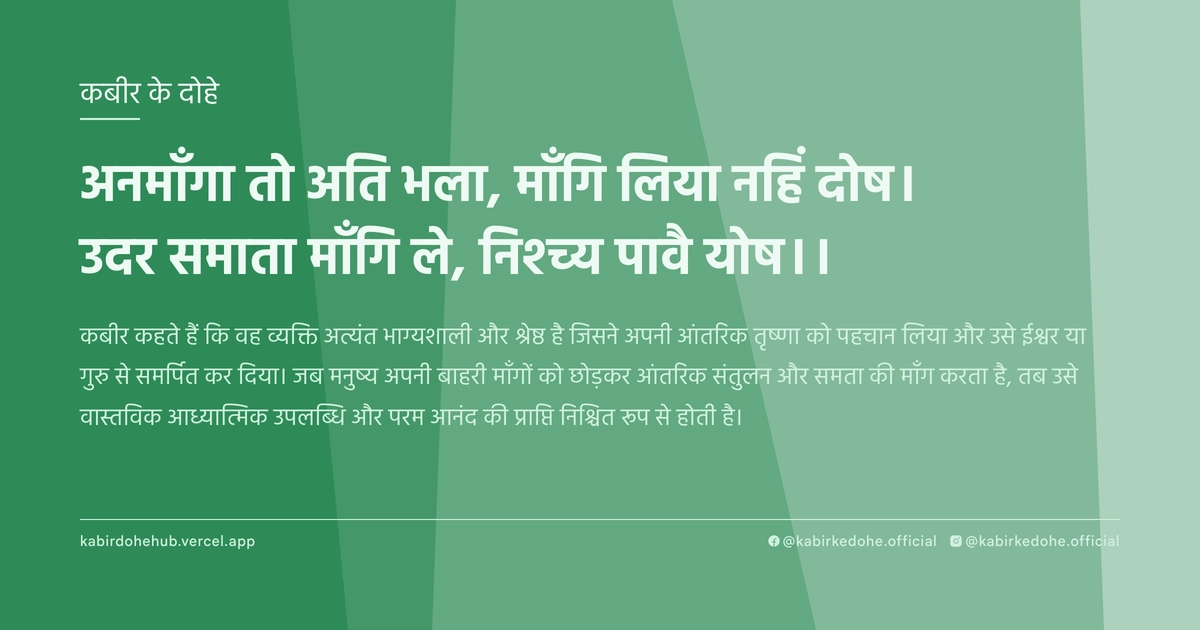
अनमाँगा तो अति भला, माँगि लिया नहिं दोष।
उदर समाता माँगि ले, निश्च्य पावै योष।।
Anmaanga to ati bhala, maangi liya nahin dosh. Udar samata maangi le, nishchay paave yosh.
इस पृष्ठ पर इस कबीर दोहे का अर्थ (meaning), हिंदी व्याख्या और अंग्रेज़ी अनुवाद, दार्शनिक विश्लेषण और व्यावहारिक जीवन सीख दी गई है। यह दोहा संतोष (Contentment) विषय से जुड़ा है — Kabir doha meaning and explanation in Hindi and English.
अर्थ (Meaning):
कबीर कहते हैं कि वह व्यक्ति अत्यंत भाग्यशाली और श्रेष्ठ है जिसने अपनी आंतरिक तृष्णा को पहचान लिया और उसे ईश्वर या गुरु से समर्पित कर दिया। जब मनुष्य अपनी बाहरी माँगों को छोड़कर आंतरिक संतुलन और समता की माँग करता है, तब उसे वास्तविक आध्यात्मिक उपलब्धि और परम आनंद की प्राप्ति निश्चित रूप से होती है।
Kabir asserts that the individual who recognizes their inner cravings and surrenders them to the Divine or the Guru is truly blessed. When a person ceases to ask for worldly gains and instead seeks internal equilibrium and equanimity, they are certain to attain the ultimate spiritual realization and the highest state of bliss.
व्याख्या (Interpretation):
इस दोहे का शाब्दिक अर्थ है कि माँगने में कोई दोष नहीं है, यदि माँग सही वस्तु की हो। यहाँ 'माँगने' का अर्थ भौतिक इच्छाओं से नहीं, बल्कि आध्यात्मिक मार्गदर्शन की तड़प से है। कबीर 'समता' (Equanimity) पर जोर देते हैं, जो द्वंद्वों—सुख-दुख, लाभ-हानि—से ऊपर उठने की अवस्था है। यह निर्गुण भक्ति का सार है, जहाँ साधक रूप और नाम के मोह को त्यागकर उस निराकार तत्व में विलीन होना चाहता है। माया हमें बाहरी वस्तुओं की माँग करना सिखाती है, लेकिन आत्मा केवल शांति और एकता की प्यासी है। जब अहंकार मिटता है और केवल 'समता' बचती है, तब आत्मा और ब्रह्म का अद्वैत (Non-duality) प्रकट होता है। यह विरोधाभास है कि पाने के लिए पहले सब कुछ छोड़ना पड़ता है।
Literally, the verse suggests there is no fault in asking, provided the request is aligned with Truth. Here, 'asking' does not refer to material greed but to a profound spiritual longing for guidance. Kabir emphasizes 'Samata' (Equanimity), the state of transcending dualities such as pleasure and pain, or gain and loss. This is the essence of Nirgun Bhakti, where the seeker sheds the attachment to forms and names to merge with the Formless Absolute. While Maya lures the mind toward external acquisitions, the Atman thirsts only for stillness and unity. When the ego dissolves and only equanimity remains, the non-duality of Atman and Brahman is revealed. It is the great spiritual paradox: to truly possess everything, one must first surrender the desire to possess.
दार्शनिक विश्लेषण (Philosophical Analysis):
कबीर का यह विचार उनके युग के कर्मकांडीय और बाह्य आडंबरों के विरुद्ध एक सशक्त प्रहार है। उस समय धर्म केवल मंदिर-मस्जिद जाने या कठिन व्रत रखने तक सीमित था, जबकि कबीर ने 'आंतरिक रूपांतरण' को प्राथमिकता दी। वे कहते हैं कि ईश्वर को बाहर खोजने की माँग व्यर्थ है; वास्तविक माँग तो मन की शांति और समता की होनी चाहिए।
यह दर्शन अद्वैत वेदांत के करीब है, जहाँ यह माना जाता है कि जीव और ईश्वर अलग नहीं हैं, केवल अज्ञान (माया) के कारण अलगाव महसूस होता है। जब साधक 'समता' माँगता है, तो वह वास्तव में उस पर्दे को हटाने की प्रार्थना कर रहा होता है जो उसे उसकी अपनी वास्तविक प्रकृति से अलग करता है।
सूफी मत के 'फना' (Fana) के सिद्धांत से भी इसका गहरा संबंध है। जैसे सूफीवाद में स्वयं को मिटाकर ईश्वर में समा जाने की बात कही गई है, वैसे ही कबीर यहाँ अहंकार की माँग को समाप्त कर समता की माँग करने की बात कर रहे हैं। यह मनोवैज्ञानिक स्तर पर इच्छाओं के विलोपन की प्रक्रिया है।
कबीर जाति और वर्ण व्यवस्था को नकारते हुए यह स्पष्ट करते हैं कि आध्यात्मिक पात्रता किसी जन्म से नहीं, बल्कि आंतरिक पात्रता और समर्पण से आती है। जो व्यक्ति अपनी वासनाओं को समता में बदल देता है, वही वास्तव में 'भला' या मुक्त है।
अतः, यह दोहा केवल एक प्रार्थना नहीं है, बल्कि एक मानसिक सर्जरी है। यह हमें सिखाता है कि हमारी अधिकांश समस्याएँ गलत चीज़ों को माँगने से पैदा होती हैं। जब हम शांति की माँग करते हैं, तो हम वास्तव में अपने भीतर के उस शून्य को भरने की कोशिश करते हैं जिसे केवल आत्म-साक्षात्कार ही भर सकता है।
Kabir's insight serves as a potent critique of the ritualistic and external pomposity of his era. During his time, religion was often reduced to temple-mosque visits or rigorous fasting, whereas Kabir prioritized 'internal transformation.' He suggests that pleading for external miracles or divine favors is futile; the only valid request is for the attainment of inner peace and equanimity.
This philosophy aligns closely with Advaita Vedanta, which posits that the individual soul (Jiva) and the Absolute (Brahman) are not distinct, but appear separate due to the veil of ignorance (Maya). When a seeker asks for 'Samata,' they are essentially praying for the removal of this veil that obscures their true nature.
There is also a profound connection to the Sufi concept of 'Fana' (annihilation of the self). Just as Sufism emphasizes the dissolution of the ego to merge with the Divine, Kabir advocates for replacing the ego-driven desires with a state of balanced oneness. This is a psychological process of extinguishing the fires of craving.
By rejecting caste and social hierarchy, Kabir clarifies that spiritual eligibility is not a birthright but a result of inner surrender and discipline. The person who can transmute their cravings into equanimity is the only one who is truly 'blessed' or liberated.
Ultimately, this Doha is not merely a prayer but a form of mental surgery. It teaches us that most of our suffering stems from asking for the wrong things. When we seek stillness, we are attempting to fill the void within us that can only be satiated by self-realization.
मूल संदेश (Core Message):
- बाहरी माँगें केवल मानसिक बंधन और अंतहीन तृष्णा को जन्म देती हैं।
- सच्ची प्रार्थना वह है जो अहंकार को मिटाकर आंतरिक संतुलन की माँग करे।
- समता वह कुंजी है जो हमें सुख और दुख के द्वंद्व से मुक्त करती है।
- जब हम कुछ भी पाने की जिद छोड़ते हैं, तब हम संपूर्णता को प्राप्त करते हैं।
- आध्यात्मिक उन्नति का अर्थ है इच्छाओं का अंत नहीं, बल्कि उनका रूपांतरण।
- परम आनंद बाहरी परिस्थितियों में नहीं, बल्कि आंतरिक स्थिरता में निहित है।
- External demands only breed mental bondage and endless craving.
- True prayer is that which dissolves the ego to seek internal equilibrium.
- Equanimity is the key that liberates us from the duality of pleasure and pain.
- When we cease the stubborn demand to possess, we attain wholeness.
- Spiritual progress is not the death of desire, but its transformation.
- Ultimate bliss resides not in external circumstances, but in internal stillness.
व्यावहारिक उदाहरण (Practical Example):
वाराणसी के घाटों पर रहने वाले एक वृद्ध बुनकर थे, जिनका नाम माधव था। माधव अपनी कला में निपुण थे, लेकिन उनका मन हमेशा इस बात से अशांत रहता था कि उनके बेटे ने शहर जाकर उन्हें भुला दिया है। वे हर दिन गंगा किनारे बैठकर ईश्वर से प्रार्थना करते कि उनका बेटा वापस आ जाए और उनके पास बहुत सारा धन हो।
माधव की प्रार्थनाएँ केवल एक माँग थीं—एक ऐसी माँग जो उनके दुख को और बढ़ा रही थी क्योंकि जब तक बेटा नहीं आता, वे दुखी रहते। वे अपनी खुशी को एक बाहरी शर्त से जोड़ चुके थे।
एक दिन उनकी मुलाकात एक घुमक्कड़ संत से हुई। संत ने माधव की व्याकुलता देखी और उनसे कहा, 'तुम बेटे की वापसी माँग रहे हो, लेकिन क्या तुमने कभी अपने मन की शांति माँगी है?'
माधव हैरान थे। उन्होंने कहा, 'शांति कैसे आएगी जब मेरा परिवार बिखरा हुआ है?' संत ने मुस्कुराकर जवाब दिया, 'शांति परिवार के मिलने में नहीं, बल्कि इस बात को स्वीकार करने में है कि सब कुछ ईश्वर की इच्छा है। तुम वस्तु की नहीं, समता की माँग करो।'
माधव ने उस दिन से अपनी प्रार्थना बदल दी। उन्होंने यह माँगना बंद कर दिया कि बेटा वापस आए, और इसके बजाय यह माँगना शुरू किया कि चाहे जो भी परिस्थिति हो, उनका मन स्थिर और शांत रहे।
धीरे-धीरे, माधव ने महसूस किया कि उनकी खुशी अब बेटे के आने या न आने पर निर्भर नहीं थी। उन्होंने अपने काम में फिर से वही पुराना आनंद पाया और घाटों पर अन्य दुखी लोगों की मदद करने लगे।
एक दिन अचानक उनका बेटा वापस आया, लेकिन वह बहुत कर्ज में डूबा हुआ था। यदि माधव पहले वाली मानसिकता में होते, तो वे टूट जाते। लेकिन अब वे 'समता' की अवस्था में थे।
उन्होंने अपने बेटे को बिना किसी शिकायत के गले लगाया और उसे शांति से जीवन को फिर से शुरू करने का रास्ता दिखाया। माधव की आंतरिक स्थिरता ने उनके बेटे के जीवन में भी सकारात्मक बदलाव लाया।
यह 'कबीर ट्विस्ट' था—जब माधव ने बाहरी माँग को छोड़कर आंतरिक समता को चुना, तो उन्हें वह शांति मिली जो किसी भी भौतिक मिलन से बड़ी थी।
अंततः, माधव ने जाना कि वास्तविक उपलब्धि किसी व्यक्ति का वापस आना नहीं, बल्कि स्वयं के भीतर उस केंद्र को पा लेना है जहाँ कोई हलचल नहीं होती।
In the ghats of Varanasi lived an elderly weaver named Madhav. Madhav was a master of his craft, yet his mind was perpetually restless because his son had moved to the city and largely forgotten him. Every day, Madhav would sit by the Ganges, praying to the Divine for his son's return and for a windfall of wealth.
Madhav's prayers were mere demands—requests that actually amplified his suffering because as long as the son remained absent, Madhav remained miserable. He had tethered his happiness to an external condition.
One day, he encountered a wandering monk. The monk observed Madhav's agitation and asked, 'You are pleading for your son's return, but have you ever asked for the peace of your own mind?'
Madhav was bewildered. He replied, 'How can there be peace when my family is fragmented?' The monk smiled and replied, 'Peace does not lie in the reunion of family, but in the acceptance that everything unfolds by Divine will. Stop asking for the object; start asking for equanimity.'
From that day forward, Madhav altered his prayer. He stopped demanding his son's return and instead began seeking a state of mind that remained steady and calm, regardless of the circumstances.
Gradually, Madhav realized that his happiness was no longer dependent on his son's presence. He rediscovered the joy in his weaving and began helping other distressed souls on the ghats.
Suddenly, one day, his son returned, but he was burdened with immense debt. Had Madhav remained in his old mindset, he would have been devastated. Instead, he was in a state of 'Samata.'
He embraced his son without a single word of complaint and calmly guided him on how to rebuild his life. Madhav's internal stability brought a positive transformation into his son's life as well.
This was the 'Kabir Twist'—when Madhav ceased his external demands and chose internal equanimity, he attained a peace far greater than any physical reunion could provide.
Ultimately, Madhav understood that true achievement is not the return of a lost person, but the discovery of that center within oneself where there is no turbulence.
अभ्यास मार्गदर्शन (Practice Guidance):
- दैनिक ध्यान: प्रतिदिन 20 मिनट मौन बैठें और अपने भीतर उठने वाली इच्छाओं को केवल देखें, उन्हें पूरा करने की कोशिश न करें।
- आत्म-पूछताछ जर्नल: हर रात लिखें कि आज आपने किन बाहरी चीजों की 'माँग' की और उन माँगों के पीछे का डर या अधूरापन क्या था।
- व्यवहार परिवर्तन: जब भी आप किसी स्थिति में प्रतिक्रिया दें, तो स्वयं से पूछें, 'क्या मैं यहाँ सही होने की माँग कर रहा हूँ या शांति की?'
- निदान चेकलिस्ट: यदि आप छोटी बातों पर क्रोधित हो रहे हैं या दूसरों की सफलता से ईर्ष्या कर रहे हैं, तो समझ लें कि आप 'समता' से दूर हैं और पुनः समर्पण की आवश्यकता है।
- Daily Meditation: Sit in silence for 20 minutes daily, observing the desires that arise within you without attempting to fulfill or suppress them.
- Self-Inquiry Journaling: Every night, record the external things you 'demanded' or craved during the day and identify the underlying fear or void driving those requests.
- Behavioral Shift: Whenever you react to a situation, ask yourself, 'Am I demanding to be right here, or am I seeking peace?'
- Diagnostic Checklist: If you find yourself angered by trivialities or envious of others' success, recognize that you have drifted from 'Samata' and need to return to a state of surrender.
चिंतन प्रश्न (Reflection Questions):
- मेरी वे कौन सी 'माँगें' हैं जिन्हें मैं ईश्वर या समाज से करता हूँ, लेकिन वास्तव में वे मेरे अहंकार की पुकार हैं?
- यदि मेरी जीवन की सभी बाहरी इच्छाएं आज पूरी हो जाएं, तो क्या मेरा मन वास्तव में शांत होगा या नई इच्छाएं जन्म लेंगी?
- मैं अपनी सार्वजनिक छवि (Public Identity) को बनाए रखने के लिए कितनी मानसिक ऊर्जा खर्च करता हूँ, और यह मेरी आंतरिक शांति को कैसे बाधित करता है?
- क्या मैं वास्तव में 'समता' चाहता हूँ, या मैं केवल उन परिस्थितियों की माँग कर रहा हूँ जो मुझे सुविधाजनक लगें?
- मेरे जीवन का वह कौन सा क्षेत्र है जहाँ मैं सबसे अधिक नियंत्रण (Control) चाहता हूँ, और उस नियंत्रण को छोड़ने पर मुझे किस बात का डर है?
- क्या मेरी प्रार्थनाएं केवल 'लेने' के बारे में हैं, या वे स्वयं को 'मिटाने' के बारे में हैं?
- What are the 'demands' I make of God or society that are actually just the cries of my ego?
- If all my external desires were fulfilled today, would my mind truly be at peace, or would new cravings simply emerge?
- How much mental energy do I expend maintaining my public identity, and how does this disrupt my internal stillness?
- Do I truly seek 'Samata' (equanimity), or am I merely demanding circumstances that are convenient for me?
- In which area of my life do I crave the most control, and what fear arises when I imagine letting go of that control?
- Are my prayers merely about 'receiving,' or are they about 'dissolving' the self?