
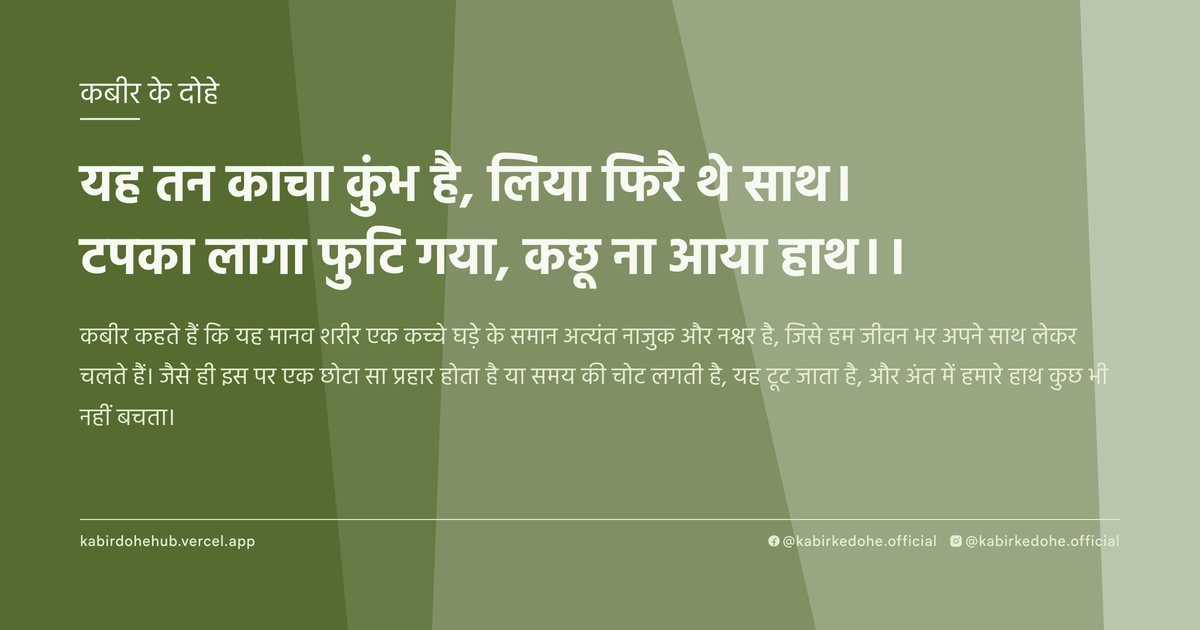
यह तन काचा कुंभ है, लिया फिरै थे साथ।
टपका लागा फुटि गया, कछू ना आया हाथ।।
Yeh tan kaacha kumbh hai, liya phirai the saath. Tapka laaga phuti gaya, kachhu na aaya haath.
इस पृष्ठ पर इस कबीर दोहे का अर्थ (meaning), हिंदी व्याख्या और अंग्रेज़ी अनुवाद, दार्शनिक विश्लेषण और व्यावहारिक जीवन सीख दी गई है। यह दोहा मृतुक्यता (Mortality) विषय से जुड़ा है — Kabir doha meaning and explanation in Hindi and English.
अर्थ (Meaning):
कबीर कहते हैं कि यह मानव शरीर एक कच्चे घड़े के समान अत्यंत नाजुक और नश्वर है, जिसे हम जीवन भर अपने साथ लेकर चलते हैं। जैसे ही इस पर एक छोटा सा प्रहार होता है या समय की चोट लगती है, यह टूट जाता है, और अंत में हमारे हाथ कुछ भी नहीं बचता।
Kabir asserts that the human body is like an unbaked clay pot—fragile, temporary, and precarious. We carry this vessel throughout our existence, but the moment a single blow of fate or time strikes it, the pot shatters, leaving us with absolutely nothing of material value.
व्याख्या (Interpretation):
साब्दिक अर्थ में, कबीर शरीर की क्षणभंगुरता की तुलना एक कच्चे घड़े से करते हैं। रूपक के स्तर पर, 'काचा कुंभ' माया के उस भ्रम का प्रतीक है जिसमें हम विश्वास करते हैं कि हमारा अस्तित्व स्थायी है। यह निरगुण भक्ति का सार है, जहाँ शरीर को केवल एक माध्यम माना गया है, गंतव्य नहीं। अद्वैत वेदांत के अनुसार, जब यह भौतिक खोल टूटता है, तब केवल आत्मा शेष रहती है, लेकिन जो लोग शरीर से मोह करते हैं, वे शून्य हाथ रह जाते हैं। यह विरोधाभास है कि हम उस चीज़ को सजाने में जीवन बिता देते हैं जो अनिवार्य रूप से नष्ट होने वाली है। अंततः, यह दोहा हमें स्थूल जगत से सूक्ष्म सत्य की ओर ले जाने का प्रयास करता है।
Literally, Kabir compares the fragility of the body to an unbaked clay pot. Metaphorically, the 'unbaked pot' symbolizes the illusion of Maya, where we mistakenly believe our physical existence is permanent. This aligns with Nirgun Bhakti, where the body is viewed merely as a vehicle, not the destination. According to Advaita Vedanta, when this physical shell shatters, only the Atman remains; however, those clinging to the physical form find themselves empty-handed. The central paradox lies in our tendency to spend a lifetime decorating a vessel that is destined for destruction. Ultimately, the verse urges a transition from the gross material world to the subtle, eternal Truth.
दार्शनिक विश्लेषण (Philosophical Analysis):
कबीर का यह दोहा उस कालखंड की प्रतिक्रिया है जहाँ लोग बाहरी कर्मकांडों और शारीरिक शुद्धता को मोक्ष का मार्ग मानते थे। वे इस विचार को पूरी तरह नकारते हैं कि केवल तीर्थयात्रा या बाहरी अनुष्ठानों से मुक्ति मिल सकती है, क्योंकि शरीर स्वयं नश्वर है।
दार्शनिक रूप से, यह सूफी मत के 'फना' और वेदांत के 'माया' के सिद्धांत से मेल खाता है। सूफीवाद में अहंकार का मिटना अनिवार्य है, ठीक वैसे ही जैसे घड़ा फूटकर मिट्टी में मिल जाता है। कबीर यहाँ चेतावनी दे रहे हैं कि यदि हम अपनी पहचान इस 'काचे कुंभ' (शरीर) से जोड़ते हैं, तो हम मृत्यु के समय गहरे शोक और रिक्तता का अनुभव करेंगे।
यह विश्लेषण हमें बताता है कि शरीर का विनाश केवल भौतिक अंत नहीं है, बल्कि यह एक अवसर है कि हम उस तत्व को पहचानें जो कभी नहीं टूटता। कबीर का विरोध उन लोगों से है जो जाति, वर्ण और शारीरिक श्रेष्ठता का अहंकार पालते हैं, क्योंकि वे भूल जाते हैं कि सबका अंत एक ही मिट्टी में होना है।
मनोवैज्ञानिक स्तर पर, यह दोहा 'मृत्यु जागरूकता' (Memento Mori) पैदा करता है। जब मनुष्य को अपनी नश्वरता का वास्तविक बोध होता है, तो उसका अहंकार कम होने लगता है और वह करुणा एवं प्रेम के मार्ग पर अग्रसर होता है।
अंततः, कबीर यह समझाते हैं कि वास्तविक उपलब्धि वह नहीं है जिसे हम भौतिक रूप से संचित करते हैं, बल्कि वह आध्यात्मिक जागृति है जो शरीर के नष्ट होने के बाद भी बनी रहती है। जो केवल शरीर को पूजता है, वह अंत में रिक्त हाथ रह जाता है।
Kabir’s verse is a direct response to an era where people viewed external rituals and physical purity as the primary paths to salvation. He rejects the notion that pilgrimage or ritualistic bathing can grant liberation, as the vessel performing these acts is itself transient.
Philosophically, this aligns with the Sufi concept of 'Fana' (annihilation of the self) and the Vedantic principle of 'Maya' (illusion). In Sufism, the dissolution of the ego is essential, much like a pot shattering to return to the earth. Kabir warns that if we anchor our identity to this 'unbaked pot' (the body), we will encounter profound void and grief at the moment of death.
This analysis reveals that the destruction of the body is not merely a physical end, but an opportunity to recognize the element that never breaks. Kabir’s critique is aimed at those who harbor pride in caste, lineage, or physical superiority, reminding them that all eventually return to the same soil.
On a psychological level, the verse instills 'death awareness' (Memento Mori). When a human truly grasps their own transience, the ego diminishes, paving the way for genuine compassion and universal love.
Ultimately, Kabir explains that true achievement is not found in material accumulation, but in the spiritual awakening that persists beyond the physical collapse. He posits that those who worship only the form are left empty-handed in the end.
मूल संदेश (Core Message):
- शरीर एक अस्थायी निवास है, इसे स्थायी घर न समझें।
- बाहरी सौंदर्य और शक्ति केवल भ्रम हैं, जो समय के साथ मिट जाते हैं।
- अहंकार का त्याग ही वास्तविक सुरक्षा का एकमात्र मार्ग है।
- नश्वरता को स्वीकार करना ही आध्यात्मिक स्वतंत्रता की पहली सीढ़ी है।
- सच्ची उपलब्धि वह है जो शरीर के विसर्जन के बाद भी शेष रहे।
- The body is a temporary dwelling; do not mistake it for a permanent home.
- External beauty and power are mere illusions that fade with time.
- Relinquishing the ego is the only true path to lasting security.
- Accepting transience is the first step toward spiritual liberation.
- True achievement is that which persists after the body dissolves.
व्यावहारिक उदाहरण (Practical Example):
वाराणसी के घाटों पर रहने वाला एक वृद्ध विधवा, जिसे लोग 'माई' कहते थे, अपना पूरा जीवन दूसरों की सेवा और दान में बिताती थी। वह बहुत गरीब थी, लेकिन उसका स्वभाव अत्यंत शांत था।
उसी घाट पर एक धनी व्यापारी रहता था जो अपनी हवेली की भव्यता और अपने स्वास्थ्य पर बहुत गर्व करता था। वह माई का उपहास करता था कि वह इतनी अभावग्रस्त स्थिति में कैसे खुश रह सकती है।
व्यापारी का मानना था कि उसका शरीर और उसकी संपत्ति उसे सुरक्षा और सम्मान प्रदान करेंगे। वह हर दिन महंगे तेलों से मालिश करता और अपनी शारीरिक शक्ति का प्रदर्शन करता था।
एक दिन अचानक शहर में एक महामारी फैली। वह शक्तिशाली व्यापारी, जिसने अपने शरीर को एक किले की तरह सजाया था, कुछ ही दिनों में बिस्तर से लग गया।
उसकी सारी संपत्ति, उसके महंगे वैद्य और उसकी शारीरिक शक्ति उसके किसी काम नहीं आई। वह असहाय महसूस कर रहा था क्योंकि उसने कभी आत्मा की शांति के लिए काम नहीं किया था।
दूसरी ओर, माई, जिसका शरीर कमजोर और जर्जर था, बीमारों की सेवा में लगी रही। वह जानती थी कि यह शरीर एक कच्चा घड़ा है, इसलिए वह उससे मोह नहीं करती थी।
जब व्यापारी अपनी अंतिम सांसें ले रहा था, उसने देखा कि माई के चेहरे पर एक अलौकिक शांति थी, जबकि वह स्वयं भय और रिक्तता से भरा हुआ था।
व्यापारी को तब समझ आया कि उसने जीवन भर उस घड़े को सजाने में समय बिताया जो अब टूट रहा था, जबकि माई ने उस आंतरिक प्रकाश को संजोया था जो कभी नहीं मिटता।
उसने अंतिम क्षणों में माई का हाथ थामा और महसूस किया कि असली संपत्ति शरीर या धन नहीं, बल्कि वह प्रेम और वैराग्य है जो मृत्यु के भय को मिटा देता है।
यह 'कबीर मोड़' था—व्यापारी का अहंकार टूट गया और उसने पहली बार उस शून्य को महसूस किया जिसे वह जीवन भर अनदेखा करता रहा था।
In the ghats of Varanasi lived an elderly widow known as 'Mai,' who spent her entire life in the service of others and in selfless charity. She was impoverished, yet her demeanor was profoundly serene.
On the same ghat lived a wealthy merchant who took immense pride in the grandeur of his mansion and his robust health. He often mocked Mai, wondering how she could be content in such a state of deprivation.
The merchant believed that his physical strength and material wealth provided him with ultimate security and status. He spent hours daily on luxurious massages and flaunting his vitality.
Suddenly, a plague swept through the city. The powerful merchant, who had treated his body like an impregnable fortress, found himself bedridden within days.
All his riches, his expensive physicians, and his physical prowess proved useless. He felt utterly helpless because he had never cultivated inner peace or spiritual resilience.
Meanwhile, Mai, whose body was frail and worn, continued to serve the sick. She lived with the conscious knowledge that the body is but an unbaked pot, and thus she harbored no attachment to it.
As the merchant drew his final breaths, he noticed a divine tranquility on Mai's face, while he himself was consumed by terror and a sense of void.
The merchant realized that he had spent his entire life decorating a vessel that was now shattering, while Mai had nurtured an inner light that is eternal.
In his final moments, he grasped Mai's hand, realizing that true wealth is not the body or gold, but the love and detachment that erase the fear of death.
This was the 'Kabir Twist'—the merchant's ego finally shattered, and he experienced the profound emptiness he had spent a lifetime ignoring.
अभ्यास मार्गदर्शन (Practice Guidance):
- प्रतिदिन 15 मिनट मौन ध्यान करें, जिसमें आप अपने शरीर को केवल एक 'उधार लिए हुए वस्त्र' या 'मिट्टी के बर्तन' के रूप में देखें।
- एक डायरी लिखें जिसमें आप उन तीन चीजों की सूची बनाएं जिनसे आप सबसे अधिक जुड़े हुए हैं, और फिर विचार करें कि यदि वे कल नष्ट हो जाएं, तो आपके भीतर क्या बचेगा।
- व्यवहार परिवर्तन: जब भी क्रोध या अहंकार महसूस हो, स्वयं से पूछें—'क्या यह भावना इस नश्वर शरीर के लिए है या उस शाश्वत आत्मा के लिए?'
- निदान चेकलिस्ट: क्या आप बीमारी या बुढ़ापे के संकेतों से अत्यधिक डरते हैं? क्या आप अपनी पहचान केवल अपने रूप या पद से जोड़ते हैं? यदि हाँ, तो आप अभी भी 'काचे कुंभ' के मोह में हैं।
- Practice 15 minutes of silent meditation daily, visualizing your body not as 'you,' but as a 'borrowed garment' or a 'clay vessel.'
- Maintain a journal listing three things you are most attached to, then contemplate what would remain within you if they were destroyed tomorrow.
- Behavioral Shift: Whenever anger or pride arises, ask yourself—'Is this emotion for the perishable body or for the eternal soul?'
- Diagnostic Checklist: Do you experience extreme fear of aging or illness? Do you define your identity solely by your appearance or status? If yes, you are still trapped in the attachment to the 'unbaked pot.'
चिंतन प्रश्न (Reflection Questions):
- यदि आज आपका शरीर पूरी तरह बदल जाए, तो आपकी 'मैं' की परिभाषा क्या होगी?
- आप अपने व्यक्तित्व का कितना हिस्सा अपनी शारीरिक छवि या सामाजिक पद को देते हैं?
- क्या आपकी डिजिटल पहचान (सोशल मीडिया) आपके 'काचे कुंभ' के मोह को और अधिक बढ़ा रही है?
- मृत्यु का विचार आपको डराता है या आपको वर्तमान क्षण में अधिक जागरूक बनाता है?
- आप ऐसी कौन सी चीज़ संचित कर रहे हैं जिसे आप मृत्यु के बाद अपने साथ ले जा सकेंगे?
- If your body were completely changed today, what would remain of your definition of 'I'?
- How much of your identity is derived from your physical image or social status?
- Is your digital identity (social media) amplifying your attachment to the 'unbaked pot'?
- Does the thought of death terrify you, or does it make you more mindful of the present moment?
- What are you accumulating that you can actually carry with you beyond the physical end?