
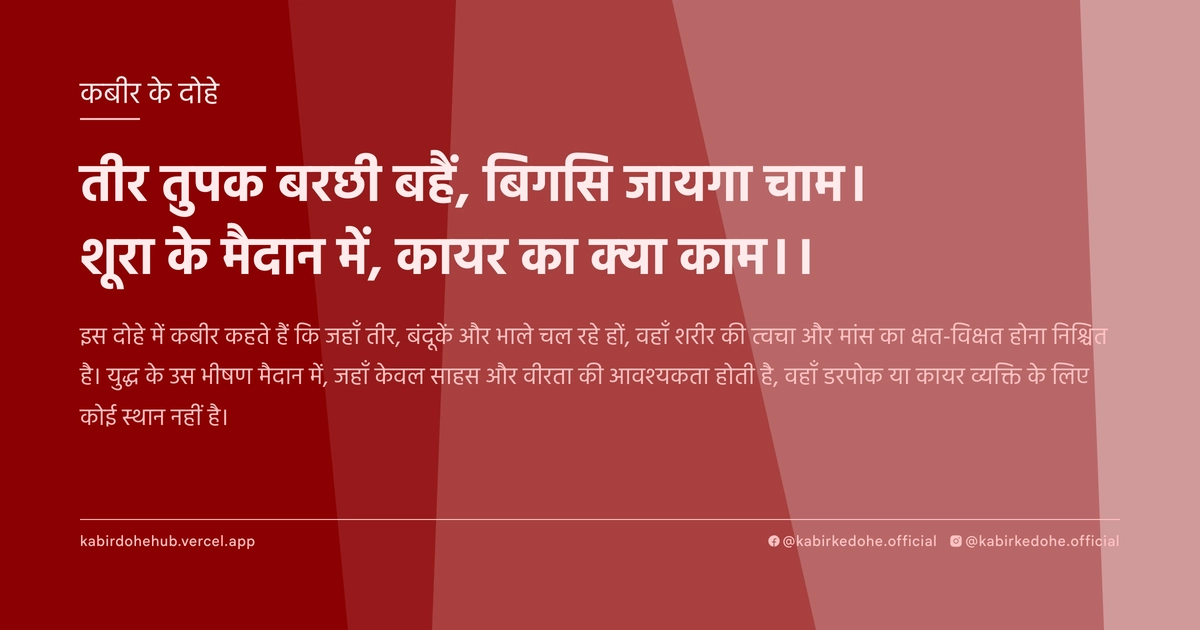
तीर तुपक बरछी बहैं, बिगसि जायगा चाम।
शूरा के मैदान में, कायर का क्या काम।।
Teer tupak barchhi bahain, bigsi jaayga chaam. Shoora ke maidan mein, kaayar ka kya kaam.
इस पृष्ठ पर इस कबीर दोहे का अर्थ (meaning), हिंदी व्याख्या और अंग्रेज़ी अनुवाद, दार्शनिक विश्लेषण और व्यावहारिक जीवन सीख दी गई है। यह दोहा निष्ठा (Integrity) विषय से जुड़ा है — Kabir doha meaning and explanation in Hindi and English.
अर्थ (Meaning):
इस दोहे में कबीर कहते हैं कि जहाँ तीर, बंदूकें और भाले चल रहे हों, वहाँ शरीर की त्वचा और मांस का क्षत-विक्षत होना निश्चित है। युद्ध के उस भीषण मैदान में, जहाँ केवल साहस और वीरता की आवश्यकता होती है, वहाँ डरपोक या कायर व्यक्ति के लिए कोई स्थान नहीं है।
Kabir asserts that in a battlefield where arrows, muskets, and spears fly, the physical body and skin are bound to be torn. In such an arena of intense struggle, where only courage and fortitude prevail, there is no place for the cowardly or the fearful.
व्याख्या (Interpretation):
शाब्दिक अर्थ युद्ध के मैदान की विभीषिका है, परंतु आध्यात्मिक स्तर पर यह 'साधना' के कठिन मार्ग का वर्णन है। यहाँ 'तीर और बरछी' वास्तव में वे मानसिक द्वंद्व, अहंकार के प्रहार और सांसारिक मोह हैं जो साधक को विचलित करते हैं। 'चाम' या त्वचा का बिगड़ना अहंकार के छिलने और पुराने व्यक्तित्व के विनाश का प्रतीक है। निर्गुण भक्ति में, ईश्वर की प्राप्ति के लिए स्वयं के सीमित 'मैं' का बलिदान देना पड़ता है। यह दोहा स्पष्ट करता है कि जो व्यक्ति अपनी सुख-सुविधाओं और डर से चिपका रहता है, वह आत्म-साक्षात्कार के इस महान युद्ध में कभी विजयी नहीं हो सकता। यह अद्वैत वेदांत के उस सत्य की ओर संकेत है जहाँ जीव को अपनी अज्ञानता के आवरण को फाड़कर ब्रह्म में विलीन होना पड़ता है।
While the literal meaning describes the horrors of war, spiritually it depicts the arduous path of 'Sadhana'. The 'arrows and spears' represent the mental conflicts, ego-strikes, and worldly attachments that plague the seeker. The 'tearing of the skin' symbolizes the shedding of the ego and the destruction of the old, limited personality. In Nirgun Bhakti, attaining the Formless Divine requires the sacrifice of the small 'I'. This Doha clarifies that one who clings to comfort and fear cannot triumph in the great battle of self-realization. It points toward the Advaita Vedanta truth where the individual soul must tear through the veil of ignorance to merge with the Absolute Brahman, highlighting the paradox that only through the death of the ego is true life born.
दार्शनिक विश्लेषण (Philosophical Analysis):
कबीर का यह दोहा उस समय के सामाजिक और धार्मिक परिवेश की प्रतिक्रिया है जहाँ धर्म को केवल कर्मकांडों और बाहरी दिखावे तक सीमित कर दिया गया था। कबीर ने 'शूरा' (वीर) शब्द का प्रयोग केवल शारीरिक बल के लिए नहीं, बल्कि मानसिक और आध्यात्मिक साहस के लिए किया है। वे बताते हैं कि सत्य की खोज कोई शांत सैर नहीं है, बल्कि एक आंतरिक युद्ध है।
यहाँ कबीर का दृष्टिकोण सूफी मत के 'नफ्स' (अहंकार) के विनाश से मिलता है। सूफीवाद में भी माना जाता है कि जब तक इंसान अपनी इच्छाओं और डर का वध नहीं करता, वह खुदा तक नहीं पहुँच सकता। यह मार्ग कठिन है और इसमें 'चाम' यानी सांसारिक प्रतिष्ठा और शारीरिक मोह का नुकसान उठाना पड़ता है।
अद्वैत वेदांत के परिप्रेक्ष्य में, यह दोहा माया के प्रभाव को नष्ट करने की बात करता है। माया हमें सुरक्षा का भ्रम देती है, लेकिन सत्य का मार्ग उस सुरक्षा को नष्ट करने की मांग करता है। जो व्यक्ति इस 'भय' से डरता है, वह वास्तव में अपनी अज्ञानता के बंधन में जकड़ा हुआ है।
कबीर जाति और वर्ण व्यवस्था के विरुद्ध थे, और यहाँ 'शूरा' कहकर वे यह संदेश दे रहे हैं कि वीरता किसी विशेष कुल या जाति की बपौती नहीं है, बल्कि यह उस व्यक्ति का गुण है जो सत्य के लिए सब कुछ दांव पर लगाने को तैयार है। यह एक लोकतांत्रिक आध्यात्मिकता है जहाँ साहस ही एकमात्र योग्यता है।
अंततः, यह विश्लेषण हमें बताता है कि आध्यात्मिक प्रगति के लिए 'कम्फर्ट ज़ोन' का त्याग अनिवार्य है। यदि आप अपनी पुरानी आदतों और पहचान को बचाने की कोशिश करेंगे, तो आप कभी भी उस अनंत सत्य का अनुभव नहीं कर पाएंगे। यह दोहा हमें कायरता त्यागकर आत्म-साक्षात्कार के युद्ध में कूदने का आह्वान करता है।
This Doha is a reaction to the socio-religious climate of Kabir's era, where religion was reduced to mere rituals and outward displays. Kabir uses the term 'Shoora' (brave) not for physical prowess, but for mental and spiritual fortitude. He posits that the search for Truth is not a peaceful stroll, but an internal war.
Kabir's perspective here aligns with the Sufi concept of the annihilation of the 'Nafs' (ego). Sufism teaches that until one slays their desires and fears, they cannot reach the Divine. This path is grueling, requiring the loss of 'skin'—the superficial layers of worldly prestige and bodily attachment.
From the lens of Advaita Vedanta, this verse speaks of destroying the influence of Maya. Maya offers an illusion of security, but the path of Truth demands the destruction of that very security. One who fears this loss is essentially shackled by their own ignorance.
Kabir, who vehemently opposed caste and class hierarchies, suggests by using 'Shoora' that bravery is not the birthright of any specific caste or lineage; it is a quality of the individual willing to risk everything for the Truth. This is a democratic spirituality where courage is the only prerequisite.
Ultimately, this analysis reveals that the abandonment of the 'comfort zone' is mandatory for spiritual evolution. If one attempts to preserve old habits and a fragile identity, they will never experience the Infinite Truth. The Doha is a clarion call to cast off cowardice and plunge into the battle of self-realization.
मूल संदेश (Core Message):
- आध्यात्मिक मार्ग सुखद नहीं, बल्कि एक युद्ध है।
- अहंकार की त्वचा का छिलना ही वास्तविक जागृति है।
- डर का त्याग ही परमात्मा से मिलन की पहली शर्त है।
- सत्य के लिए सामाजिक प्रतिष्ठा का बलिदान अनिवार्य है।
- आंतरिक वीरता ही अज्ञानता के अंधकार को मिटाती है।
- साधना का मैदान केवल साहसी आत्माओं के लिए खुला है।
- The spiritual path is not a luxury, but a battlefield.
- The tearing of the ego's skin is the only true awakening.
- Renouncing fear is the primary condition for Divine union.
- Sacrificing social prestige is mandatory for the sake of Truth.
- Inner fortitude alone erases the darkness of ignorance.
- The arena of Sadhana is open only to courageous souls.
व्यावहारिक उदाहरण (Practical Example):
एक समय की बात है, बनारस के घाटों पर एक वृद्ध विधवा रहती थी, जिसका नाम जानकी था। समाज की नजरों में वह एक असहाय स्त्री थी, जिसे केवल पूजा-पाठ और मौन रहने की सलाह दी जाती थी। जानकी का जीवन एक तय ढर्रे पर चल रहा था, जहाँ वह अपनी छोटी सी कुटिया में सिमटी रहती और समाज के कठोर नियमों का पालन करती ताकि उसे 'सम्मानित' माना जाए।
एक दिन उसने कबीर के इस दोहे को सुना। उसे महसूस हुआ कि उसकी पूरी जिंदगी एक 'कायर' की तरह बीती है। वह समाज के डर से अपनी आवाज दबाती रही, अपनी इच्छाओं का गला घोंटती रही और कभी उस सत्य का सामना नहीं किया जो उसके भीतर चीख रहा था। उसे समझ आया कि उसकी 'त्वचा' यानी उसकी सामाजिक छवि और मान-मर्यादा का डर ही उसकी सबसे बड़ी बेड़ी है।
जानकी ने निर्णय लिया कि वह अब डरकर नहीं जिएगी। उसने घाटों पर उन लड़कियों को पढ़ाना शुरू किया जिन्हें समाज ने ठुकरा दिया था। जब उसने ऐसा किया, तो समाज के तथाकथित 'भले' लोगों ने उसे भला-बुरा कहना शुरू कर दिया। उसकी प्रतिष्ठा पर प्रहार हुए, जैसे युद्ध में तीर और बरछियां चलती हैं।
शुरुआत में वह घबराई, लेकिन उसे याद आया कि 'शूरा के मैदान' में कायर का काम नहीं। उसने अपनी सामाजिक छवि (चाम) के बिगड़ने की चिंता छोड़ दी। उसने उन प्रहारों को स्वीकार किया और अपनी आंतरिक शक्ति को जगाया।
जैसे-जैसे समय बीता, जानकी की निडरता ने अन्य महिलाओं को भी प्रेरित किया। जो लोग पहले उसे ताने देते थे, अब वे उसकी साहसपूर्ण दृष्टि के सामने नतमस्तक होने लगे। उसने पाया कि जब उसने अपनी 'छवि' को बचाने का मोह छोड़ दिया, तब वह वास्तव में स्वतंत्र हो गई।
उसका संघर्ष बाहरी था, लेकिन जीत आंतरिक थी। उसने यह जान लिया कि वास्तविक शांति पूजा के कमरों में नहीं, बल्कि सत्य के लिए लड़ने के साहस में है।
जानकी अब केवल एक विधवा नहीं थी, वह एक मार्गदर्शक बन चुकी थी। उसने अपनी कायरता का त्याग कर वीरता का मार्ग चुना था।
उसकी कहानी यह सिखाती है कि जब हम अपनी झूठी पहचान और सामाजिक डर को नष्ट होने देते हैं, तभी हम अपनी वास्तविक आत्मा से मिलते हैं।
Once, on the ghats of Varanasi, lived an elderly widow named Janaki. In the eyes of society, she was a helpless woman, advised only to engage in prayers and maintain a vow of silence. Janaki's life followed a rigid pattern, confined to a small hut, adhering to strict social norms just to be considered 'respectable'.
One day, she heard this Doha of Kabir. She realized that her entire life had been spent as a 'coward'. She had suppressed her voice out of fear of society, strangled her desires, and never faced the truth screaming within her. She understood that her 'skin'—her social image and the fear of reputation—was her greatest shackle.
Janaki decided she would no longer live in fear. She began teaching girls on the ghats who had been cast out by society. When she did this, the so-called 'righteous' people of the community began to slander her. Her reputation was attacked, much like arrows and spears in a battlefield.
Initially, she trembled, but she remembered that there is no place for a coward in the 'field of the brave'. She stopped worrying about the tearing of her social skin. She accepted the blows and awakened her inner strength.
As time passed, Janaki's fearlessness inspired other women. Those who once mocked her began to bow before her courageous vision. She discovered that once she let go of the obsession with protecting her 'image', she became truly free.
Her struggle was external, but the victory was internal. She learned that real peace is not found in prayer rooms, but in the courage to fight for Truth.
Janaki was no longer just a widow; she had become a guide. She had traded her cowardice for the path of the warrior.
Her story teaches us that only when we allow our false identities and social fears to be destroyed do we encounter our authentic soul.
अभ्यास मार्गदर्शन (Practice Guidance):
- प्रतिदिन 20 मिनट मौन ध्यान करें और उन क्षेत्रों की पहचान करें जहाँ आप डर के कारण समझौता कर रहे हैं।
- एक 'साहस जर्नल' लिखें: उन स्थितियों को दर्ज करें जहाँ आपने अपनी सामाजिक छवि की चिंता किए बिना सत्य का साथ दिया।
- व्यवहार परिवर्तन: सप्ताह में एक बार ऐसा कार्य करें जो आपको डराता है लेकिन नैतिक रूप से सही है, ताकि आप अपने 'कम्फर्ट ज़ोन' को तोड़ सकें।
- डायग्नोस्टिक चेकलिस्ट: क्या मैं दूसरों की राय से अधिक डरता हूँ? क्या मैं सत्य बोलने के बजाय शांति बनाए रखने का ढोंग करता हूँ? यदि हाँ, तो आप अभी भी 'कायर' मोड में हैं।
- Practice 20 minutes of silent meditation daily to identify areas where you are compromising due to fear.
- Maintain a 'Courage Journal': Record instances where you stood by the truth regardless of your social image.
- Behavioral Change: Once a week, perform an action that scares you but is ethically right, to break your 'comfort zone'.
- Diagnostic Checklist: Do I fear others' opinions more than my own integrity? Do I pretend to maintain peace instead of speaking the truth? If yes, you are still in 'coward' mode.
चिंतन प्रश्न (Reflection Questions):
- मेरी वह कौन सी 'सामाजिक त्वचा' है जिसे मैं खोने से सबसे ज्यादा डरता हूँ?
- क्या मेरी धार्मिकता वास्तव में साहस है, या केवल समाज में स्वीकार्य होने का एक सुरक्षित तरीका?
- यदि आज मेरी सारी प्रतिष्ठा छीन ली जाए, तो मेरे भीतर क्या बचेगा?
- मैं किन सत्यो को केवल इसलिए दबा देता हूँ क्योंकि उन्हें स्वीकार करने में 'दर्द' होगा?
- क्या मैं वास्तव में एक साधक हूँ, या मैं केवल आध्यात्मिक शब्दावली का उपयोग करके अपनी कायरता को छिपा रहा हूँ?
- मेरे जीवन का वह कौन सा 'युद्ध' है जिसे मैं टालने की कोशिश कर रहा हूँ?
- What is that 'social skin' I am most terrified of losing?
- Is my religiosity true courage, or just a safe way to be acceptable to society?
- If all my prestige were stripped away today, what would remain within me?
- Which truths do I suppress simply because accepting them would be 'painful'?
- Am I truly a seeker, or am I using spiritual terminology to mask my cowardice?
- What is the 'battle' in my life that I am desperately trying to avoid?