
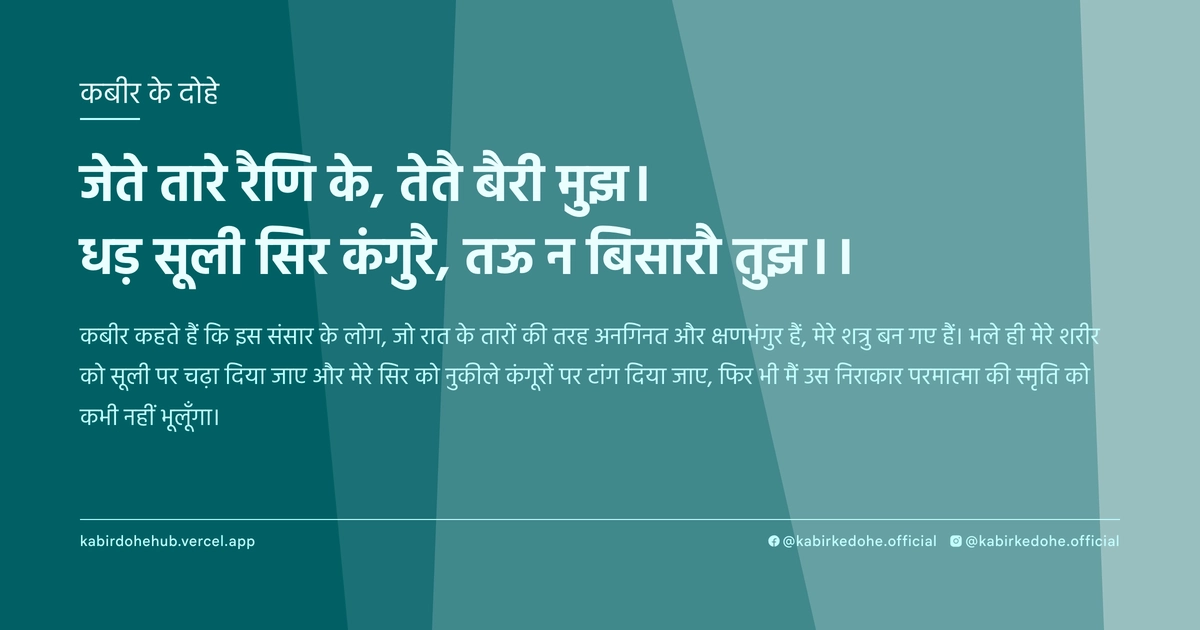
जेते तारे रैणि के, तेतै बैरी मुझ।
धड़ सूली सिर कंगुरै, तऊ न बिसारौ तुझ।।
Jete taare raini ke, tetai bairi mujh. Dhad sooli sir kangurai, tau na bisarou tujh.
इस पृष्ठ पर इस कबीर दोहे का अर्थ (meaning), हिंदी व्याख्या और अंग्रेज़ी अनुवाद, दार्शनिक विश्लेषण और व्यावहारिक जीवन सीख दी गई है। यह दोहा निष्ठा (Integrity) विषय से जुड़ा है — Kabir doha meaning and explanation in Hindi and English.
अर्थ (Meaning):
कबीर कहते हैं कि इस संसार के लोग, जो रात के तारों की तरह अनगिनत और क्षणभंगुर हैं, मेरे शत्रु बन गए हैं। भले ही मेरे शरीर को सूली पर चढ़ा दिया जाए और मेरे सिर को नुकीले कंगूरों पर टांग दिया जाए, फिर भी मैं उस निराकार परमात्मा की स्मृति को कभी नहीं भूलूँगा।
Kabir declares that the people of this world, as numerous and fleeting as the stars in the night sky, have become my enemies. Even if my body is impaled upon a cross and my head is perched upon sharp spikes, I shall never let the remembrance of the Formless Divine slip from my consciousness.
व्याख्या (Interpretation):
यह दोहा भौतिक अस्तित्व और आध्यात्मिक निष्ठा के बीच के चरम संघर्ष को दर्शाता है। 'तारे रैणि के' का अर्थ केवल संख्या नहीं, बल्कि संसार की नश्वरता और उसकी विचलित करने वाली प्रकृति है। यहाँ 'बैरी' शब्द बाहरी विरोधियों के साथ-साथ उन मानसिक प्रवृत्तियों का भी प्रतीक है जो साधक को सत्य से दूर करती हैं। सूली और कंगुरों का उल्लेख शारीरिक यातना की पराकाष्ठा है, जो यह सिद्ध करता है कि जब आत्मा परमात्मा (ब्रह्म) के साथ एकाकार हो जाती है, तो देह केवल एक वस्त्र रह जाती है। यह निर्गुण भक्ति का वह शिखर है जहाँ द्वैत पूरी तरह समाप्त हो जाता है और केवल 'एक' शेष रहता है। यह अद्वैत वेदांत के उस सत्य को पुष्ट करता है कि आत्मा अविनाशी है और शरीर का विनाश उसे परमात्मा से अलग नहीं कर सकता।
This couplet depicts the extreme conflict between physical existence and spiritual allegiance. The 'stars of the night' signify not just quantity, but the ephemeral and distracting nature of the worldly realm. The term 'enemies' refers not only to external persecutors but to the internal psychological tendencies that divert the seeker from Truth. The mention of the cross and spikes represents the pinnacle of physical agony, proving that when the soul merges with the Formless (Brahman), the body becomes a mere garment. This is the zenith of Nirgun Bhakti, where duality is completely annihilated, leaving only the 'One'. It affirms the Advaita Vedanta truth that the Atman is indestructible, and the destruction of the physical vessel cannot sever the union with the Divine.
दार्शनिक विश्लेषण (Philosophical Analysis):
कबीर का यह कथन उस ऐतिहासिक कालखंड की गूँज है जहाँ रूढ़िवादिता और धार्मिक कट्टरता चरम पर थी। उन्होंने बाहरी कर्मकांडों और जातिगत श्रेष्ठता को नकारते हुए 'सहज' मार्ग पर बल दिया, जिससे तत्कालीन समाज के शक्तिशाली वर्ग उन्हें अपना शत्रु मानने लगे। यह दोहा केवल शारीरिक प्रताड़ना की बात नहीं करता, बल्कि 'अहंकार' के विसर्जन की प्रक्रिया है। सूली पर चढ़ना यहाँ प्रतीकात्मक है—यह उस पुराने 'मैं' की मृत्यु है जो सामाजिक पहचान और शारीरिक सुखों से बंधा था।
दार्शनिक स्तर पर, यह सूफी मत के 'फना' (विनाश) के सिद्धांत से मेल खाता है, जहाँ साधक स्वयं को ईश्वर की इच्छा में पूरी तरह मिटा देता है। जब तक 'मैं' जीवित है, तब तक 'वह' प्रकट नहीं हो सकता। कबीर यहाँ यह स्पष्ट कर रहे हैं कि सत्य का मार्ग कठिन है और इसमें सामाजिक बहिष्कार या मृत्यु भी संभव है, लेकिन जो सत्य को जान लेता है, उसके लिए मृत्यु केवल एक संक्रमण है, अंत नहीं।
अद्वैत वेदांत के परिप्रेक्ष्य में, यह अनुभव 'माया' के पर्दे को फाड़ने जैसा है। संसार के लोग (तारे) माया के प्रतीक हैं जो क्षणिक चमक दिखाते हैं लेकिन अंधेरे को नहीं मिटा सकते। कबीर का संकल्प यह दर्शाता है कि उन्होंने उस 'अविनाशी' को पा लिया है जो समय और स्थान से परे है। उनके लिए परमात्मा कोई बाहरी सत्ता नहीं, बल्कि उनके अपने भीतर की चेतना है।
यहाँ ritualism का पूर्ण तिरस्कार है। कबीर यह समझाते हैं कि ईश्वर को पाने के लिए मंदिर, मस्जिद या किसी विशेष अनुष्ठान की आवश्यकता नहीं है, बल्कि अटूट विश्वास और आंतरिक समर्पण की आवश्यकता है। यह समर्पण इतना गहरा होना चाहिए कि वह मृत्यु के भय को भी निगल जाए।
अंततः, यह दोहा मनोवैज्ञानिक रूपांतरण की बात करता है। जब एक व्यक्ति अपने जीवन के उद्देश्य को भौतिक लाभ से ऊपर उठाकर सार्वभौमिक सत्य से जोड़ लेता है, तो वह भयमुक्त हो जाता है। यह 'अभय' की स्थिति ही वास्तविक मुक्ति है, जहाँ बाहरी दुनिया का कोई भी प्रहार उसकी आंतरिक शांति को भंग नहीं कर सकता।
Kabir's statement echoes a historical era where orthodoxy and religious bigotry were at their peak. By rejecting external rituals and caste superiority in favor of the 'Sahaj' (spontaneous) path, he became an enemy to the powerful social strata of his time. This couplet does not merely discuss physical torture; it describes the process of the dissolution of the 'Ego'. Being impaled is symbolic—it represents the death of the old 'I' bound by social identity and physical pleasures.
Philosophically, this aligns with the Sufi concept of 'Fana' (annihilation), where the seeker completely erases themselves in the will of the Divine. As long as the 'I' exists, the 'He' cannot manifest. Kabir clarifies that the path to Truth is arduous, involving social boycott or death, but for one who has realized the Truth, death is merely a transition, not an end.
From the perspective of Advaita Vedanta, this experience is akin to tearing the veil of 'Maya'. The people of the world (the stars) symbolize Maya, offering a fleeting shimmer but failing to erase the darkness. Kabir's resolve demonstrates that he has found the 'Indestructible' which exists beyond time and space. For him, the Divine is not an external entity but the consciousness within.
There is a complete repudiation of ritualism here. Kabir explains that reaching the Divine requires neither temples, mosques, nor specific rites, but an unwavering faith and internal surrender. This surrender must be so profound that it swallows the very fear of death.
Ultimately, this couplet speaks of a psychological transformation. When an individual elevates their life's purpose above material gain to a universal truth, they become fearless. This state of 'Abhaya' (fearlessness) is true liberation, where no external blow can disrupt their internal equilibrium.
मूल संदेश (Core Message):
- संसार की भीड़ केवल क्षणभंगुर भ्रम है।
- सत्य के मार्ग पर अकेले चलना ही वास्तविक साहस है।
- शारीरिक पीड़ा आत्मा की अमरता को नहीं मिटा सकती।
- अहंकार का विसर्जन ही परमात्मा से मिलन की कुंजी है।
- भय से मुक्ति ही वास्तविक आध्यात्मिक स्वतंत्रता है।
- The crowd of the world is but a fleeting illusion.
- Walking alone on the path of Truth is the ultimate courage.
- Physical agony cannot erase the immortality of the soul.
- The dissolution of ego is the key to union with the Divine.
- Freedom from fear is the only true spiritual liberation.
व्यावहारिक उदाहरण (Practical Example):
एक समय की बात है, बनारस के घाटों पर रहने वाला एक वृद्ध बुनकर था, जिसका नाम माधव था। माधव अपनी कला में निपुण था, लेकिन वह कबीर के विचारों से गहराई से प्रभावित था। वह मानता था कि ईश्वर किसी मंदिर की मूर्ति में नहीं, बल्कि हर इंसान के भीतर और उसके काम में बसता है।
गाँव के कुछ प्रभावशाली लोग और कट्टरपंथी पुजारी माधव के इस विचार से चिढ़ते थे। वे चाहते थे कि माधव उनके द्वारा निर्धारित कर्मकांडों का पालन करे और अपनी जाति के अहंकार को स्वीकार करे। जब माधव ने इनकार किया, तो उन्होंने उसे समाज से बहिष्कृत कर दिया।
माधव के परिवार को धमकियाँ दी गईं। उसे चेतावनी दी गई कि यदि उसने अपनी 'नास्तिकता' नहीं छोड़ी, तो उसे गाँव से निकाल दिया जाएगा और उसकी छोटी सी झोपड़ी जला दी जाएगी। माधव के सामने उसकी आजीविका और सम्मान दोनों दांव पर थे।
एक रात, कट्टरपंथियों ने उसकी झोपड़ी में आग लगा दी। माधव की जीवन भर की कमाई, उसके करघे और उसके कपड़े सब जलकर राख हो गए। वह सड़क पर आ गया, उसके पास अब सिर छुपाने की जगह भी नहीं थी।
गाँव के लोग उसके पास आए और उपहास करते हुए बोले, "देखो, तुम्हारे उस निराकार ईश्वर ने तुम्हें कहाँ पहुँचा दिया? अब भी समय है, हमारे पैर पकड़ो और हमारी रीतियों को मानो।"
माधव ने जलती हुई झोपड़ी को देखा और फिर उन लोगों की ओर। उसके चेहरे पर कोई क्रोध नहीं था, बल्कि एक असीम शांति थी। उसने मुस्कुराते हुए कहा, "तुमने मेरा घर जलाया है, मेरी आत्मा नहीं। जो मेरा है, वह कभी नष्ट नहीं हो सकता।"
उसने महसूस किया कि अब तक वह अपनी झोपड़ी और अपनी पहचान से चिपका हुआ था। आग ने उसे उन अंतिम बंधनों से भी मुक्त कर दिया था। वह अब पूरी तरह से 'शून्य' था, और उसी शून्य में उसे परमात्मा की स्पष्ट उपस्थिति महसूस हुई।
माधव ने अपनी शेष जिंदगी अन्य पीड़ितों की मदद करने और सत्य का प्रचार करने में बिता दी। उसने यह साबित कर दिया कि जब व्यक्ति बाहरी दुनिया के खोने के डर को जीत लेता है, तो वह वास्तव में स्वतंत्र हो जाता है।
उसका जीवन एक उदाहरण बन गया कि कैसे अटूट विश्वास बाहरी प्रताड़ना को आंतरिक आनंद में बदल सकता है। वह अब किसी भी 'तारे' (संसार के लोगों) से नहीं डरता था, क्योंकि उसने अपने भीतर के सूरज को पा लिया था।
अंत में, माधव की शांति ने उन कट्टरपंथियों के अहंकार को भी चुनौती दी, क्योंकि वे देख सकते थे कि जिस व्यक्ति के पास कुछ नहीं बचा, वह उनसे कहीं अधिक समृद्ध और खुश था।
Once, there lived an elderly weaver named Madhav on the ghats of Varanasi. Madhav was a master of his craft, but he was deeply influenced by the teachings of Kabir. He believed that God did not reside in temple idols, but within every human being and in the act of honest work.
Some influential people and orthodox priests in the village were irritated by Madhav's views. They wanted him to follow their prescribed rituals and accept the hierarchy of caste. When Madhav refused, they cast him out of the community.
Threats were issued to Madhav's family. He was warned that if he did not abandon his 'atheism', he would be expelled from the village and his small hut burned down. Madhav's livelihood and honor were both at stake.
One night, the orthodox zealots set fire to his hut. Madhav's lifelong earnings, his looms, and his clothes were all reduced to ashes. He found himself on the street with nowhere to call home.
Villagers approached him, mocking, "Look where your formless God has brought you! There is still time; fall at our feet and accept our customs."
Madhav looked at the burning hut and then at the people. There was no anger on his face, only a boundless peace. He smiled and said, "You have burned my house, not my soul. That which is truly mine can never be destroyed."
He realized that until then, he had been clinging to his hut and his identity. The fire had liberated him from those final attachments. He was now completely 'Shunya' (void), and in that void, he felt the vivid presence of the Divine.
Madhav spent the rest of his life helping other victims and spreading the truth. He proved that when a person conquers the fear of losing worldly possessions, they become truly free.
His life became an example of how unwavering faith can transform external torture into internal bliss. He no longer feared any 'star' (the people of the world) because he had found the sun within.
In the end, Madhav's peace challenged the ego of the orthodoxists, for they could see that the man who had nothing left was far wealthier and happier than they were.
अभ्यास मार्गदर्शन (Practice Guidance):
- प्रतिदिन 20 मिनट मौन ध्यान करें, जहाँ आप अपने शरीर को एक बाहरी आवरण मानकर अपनी आंतरिक चेतना (साक्षी भाव) पर ध्यान केंद्रित करें।
- स्व-पूछताछ जर्नल लिखें: 'यदि आज मेरी सामाजिक पहचान और भौतिक संपत्ति छीन ली जाए, तो मेरे भीतर क्या शेष बचेगा?'
- व्यवहार परिवर्तन: जब कोई आपकी आलोचना करे या आपको नीचा दिखाने की कोशिश करे, तो प्रतिक्रिया देने के बजाय यह देखें कि आपका 'अहंकार' कहाँ चोटिल हो रहा है।
- निदान चेकलिस्ट: क्या मैं अभी भी दूसरों की स्वीकृति (Validation) के लिए अपनी मान्यताओं को बदल रहा हूँ? क्या मृत्यु का विचार मुझे भयभीत करता है या शांत करता है?
- Practice 20 minutes of silent meditation daily, viewing your body as an external shell and focusing on your internal consciousness (the Witness state).
- Maintain a self-inquiry journal: 'If my social identity and material assets were stripped away today, what would remain within me?'
- Behavioral Shift: When someone criticizes or attempts to belittle you, instead of reacting, observe where exactly your 'ego' is feeling wounded.
- Diagnostic Checklist: Am I still altering my beliefs for the sake of external validation? Does the thought of death evoke fear or a sense of profound peace?
चिंतन प्रश्न (Reflection Questions):
- मेरे जीवन में वे कौन से 'तारे' (लोग या विचार) हैं जो मुझे मेरे वास्तविक स्वरूप से दूर ले जाते हैं?
- क्या मेरी भक्ति या आध्यात्मिकता केवल सामाजिक स्वीकृति के लिए है, या मैं इसके लिए सब कुछ खोने को तैयार हूँ?
- यदि मेरी डिजिटल पहचान (Social Media Ego) कल मिट जाए, तो क्या मैं स्वयं को जान पाऊँगा?
- मैं किन गुप्त पूर्वाग्रहों को ढो रहा हूँ जो मुझे दूसरों को 'शत्रु' मानने पर मजबूर करते हैं?
- क्या मैं वास्तव में उस सत्य से प्रेम करता हूँ, या मैं केवल सत्य के 'दिखावे' से प्रेम करता हूँ?
- Who are the 'stars' (people or ideas) in my life that distract me from my true nature?
- Is my spirituality merely for social validation, or am I prepared to lose everything for it?
- If my digital identity (Social Media Ego) vanished tomorrow, would I still know who I am?
- What hidden biases am I carrying that force me to perceive others as 'enemies'?
- Do I truly love the Truth, or am I merely in love with the 'appearance' of being truthful?