
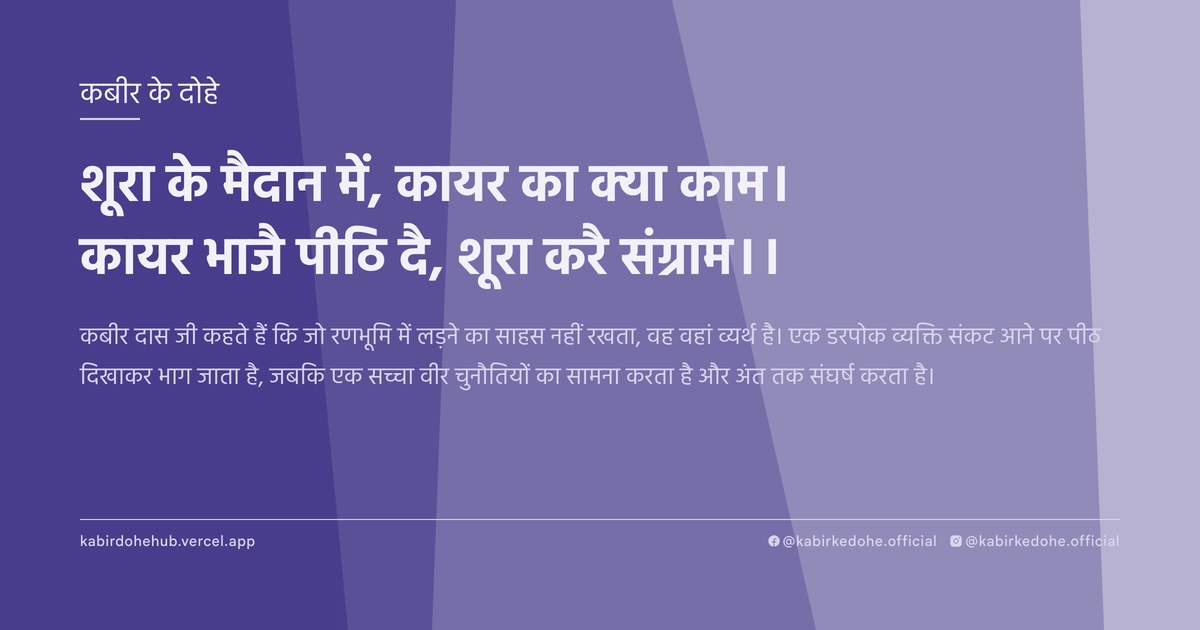
शूरा के मैदान में, कायर का क्या काम।
कायर भाजै पीठि दै, शूरा करै संग्राम।।
Shura ke maidan mein, kayar ka kya kaam. Kayar bhajai peethi dai, shura karai sangram.
इस पृष्ठ पर इस कबीर दोहे का अर्थ (meaning), हिंदी व्याख्या और अंग्रेज़ी अनुवाद, दार्शनिक विश्लेषण और व्यावहारिक जीवन सीख दी गई है। यह दोहा निष्ठा (Integrity) विषय से जुड़ा है — Kabir doha meaning and explanation in Hindi and English.
अर्थ (Meaning):
कबीर दास जी कहते हैं कि जो रणभूमि में लड़ने का साहस नहीं रखता, वह वहां व्यर्थ है। एक डरपोक व्यक्ति संकट आने पर पीठ दिखाकर भाग जाता है, जबकि एक सच्चा वीर चुनौतियों का सामना करता है और अंत तक संघर्ष करता है।
Kabir asserts that a coward has no place in the battlefield of courage. While the timid flee by turning their backs when faced with adversity, the true warrior stands firm and engages in the struggle, facing the conflict head-on without hesitation.
व्याख्या (Interpretation):
यहाँ 'मैदान' केवल भौतिक युद्धभूमि नहीं, बल्कि मानव जीवन का आध्यात्मिक संघर्ष है। 'कायर' वह है जो अपनी वासनाओं, अहंकार और माया के भय से डरकर सत्य से भागता है। 'शूरा' या वीर वह साधक है जो अपने भीतर के अंधकार और अज्ञान के विरुद्ध युद्ध छेड़ता है। यह दोहा निर्गुण भक्ति के उस मार्ग को दर्शाता है जहाँ साधक को अपनी इंद्रियों और मानसिक भ्रमों का सामना करना पड़ता है। अद्वैत वेदांत के अनुसार, जब तक हम द्वैत के भय से नहीं लड़ते, हम ब्रह्म के साथ एकाकार नहीं हो सकते। यह संघर्ष बाहरी नहीं, बल्कि अंतर्मन का है, जहाँ आत्मा को अपने सीमित स्वरूप को त्यागकर अनंत में विलीन होना होता है।
The 'battlefield' mentioned here is not a literal war zone but the spiritual arena of human existence. The 'coward' represents the individual who flees from the truth, intimidated by their own desires, ego, and the illusions of Maya. The 'warrior' is the seeker who dares to wage war against their own inner darkness and ignorance. This verse reflects the path of Nirgun Bhakti, where the practitioner must confront the turbulence of the senses. According to Advaita Vedanta, until one fights the fear born of duality, the realization of Atman-Brahman non-duality remains elusive. The paradox lies in the fact that the enemy and the warrior are both within the same self; the struggle is the process of purifying the soul to realize its inherent divinity.
दार्शनिक विश्लेषण (Philosophical Analysis):
कबीर का यह दोहा मध्यकालीन भारत के सामाजिक और धार्मिक पाखंड के विरुद्ध एक आह्वान है। उस समय धर्म के नाम पर केवल कर्मकांडों और बाहरी दिखावे पर जोर था, जिसे कबीर ने 'कायरता' माना। उनके लिए वास्तविक धर्म वह है जो व्यक्ति को आंतरिक साहस दे ताकि वह जाति, वर्ण और धार्मिक कट्टरता की बेड़ियों को तोड़ सके।
दार्शनिक स्तर पर, यह सूफीवाद के 'नफ्स' (अहंकार) के साथ युद्ध के समान है। सूफी मत में जब तक साधक अपने निचले स्व (lower self) को नष्ट नहीं करता, वह ईश्वर के प्रेम को प्राप्त नहीं कर सकता। कबीर यहाँ 'संग्राम' को आत्म-साक्षात्कार की प्रक्रिया के रूप में देखते हैं, जहाँ अहंकार का विसर्जन अनिवार्य है।
अद्वैत वेदांत के परिप्रेक्ष्य में, यह युद्ध 'माया' के विरुद्ध है। माया हमें यह विश्वास दिलाती है कि हम अलग और सीमित हैं। जो व्यक्ति इस भ्रम से डरकर सांसारिक सुखों में शरण लेता है, वह कायर है। जो इस भ्रम को चुनौती देता है, वही वास्तव में मुक्त होने का अधिकारी है।
कबीर ritualism (कर्मकांड) को इसलिए नकारते हैं क्योंकि वे इसे एक 'सुरक्षित पलायन' मानते हैं। मंदिर जाना या माला जपना आसान है, लेकिन अपने क्रोध, लोभ और मोह का सामना करना कठिन है। असली वीरता बाहरी आडंबरों को छोड़कर सत्य की खोज में कूदने में है।
अंततः, यह मनोवैज्ञानिक रूपांतरण की बात है। भय से मुक्ति ही ज्ञान का द्वार है। जब साधक यह जान लेता है कि वह स्वयं ही वह अनंत चेतना है जिससे वह डर रहा था, तब युद्ध समाप्त हो जाता है और केवल शांति शेष रहती है। यह 'शूरा' बनने की यात्रा वास्तव में 'शून्य' होने की यात्रा है।
This couplet serves as a clarion call against the social and religious hypocrisy of medieval India. During Kabir's era, religion was reduced to mere rituals and external displays, which Kabir categorized as a form of spiritual cowardice. For him, true religion is that which empowers the individual with the inner courage to shatter the shackles of caste, creed, and dogmatic rigidity.
On a philosophical plane, this mirrors the Sufi concept of the struggle against the 'Nafs' (the ego). In Sufism, unless the seeker annihilates the lower self, the divine love of the Beloved remains unattainable. Kabir views 'sangram' (battle) as the process of self-realization, where the dissolution of the ego is an absolute necessity for liberation.
From the perspective of Advaita Vedanta, this battle is waged against 'Maya'. Maya creates the illusion of separation and limitation. The one who retreats into the comfort of worldly attachments out of fear of the unknown is the coward. The warrior is the one who challenges this illusion to realize the non-dual nature of existence.
Kabir rejects ritualism because he perceives it as a 'safe escape'. It is easy to chant beads or visit shrines, but it is excruciatingly difficult to confront one's own anger, greed, and attachment. True bravery lies in abandoning these superficial crutches to dive into the depths of truth.
Ultimately, this is a discourse on psychological transformation. Liberation from fear is the gateway to Gnosis. When the seeker realizes that they are the very infinite consciousness they were fearing, the battle ceases, and only absolute peace remains. The journey to becoming a 'warrior' is, in essence, the journey toward becoming 'Shunya' (the void/zero).
मूल संदेश (Core Message):
- आंतरिक भय ही आध्यात्मिक प्रगति का सबसे बड़ा अवरोध है।
- सत्य का सामना करना ही वास्तविक वीरता और भक्ति है।
- अहंकार का विसर्जन ही मोक्ष का एकमात्र मार्ग है।
- पलायन मानसिक गुलामी है, जबकि संघर्ष मुक्ति का द्वार है।
- जब व्यक्ति स्वयं को जान लेता है, तो डर समाप्त हो जाता है।
- Internal fear is the greatest obstacle to spiritual evolution.
- Facing the truth is the only act of true bravery and devotion.
- The dissolution of the ego is the sole path to liberation.
- Escape is mental slavery; confrontation is the gateway to freedom.
- When one realizes the True Self, fear ceases to exist.
व्यावहारिक उदाहरण (Practical Example):
एक समय की बात है, वाराणसी के घाटों पर माधव नाम का एक वृद्ध बुनकर रहता था। माधव अपनी कला में निपुण था, लेकिन वह जीवन भर एक गहरे डर से ग्रस्त रहा—उसे डर था कि यदि उसने समाज के पुराने नियमों को चुनौती दी, तो वह अकेला पड़ जाएगा। वह चुपचाप अन्याय सहता और अपनी आंतरिक पीड़ा को दबाए रखता था।
एक दिन माधव की मुलाकात एक घुमंतू संत से हुई, जिसने उसे कबीर का यह दोहा सुनाया। संत ने उससे कहा, "माधव, तुम अपनी शांति के लिए जो चुप्पी साधे हुए हो, वह शांति नहीं, बल्कि कायरता है। तुम सत्य के मैदान से भाग रहे हो।"
माधव को पहली बार महसूस हुआ कि उसकी 'शांति' वास्तव में एक डर था। उसने देखा कि उसके गाँव के छोटे बुनकरों का शोषण शक्तिशाली व्यापारियों द्वारा किया जा रहा था। माधव हमेशा डरता था कि विरोध करने पर उसका काम छिन जाएगा।
उसने तय किया कि अब वह 'शूरा' बनेगा। उसने सबसे पहले अपने भीतर के उस डर का सामना किया जिसने उसे दशकों तक जकड़े रखा था। उसने महसूस किया कि खोने के लिए उसके पास केवल एक झूठी प्रतिष्ठा थी, जबकि पाने के लिए पूरा सत्य था।
माधव ने गाँव के सभी बुनकरों को इकट्ठा किया। शुरुआत में उसे कड़ा विरोध झेलना पड़ा। कुछ लोगों ने उसे पागल कहा, कुछ ने उसे समाज से बहिष्कृत करने की धमकी दी। वह डर की लहरें महसूस कर सकता था, लेकिन उसने पीठ नहीं दिखाई।
उसने तर्क दिया कि एकता ही उनकी असली शक्ति है। उसने व्यापारियों के सामने अपनी शर्तें रखीं और स्पष्ट किया कि वे अब शोषण स्वीकार नहीं करेंगे। यह उसके जीवन का सबसे बड़ा 'संग्राम' था—न केवल व्यापारियों के साथ, बल्कि अपनी ही पुरानी पहचान के साथ।
धीरे-धीरे अन्य बुनकर भी उसके साहस से प्रेरित हुए। जब व्यापारियों ने देखा कि अब कोई डरने वाला नहीं है, तो उन्हें झुकना पड़ा। माधव ने न केवल आर्थिक सुधार किए, बल्कि एक ऐसा समुदाय बनाया जहाँ सम्मान सर्वोपरि था।
इस बदलाव के बाद माधव की नींद बदल गई। अब वह केवल एक बुनकर नहीं था, बल्कि एक जागृत आत्मा था। उसने सीखा कि जब हम अपने डर का सामना करते हैं, तो वह डर ही हमारी सबसे बड़ी शक्ति बन जाता है।
उसने महसूस किया कि जिस 'मैदान' से वह भाग रहा था, वही मैदान उसे पूर्णता की ओर ले गया। उसकी वीरता बाहरी जीत में नहीं, बल्कि आंतरिक भय के विसर्जन में थी।
अंत में, माधव ने अपनी पूरी संपत्ति गरीबों की शिक्षा के लिए समर्पित कर दी, क्योंकि उसने जान लिया था कि असली जीत अहंकार को मिटाने में है, न कि उसे बढ़ाने में।
Once, on the ghats of Varanasi, lived an elderly weaver named Madhav. Madhav was a master of his craft, but he had spent his entire life plagued by a deep-seated fear—the fear that if he challenged the archaic norms of society, he would be left utterly alone. He bore injustices in silence, suppressing his inner turmoil.
One day, Madhav encountered a wandering saint who recited this specific doha of Kabir. The saint looked at him and said, "Madhav, the silence you maintain for the sake of peace is not peace; it is cowardice. You are fleeing from the battlefield of truth."
For the first time, Madhav realized that his 'peace' was actually a mask for fear. He observed how the small-scale weavers of his village were being exploited by powerful merchants. Madhav had always feared that protesting would cost him his livelihood.
He decided that he would now become a 'Shoora' (warrior). He began by confronting the internal fear that had shackled him for decades. He realized that all he had to lose was a false reputation, while all he had to gain was the absolute truth.
Madhav gathered all the weavers of the village. Initially, he faced severe backlash. Some called him mad; others threatened to ostracize him from the community. He could feel the waves of fear crashing over him, but he refused to turn his back.
He argued that unity was their only true strength. He presented his terms to the merchants, making it clear that exploitation would no longer be tolerated. This was the greatest 'sangram' of his life—not just against the merchants, but against his own old identity.
Gradually, other weavers were inspired by his courage. When the merchants realized that the fear had vanished from the hearts of the workers, they were forced to concede. Madhav not only secured economic reforms but built a community where dignity was paramount.
After this transformation, Madhav's internal state changed. He was no longer just a weaver; he was an awakened soul. He learned that when we face our fears, those very fears transform into our greatest strengths.
He realized that the 'field' he had been fleeing from was the only place where he could find completeness. His victory was not in the external triumph, but in the internal dissolution of fear.
Ultimately, Madhav dedicated his entire wealth to the education of the poor, having understood that the true victory lies in the annihilation of the ego, not in its expansion.
अभ्यास मार्गदर्शन (Practice Guidance):
- प्रतिदिन 20 मिनट मौन ध्यान करें, जहाँ आप अपने भीतर उठने वाले डर और असुरक्षाओं को बिना किसी निर्णय के केवल देखें।
- एक 'भय-डायरी' (Fear Journal) बनाएँ। लिखें कि आप किन स्थितियों से भाग रहे हैं और वह डर वास्तव में किस 'झूठे अहंकार' की रक्षा कर रहा है।
- सचेत व्यवहार परिवर्तन: दिन में कम से कम एक ऐसा कार्य करें जिससे आपको घबराहट होती हो (जैसे किसी कठिन सत्य को स्वीकार करना या किसी गलत बात का विनम्रतापूर्वक विरोध करना)।
- निदान चेकलिस्ट: क्या मैं अपनी सुख-सुविधाओं के लिए सत्य से समझौता कर रहा हूँ? क्या मैं अपनी गलतियों को स्वीकार करने के बजाय दूसरों पर दोष मढ़ता हूँ? यदि हाँ, तो आप 'कायर' की स्थिति में हैं।
- Practice 20 minutes of silent meditation daily, observing the fears and insecurities that arise within you without judgment.
- Maintain a 'Fear Journal'. Document the situations you are avoiding and analyze which 'false ego' that fear is trying to protect.
- Conscious Behavioral Shift: Perform at least one action daily that triggers anxiety (e.g., accepting a difficult truth or politely opposing a wrong action).
- Diagnostic Checklist: Am I compromising the truth for the sake of my comfort? Do I blame others instead of accepting my mistakes? If yes, you are currently in the state of the 'coward'.
चिंतन प्रश्न (Reflection Questions):
- मेरे जीवन का वह कौन सा 'मैदान' है जिससे मैं सालों से भाग रहा हूँ?
- मेरी वह कौन सी सामाजिक छवि (Public Image) है जिसे बचाने के लिए मैं अपनी अंतरात्मा की आवाज़ को दबाता हूँ?
- क्या मेरा 'धार्मिक' होना वास्तव में भक्ति है, या यह केवल अनिश्चितता के डर से बचने का एक तरीका है?
- यदि आज मेरा अहंकार पूरी तरह नष्ट हो जाए, तो मेरे व्यक्तित्व में क्या बचेगा?
- मैं किन पूर्वाग्रहों (Biases) के पीछे छिपकर दूसरों को आंकता हूँ ताकि मुझे खुद का सामना न करना पड़े?
- What is that one 'battlefield' in my life that I have been avoiding for years?
- Which part of my public identity do I protect by silencing my inner conscience?
- Is my 'religiosity' actual devotion, or is it merely a coping mechanism to escape the fear of uncertainty?
- If my ego were to be completely annihilated today, what would remain of my personality?
- Behind which biases do I hide when judging others, just to avoid facing my own shadows?