
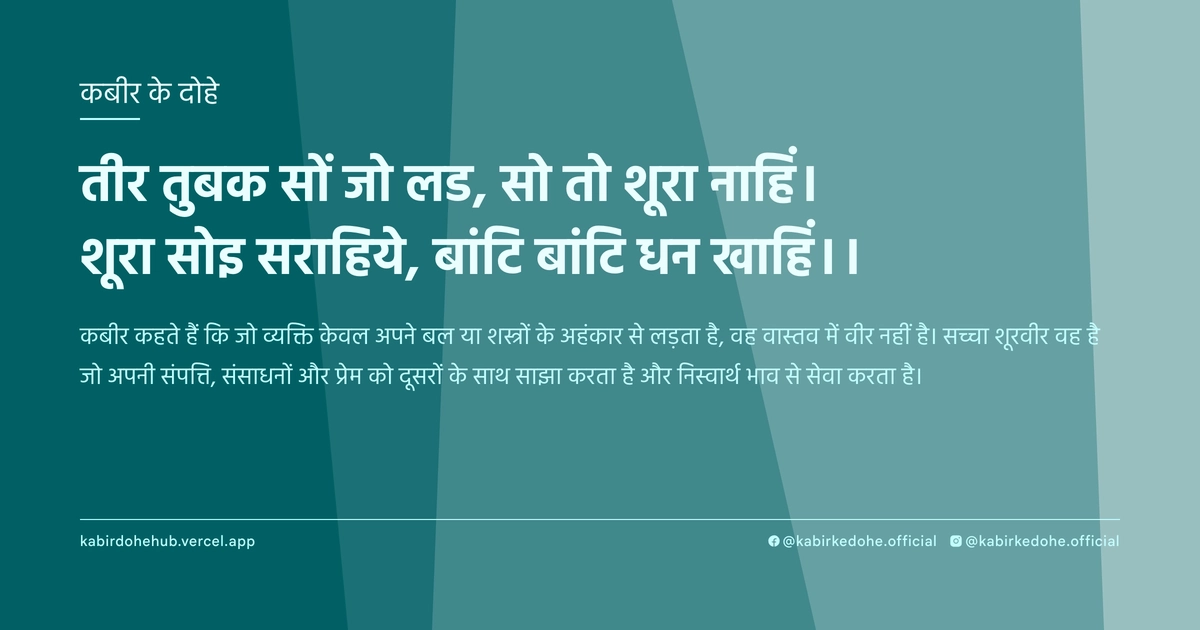
तीर तुबक सों जो लड, सो तो शूरा नाहिं।
शूरा सोइ सराहिये, बांटि बांटि धन खाहिं।।
Teer tubak son jo lad, so to shoora naahin. Shoora soi saraahiye, baanti baanti dhan khaahin.
इस पृष्ठ पर इस कबीर दोहे का अर्थ (meaning), हिंदी व्याख्या और अंग्रेज़ी अनुवाद, दार्शनिक विश्लेषण और व्यावहारिक जीवन सीख दी गई है। यह दोहा करुणा (Compassion) विषय से जुड़ा है — Kabir doha meaning and explanation in Hindi and English.
अर्थ (Meaning):
कबीर कहते हैं कि जो व्यक्ति केवल अपने बल या शस्त्रों के अहंकार से लड़ता है, वह वास्तव में वीर नहीं है। सच्चा शूरवीर वह है जो अपनी संपत्ति, संसाधनों और प्रेम को दूसरों के साथ साझा करता है और निस्वार्थ भाव से सेवा करता है।
Kabir asserts that one who fights merely with the strength of weapons or the arrogance of power is not a true warrior. The real hero is the one who possesses the courage to share their wealth, resources, and love with others, practicing selfless generosity.
व्याख्या (Interpretation):
शाब्दिक अर्थ में, यह दोहा युद्ध और दान के बीच अंतर करता है। आध्यात्मिक स्तर पर, 'तीर' और 'तुबक' अहंकार और मानसिक द्वंद्व के प्रतीक हैं। जब हम अपने विचारों या मान्यताओं के लिए दूसरों से लड़ते हैं, तो हम केवल अपनी ईगो को संतुष्ट कर रहे होते हैं। निर्गुण भक्ति के संदर्भ में, वास्तविक वीरता 'अहं' का विसर्जन है। अद्वैत वेदांत के अनुसार, जब मैं यह अनुभव करता हूँ कि दूसरा भी मैं ही हूँ, तब साझा करना केवल दान नहीं, बल्कि स्वयं की सेवा बन जाता है। यह माया के उस भ्रम को तोड़ता है जो हमें 'मेरा' और 'तेरा' में विभाजित करता है।
Literally, this couplet distinguishes between combat and charity. Spiritally, the 'arrows' and 'weapons' symbolize the ego and mental conflicts. When we fight for our beliefs or status, we are merely feeding the ego. In the context of Nirgun Bhakti, true bravery is the dissolution of the 'I'. According to Advaita Vedanta, when one realizes that the other is an extension of oneself, sharing is no longer an act of charity but an act of self-recognition. This shatters the illusion of Maya, which creates the artificial boundary between 'mine' and 'thine', revealing the non-dual nature of existence.
दार्शनिक विश्लेषण (Philosophical Analysis):
कबीर का यह दोहा 15वीं शताब्दी के सामाजिक परिवेश में रचा गया था, जहाँ वीरता को केवल युद्ध और विजय से मापा जाता था। कबीर ने इस पारंपरिक परिभाषा को चुनौती दी और वीरता को 'त्याग' और 'करुणा' से जोड़ दिया। यह दृष्टिकोण सूफीवाद के 'फना' (अहंकार का विनाश) और भक्ति मार्ग के 'सेवा' भाव का संगम है।
यहाँ कबीर कर्मकांडीय श्रेष्ठता और जातिगत अहंकार पर प्रहार करते हैं। वे तर्क देते हैं कि शस्त्रों से जीतना आसान है, लेकिन अपने भीतर के लोभ और मोह को जीतना सबसे कठिन युद्ध है। यह मनोवैज्ञानिक रूपांतरण की बात है, जहाँ व्यक्ति बाहरी विजय के बजाय आंतरिक शांति और सामूहिक कल्याण को चुनता है।
अद्वैत वेदांत के परिप्रेक्ष्य में, यह दोहा 'अहं ब्रह्मास्मि' की व्यावहारिक अभिव्यक्ति है। यदि संपूर्ण ब्रह्मांड एक ही चेतना है, तो संचय करना मूर्खता है और साझा करना स्वाभाविक सत्य। संचय करना अलगाव (Separation) का प्रतीक है, जबकि साझा करना एकता (Oneness) का।
कबीर यहाँ यह स्पष्ट करते हैं कि धर्म केवल मंदिर या मस्जिद जाने में नहीं, बल्कि मानवता की सेवा में है। वे ritualism को नकारते हुए यह सिखाते हैं कि ईश्वर उस हृदय में बसता है जो दूसरों के दुख को अपना समझता है।
अंततः, यह विश्लेषण हमें बताता है कि वास्तविक शक्ति विनाश करने में नहीं, बल्कि पोषण करने में है। जो व्यक्ति अपनी संपत्ति और प्रेम को बांटता है, वह वास्तव में माया के बंधनों को काट चुका होता है और मोक्ष की ओर अग्रसर होता है।
This couplet was composed within the 15th-century social milieu where bravery was measured solely by conquest and martial prowess. Kabir challenges this conventional definition, redefining heroism as 'renunciation' and 'compassion'. This perspective is a synthesis of the Sufi concept of 'Fana' (annihilation of the ego) and the Bhakti path of 'Seva' (selfless service).
Kabir attacks ritualistic superiority and caste-based arrogance. He argues that conquering others with weapons is simple, but conquering the internal greed and attachment is the most grueling battle. This is a call for psychological transformation, where the individual chooses collective welfare over personal victory.
From the lens of Advaita Vedanta, this verse is a practical manifestation of 'Aham Brahmasmi'. If the entire universe is a single consciousness, then hoarding is an absurdity and sharing is the natural truth. Accumulation symbolizes separation, while sharing symbolizes oneness.
Kabir clarifies that spirituality does not reside in the rituals of temples or mosques, but in the service of humanity. By rejecting ritualism, he teaches that the Divine dwells in the heart that perceives the suffering of others as its own.
Ultimately, this analysis reveals that true power lies not in destruction, but in nourishment. The person who distributes their wealth and love has effectively severed the ties of Maya and is moving toward liberation.
मूल संदेश (Core Message):
- शस्त्रों की विजय क्षणिक है, करुणा की विजय शाश्वत है।
- अहंकार का त्याग ही वास्तविक वीरता का प्रमाण है।
- संसाधनों का संचय अलगाव पैदा करता है, साझा करना एकता लाता है।
- सच्चा योद्धा वह है जो अपने भीतर के लोभ को जीत ले।
- मानवता की सेवा ही ईश्वर की सच्ची इबादत है।
- Victory by weapons is fleeting; victory by compassion is eternal.
- The surrender of ego is the ultimate proof of true bravery.
- Accumulation of resources creates separation; sharing fosters unity.
- The true warrior is one who conquers their own internal greed.
- Service to humanity is the sincerest form of worship to the Divine.
व्यावहारिक उदाहरण (Practical Example):
एक समय की बात है, बनारस के घाटों पर रहने वाला एक वृद्ध विधवा, जिसे लोग 'माई' कहते थे, अत्यंत गरीबी में जीवन व्यतीत कर रही थी। उसके पास केवल एक छोटा सा मिट्टी का बर्तन और कुछ पुराने वस्त्र थे।
उसी घाट पर एक धनी व्यापारी रहता था, जो अपनी शक्ति और धन के अहंकार में चूर था। वह अक्सर गरीबों का अपमान करता था और अपनी श्रेष्ठता सिद्ध करने के लिए दूसरों को नीचा दिखाता था।
माई हर दिन मंदिर के बाहर मिलने वाले बचे हुए प्रसाद को इकट्ठा करती और उसे उन भूखे बच्चों में बांट देती जो गलियों में भटकते थे। वह स्वयं भूखी रहती, लेकिन बच्चों के चेहरे की मुस्कान उसे तृप्ति देती थी।
व्यापारी ने एक दिन माई का मजाक उड़ाते हुए कहा, "तुम इतनी कंगाल हो, फिर भी दूसरों को खिलाती हो? क्या तुम्हें अपनी भूख का अहसास नहीं? असली ताकत तो धन जुटाने में है।"
माई ने शांति से उत्तर दिया, "बेटा, तुम धन बटोरकर अपनी तिजोरी भर रहे हो, वह तुम्हारी जीत है। मैं अपना दुख बांटकर मन को हल्का कर रही हूँ, यह मेरी जीत है।"
व्यापारी को लगा कि वह जीत गया है, लेकिन कुछ समय बाद उसके जीवन में एक भीषण संकट आया। उसका व्यापार डूब गया और उसके तथाकथित 'शक्तिशाली' मित्र उसे छोड़कर चले गए।
जब वह पूरी तरह टूट गया और सड़क पर आ गया, तब वही बच्चे और गरीब लोग, जिन्हें माई ने खिलाया था, उसकी मदद के लिए आगे आए। उन्होंने उसे सहारा दिया और उसे फिर से खड़ा होने की हिम्मत दी।
व्यापारी को तब समझ आया कि उसने अब तक जिस 'वीरता' को पूजा थी, वह केवल एक भ्रम था। असली शूरवीर वह माई थी, जिसने अभाव में भी देने का साहस रखा।
उसने अपनी शेष बची संपत्ति को एक सामुदायिक रसोई में बदल दिया। उसने सीखा कि बांटने से धन घटता नहीं, बल्कि आत्मा का विस्तार होता है।
यह 'कबीर ट्विस्ट' था—जहाँ अहंकार की हार ने एक मनुष्य को वास्तव में 'शूरवीर' बना दिया।
Once, in the ghats of Varanasi, lived an elderly widow known as 'Mai', who existed in extreme poverty. Her only possessions were a small clay pot and a few worn-out clothes.
On the same ghat lived a wealthy merchant, consumed by the arrogance of his power and riches. He frequently insulted the poor and belittled others to assert his superiority.
Every day, Mai would collect the leftover offerings from the temple and distribute them among the hungry children wandering the alleys. She often remained hungry herself, but the smiles on the children's faces gave her profound satisfaction.
One day, the merchant mocked her, saying, "You are so destitute, yet you feed others? Do you not feel your own hunger? True strength lies in accumulating wealth."
Mai replied calmly, "Son, you are filling your vault by gathering wealth; that is your victory. I am lightening my soul by sharing my sorrow; that is my victory."
The merchant believed he had won the argument, but soon a severe crisis struck his life. His business collapsed, and his so-called 'powerful' friends abandoned him.
When he was completely broken and stranded on the street, the very children and poor people whom Mai had fed stepped forward to help him. They provided him shelter and the courage to start over.
The merchant then realized that the 'bravery' he had worshipped was a mere illusion. The true warrior was Mai, who had the courage to give even in the midst of scarcity.
He converted his remaining assets into a community kitchen. He learned that sharing does not diminish wealth but expands the soul.
This was the 'Kabir Twist'—where the defeat of the ego transformed a man into a true 'hero'.
अभ्यास मार्गदर्शन (Practice Guidance):
- प्रतिदिन 15 मिनट मौन ध्यान करें और विचार करें कि आपके जीवन में कौन सी वस्तुएं 'अहंकार' की तलवार बन गई हैं।
- एक 'त्याग डायरी' लिखें: प्रतिदिन एक ऐसी चीज़ साझा करें जो आपको प्रिय हो, चाहे वह धन हो, समय हो या ज्ञान।
- व्यवहार परिवर्तन: जब भी किसी से विवाद हो, तो जीतने की कोशिश करने के बजाय, सामने वाले की आवश्यकता को समझने का प्रयास करें।
- डायग्नोस्टिक चेकलिस्ट: क्या मैं दूसरों की मदद केवल प्रशंसा के लिए करता हूँ? क्या मैं अपनी उपलब्धियों को 'मेरा' कहता हूँ या 'ईश्वरीय कृपा'? यदि 'मेरा' शब्द अधिक है, तो अहंकार अभी जीवित है।
- Practice 15 minutes of silent meditation daily, contemplating which aspects of your life have become 'swords of ego'.
- Maintain a 'Renunciation Journal': Daily share something you hold dear, whether it be wealth, time, or knowledge.
- Behavioral Shift: During conflicts, instead of striving to win the argument, attempt to understand the underlying need of the other person.
- Diagnostic Checklist: Do I help others primarily for praise? Do I attribute my achievements to 'me' or 'divine grace'? If 'me' dominates, the ego is still active.
चिंतन प्रश्न (Reflection Questions):
- मेरी कौन सी सफलताएं वास्तव में मेरी हैं, और कौन सी दूसरों के अदृश्य योगदान का परिणाम हैं?
- क्या मैं दूसरों की मदद इसलिए करता हूँ ताकि मैं खुद को 'श्रेष्ठ' महसूस कर सकूँ?
- मेरे डिजिटल व्यक्तित्व (Social Media) में मैं जो 'वीरता' या 'सफलता' दिखाता हूँ, क्या वह मेरे वास्तविक आंतरिक संघर्षों को छुपा रही है?
- यदि आज मुझसे मेरा सारा सामाजिक पद और धन छीन लिया जाए, तो मेरी पहचान में क्या बचेगा?
- मैं किन लोगों को अपने जीवन में 'कमतर' मानता हूँ, और यह धारणा मेरे किस अहंकार से उपजी है?
- Which of my successes are truly mine, and which are results of the invisible contributions of others?
- Do I help others simply so that I can feel 'superior' to them?
- Does the 'bravery' or 'success' I project in my digital persona hide my actual internal struggles?
- If all my social status and wealth were stripped away today, what would remain of my identity?
- Whom do I consider 'inferior' in my life, and from which part of my ego does this perception arise?