
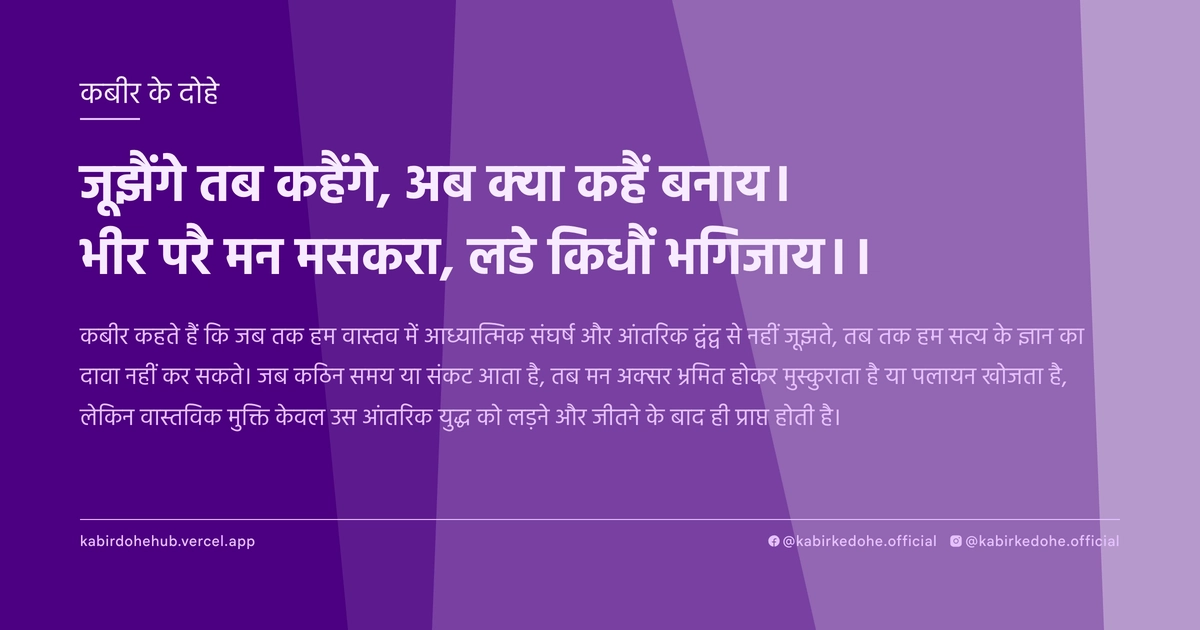
जूझैंगे तब कहैंगे, अब क्या कहैं बनाय।
भीर परै मन मसकरा, लडे किधौं भगिजाय।।
Joojhainge tab kaheinge, ab kya kahein banay. Bheer parai man maskara, lade kidhaun bhagijay.
इस पृष्ठ पर इस कबीर दोहे का अर्थ (meaning), हिंदी व्याख्या और अंग्रेज़ी अनुवाद, दार्शनिक विश्लेषण और व्यावहारिक जीवन सीख दी गई है। यह दोहा धैर्य (Patience) विषय से जुड़ा है — Kabir doha meaning and explanation in Hindi and English.
अर्थ (Meaning):
कबीर कहते हैं कि जब तक हम वास्तव में आध्यात्मिक संघर्ष और आंतरिक द्वंद्व से नहीं जूझते, तब तक हम सत्य के ज्ञान का दावा नहीं कर सकते। जब कठिन समय या संकट आता है, तब मन अक्सर भ्रमित होकर मुस्कुराता है या पलायन खोजता है, लेकिन वास्तविक मुक्ति केवल उस आंतरिक युद्ध को लड़ने और जीतने के बाद ही प्राप्त होती है।
Kabir asserts that one cannot claim spiritual realization without first enduring the grueling struggle of inner conflict. When crisis strikes, the mind often reacts with a superficial smile or a desire to flee; however, true liberation is only achieved by confronting the internal battle and emerging victorious through persistence.
व्याख्या (Interpretation):
यह दोहा आध्यात्मिक साधना की कठोरता को दर्शाता है। 'जूझना' यहाँ केवल बाहरी संघर्ष नहीं, बल्कि अहंकार और माया के विरुद्ध आंतरिक युद्ध है। कबीर स्पष्ट करते हैं कि बिना तप और संघर्ष के प्राप्त किया गया ज्ञान केवल बौद्धिक विलास है। जब साधक 'भीर' यानी संकट में पड़ता है, तो उसका मन अक्सर छलावा करता है, जिसे 'मसकराना' कहा गया है। यह मन की वह प्रवृत्ति है जो कठिन सत्य से बचने के लिए सुखद भ्रम पैदा करती है। अंततः, जो इस मानसिक द्वंद्व से लड़ता है, वही 'भगिजाय' यानी मोक्ष या मुक्ति की ओर बढ़ता है। यह निर्गुण भक्ति का सार है जहाँ ईश्वर बाहरी कर्मकांडों में नहीं, बल्कि स्वयं के भीतर के अंधकार से लड़कर प्रकाश पाने में है। यह अद्वैत वेदांत के उस सिद्धांत से जुड़ा है जहाँ जीव को अपने अज्ञान (माया) का नाश कर ब्रह्म स्वरूप को पहचानना पड़ता है।
This couplet illuminates the rigorous nature of spiritual discipline. 'Jujhna' (struggling) refers not to external conflict, but to the internal war against the ego and Maya. Kabir clarifies that knowledge acquired without austerity and struggle is merely intellectual vanity. When the seeker encounters 'Bheer' (crisis), the mind often resorts to 'Maskara' (smiling/deception), a psychological defense mechanism that creates pleasant illusions to avoid harsh truths. Ultimately, only those who fight this mental duality achieve 'Bhagijay' or liberation. This encapsulates the essence of Nirgun Bhakti, where the Divine is found not in rituals, but in the act of conquering one's own darkness. It aligns with Advaita Vedanta, where the individual soul must annihilate ignorance to realize its non-dual identity with Brahman.
दार्शनिक विश्लेषण (Philosophical Analysis):
कबीर का यह दर्शन उनके समय के पाखंडी धर्मगुरुओं और केवल किताबी ज्ञान रखने वालों पर एक प्रहार है। वे तर्क देते हैं कि सत्य कोई ऐसी वस्तु नहीं है जिसे शब्दों से 'बनाया' या गढ़ा जा सके; यह एक अनुभव है जो केवल गहन संघर्ष के बाद प्राप्त होता है। यहाँ कबीर का दृष्टिकोण सूफी मत के 'नफ्स' (अहंकार) को मारने की प्रक्रिया से मिलता-जुलता है, जहाँ साधक को अपनी इच्छाओं और वासनाओं के विरुद्ध निरंतर युद्ध करना पड़ता है।
ऐतिहासिक रूप से, कबीर ने जाति और धर्म के बंधनों को तोड़ा क्योंकि वे जानते थे कि वास्तविक बंधन मानसिक हैं। वे ritualism (कर्मकांड) का विरोध करते हैं क्योंकि बाहरी स्नान या माला जपना उस आंतरिक युद्ध का विकल्प नहीं हो सकता। उनके लिए, भक्ति का अर्थ है अपनी आत्मा के सबसे गहरे और डरावने हिस्सों का सामना करना।
अद्वैत वेदांत के संदर्भ में, यह दोहा 'माया' के प्रभाव की व्याख्या करता है। माया हमें यह विश्वास दिलाती है कि हम अलग हैं, और जब हम इस भ्रम को तोड़ने की कोशिश करते हैं, तो मन हमें डराता है या लुभाता है। यह 'मसकराना' वास्तव में अहंकार की वह चाल है जो हमें पूर्ण समर्पण से रोकती है।
मनोवैज्ञानिक स्तर पर, कबीर यहाँ 'cognitive dissonance' की बात कर रहे हैं। जब हमारी मान्यताएं हमारे वास्तविक अनुभवों से टकराती हैं, तो हम या तो भागते हैं या झूठ का सहारा लेते हैं। कबीर का सुझाव है कि इस तनाव को स्वीकार किया जाए और उससे लड़ा जाए, क्योंकि यही वह बिंदु है जहाँ रूपांतरण शुरू होता है।
अंततः, यह दोहा यह संदेश देता है कि आध्यात्मिक शांति कोई उपहार नहीं है, बल्कि एक उपलब्धि है। जो व्यक्ति संघर्ष से डरकर भागता है, वह कभी उस परम सत्य को नहीं जान पाएगा जो केवल पूर्ण आत्म-समर्पण और अहंकार के विसर्जन के बाद प्रकट होता है।
Kabir's philosophy here serves as a critique of the hypocritical clergy and those possessing mere bookish knowledge of his era. He argues that Truth is not a construct that can be 'fabricated' through words; it is an experiential realization attained only after profound struggle. His perspective mirrors the Sufi concept of 'Nafs' (the lower self), where the seeker must engage in a relentless war against their own desires and ego.
Historically, Kabir dismantled caste and religious barriers because he recognized that the true shackles are mental. He rejected ritualism, asserting that external baths or chanting beads are no substitute for the internal battle. For him, devotion is the act of confronting the deepest, most terrifying aspects of one's own soul.
In the context of Advaita Vedanta, this couplet explains the influence of 'Maya'. Maya convinces us of our separation from the Divine, and when we attempt to shatter this illusion, the mind reacts with fear or temptation. This 'smiling' (Maskara) is the ego's tactic to prevent total surrender to the Absolute.
Psychologically, Kabir is addressing 'cognitive dissonance'. When our beliefs clash with our lived reality, we either flee or resort to denial. Kabir suggests embracing this tension and fighting through it, as this friction is the precise catalyst for spiritual transformation.
Ultimately, the couplet posits that spiritual peace is not a gift but an achievement. One who flees from the struggle will never encounter the Ultimate Truth, which reveals itself only after the total annihilation of the ego and complete surrender to the formless Divine.
मूल संदेश (Core Message):
- दिखावटी शांति वास्तव में आध्यात्मिक पलायन है।
- सत्य की प्राप्ति केवल आंतरिक संघर्ष के माध्यम से संभव है।
- अहंकार का विनाश ही वास्तविक मोक्ष का द्वार है।
- संकट के समय मन का छलावा ही सबसे बड़ी बाधा है।
- बिना तप और युद्ध के ज्ञान केवल एक बोझ है।
- आत्मा का मिलन केवल अहंकार की मृत्यु के बाद होता है।
- Superficial peace is actually a spiritual escape.
- Realization of Truth is possible only through internal struggle.
- The annihilation of ego is the only gateway to true liberation.
- The mind's deception during crisis is the greatest obstacle.
- Knowledge without austerity and war is merely a burden.
- Union with the Divine occurs only after the death of the ego.
व्यावहारिक उदाहरण (Practical Example):
वाराणसी के एक पुराने मोहल्ले में माधव नाम का एक बुनकर रहता था। माधव अपनी कला में निपुण था, लेकिन उसका मन हमेशा अशांत रहता था। वह घंटों मंदिर में बैठता, माला जपता और खुद को बहुत बड़ा भक्त मानता था। लेकिन जैसे ही घर में कोई विवाद होता या व्यापार में घाटा आता, वह क्रोधित हो जाता या दूसरों को दोष देने लगता। वह अपनी आध्यात्मिक छवि को बनाए रखने के लिए बाहरी दुनिया के सामने मुस्कुराता, लेकिन अंदर ही अंदर वह ईर्ष्या और असुरक्षा से जल रहा था।
एक दिन उसकी मुलाकात एक घुमंतू साधु से हुई जिसने माधव की इस 'दिखावटी शांति' को पहचान लिया। साधु ने उससे कहा, "माधव, तुम्हारी माला केवल धागा है, क्योंकि तुमने अपने भीतर के युद्ध को कभी स्वीकार ही नहीं किया। तुम केवल शांति का ढोंग कर रहे हो, संघर्ष का सामना नहीं।"
माधव को पहले तो यह बात चुभी, लेकिन उसने गहराई से सोचा। उसने महसूस किया कि वह अपनी समस्याओं से भाग रहा था और धर्म को एक ढाल की तरह इस्तेमाल कर रहा था ताकि उसे अपनी कमियों का सामना न करना पड़े। उसने तय किया कि अब वह अपनी बुराइयों को छिपाएगा नहीं, बल्कि उनसे लड़ेगा।
अगले कुछ महीनों तक माधव का जीवन कठिन हो गया। जब भी उसे गुस्सा आता, वह चुपचाप बैठ जाता और देखता कि यह गुस्सा कहाँ से आ रहा है। जब वह किसी से ईर्ष्या करता, तो वह खुद से पूछता कि वह किस कमी को भरने की कोशिश कर रहा है। यह प्रक्रिया बहुत दर्दनाक थी; उसे ऐसा लगा जैसे वह अपनी ही खाल उतार रहा हो।
एक समय ऐसा आया जब उसके व्यापार में भारी नुकसान हुआ। पुराना माधव होता तो शायद टूट जाता या किस्मत को कोसता। लेकिन अब वह उस 'भीर' (संकट) में भी स्थिर रहा। उसने अपनी गलतियों को स्वीकार किया और बिना किसी शिकायत के नए सिरे से काम शुरू किया।
उसने पाया कि जब उसने अपने आंतरिक अंधेरे से लड़ना शुरू किया, तो बाहरी दुनिया की मुश्किलें छोटी होने लगीं। उसकी मुस्कुराहट अब छलावा नहीं थी, बल्कि एक वास्तविक जीत की शांति थी।
उसने महसूस किया कि असली भक्ति मंदिर की सीढ़ियों पर नहीं, बल्कि अपने क्रोध, लोभ और अहंकार के साथ की गई कुश्ती में है।
अंत में, माधव केवल एक कुशल बुनकर ही नहीं रहा, बल्कि एक ऐसा मनुष्य बन गया जिसकी शांति किसी भी बाहरी परिस्थिति से विचलित नहीं होती थी। उसने जान लिया था कि बिना जूझे, जीत का स्वाद नहीं मिलता।
In an ancient neighborhood of Varanasi lived a weaver named Madhav. Madhav was a master of his craft, yet his mind was perpetually restless. He spent hours in temples, chanting beads, and viewed himself as a great devotee. However, the moment a domestic dispute arose or business faltered, he would erupt in anger or blame others. To maintain his spiritual image, he would smile superficially before the world, while internally burning with jealousy and insecurity.
One day, he met a wandering monk who recognized Madhav's 'performative peace'. The monk told him, "Madhav, your beads are mere threads, for you have never acknowledged the war within. You are merely mimicking peace; you are not facing the struggle."
Initially, Madhav felt stung, but he reflected deeply. He realized he had been fleeing from his problems, using religion as a shield to avoid facing his own flaws. He decided that he would no longer hide his shadows but would fight them openly.
For the next few months, Madhav's life became arduous. Whenever anger flared, he would sit in silence and observe the root of that rage. When jealousy struck, he questioned what void he was trying to fill. This process was agonizing; it felt as if he were peeling off his own skin.
Eventually, a severe business loss struck. The old Madhav would have broken down or cursed fate. But now, he remained steady in the midst of the 'Bheer' (crisis). He accepted his mistakes and restarted his work without a single complaint.
He discovered that as he began to fight his internal darkness, external hardships seemed trivial. His smile was no longer a deception, but the peace of a genuine victory.
He realized that true devotion does not lie on temple stairs, but in the wrestling match with one's own anger, greed, and ego.
In the end, Madhav ceased to be just a skilled weaver; he became a man whose peace was undisturbed by any external circumstance. He had learned that without the struggle, the taste of victory is nonexistent.
अभ्यास मार्गदर्शन (Practice Guidance):
- दैनिक आत्म-अवलोकन: प्रतिदिन 20 मिनट मौन बैठें और उन भावनाओं को पहचानें जिनसे आप भागते हैं (जैसे क्रोध, डर या ईर्ष्या)। उन्हें दबाने के बजाय, उन्हें साक्षी भाव से देखें।
- सत्य-लेखन (Journaling): एक डायरी लिखें जिसमें आप अपनी उन गलतियों को दर्ज करें जिन्हें आप दुनिया से छिपाते हैं। खुद से पूछें, "मैं इस सच से क्यों डर रहा हूँ?"
- व्यवहारिक परिवर्तन: जब भी आप किसी कठिन परिस्थिति में 'दिखावटी मुस्कुराहट' दें, तुरंत रुकें और स्वीकार करें कि आप अंदर से परेशान हैं। इस ईमानदारी को अपना हथियार बनाएं।
- निदान चेकलिस्ट: क्या मैं केवल तब शांत रहता हूँ जब सब कुछ सही होता है? क्या मैं अपनी गलतियों के लिए दूसरों को जिम्मेदार ठहराता हूँ? क्या मेरा आध्यात्मिक अभ्यास केवल बाहरी दिखावा है? यदि हाँ, तो आप अभी भी 'जूझ' नहीं रहे हैं।
- Daily Self-Observation: Sit in silence for 20 minutes daily and identify the emotions you typically flee from (e.g., anger, fear, or jealousy). Instead of suppressing them, observe them as a witness.
- Truth-Journaling: Maintain a diary recording the mistakes you hide from the world. Ask yourself, "Why am I afraid of this truth?"
- Behavioral Shift: Whenever you offer a 'superficial smile' in a difficult situation, stop immediately and acknowledge that you are internally distressed. Make this honesty your weapon.
- Diagnostic Checklist: Do I remain calm only when everything is going well? Do I blame others for my mistakes? Is my spiritual practice merely an external show? If yes, you are not yet 'struggling' in the true sense.
चिंतन प्रश्न (Reflection Questions):
- मेरी वह कौन सी 'दिखावटी मुस्कुराहट' है जिसे मैं समाज के सामने बनाए रखता हूँ, जबकि अंदर मैं टूट रहा हूँ?
- क्या मैं धर्म का उपयोग ईश्वर को पाने के लिए कर रहा हूँ, या अपनी कमियों को छिपाने के लिए एक ढाल के रूप में?
- मेरे जीवन का वह कौन सा 'युद्ध' है जिससे मैं सबसे ज्यादा डरता हूँ और जिससे भाग रहा हूँ?
- यदि मेरी सारी सामाजिक प्रतिष्ठा और पहचान छीन ली जाए, तो मेरे भीतर क्या बचेगा?
- क्या मेरी शांति वास्तविक है, या यह केवल संघर्ष की अनुपस्थिति के कारण है?
- मैं अपनी डिजिटल पहचान (Social Media Ego) को बनाए रखने के लिए अपनी वास्तविकता का कितना बलिदान कर रहा हूँ?
- What is that 'superficial smile' I maintain for society while I am breaking apart inside?
- Am I using religion to find the Divine, or as a shield to hide my own inadequacies?
- What is the specific 'war' in my life that I fear the most and am actively avoiding?
- If all my social prestige and identity were stripped away, what would remain within me?
- Is my peace genuine, or is it merely the result of an absence of conflict?
- How much of my reality am I sacrificing to maintain my digital identity (Social Media Ego)?