
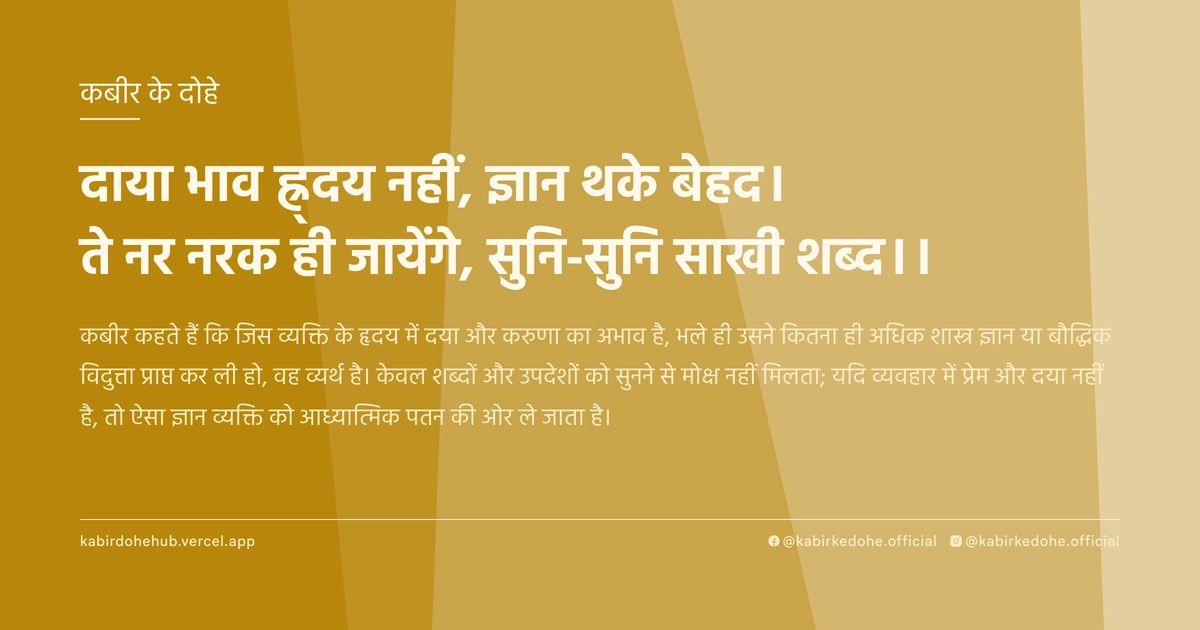
दाया भाव ह्र्दय नहीं, ज्ञान थके बेहद।
ते नर नरक ही जायेंगे, सुनि-सुनि साखी शब्द।।
Daya bhav hridaya nahi, gyan thake behad. Te nar narak hi jaayenge, suni-suni sakhi shabd.
इस पृष्ठ पर इस कबीर दोहे का अर्थ (meaning), हिंदी व्याख्या और अंग्रेज़ी अनुवाद, दार्शनिक विश्लेषण और व्यावहारिक जीवन सीख दी गई है। यह दोहा करुणा (Compassion) विषय से जुड़ा है — Kabir doha meaning and explanation in Hindi and English.
अर्थ (Meaning):
कबीर कहते हैं कि जिस व्यक्ति के हृदय में दया और करुणा का अभाव है, भले ही उसने कितना ही अधिक शास्त्र ज्ञान या बौद्धिक विदुत्ता प्राप्त कर ली हो, वह व्यर्थ है। केवल शब्दों और उपदेशों को सुनने से मोक्ष नहीं मिलता; यदि व्यवहार में प्रेम और दया नहीं है, तो ऐसा ज्ञान व्यक्ति को आध्यात्मिक पतन की ओर ले जाता है।
Kabir asserts that intellectual brilliance and vast scriptural knowledge are utterly futile if the heart remains devoid of compassion and empathy. Merely listening to spiritual discourses or reciting sacred verses does not lead to liberation; without the actual practice of kindness, such academic knowledge becomes a burden that leads to spiritual failure.
व्याख्या (Interpretation):
यह दोहा ज्ञान के दो रूपों—बौद्धिक (Paroksha) और अनुभवात्मक (Aparoksha)—के बीच के संघर्ष को दर्शाता है। शाब्दिक अर्थ यह है कि बिना दया के ज्ञानी भी नरक के भागी हैं। रूपकात्मक रूप से, 'नरक' यहाँ किसी भौगोलिक स्थान के बजाय अहंकार और अलगाव की मानसिक स्थिति का प्रतीक है। निर्गुण भक्ति के अनुसार, ईश्वर किसी मंदिर या पुस्तक में नहीं, बल्कि जीव मात्र के प्रति करुणा में निवास करता है। जब कोई व्यक्ति केवल 'साखी-शब्द' (उपदेशों) को सुनता है लेकिन उन्हें जीवन में नहीं उतारता, तो वह माया के जाल में और अधिक फंस जाता है क्योंकि उसका अहंकार 'ज्ञानी' होने के भ्रम से बढ़ जाता है। यह अद्वैत वेदांत के उस सिद्धांत की पुष्टि करता है जहाँ आत्मा का परमात्मा से मिलन केवल तभी संभव है जब 'मैं' और 'तू' का भेद मिट जाए, जो केवल निस्वार्थ दया से संभव है।
This couplet highlights the tension between two types of knowledge: intellectual (Paroksha) and experiential (Aparoksha). Literally, it warns that those without compassion are doomed regardless of their learning. Metaphorically, 'hell' represents not a physical location, but a psychological state of ego and alienation. In the tradition of Nirgun Bhakti, the Divine resides not in scriptures or temples, but in compassion toward all living beings. When an individual consumes spiritual discourses ('Sakhi-Shabd') without embodying them, they fall deeper into Maya, as their ego is inflated by the illusion of being a 'scholar.' This aligns with Advaita Vedanta, suggesting that the realization of non-duality (Atman-Brahman) is impossible as long as the barrier of the ego persists—a barrier that only selfless compassion can dissolve.
दार्शनिक विश्लेषण (Philosophical Analysis):
कबीर का यह प्रहार उस समय के धार्मिक पाखंड और शुष्क बौद्धिकता पर था, जहाँ पंडित और मौलवी केवल ग्रंथों के रटने को ही धर्म मानते थे। कबीर ने स्पष्ट किया कि ज्ञान यदि हृदय को कोमल नहीं बनाता, तो वह केवल एक मानसिक बोझ है। यह दृष्टिकोण सूफीवाद के 'इश्क' (प्रेम) और भक्ति मार्ग के 'प्रेम तत्व' से गहराई से जुड़ा है, जहाँ प्रेम को ही सर्वोच्च सत्य माना गया है।
दार्शनिक स्तर पर, कबीर यहाँ 'अहंकार' (Ego) के सूक्ष्म रूप की चर्चा कर रहे हैं। जब व्यक्ति शास्त्र पढ़ता है, तो अक्सर उसमें एक श्रेष्ठता का भाव आ जाता है, जिसे 'आध्यात्मिक अहंकार' कहा जाता है। यह अहंकार सत्य के मार्ग में सबसे बड़ी बाधा है। कबीर के अनुसार, वास्तविक ज्ञान वह है जो व्यक्ति को विनम्र बनाए और उसे समस्त सृष्टि के साथ एकाकार कर दे।
अद्वैत वेदांत के परिप्रेक्ष्य में, यदि हम यह मानते हैं कि पूरी सृष्टि एक ही चेतना का विस्तार है, तो दूसरे के प्रति क्रूरता वास्तव में स्वयं के प्रति क्रूरता है। अतः, दया केवल एक नैतिक गुण नहीं, बल्कि एक आध्यात्मिक आवश्यकता है। बिना दया के, ज्ञान केवल एक बौद्धिक व्यायाम बनकर रह जाता है जो आत्मा को मुक्त करने के बजाय उसे और अधिक बांध देता है।
कबीर ने कर्मकांडों और बाहरी आडंबरों का विरोध किया क्योंकि वे अक्सर मनुष्य को यह विश्वास दिलाते हैं कि वे 'पवित्र' हैं, जबकि उनका हृदय घृणा से भरा होता है। उनके लिए, एक अनपढ़ व्यक्ति जो दयालु है, वह उस विद्वान से कहीं अधिक श्रेष्ठ है जो शास्त्रों का ज्ञाता तो है लेकिन हृदय से कठोर है।
अंततः, यह दोहा मनोवैज्ञानिक रूपांतरण की मांग करता है। यह हमें चेतावनी देता है कि सूचना (Information) और बोध (Realization) के बीच एक गहरी खाई है। बोध केवल तभी आता है जब ज्ञान हृदय के माध्यम से छनकर व्यवहार में उतरता है। बिना करुणा के ज्ञान एक ऐसी तलवार की तरह है जो केवल दूसरों को काटती है, जबकि करुणा वह मरहम है जो आत्मा के घावों को भरता है।
Kabir’s critique is aimed at the religious hypocrisy and dry intellectualism of his era, where scholars and clerics equated the rote memorization of texts with spirituality. He clarifies that knowledge which does not soften the heart is merely a mental burden. This perspective is deeply intertwined with the Sufi concept of 'Ishq' (Divine Love) and the Bhakti movement's emphasis on 'Prem,' where love is regarded as the ultimate truth.
On a philosophical level, Kabir addresses a subtle form of the ego. When a person acquires scriptural knowledge, they often develop a sense of superiority known as 'spiritual ego.' This pride is the greatest obstacle on the path to truth. According to Kabir, genuine knowledge is that which fosters humility and integrates the individual with the entire cosmos.
From the lens of Advaita Vedanta, if the entire universe is an extension of a single consciousness, then cruelty toward another is effectively cruelty toward oneself. Thus, compassion is not merely a moral virtue but a spiritual necessity. Without it, knowledge remains a sterile intellectual exercise that binds the soul further rather than liberating it.
Kabir rejected ritualism and external displays of piety because they often mislead individuals into believing they are 'holy' while their hearts remain filled with hatred. To him, an illiterate person possessing a compassionate heart is far superior to a scholar who knows the scriptures but remains cold and indifferent.
Ultimately, this couplet demands a psychological transformation. It warns us of the vast chasm between information and realization. Realization occurs only when knowledge filters through the heart and manifests in behavior. Knowledge without compassion is like a sword that only cuts; compassion is the balm that heals the wounds of the soul.
मूल संदेश (Core Message):
- बौद्धिक अहंकार सत्य की प्राप्ति में सबसे बड़ी बाधा है।
- बिना करुणा के ज्ञान केवल एक मानसिक बोझ है।
- ईश्वर ग्रंथों में नहीं, बल्कि जीव मात्र की सेवा में है।
- शब्दों का श्रवण व्यर्थ है यदि व्यवहार में परिवर्तन न हो।
- प्रेम और दया ही वास्तविक आध्यात्मिक उपलब्धि हैं।
- Intellectual pride is the primary obstacle to spiritual realization.
- Knowledge without compassion is merely a psychological burden.
- The Divine is found in service to all beings, not in texts.
- Listening to wisdom is futile if it does not transform behavior.
- Love and empathy are the only true spiritual achievements.
व्यावहारिक उदाहरण (Practical Example):
वाराणसी के एक पुराने मोहल्ले में पंडित शिवदत्त रहते थे। उन्हें वेदों, पुराणों और दर्शनशास्त्र का गहरा ज्ञान था। शहर के लोग उनकी विद्वत्ता की प्रशंसा करते थे और वे घंटों तक धर्म पर प्रवचन देते थे। शिवदत्त का मानना था कि केवल शास्त्रों का अध्ययन ही मोक्ष का मार्ग है।
उसी गली में एक बूढ़ी विधवा, रमा, रहती थी जो दूसरों के घरों में झाड़ू-पोछा करके अपना गुजारा करती थी। रमा अनपढ़ थी, उसने कभी कोई ग्रंथ नहीं पढ़ा था, लेकिन उसका हृदय करुणा से भरा था। वह अपनी आधी रोटी किसी भूखे कुत्ते या सड़क पर सो रहे किसी लाचार व्यक्ति को खिला देती थी।
एक दिन शहर में भारी बारिश हुई और गलियां जलमग्न हो गईं। शिवदत्त अपने ऊंचे चबूतरे पर बैठकर बारिश का आनंद ले रहे थे और शास्त्रों में वर्णित 'प्रलय' पर विचार कर रहे थे। तभी उन्होंने देखा कि रमा एक छोटे से घायल पिल्ले को अपने फटे हुए आँचल में लपेटकर उसे गर्मी देने की कोशिश कर रही थी, जबकि वह खुद ठंड से कांप रही थी।
शिवदत्त ने उसे टोका और कहा, "रमा, तू इस तुच्छ जीव के लिए अपनी जान जोखिम में डाल रही है? शास्त्र कहते हैं कि आत्मा अमर है, शरीर तो नश्वर है, इस छोटे से कुत्ते के मोह में क्यों पड़ना?"
रमा ने सरलता से उत्तर दिया, "पंडित जी, मुझे शास्त्र तो नहीं पता, पर इस नन्हे जीव की आँखों में जो डर है, वह मुझे सोने नहीं देता। अगर मेरा ईश्वर है, तो वह इस छोटे से जीव के दर्द में भी होगा।"
यह बात शिवदत्त के हृदय पर बिजली की तरह गिरी। उन्हें अचानक महसूस हुआ कि उन्होंने जीवन भर केवल शब्दों को इकट्ठा किया, लेकिन उस सत्य को कभी नहीं जिया जो उन शब्दों का सार था। उन्होंने महसूस किया कि उनका ज्ञान केवल एक मुखौटा था, जिसके पीछे एक कठोर और उदासीन हृदय छिपा था।
शिवदत्त ने पहली बार अपनी किताबों को किनारे रखा और रमा की मदद के लिए नीचे उतरे। उन्होंने उस पिल्ले को बचाने में उसकी सहायता की और उस दिन उन्हें वह ज्ञान मिला जो हज़ारों ग्रंथों में नहीं मिला था—करुणा का ज्ञान।
उस दिन के बाद शिवदत्त का जीवन बदल गया। अब उनके प्रवचनों में केवल श्लोक नहीं थे, बल्कि उनमें दूसरों के दुख को समझने की तड़प थी। उन्होंने समझा कि ज्ञान की सार्थकता दूसरों के आँसू पोंछने में है, न कि केवल उन्हें गिनने में।
शिवदत्त अब केवल एक विद्वान नहीं रहे, बल्कि एक संवेदनशील मनुष्य बन गए। उन्होंने सीखा कि जब तक हृदय में दया नहीं जागती, तब तक सारी विद्या केवल एक बोझ है जो आत्मा को ऊपर उठाने के बजाय नीचे गिराती है।
In an old neighborhood of Varanasi lived Pandit Shivdutt, a man of profound knowledge in the Vedas, Puranas, and philosophy. The townspeople admired his erudition, and he spent hours delivering complex discourses on religion. Shivdutt believed that the rigorous study of scriptures was the only path to liberation.
In the same lane lived Rama, an elderly widow who earned her meager living by cleaning houses. Rama was illiterate; she had never read a single text, yet her heart overflowed with compassion. She would often share half of her own roti with a hungry dog or a destitute person sleeping on the street.
One day, torrential rains flooded the streets of the city. Shivdutt sat on his high platform, enjoying the rain while contemplating the scriptural descriptions of the 'Pralaya' (cosmic dissolution). He noticed Rama struggling in the rain, wrapping a small, shivering, injured puppy in her torn saree to keep it warm, while she herself trembled from the cold.
Shivdutt called out to her, "Rama, why do you risk your well-being for this insignificant creature? The scriptures say the soul is immortal and the body is transient. Why cling to the attachment of a mere dog?"
Rama replied simply, "Pandit ji, I do not know the scriptures, but the fear in this little creature's eyes will not let me rest. If there is a God, He must reside in the pain of this small being as well."
These words struck Shivdutt like a bolt of lightning. He suddenly realized that he had spent his entire life collecting words, but had never lived the truth that those words were meant to convey. He saw that his knowledge was merely a mask hiding a cold and indifferent heart.
For the first time, Shivdutt set aside his books and stepped down from his platform to help Rama. As they worked together to save the puppy, he experienced a realization that thousands of texts had failed to provide—the realization of compassion.
After that day, Shivdutt's life transformed. His discourses were no longer just recitations of verses; they were infused with a genuine longing to alleviate the suffering of others. He understood that the purpose of knowledge is to wipe away the tears of others, not just to count them.
Shivdutt ceased to be merely a scholar and became a sensitive human being. He learned that until compassion awakens in the heart, all learning is but a burden that weighs the soul down rather than lifting it up.
His transformation became a beacon for the neighborhood, proving that the highest form of intelligence is not the ability to analyze a text, but the capacity to feel the pain of another as one's own.
अभ्यास मार्गदर्शन (Practice Guidance):
- दैनिक करुणा अभ्यास: प्रतिदिन कम से कम एक ऐसा कार्य करें जिसमें आपका कोई व्यक्तिगत लाभ न हो और जो किसी अन्य जीव (मनुष्य या पशु) के दुख को कम करे।
- आत्म-निरीक्षण जर्नल: हर रात यह लिखें कि आज आपने कितनी बार अपने ज्ञान का उपयोग दूसरों को नीचा दिखाने के लिए किया और कितनी बार दया दिखाने के लिए।
- मौन चिंतन: प्रतिदिन 20 मिनट मौन बैठें और यह विचार करें कि आपके भीतर का 'ज्ञानी' अहंकार आपको दूसरों से कैसे अलग कर रहा है।
- निदान चेकलिस्ट: यदि आप किसी की मदद करते समय यह सोचते हैं कि 'मैं' महान हूँ, तो आप अभी भी अहंकार में हैं। यदि आप यह महसूस करते हैं कि सामने वाले का दुख आपका अपना है, तो आप दया के मार्ग पर हैं।
- Daily Compassion Practice: Perform at least one act of kindness daily that offers no personal gain and specifically aims to alleviate the suffering of another living being (human or animal).
- Self-Inquiry Journaling: Every night, record instances where you used your knowledge to assert superiority over others versus instances where you used it to show empathy.
- Silent Contemplation: Spend 20 minutes in silence daily, reflecting on how your 'intellectual ego' creates a barrier between you and the rest of existence.
- Diagnostic Checklist: If you feel a sense of 'grandeur' while helping someone, you are still trapped in ego. If you feel that the other's pain is indistinguishable from your own, you are embodying true compassion.
चिंतन प्रश्न (Reflection Questions):
- क्या मेरा ज्ञान मुझे दूसरों के करीब लाता है या मुझे उनसे श्रेष्ठ महसूस कराता है?
- जब मैं किसी की मदद करता हूँ, तो क्या मैं वास्तव में उस व्यक्ति की मदद कर रहा हूँ या अपनी 'अच्छाई' की छवि को पुष्ट कर रहा हूँ?
- मेरे जीवन में ऐसा कौन सा व्यक्ति है जिसे मैं 'अज्ञानी' मानकर उपेक्षित करता हूँ, और क्या उसमें मुझसे अधिक करुणा हो सकती है?
- क्या मैं आध्यात्मिक चर्चाओं का उपयोग अपने आंतरिक खालीपन को छिपाने के लिए एक ढाल के रूप में कर रहा हूँ?
- यदि आज मेरे पास कोई डिग्री या पद न हो, तो क्या मेरी मानवता ही मेरी एकमात्र पहचान होगी?
- Does my knowledge bring me closer to others, or does it make me feel superior to them?
- When I help someone, am I truly serving them, or am I reinforcing my own image of being a 'good person'?
- Who is the person in my life that I dismiss as 'uneducated,' and could they possibly possess more compassion than I do?
- Am I using spiritual discourses as a shield to hide my own internal emptiness?
- If I were stripped of all my degrees and titles today, would my humanity be the only identity I have left?