
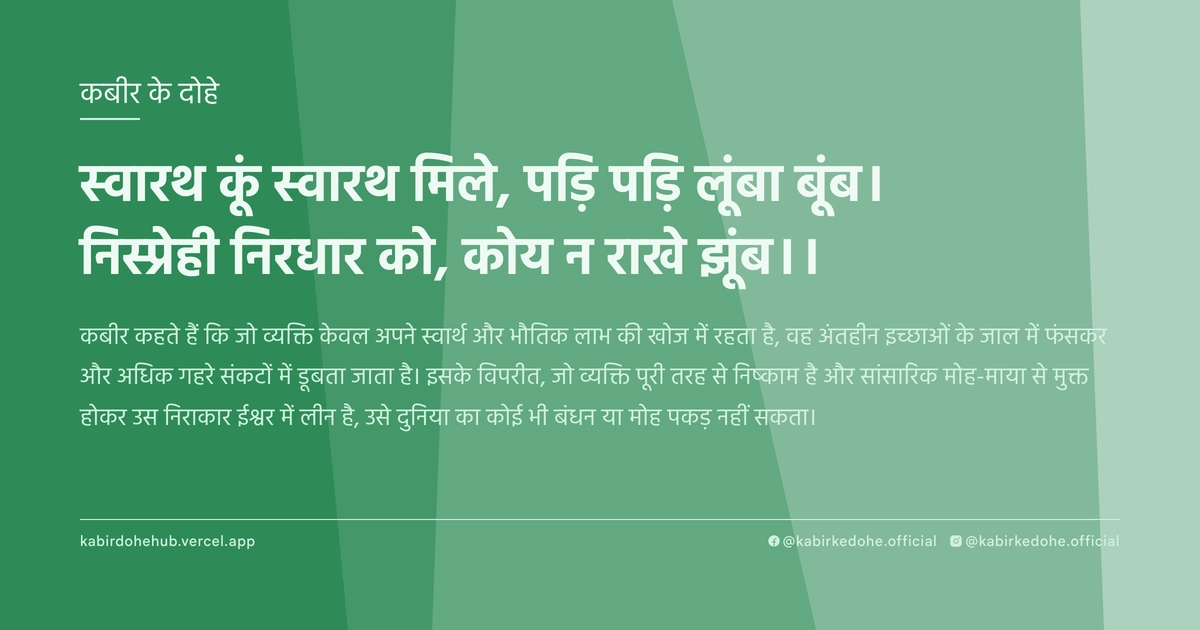
स्वारथ कूं स्वारथ मिले, पड़ि पड़ि लूंबा बूंब।
निस्प्रेही निरधार को, कोय न राखे झूंब।।
Swarth kun swarth mile, pad pad lumba boomb. Nisprehi nirdhaar ko, koy na raakhe jhoomb.
इस पृष्ठ पर इस कबीर दोहे का अर्थ (meaning), हिंदी व्याख्या और अंग्रेज़ी अनुवाद, दार्शनिक विश्लेषण और व्यावहारिक जीवन सीख दी गई है। यह दोहा मोह (Attachment) विषय से जुड़ा है — Kabir doha meaning and explanation in Hindi and English.
अर्थ (Meaning):
कबीर कहते हैं कि जो व्यक्ति केवल अपने स्वार्थ और भौतिक लाभ की खोज में रहता है, वह अंतहीन इच्छाओं के जाल में फंसकर और अधिक गहरे संकटों में डूबता जाता है। इसके विपरीत, जो व्यक्ति पूरी तरह से निष्काम है और सांसारिक मोह-माया से मुक्त होकर उस निराकार ईश्वर में लीन है, उसे दुनिया का कोई भी बंधन या मोह पकड़ नहीं सकता।
Kabir explains that those who seek only personal gain and selfish interests find themselves sinking deeper into an endless cycle of desires and complications. Conversely, the one who is truly detached and anchored in the formless Divine remains untouched by the clingy nature of worldly attachments and the traps of the ego.
व्याख्या (Interpretation):
इस दोहे का शाब्दिक अर्थ है कि स्वार्थ व्यक्ति को गहरे गर्त में धकेलता है। रूपक के तौर पर, 'लूंबा बूंब' उस अंतहीन लालसा का प्रतीक है जो कभी तृप्त नहीं होती। यह निर्गुण भक्ति के उस सिद्धांत को दर्शाता है जहाँ 'माया' को एक भ्रम माना गया है जो आत्मा को उसकी वास्तविक प्रकृति से दूर रखता है। जब तक मनुष्य 'मैं' और 'मेरा' के अहंकार में रहता है, वह द्वैत (duality) में फंसा रहता है। अद्वैत वेदांत के अनुसार, जब यह स्वार्थ समाप्त होता है, तब साधक 'निरधार' यानी उस निराकार ब्रह्म के साथ एकाकार हो जाता है। यह विरोधाभास है कि जिसे हम पाने की कोशिश करते हैं (सांसारिक सुख), वही हमें बांधता है, और जिसे हम त्याग देते हैं (अहंकार), वही हमें मुक्त करता है।
Literally, the verse suggests that selfishness pushes one into a deeper abyss. Metaphorically, 'lumba bump' symbolizes the insatiable hunger of the ego that never finds satisfaction. This aligns with Nirgun Bhakti, where 'Maya' is viewed as an illusion that veils the soul's true nature. As long as a human exists within the framework of 'I' and 'Mine,' they remain trapped in duality. According to Advaita Vedanta, once this selfishness dissolves, the seeker merges with the 'Nirdhaar'—the formless, attributeless Absolute. The central paradox presented is that the pursuit of worldly acquisition leads to spiritual imprisonment, while the act of relinquishment leads to ultimate liberation.
दार्शनिक विश्लेषण (Philosophical Analysis):
कबीर का यह दोहा उनके युग के उस सामाजिक और धार्मिक परिवेश की प्रतिक्रिया है जहाँ कर्मकांड और बाहरी दिखावे को मोक्ष का साधन माना जाता था। कबीर ने स्पष्ट किया कि मोक्ष किसी मंदिर, मस्जिद या तीर्थ यात्रा से नहीं, बल्कि आंतरिक शुद्धि और स्वार्थ के त्याग से मिलता है। यहाँ 'स्वार्थ' केवल भौतिक लालच नहीं है, बल्कि वह सूक्ष्म अहंकार है जो व्यक्ति को दूसरों से अलग करता है।
दार्शनिक स्तर पर, यह सूफी मत के 'फना' (अहंकार का विनाश) और अद्वैत वेदांत के 'अहं ब्रह्मास्मि' के करीब है। जब तक व्यक्ति स्वयं को एक अलग इकाई मानता है, वह भय और इच्छाओं के अधीन रहता है। कबीर तर्क देते हैं कि यह पृथकता ही दुख का मूल कारण है।
वे ritualism (कर्मकांड) का विरोध करते हुए कहते हैं कि ईश्वर को पाने के लिए किसी मध्यस्थ या बाहरी आडंबर की आवश्यकता नहीं है। यदि हृदय में निष्काम प्रेम और तटस्थता है, तो निराकार ब्रह्म स्वतः प्रकट हो जाता है। यह मनोवैज्ञानिक रूपांतरण की प्रक्रिया है जहाँ 'स्व' (Self) का विस्तार होकर 'सर्व' (Universal) हो जाता है।
अक्सर लोग इस दोहे को केवल भौतिक त्याग के रूप में देखते हैं, लेकिन कबीर का संकेत मानसिक आसक्ति (attachment) की ओर है। एक व्यक्ति महल में रहकर भी 'निस्प्रेही' हो सकता है यदि उसका मन किसी भी परिणाम से चिपका नहीं है।
अंततः, यह शिक्षण हमें सिखाता है कि मुक्ति बाहरी परिस्थितियों के बदलने से नहीं, बल्कि आंतरिक दृष्टिकोण के बदलने से आती है। जब हम दूसरों के लाभ में अपना लाभ देखने लगते हैं, तब हम उस 'निरधार' अवस्था को प्राप्त करते हैं जहाँ कोई बंधन शेष नहीं रहता।
This couplet is a direct response to the socio-religious climate of Kabir's era, where ritualism and external displays of piety were mistaken for the path to salvation. Kabir asserts that liberation is not found in temples, mosques, or pilgrimages, but through internal purification and the eradication of selfishness. Here, 'selfishness' refers not just to material greed, but to the subtle ego that creates a sense of separation from others.
Philosophically, this mirrors the Sufi concept of 'Fana' (annihilation of the self) and the Advaita Vedanta realization of 'Aham Brahmasmi' (I am Brahman). As long as an individual perceives themselves as a separate entity, they remain subject to fear and desire. Kabir argues that this perceived separation is the root cause of all suffering.
By rejecting ritualism, he emphasizes that no mediator or outward ceremony is required to reach the Divine. If the heart possesses selfless love and equanimity, the formless Absolute manifests naturally. This is a process of psychological transformation where the limited 'self' expands into the 'universal.'
Common literalist interpretations often mistake this for a call to absolute poverty. However, Kabir refers to mental attachment. A person can live in a palace and still be 'Nisprehi' (detached) if their mind does not cling to the outcomes of their actions.
Ultimately, the teaching suggests that liberation comes not from changing external circumstances, but from shifting internal perception. When one finds their own fulfillment in the well-being of others, they reach that 'Nirdhaar' state where no worldly bond can hold them.
मूल संदेश (Core Message):
- स्वार्थ एक अंतहीन गड्ढा है जो कभी नहीं भरता।
- अहंकार का त्याग ही वास्तविक स्वतंत्रता का द्वार है।
- जब 'मैं' मिटता है, तब 'ब्रह्म' प्रकट होता है।
- निराकार में लीन होना ही परम सुरक्षा है।
- बाहरी उपलब्धियां बंधन हैं, आंतरिक तटस्थता मुक्ति है।
- प्रेम जब निस्वार्थ होता है, तभी वह आध्यात्मिक बन जाता है।
- Selfishness is an endless pit that can never be filled.
- The dissolution of ego is the only gateway to true freedom.
- When the 'I' vanishes, the 'Absolute' manifests.
- Merging with the Formless is the ultimate sanctuary.
- External achievements are bonds; internal neutrality is liberation.
- Love becomes spiritual only when it ceases to be selfish.
व्यावहारिक उदाहरण (Practical Example):
एक समय की बात है, वाराणसी के घाटों पर माधव नाम का एक वृद्ध बुनकर रहता था। माधव अपनी कला में निपुण था, लेकिन उसका मन हमेशा इस चिंता में रहता था कि उसके प्रतिस्पर्धी उससे अधिक कपड़े कैसे बेच लेते हैं। वह अपनी सफलता के लिए दूसरों की विफलता की कामना करने लगा था।
उसका जीवन तनाव से भर गया। वह जितना अधिक धन कमाने की कोशिश करता, उसकी नींद उतनी ही कम होती जाती। वह 'लूंबा बूंब' यानी अंतहीन लालसा के उस गर्त में गिर चुका था जहाँ उसे कभी शांति नहीं मिली।
एक दिन उसने एक फकीर को देखा जो फटे कपड़ों में था, लेकिन उसके चेहरे पर एक ऐसी चमक और शांति थी जो माधव ने अपने जीवन के सबसे अमीर ग्राहकों में भी नहीं देखी थी। माधव ने उनसे पूछा, "आप इतने अभाव में होकर भी इतने प्रसन्न कैसे हैं?"
फकीर ने मुस्कुराते हुए कहा, "मैं कुछ पाने की कोशिश नहीं कर रहा, इसलिए मुझे खोने का डर नहीं है। मैंने अपने स्वार्थ को उस निराकार में विलीन कर दिया है।"
यह बात माधव के हृदय में गहरे तक उतर गई। उसने महसूस किया कि उसकी बेचैनी कपड़ों की कमी से नहीं, बल्कि 'श्रेष्ठ होने' के अहंकार से थी।
अगले दिन से माधव ने अपना दृष्टिकोण बदल दिया। उसने अपने प्रतिस्पर्धियों को दुश्मन मानना बंद कर दिया और उन्हें अपने हुनर में मदद करना शुरू किया। उसने अपने सबसे कठिन डिजाइनों के गुर दूसरों को सिखा दिए।
जैसे ही उसने 'स्वार्थ' का त्याग किया, उसका मानसिक बोझ हल्का हो गया। अब वह कपड़े केवल पैसे के लिए नहीं, बल्कि एक सेवा और कला के रूप में बुनने लगा।
अजीब बात यह हुई कि जब उसने प्रतिस्पर्धा छोड़ दी, तो उसकी कला और निखर गई। लोग उसकी सादगी और ईमानदारी की वजह से उसके पास आने लगे।
अब माधव के पास धन तो था, लेकिन वह धन का गुलाम नहीं था। वह 'निस्प्रेही' बन चुका था।
उसने पाया कि जब वह खुद को दूसरों की खुशी से जोड़ लेता है, तो वह उस निराकार शांति का अनुभव करता है जिसे वह वर्षों से बाहर खोज रहा था।
Once, on the ghats of Varanasi, lived an elderly weaver named Madhav. Madhav was a master of his craft, but his mind was constantly plagued by the worry that his competitors were selling more cloth than he was. He began to secretly wish for the failure of others to ensure his own success.
His life became consumed by stress. The more he strove to accumulate wealth, the less he slept. He had fallen into the 'lumba bump'—the endless abyss of craving where peace was nonexistent.
One day, he encountered a wandering dervish who wore tattered clothes, yet possessed a radiance and serenity that Madhav had never seen even in his wealthiest clients. Madhav asked, "How can you be so joyful in such extreme lack?"
The dervish smiled and replied, "I am not trying to attain anything; therefore, I have nothing to fear losing. I have dissolved my selfishness into the Formless."
These words pierced Madhav's heart. He realized that his restlessness didn't stem from a lack of money, but from the ego's need to be 'superior.'
From the next day, Madhav shifted his perspective. He stopped viewing his competitors as enemies and began helping them improve their craft. He shared the secrets of his most difficult designs with others.
As soon as he relinquished his 'selfishness,' his mental burden lifted. He began weaving not for profit, but as a form of service and art.
Strangely, once he abandoned competition, his art flourished even more. People were drawn to him not just for his cloth, but for his simplicity and honesty.
Madhav still had money, but he was no longer a slave to it. He had become 'Nisprehi'—detached.
He discovered that by linking his happiness to the well-being of others, he experienced the formless peace he had spent years searching for externally.
अभ्यास मार्गदर्शन (Practice Guidance):
- दैनिक चिंतन: प्रतिदिन 15 मिनट मौन बैठें और विचार करें कि आज आपने कितनी बार 'मैं' या 'मेरा' शब्द का प्रयोग स्वार्थवश किया।
- निस्वार्थ कर्म अभ्यास: सप्ताह में एक बार ऐसा कार्य करें जिससे किसी अन्य को लाभ हो, लेकिन इस शर्त पर कि आप उस व्यक्ति को कभी न बताएं और न ही बदले में किसी प्रशंसा की उम्मीद करें।
- आत्म-पूछताछ जर्नल: लिखें कि आपकी कौन सी इच्छाएं आपको मानसिक तनाव दे रही हैं। क्या वे वास्तव में आपकी जरूरत हैं या केवल सामाजिक प्रतिष्ठा (Ego) की भूख?
- निदान चेकलिस्ट: (1) क्या मैं दूसरों की सफलता से ईर्ष्या महसूस करता हूँ? (2) क्या मेरा सुख बाहरी परिणामों पर निर्भर है? (3) क्या मैं मदद करते समय भी अपनी छवि की चिंता करता हूँ? यदि हाँ, तो आप अभी भी 'स्वार्थ' के गर्त में हैं।
- Daily Contemplation: Sit in silence for 15 minutes daily and observe how many times you used 'I' or 'Mine' out of a sense of selfish desire.
- Selfless Action Practice: Once a week, perform an act of kindness for someone else with the strict condition that you never reveal it to them and expect no praise in return.
- Self-Inquiry Journal: Document the desires that cause you mental stress. Ask yourself: Are these genuine needs, or merely a hunger for social status and ego validation?
- Diagnostic Checklist: (1) Do I feel envy at others' success? (2) Is my happiness dependent on external outcomes? (3) Do I worry about my image even while helping others? If yes, you are still trapped in the abyss of selfishness.
चिंतन प्रश्न (Reflection Questions):
- आपकी वह कौन सी 'सफलता' है जिसे पाने के लिए आपने अपनी आंतरिक शांति का बलिदान कर दिया?
- यदि आपकी सामाजिक पहचान (पद, प्रतिष्ठा, संपत्ति) आज छीन ली जाए, तो आपके भीतर क्या बचेगा?
- क्या आप वास्तव में दूसरों की भलाई चाहते हैं, या आप केवल 'भलाई करने वाले' की छवि का आनंद लेते हैं?
- आपके जीवन का वह कौन सा क्षेत्र है जहाँ आप अभी भी 'मेरा' शब्द का उपयोग करके नियंत्रण करना चाहते हैं?
- क्या आप उस शून्य (Void) का सामना करने के लिए तैयार हैं जहाँ कोई इच्छा शेष नहीं रहती?
- आपकी डिजिटल पहचान (Social Media Ego) आपके वास्तविक स्वरूप को कितना ढक चुकी है?
- Which 'success' in your life did you achieve at the cost of your internal peace?
- If your social identity (rank, prestige, wealth) were stripped away today, what would remain within you?
- Do you truly desire the well-being of others, or do you simply enjoy the image of being a 'benefactor'?
- In which area of your life are you still using the word 'Mine' to exert control?
- Are you prepared to face the Void where no desires remain?
- To what extent has your digital identity (Social Media Ego) obscured your authentic self?