
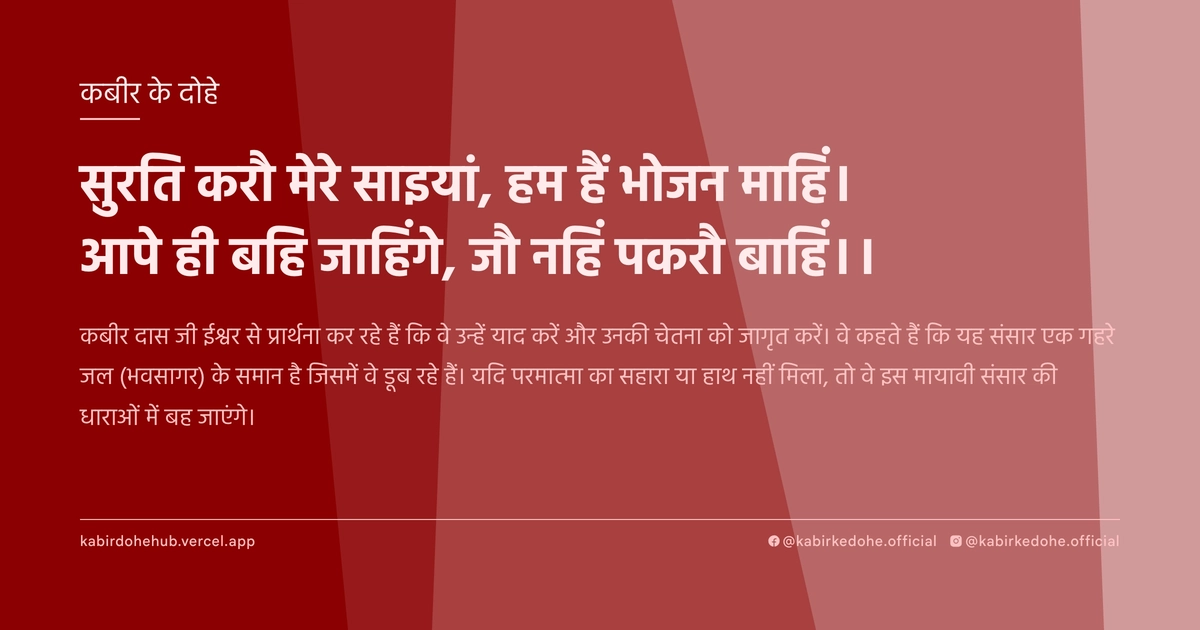
सुरति करौ मेरे साइयां, हम हैं भोजन माहिं।
आपे ही बहि जाहिंगे, जौ नहिं पकरौ बाहिं।।
Surati karau mere saiyan, hum hain bhojan mahin. Aape hi bahi jahinge, jau nahin pakrau bahin.
इस पृष्ठ पर इस कबीर दोहे का अर्थ (meaning), हिंदी व्याख्या और अंग्रेज़ी अनुवाद, दार्शनिक विश्लेषण और व्यावहारिक जीवन सीख दी गई है। यह दोहा प्रपत्ति (Surrender) विषय से जुड़ा है — Kabir doha meaning and explanation in Hindi and English.
अर्थ (Meaning):
कबीर दास जी ईश्वर से प्रार्थना कर रहे हैं कि वे उन्हें याद करें और उनकी चेतना को जागृत करें। वे कहते हैं कि यह संसार एक गहरे जल (भवसागर) के समान है जिसमें वे डूब रहे हैं। यदि परमात्मा का सहारा या हाथ नहीं मिला, तो वे इस मायावी संसार की धाराओं में बह जाएंगे।
Kabir pleads with the Divine to cast a glance of grace and awaken his consciousness. He describes the material world as a vast, turbulent ocean of existence (Bhav-Sagar) in which he is currently immersed. He warns that without the guiding hand of the Almighty, he will be swept away by the currents of illusion.
व्याख्या (Interpretation):
यहाँ 'सुरति' का अर्थ केवल याद करना नहीं, बल्कि चेतना का परमात्मा में विलीन होना है। 'भवजल' इस भौतिक संसार की नश्वरता और दुखों का प्रतीक है, जहाँ मनुष्य वासनाओं और अहंकार के कारण भटकता रहता है। यह दोहा निर्गुण भक्ति की उस अवस्था को दर्शाता है जहाँ साधक यह महसूस करता है कि व्यक्तिगत प्रयास पर्याप्त नहीं हैं; ईश्वरीय कृपा (अनुग्रह) अनिवार्य है। अद्वैत वेदांत के परिप्रेक्ष्य में, यह आत्मा की वह तड़प है जो अपनी पृथकता को समाप्त कर ब्रह्म में लीन होना चाहती है। यह विरोधाभास है कि हम जिसे अपना 'मैं' समझते हैं, वही हमें इस जल में डुबोता है, और जब वह 'मैं' मिटता है, तभी परमात्मा का हाथ पकड़ना संभव होता है।
In this verse, 'Surati' refers not merely to remembrance, but to the alignment of consciousness with the Divine. 'Bhavjal' symbolizes the transient and suffering-filled nature of the material world, where humans wander lost in desire and ego. This doha reflects the state of Nirgun Bhakti where the seeker realizes that individual effort alone is insufficient; Divine Grace (Anugraha) is essential. From the perspective of Advaita Vedanta, this represents the soul's longing to dissolve its perceived separation and merge back into Brahman. The central paradox lies in the fact that the 'I' (ego) is the very weight that drowns the seeker, and only when this 'I' is surrendered can the hand of the Divine be grasped.
दार्शनिक विश्लेषण (Philosophical Analysis):
कबीर का यह दोहा उस कालखंड का है जब समाज कर्मकांडों और बाहरी दिखावे में उलझा था। कबीर ने मंदिर-मस्जिद के बजाय 'भीतर की सुरति' पर जोर दिया। यहाँ 'बांह पकड़ना' किसी भौतिक क्रिया का नहीं, बल्कि आध्यात्मिक जागरण का संकेत है। यह सूफी मत के 'फना' (अहंकार का विनाश) के समान है, जहाँ साधक अपनी पहचान को ईश्वर में विलीन कर देता है।
दार्शनिक स्तर पर, यह दोहा माया के प्रभाव की व्याख्या करता है। माया वह शक्ति है जो सत्य को छिपा देती है और असत्य को सत्य जैसा दिखाती है। जब तक मनुष्य इस भ्रम में रहता है कि वह कर्ता है, वह भवजल में बहता रहता है। जैसे ही वह समर्पण करता है, वह अद्वैत की स्थिति में पहुँच जाता है जहाँ ज्ञाता, ज्ञान और ज्ञेय एक हो जाते हैं।
कबीर जाति और धर्म के भेदों को नकारते हुए यह संदेश देते हैं कि ईश्वर किसी विशेष संप्रदाय का नहीं, बल्कि उस चेतना का है जो हर जीव में व्याप्त है। उनका विरोध उन पंडितों और मुल्लाओं से था जो केवल शब्दों के जाल बुनते थे, जबकि वास्तविक मुक्ति 'सुरति' या सजगता से आती है।
मनोवैज्ञानिक रूप से, यह दोहा अस्तित्वगत संकट (Existential Crisis) को दर्शाता है। जब मनुष्य को अपनी नश्वरता का बोध होता है, तब वह एक उच्चतर शक्ति की खोज करता है। यह खोज बाहर नहीं, बल्कि अंतर्मन की गहराई में होती है।
अंततः, यह दोहा यह सिखाता है कि मोक्ष केवल ज्ञान से नहीं, बल्कि प्रेम और पूर्ण समर्पण से प्राप्त होता है। जब अहंकार पूरी तरह समाप्त हो जाता है, तब परमात्मा स्वयं साधक का हाथ थाम लेता है, क्योंकि अब वहाँ कोई 'मैं' नहीं बचा है जो बाधा उत्पन्न करे।
Kabir's doha emerges from an era dominated by rigid ritualism and outward displays of piety. He emphasizes 'internal awareness' over the sterile rituals of temples and mosques. The act of 'holding the arm' is not a physical gesture but a metaphor for spiritual awakening and the descent of grace.
Philosophically, this verse explains the mechanism of Maya. Maya is the cosmic illusion that veils the Truth and presents the ephemeral as eternal. As long as a human believes they are the sole 'doer' (Karta), they remain swept away by the currents of the material world. Only through surrender does one reach the state of Advaita, where the knower, the known, and the knowledge become one.
Rejecting caste and creed, Kabir asserts that the Divine is not the property of any sect but is the consciousness pervading every living being. His critique was aimed at the clergy who spun webs of words while ignoring the actual path of 'Surati' or mindful presence.
Psychologically, the doha mirrors an existential crisis. When a human realizes their own fragility and mortality, they seek a higher anchor. This search is not an outward journey but an inward dive into the depths of the self.
Ultimately, the teaching suggests that liberation is achieved not through intellectual accumulation, but through love and absolute surrender. When the ego is completely annihilated, the Divine naturally grasps the seeker, for there is no longer a separate 'I' to create resistance.
मूल संदेश (Core Message):
- अहंकार वह बोझ है जो हमें आध्यात्मिक गहराई में डुबो देता है।
- बाहरी कर्मकांडों के बजाय आंतरिक चेतना का जागरण ही वास्तविक मार्ग है।
- पूर्ण समर्पण ही वह एकमात्र सेतु है जो जीव को शिव से जोड़ता है।
- संसार एक भ्रम है, लेकिन इस भ्रम को पहचानना ही मुक्ति की पहली सीढ़ी है।
- ईश्वरीय कृपा तब प्राप्त होती है जब व्यक्तिगत 'मैं' पूरी तरह मिट जाता है।
- Ego is the weight that drowns us in the depths of material existence.
- Awakening internal consciousness is the only true path, far beyond ritualism.
- Absolute surrender is the sole bridge connecting the individual to the Universal.
- The world is an illusion, but recognizing this illusion is the first step to liberation.
- Divine Grace descends only when the personal 'I' is completely annihilated.
व्यावहारिक उदाहरण (Practical Example):
एक समय की बात है, वाराणसी के घाटों पर माधव नाम का एक वृद्ध नाविक रहता था। माधव का जीवन केवल नाव चलाने और यात्रियों को पार कराने में बीता था। वह स्वभाव से बहुत विनम्र था, लेकिन उसके मन में एक गहरा खालीपन था। उसे लगता था कि वह जीवन भर दूसरों को किनारे लगाता रहा, पर वह स्वयं कभी किनारे नहीं पहुँच पाया।
माधव हर दिन गंगा की लहरों को देखता और सोचता कि उसका जीवन भी इन लहरों की तरह है—कभी शांत, कभी उग्र, लेकिन हमेशा अनिश्चित। वह अक्सर मंदिर के पुजारियों को देखता जो मंत्रोच्चार करते थे, पर उसे लगता था कि वे शब्द केवल हवा में तैर रहे हैं, उसके हृदय तक नहीं पहुँच रहे।
एक दिन, एक फकीर उसकी नाव पर सवार हुआ। फकीर ने माधव की आँखों में वह तड़प देखी और बस इतना कहा, "नाविक, तू लहरों से लड़ रहा है, जबकि तुझे बस लहरों के साथ बहना सीखना है जब तक कि तू खुद पानी न बन जाए।"
माधव उलझन में पड़ गया। उसने पूछा, "महाराज, मैं तो डूब रहा हूँ, मुझे कोई बचाने वाला चाहिए।"
फकीर मुस्कुराया और बोला, "तू जिसे बचाने वाला समझ रहा है, वह तेरे ही भीतर बैठा है। तूने अपनी बांहें दुनिया की रस्सियों से बाँध रखी हैं, इसलिए तू उस अदृश्य हाथ को महसूस नहीं कर पा रहा।"
उस रात माधव ने अपनी नाव किनारे लगाई और पहली बार मौन में बैठा। उसने अपनी सारी उपलब्धियों, अपने डर और अपनी पहचान को गंगा की लहरों में विसर्जित करने का संकल्प लिया। उसने महसूस किया कि उसका 'अहंकार' ही वह भारी पत्थर था जिसने उसे डुबो रखा था।
जैसे ही उसने यह स्वीकार किया कि वह कुछ भी नहीं है, उसे एक असीम शांति का अनुभव हुआ। उसे ऐसा लगा जैसे किसी ने वास्तव में उसकी बांह पकड़ ली हो और उसे एक ऐसी जगह ले जाया हो जहाँ कोई लहर नहीं थी।
माधव अब भी नाव चलाता था, लेकिन अब वह केवल यात्रियों को पार नहीं कराता था, बल्कि उनके भीतर की शांति को जगाने का माध्यम बन गया था। उसकी नाव अब केवल लकड़ी का ढांचा नहीं, बल्कि एक चलता-फिरता आश्रम बन गई थी।
उसने जान लिया था कि जब हम खुद को पूरी तरह खो देते हैं, तभी हम वास्तव में पाए जाते हैं।
Once, on the ghats of Varanasi, lived an elderly boatman named Madhav. Madhav's entire life had been spent rowing and ferrying passengers across the river. He was humble by nature, yet a profound emptiness resided within him. He felt that while he had spent his life bringing others to the shore, he himself had never reached it.
Every day, Madhav watched the ripples of the Ganges and thought that his life was like those waves—sometimes calm, sometimes turbulent, but always uncertain. He often observed the priests chanting mantras, but it felt as though those words only floated in the air, never reaching his heart.
One day, a wandering Sufi ascetic boarded his boat. The ascetic saw the longing in Madhav's eyes and simply said, "Boatman, you are fighting the waves, while you should learn to flow with them until you yourself become the water."
Madhav was confused. He asked, "Master, I am drowning; I need someone to save me."
The ascetic smiled and replied, "The one you seek as a savior is sitting within you. You have tied your arms to the ropes of the world, which is why you cannot feel that invisible hand."
That night, Madhav moored his boat and sat in silence for the first time. He resolved to surrender all his achievements, his fears, and his identity into the currents of the Ganges. He realized that his 'ego' was the heavy stone that had kept him submerged.
The moment he accepted that he was nothing, he experienced an infinite peace. It felt as if someone had truly grasped his arm and led him to a place where there were no more waves.
Madhav continued to row his boat, but he no longer just ferried passengers; he became a medium for awakening the peace within them. His boat was no longer just a wooden structure, but a floating sanctuary.
He had learned that only when we completely lose ourselves do we truly find ourselves.
अभ्यास मार्गदर्शन (Practice Guidance):
- प्रतिदिन 20 मिनट के लिए 'साक्षी भाव' का अभ्यास करें, जहाँ आप अपने विचारों को बिना किसी निर्णय के केवल एक दर्शक की तरह देखें।
- एक डायरी लिखें जिसमें आप उन क्षणों को दर्ज करें जब आपका अहंकार (Ego) आपको नियंत्रित करता है और फिर विश्लेषण करें कि उस समय 'सुरति' (चेतना) कहाँ थी।
- जब भी आप तनाव या भय महसूस करें, अपनी आँखें बंद करें और कल्पना करें कि आप एक विशाल समुद्र में हैं और एक दिव्य शक्ति ने आपका हाथ थाम रखा है।
- व्यवहार परिवर्तन: दिन में कम से कम एक बार किसी ऐसे व्यक्ति की निस्वार्थ मदद करें जिससे आपका कोई स्वार्थ न हो, ताकि 'मैं' की भावना कम हो सके।
- निदान चेकलिस्ट: क्या आप अभी भी परिणामों से बहुत अधिक जुड़े हैं? क्या आप दूसरों की आलोचना पर विचलित होते हैं? यदि हाँ, तो इसका अर्थ है कि आप अभी भी 'भवजल' की धाराओं में बह रहे हैं।
- Practice 'Witness Consciousness' (Sakshi Bhava) for 20 minutes daily, observing your thoughts as a detached spectator without judgment.
- Maintain a journal to record moments when your ego takes control, then analyze where your 'Surati' (awareness) was during that lapse.
- Whenever you feel stress or fear, close your eyes and visualize yourself in a vast ocean, held securely by a Divine hand.
- Behavioral Change: Perform one selfless act of service daily for someone from whom you expect nothing, to diminish the sense of 'I'.
- Diagnostic Checklist: Are you still overly attached to outcomes? Do you get easily perturbed by criticism? If yes, you are still drifting in the currents of 'Bhavjal'.
चिंतन प्रश्न (Reflection Questions):
- वह कौन सा 'मुखौटा' है जिसे मैं समाज के सामने पहनता हूँ, और वह मेरे वास्तविक स्वरूप को कैसे छिपाता है?
- यदि आज मेरी सारी सामाजिक पहचान (पद, प्रतिष्ठा, संबंध) छीन ली जाए, तो मेरे भीतर क्या बचेगा?
- मैं किन ऐसी इच्छाओं को पकड़ कर बैठा हूँ जो मुझे मानसिक शांति से दूर ले जा रही हैं?
- क्या मेरा 'भक्ति' का मार्ग वास्तव में समर्पण है, या यह केवल ईश्वर से कुछ माँगने का एक तरीका है?
- मेरे जीवन का वह कौन सा क्षेत्र है जहाँ मैं अभी भी पूरी तरह नियंत्रण चाहता हूँ और समर्पण से डरता हूँ?
- What is the 'mask' I wear in society, and how does it obscure my authentic self?
- If all my social identities (status, reputation, relations) were stripped away today, what would remain within me?
- Which desires am I clinging to that are actively pulling me away from inner peace?
- Is my path of 'devotion' truly a surrender, or is it merely a sophisticated way of asking for things from the Divine?
- In which area of my life am I still desperately seeking control and fearing total surrender?