
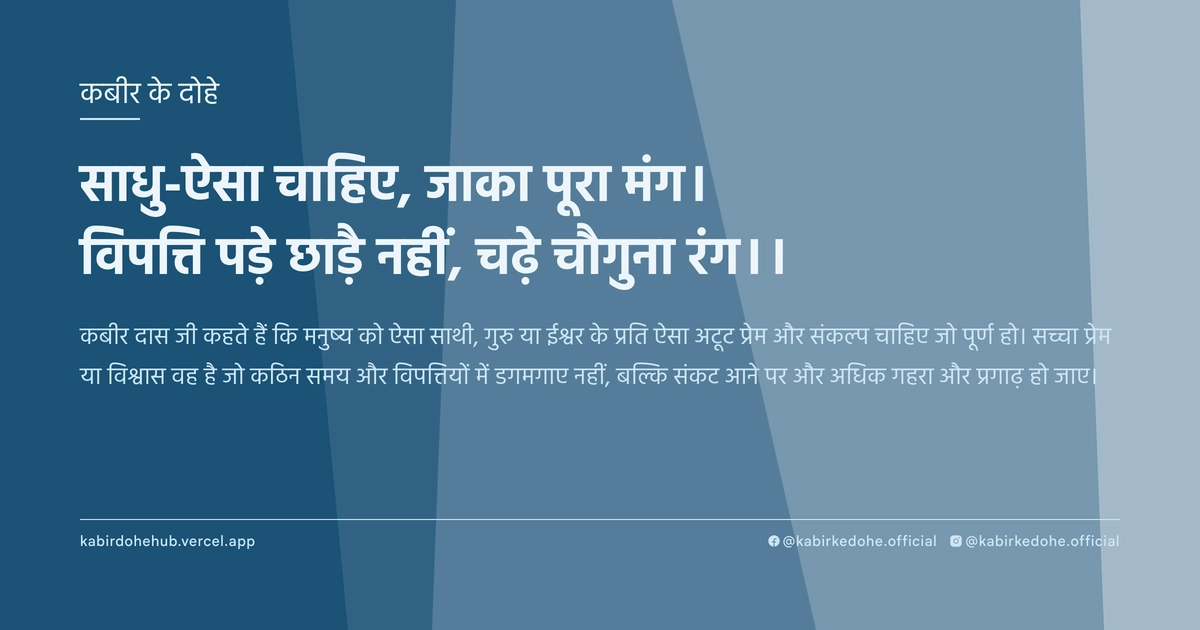
साधु-ऐसा चाहिए, जाका पूरा मंग।
विपत्ति पड़े छाड़ै नहीं, चढ़े चौगुना रंग।।
Sadhu-aisa chahiye, jaka poora mang. Vipatti pade chhadai nahi, chadhe chauguna rang.
इस पृष्ठ पर इस कबीर दोहे का अर्थ (meaning), हिंदी व्याख्या और अंग्रेज़ी अनुवाद, दार्शनिक विश्लेषण और व्यावहारिक जीवन सीख दी गई है। यह दोहा निष्ठा (Integrity) विषय से जुड़ा है — Kabir doha meaning and explanation in Hindi and English.
अर्थ (Meaning):
कबीर दास जी कहते हैं कि मनुष्य को ऐसा साथी, गुरु या ईश्वर के प्रति ऐसा अटूट प्रेम और संकल्प चाहिए जो पूर्ण हो। सच्चा प्रेम या विश्वास वह है जो कठिन समय और विपत्तियों में डगमगाए नहीं, बल्कि संकट आने पर और अधिक गहरा और प्रगाढ़ हो जाए।
Kabir asserts that one must seek a companion, a guru, or a divine connection characterized by absolute integrity and wholeness. True devotion or love is not that which flourishes in ease, but that which remains steadfast during adversity, intensifying fourfold when faced with hardship.
व्याख्या (Interpretation):
शाब्दिक रूप से, यह दोहा एक आदर्श साथी या विश्वास की खोज है। आध्यात्मिक स्तर पर, 'मंग' का अर्थ केवल इच्छा नहीं, बल्कि एक पूर्ण समर्पण है। यहाँ 'रंग' का तात्पर्य भक्ति के रंग से है। जब जीवन में दुख आता है, तो साधारण व्यक्ति ईश्वर या अपने आदर्शों को त्याग देता है, लेकिन एक सच्चा साधक विपत्ति को एक अवसर के रूप में देखता है। यह निर्गुण भक्ति का सार है जहाँ आत्मा का परमात्मा से मिलन बाहरी परिस्थितियों पर निर्भर नहीं करता। यह अद्वैत वेदांत की उस स्थिति को दर्शाता है जहाँ द्वैत (सुख-दुख) समाप्त हो जाता है और केवल शुद्ध चेतना शेष रहती है। माया हमें विश्वास दिलाती है कि दुख में ईश्वर साथ नहीं है, जबकि सत्य यह है कि दुख ही वह अग्नि है जो अहंकार को जलाकर प्रेम को शुद्ध करती है।
Literally, this couplet seeks an ideal companion or a steadfast faith. Spiritually, 'Mang' refers not to a mere wish, but to a total, holistic surrender. The 'Rang' (color) symbolizes the dye of divine love. While the average person abandons their ideals or God during turmoil, the true seeker views adversity as a catalyst. This is the essence of Nirgun Bhakti, where the soul's union with the Formless is independent of external circumstances. It mirrors the Advaita Vedanta state where the duality of pleasure and pain dissolves, leaving only pure consciousness. Maya creates the illusion that the Divine is absent during suffering, whereas the truth is that hardship is the fire that incinerates the ego, refining love into its purest form.
दार्शनिक विश्लेषण (Philosophical Analysis):
कबीर का यह दोहा उस सामाजिक और धार्मिक परिवेश में लिखा गया था जहाँ धर्म केवल कर्मकांडों और बाहरी दिखावे तक सीमित था। कबीर ने ritualism का विरोध करते हुए आंतरिक अनुभव और अडिग विश्वास पर जोर दिया। उनका दर्शन सूफीवाद के 'इश्क-ए-हकीकी' (ईश्वरीय प्रेम) से गहराई से प्रेरित है, जहाँ प्रेमी को अपने प्रिय (परमात्मा) के लिए हर कष्ट सहने को तैयार रहना पड़ता है।
अद्वैत वेदांत के परिप्रेक्ष्य में, यह दोहा 'साक्षी भाव' की शिक्षा देता है। जब व्यक्ति यह जान लेता है कि वह शरीर या मन नहीं बल्कि अविनाशी आत्मा है, तो बाहरी विपत्तियाँ उसे विचलित नहीं करतीं। अहंकार (I-ness) ही वह तत्व है जो दुख में टूटता है; जब अहंकार मिट जाता है, तो केवल वह 'रंग' बचता है जो कभी फीका नहीं पड़ता।
कबीर यहाँ जाति और वर्ग के भेदों को नकारते हुए एक सार्वभौमिक सत्य प्रस्तुत करते हैं: सत्य की कसौटी सुख नहीं, बल्कि संकट है। जो विश्वास केवल अनुकूल परिस्थितियों में काम करे, वह विश्वास नहीं, बल्कि एक सौदा है। वास्तविक भक्ति वह है जो प्रतिकूलता में और अधिक प्रज्वलित हो।
मनोवैज्ञानिक स्तर पर, यह 'post-traumatic growth' की बात करता है। कबीर समझाते हैं कि मानसिक रूपांतरण तब होता है जब हम अपनी पीड़ा को आध्यात्मिक विकास के साधन के रूप में उपयोग करते हैं। यह केवल धैर्य की बात नहीं है, बल्कि चेतना के उस स्तर की बात है जहाँ दुख और सुख एक ही सिक्के के दो पहलू बन जाते हैं।
अंततः, यह दोहा हमें यह सिखाता है कि पूर्णता (Poornata) बाहरी उपलब्धियों में नहीं, बल्कि आंतरिक स्थिरता में है। जब साधक अपनी आंतरिक शक्ति को पहचान लेता है, तो संसार की कोई भी विपत्ति उसे उसके मार्ग से विचलित नहीं कर सकती, बल्कि वह उसे और अधिक दृढ़ बनाती है।
Kabir composed this couplet in a socio-religious era where faith was largely reduced to empty rituals and outward displays. By rejecting ritualism, Kabir emphasized internal experience and unwavering conviction. His philosophy is deeply influenced by the Sufi concept of 'Ishq-e-Haqiqi' (Divine Love), where the lover must be prepared to endure every hardship for the sake of the Beloved (the Divine).
From the perspective of Advaita Vedanta, this verse teaches the state of 'Sakshi' (the Witness). When an individual realizes they are not the transient body or mind but the eternal Atman, external calamities cease to disturb them. The ego (Ahamkara) is the only element that shatters under pressure; once the ego is annihilated, only the 'Rang' remains—a color that never fades.
Kabir transcends caste and class distinctions to present a universal truth: the litmus test of truth is not comfort, but crisis. Faith that functions only under favorable conditions is not faith, but a transaction. Genuine devotion is that which ignites more fiercely in the face of adversity.
Psychologically, this speaks to the concept of post-traumatic growth. Kabir suggests that true mental transformation occurs when we utilize our suffering as a vehicle for spiritual evolution. It is not merely about patience, but about reaching a level of consciousness where pain and pleasure are recognized as two sides of the same coin.
Ultimately, the couplet teaches that wholeness (Poornata) is not found in external achievements but in internal stability. Once the seeker recognizes their inner strength, no worldly calamity can derail them; instead, every struggle serves to fortify their resolve.
मूल संदेश (Core Message):
- सच्ची श्रद्धा वह है जो संकट में और प्रगाढ़ हो।
- सुख में मिली भक्ति अक्सर एक सौदा होती है।
- विपत्ति अहंकार को नष्ट कर आत्मा को शुद्ध करती है।
- स्थिरता ही आध्यात्मिक पूर्णता की एकमात्र पहचान है।
- परमात्मा से प्रेम बाहरी परिस्थितियों का मोहताज नहीं होता।
- True faith is that which intensifies during a crisis.
- Devotion found only in comfort is often a mere transaction.
- Adversity destroys the ego to purify the soul.
- Equanimity is the sole hallmark of spiritual wholeness.
- Love for the Divine is independent of external circumstances.
व्यावहारिक उदाहरण (Practical Example):
वाराणसी के घाटों पर रहने वाली एक वृद्ध विधवा, जानकी, का जीवन अत्यंत कठिन था। वह दूसरों के कपड़े धोकर अपना गुजारा करती थी। समाज ने उसे हाशिए पर धकेल दिया था और उसके अपने परिवार ने उसे त्याग दिया था।
जानकी का एकमात्र सहारा उसकी ईश्वर के प्रति अटूट श्रद्धा थी। वह हर सुबह गंगा की लहरों को देखते हुए मौन प्रार्थना करती थी। लोग उसे पागल समझते थे क्योंकि वह अभावों में भी मुस्कुराती रहती थी।
एक समय ऐसा आया जब शहर में भीषण महामारी फैली। जानकी की छोटी सी झोपड़ी भी छिन गई और वह गंभीर रूप से बीमार पड़ गई। उसके पास न दवा के पैसे थे और न ही कोई देखभाल करने वाला।
उस समय उसके मन में एक क्षण के लिए भी यह विचार नहीं आया कि ईश्वर ने उसके साथ अन्याय किया है। उसने अपनी पीड़ा को एक भेंट के रूप में स्वीकार किया।
उसने देखा कि उसके आस-पास के लोग, जो समृद्ध थे, डर और क्रोध में चिल्ला रहे थे। वे ईश्वर को कोस रहे थे क्योंकि उनकी सुख-सुविधाएं छिन गई थीं।
जानकी ने अपनी अंतिम शक्ति बटोरकर उन बीमारों की सेवा करनी शुरू की जो अकेले थे। उसने अपनी बीमारी को भुलाकर दूसरों के आँसू पोंछे।
उसकी यह निस्वार्थ सेवा और अडिग शांति देखकर लोग आश्चर्यचकित थे। उसकी भक्ति अब केवल प्रार्थनाओं तक सीमित नहीं थी, बल्कि वह साक्षात करुणा बन गई थी।
विपत्ति ने उसकी श्रद्धा को कम नहीं किया, बल्कि उसे 'चौगुना' बढ़ा दिया। वह अब केवल एक भक्त नहीं, बल्कि दूसरों के लिए आशा की किरण बन गई थी।
जब वह अंततः शांत हुई, तो पूरा मोहल्ला उसके चरणों में था। उसकी मृत्यु एक शोक नहीं, बल्कि एक उत्सव बन गई क्योंकि उसने दिखाया कि कैसे दुख को दिव्यता में बदला जाता है।
यह जानकी का 'कबीर ट्विस्ट' था—जहाँ अभाव ने उसे कमजोर नहीं, बल्कि आध्यात्मिक रूप से सबसे शक्तिशाली बना दिया।
Janaki, an elderly widow living on the ghats of Varanasi, led a life of extreme hardship. She earned a meager living washing clothes for others. Society had pushed her to the margins, and her own family had abandoned her.
Janaki's only solace was her unwavering faith in the Divine. Every morning, gazing at the ripples of the Ganges, she would engage in silent prayer. People considered her delusional because she remained smiling despite her deprivation.
There came a time when a severe epidemic swept through the city. Janaki lost her tiny hut and fell gravely ill. She had neither the money for medicine nor anyone to care for her.
During this crisis, not once did the thought cross her mind that God had been unfair to her. She accepted her suffering as an offering.
She observed that the people around her, who were wealthy, were screaming in fear and anger. They cursed the Divine because their comforts had been stripped away.
Gathering her remaining strength, Janaki began serving the sick who were alone. Forgetting her own ailment, she wiped the tears of others.
People were astonished by her selfless service and unshakable peace. Her devotion was no longer confined to prayers; she had become the living embodiment of compassion.
Adversity did not diminish her faith; it amplified it 'fourfold.' She was no longer just a devotee, but a beacon of hope for others.
When she finally passed away, the entire neighborhood gathered at her feet. Her death was not a tragedy but a celebration, for she demonstrated how to transmute suffering into divinity.
This was Janaki's 'Kabir Twist'—where deprivation did not make her weak, but rendered her spiritually the most powerful among them.
अभ्यास मार्गदर्शन (Practice Guidance):
- प्रतिदिन 20 मिनट मौन ध्यान करें, जहाँ आप अपने जीवन की सबसे कठिन स्मृति को याद करें और उसे बिना किसी निर्णय या शिकायत के केवल स्वीकार करें।
- एक 'विपत्ति पत्रिका' (Adversity Journal) बनाएँ। जब भी कोई समस्या आए, तो यह लिखें कि यह स्थिति आपके अहंकार के किस हिस्से को तोड़ रही है और आपको कैसे परिपक्व बना रही है।
- व्यवहार परिवर्तन: जब कोई आपसे बुरा व्यवहार करे, तो प्रतिक्रिया देने के बजाय यह सोचें कि यह आपकी सहनशक्ति और प्रेम की परीक्षा है।
- निदान चेकलिस्ट: क्या आप सुख में अहंकारी और दुख में निराश हो जाते हैं? यदि हाँ, तो आपकी भक्ति अभी 'रंग' नहीं पकड़ी है। यदि आप दोनों स्थितियों में स्थिर हैं, तो आप इस मार्ग पर हैं।
- Practice 20 minutes of silent meditation daily, recalling your most difficult memory and accepting it fully without judgment or complaint.
- Maintain an 'Adversity Journal.' Whenever a problem arises, record which part of your ego is being dismantled and how the situation is maturing you.
- Behavioral Shift: When someone treats you poorly, instead of reacting, perceive it as a test of your endurance and capacity for unconditional love.
- Diagnostic Checklist: Do you become arrogant in success and despair in failure? If yes, your faith has not yet 'taken color.' If you remain equanimous in both, you are aligned with this wisdom.
चिंतन प्रश्न (Reflection Questions):
- क्या मेरा विश्वास केवल तब तक है जब तक मेरी इच्छाएं पूरी हो रही हैं?
- मेरे जीवन का वह कौन सा 'अंधेरा' है जिसे मैं स्वीकार करने से डरता हूँ, जबकि वही मेरी मुक्ति का द्वार हो सकता है?
- मैं अपनी सार्वजनिक छवि (Digital Ego) में कितना धैर्य दिखाता हूँ, और एकांत में मेरा वास्तविक स्वरूप क्या है?
- क्या मैं दूसरों के दुख में केवल सहानुभूति दिखाता हूँ, या मैं उस दुख को उनके साथ साझा करने का साहस रखता हूँ?
- यदि आज मेरा सब कुछ छिन जाए, तो क्या मेरे पास ऐसा कुछ बचेगा जिसे मैं 'अविनाशी' कह सकूँ?
- Is my faith contingent upon the fulfillment of my desires?
- What is that 'darkness' in my life I fear accepting, even though it might be the gateway to my liberation?
- How much patience do I project in my public identity (Digital Ego), and what is my true nature in solitude?
- Do I offer mere sympathy to others in pain, or do I have the courage to truly share that suffering with them?
- If everything I possess were stripped away today, would anything remain within me that I could call 'indestructible'?