
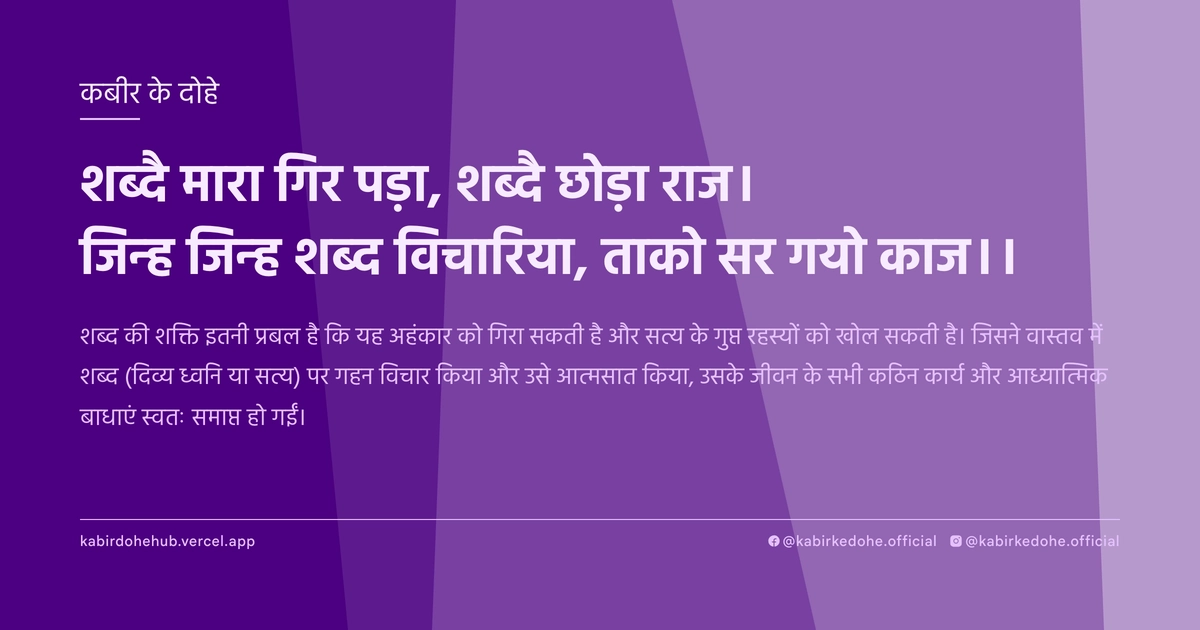
शब्दै मारा गिर पड़ा, शब्दै छोड़ा राज।
जिन्ह जिन्ह शब्द विचारिया, ताको सर गयो काज।।
Shabde mara gir pada, shabde chhoda raaj. Jinh jinh shabd vichariya, tako sar gayo kaaj.
इस पृष्ठ पर इस कबीर दोहे का अर्थ (meaning), हिंदी व्याख्या और अंग्रेज़ी अनुवाद, दार्शनिक विश्लेषण और व्यावहारिक जीवन सीख दी गई है। यह दोहा मुक्ति (Liberation) विषय से जुड़ा है — Kabir doha meaning and explanation in Hindi and English.
अर्थ (Meaning):
शब्द की शक्ति इतनी प्रबल है कि यह अहंकार को गिरा सकती है और सत्य के गुप्त रहस्यों को खोल सकती है। जिसने वास्तव में शब्द (दिव्य ध्वनि या सत्य) पर गहन विचार किया और उसे आत्मसात किया, उसके जीवन के सभी कठिन कार्य और आध्यात्मिक बाधाएं स्वतः समाप्त हो गईं।
The power of the 'Shabad' (Divine Word) is so potent that it can shatter the ego and unlock the hidden secrets of existence. Those who have deeply contemplated and realized the essence of this Word find that their spiritual struggles and worldly burdens are effortlessly resolved.
व्याख्या (Interpretation):
यहाँ 'शब्द' का अर्थ केवल बोला गया शब्द नहीं, बल्कि 'अनहद नाद' या ब्रह्मांडीय कंपन है। पहले चरण में, शब्द अहंकार पर प्रहार करता है, जिससे साधक का झूठा व्यक्तित्व गिर जाता है। दूसरे चरण में, यही शब्द उसे मुक्ति के राज या सत्य के साम्राज्य में ले जाता है। यह निर्गुण भक्ति का सार है जहाँ ईश्वर किसी मूर्ति में नहीं, बल्कि आंतरिक ध्वनि और जागरूकता में है। जब साधक शब्द का विचार करता है, तो वह द्वैत से अद्वैत की ओर बढ़ता है, जहाँ 'मैं' और 'वह' का भेद मिट जाता है। यह विरोधाभास है कि मौन रहकर ही इस शब्द को सुना जा सकता है। अंततः, यह प्रक्रिया आत्मा को माया के बंधनों से मुक्त कर ब्रह्म के साथ एकाकार कर देती है।
Here, 'Shabad' does not refer to mere spoken language, but to the 'Anhad Naad' or the cosmic vibration of the universe. In the first instance, the Word strikes the ego, causing the false persona of the seeker to collapse. In the second, this same Word unlocks the secrets of liberation and the kingdom of Truth. This is the essence of Nirgun Bhakti, where the Divine is found not in idols, but in internal sound and consciousness. As the seeker contemplates the Shabad, they transition from duality to Advaita (non-duality), where the distinction between 'I' and 'Thou' vanishes. The central paradox is that this Word can only be heard in absolute inner silence. Ultimately, this process severs the ties of Maya, merging the Atman with the infinite Brahman.
दार्शनिक विश्लेषण (Philosophical Analysis):
कबीर का यह दोहा उस युग की उपज है जब धर्म केवल कर्मकांडों और बाहरी दिखावे तक सीमित था। कबीर ने पुरोहितवाद और जातिगत श्रेष्ठता को चुनौती देते हुए 'शब्द' को ही एकमात्र मार्ग बताया। यह दृष्टिकोण सूफी मत के 'कलाम' और वेदांत के 'ओम्' के समान है, जो ध्वनि को सृष्टि का मूल मानते हैं। कबीर का तर्क है कि जब तक मनुष्य शब्दों के जाल (शास्त्रों की बहस) में उलझा रहता है, वह सत्य से दूर रहता है; लेकिन जब वह शब्द के 'अर्थ' या उसकी 'ध्वनि' में उतरता है, तो वह सीधे परमात्मा से जुड़ता है।
दार्शनिक स्तर पर, यह 'अहंकार के विलोपन' की प्रक्रिया है। 'शब्दै मारा गिर पड़ा' का अर्थ है कि सत्य का एक प्रहार मनुष्य के उस अहंकार को नष्ट कर देता है जिसे उसने वर्षों के ज्ञान और पद से संजोया था। यह मनोवैज्ञानिक रूपांतरण है जहाँ व्यक्ति अपनी सामाजिक पहचान को त्यागकर अपनी वास्तविक आध्यात्मिक पहचान को खोजता है।
यह दोहा अद्वैत वेदांत के इस सिद्धांत की पुष्टि करता है कि अज्ञानता ही बंधन का कारण है। शब्द यहाँ 'ज्ञान' का प्रतीक है जो अज्ञान के पर्दे को फाड़ देता है। कबीर यह स्पष्ट करते हैं कि केवल मंत्रों का जाप करना पर्याप्त नहीं है, बल्कि 'विचार' यानी गहन चिंतन और अनुभव आवश्यक है।
सूफीवाद के प्रभाव में, कबीर 'शब्द' को उस प्रेम की पुकार के रूप में देखते हैं जो प्रेमी (साधक) और प्रियतम (ईश्वर) के बीच की दूरी को मिटा देती है। यह एक ऐसी अवस्था है जहाँ तर्क समाप्त हो जाता है और केवल अनुभव शेष रहता है।
अंततः, कबीर यह संदेश देते हैं कि सत्य किसी विशेष धर्म या ग्रंथ की बपौती नहीं है। जो व्यक्ति अपनी अंतरात्मा की आवाज़ को सुनने का साहस करता है, उसके लिए मोक्ष के द्वार खुल जाते हैं। यह बाहरी शोर से आंतरिक शांति की ओर एक यात्रा है, जहाँ शब्द ही सेतु है और शब्द ही गंतव्य।
This couplet emerges from an era where religion was largely confined to rituals and outward displays of piety. Kabir challenged the priestly class and caste hierarchies by proposing the 'Shabad' as the sole path to liberation. This perspective aligns with the Sufi concept of 'Kalam' and the Vedantic 'Om', both viewing sound as the primordial seed of creation. Kabir argues that as long as a human is entangled in the web of words (scholarly debates), they remain distant from Truth; however, when they dive into the 'meaning' or the 'vibration' of the Word, they connect directly with the Divine.
Philosophically, this is the process of 'annihilation of the ego'. 'Shabdai maara gir pada' implies that a single strike of Truth shatters the ego that a person has meticulously built through years of acquired knowledge and social status. This is a psychological transformation where the individual discards their social identity to discover their authentic spiritual essence.
The verse validates the Advaita Vedanta principle that ignorance (Avidya) is the root of all bondage. Here, the Shabad symbolizes the 'Jnana' (Knowledge) that tears through the veil of illusion. Kabir clarifies that the mere rote recitation of mantras is insufficient; 'Vichaar'—deep contemplation and experiential realization—is essential.
Influenced by Sufism, Kabir views the Shabad as the call of Divine Love that erases the distance between the Lover (seeker) and the Beloved (God). It is a state where logic ceases to function and only direct experience remains.
Ultimately, Kabir asserts that Truth is not the monopoly of any specific religion or scripture. Whoever possesses the courage to listen to the voice of their own soul finds the gates of liberation open. It is a journey from external noise to internal silence, where the Word is both the bridge and the destination.
मूल संदेश (Core Message):
- अहंकार का पतन ही वास्तविक आध्यात्मिक उदय की शुरुआत है।
- सत्य के शब्द केवल सुनने के लिए नहीं, बल्कि अनुभव करने के लिए होते हैं।
- जब 'मैं' मिटता है, तब ब्रह्मांडीय संगीत सुनाई देता है।
- बौद्धिक विमर्श से ऊपर उठकर आत्म-साक्षात्कार की ओर बढ़ें।
- मौन ही वह भाषा है जिसमें ईश्वर और आत्मा संवाद करते हैं।
- The collapse of the ego is the true beginning of spiritual awakening.
- Words of Truth are not for mere hearing, but for experiential realization.
- When the 'I' vanishes, the cosmic music becomes audible.
- Rise above intellectual discourse toward the direct experience of the Self.
- Silence is the only language in which the Soul and the Divine communicate.
व्यावहारिक उदाहरण (Practical Example):
वाराणसी के घाटों पर रहने वाले एक वृद्ध बुनकर थे, जिनका नाम माधव था। माधव अपने काम में निपुण थे, लेकिन उनका स्वभाव अत्यंत क्रोधी और अहंकारी था। उन्हें विश्वास था कि उनके द्वारा बुने गए वस्त्र शहर के सबसे श्रेष्ठ हैं और वे स्वयं को अन्य बुनकरों से श्रेष्ठ मानते थे। वे अक्सर दूसरों की कला का उपहास करते और अपनी श्रेष्ठता का बखान करते थे।
एक दिन, एक फकीर उनके पास आया। फकीर ने माधव के अहंकार को भांप लिया और उनसे कहा, "माधव, तुम धागों को तो जोड़ लेते हो, लेकिन अपनी आत्मा के धागे को परमात्मा से जोड़ना भूल गए। तुम्हारी यह श्रेष्ठता केवल एक भ्रम है, एक ऐसा पर्दा जो तुम्हें तुम्हारी असलियत देखने नहीं दे रहा।"
माधव को यह बात चुभी और उन्होंने फकीर का अपमान करना चाहा। लेकिन फकीर ने केवल एक वाक्य कहा, "जिस दिन तुम यह जान लोगे कि तुम केवल एक माध्यम हो, उस दिन तुम्हारी कला वास्तव में दिव्य होगी।" यह छोटा सा 'शब्द' माधव के हृदय पर प्रहार की तरह लगा। उन्हें पहली बार महसूस हुआ कि उनकी सारी उपलब्धियां उनके अहंकार की खुराक मात्र थीं।
वह रात माधव के लिए बेचैनी भरी थी। वे बार-बार उस वाक्य के बारे में सोचने लगे। उन्होंने महसूस किया कि उनका क्रोध और अहंकार उन्हें अंदर से खोखला कर रहा था। उन्होंने अपनी श्रेष्ठता के दावे को त्याग दिया और यह स्वीकार किया कि वे भी अन्य बुनकरों की तरह एक साधारण इंसान हैं।
अगले कुछ महीनों तक माधव ने मौन का अभ्यास किया। वे अब केवल काम पर ध्यान देते थे, लेकिन इस बार उनका उद्देश्य प्रशंसा पाना नहीं, बल्कि उस 'दिव्य ध्वनि' को महसूस करना था जो उनके करघे की लय में छिपी थी। उन्होंने अपनी कला को एक प्रार्थना बना लिया।
धीरे-धीरे उनका व्यवहार बदलने लगा। वे अब दूसरों की मदद करने लगे और छोटे बुनकरों को अपनी तकनीक सिखाने लगे। उनके चेहरे पर एक ऐसी शांति आ गई जो पहले कभी नहीं थी। उनका अहंकार 'गिर गया' था और उनके जीवन का एक नया 'राज' खुल गया था।
एक दिन, एक बड़ा व्यापारी उनके पास आया और उन्हें बहुत अधिक धन का प्रस्ताव दिया, लेकिन माधव ने विनम्रता से मना कर दिया। उन्होंने कहा, "अब मुझे धन की नहीं, संतोष की आवश्यकता है। मैंने जान लिया है कि असली संपत्ति वह शांति है जो अहंकार के मिटने के बाद मिलती है।"
माधव का जीवन अब एक उदाहरण बन गया था। उन्होंने यह सिद्ध कर दिया कि जब हम अपनी झूठी पहचान को शब्द की शक्ति से नष्ट करते हैं, तो जीवन के सारे संघर्ष समाप्त हो जाते हैं और हम वास्तव में स्वतंत्र हो जाते हैं।
In the ghats of Varanasi lived an elderly weaver named Madhav. Madhav was a master of his craft, but his nature was intensely arrogant and volatile. He believed the fabrics he wove were the finest in the city and viewed himself as far superior to other weavers. He often mocked the work of others and boasted of his unmatched skill.
One day, a wandering fakir approached him. Sensing Madhav's pride, the fakir said, "Madhav, you know how to join threads, but you have forgotten to join the thread of your soul to the Divine. This superiority of yours is a mere illusion, a veil preventing you from seeing your true self."
Madhav felt stung by these words and attempted to insult the fakir. However, the fakir simply replied, "The day you realize that you are merely an instrument, your art will truly become divine." This short 'word' struck Madhav's heart like a thunderbolt. For the first time, he felt that all his achievements were merely fuel for his ego.
That night was restless for Madhav. He kept ruminating over that single sentence. He realized that his anger and pride were hollowing him out from within. He decided to let go of his claims of superiority and accepted that he was a simple human, no different from any other weaver.
For the next few months, Madhav practiced silence. He focused on his work, but this time his goal was not praise, but to feel the 'divine vibration' hidden in the rhythm of his loom. He turned his craft into a prayer.
Gradually, his behavior shifted. He began helping others and teaching his techniques to novice weavers. A serenity descended upon his face that had never been there before. His ego had 'fallen,' and a new 'secret' of life had unfolded before him.
One day, a wealthy merchant offered him a vast sum of money for a special commission, but Madhav politely declined. He said, "I no longer need wealth; I need contentment. I have learned that true riches are the peace found after the ego vanishes."
Madhav's life became a living testament. He proved that when we destroy our false identity through the power of the Truth-Word, all life's conflicts cease, and we become truly free.
अभ्यास मार्गदर्शन (Practice Guidance):
- प्रतिदिन 20 मिनट 'अजपा जाप' या आंतरिक ध्वनि के श्रवण का अभ्यास करें, जहाँ आप बाहरी शब्दों को छोड़कर भीतर की शांति को सुनें।
- एक डायरी लिखें जिसमें आप उन क्षणों को दर्ज करें जब आपका अहंकार चोटिल हुआ हो। विश्लेषण करें कि क्या वह चोट वास्तव में आपको बेहतर बनाने के लिए एक 'दिव्य प्रहार' थी।
- व्यवहार परिवर्तन: दिन में कम से कम एक बार अपनी किसी ऐसी धारणा को चुनौती दें जिसे आप 'परम सत्य' मानते हैं, और यह स्वीकार करें कि आप गलत हो सकते हैं।
- निदान चेकलिस्ट: क्या आप दूसरों की आलोचना सुनकर विचलित होते हैं? क्या आप अपनी उपलब्धियों का श्रेय स्वयं लेते हैं? यदि हाँ, तो आप अभी भी 'शब्द' के प्रभाव से दूर हैं।
- Practice 20 minutes of 'Ajapa Jap' or listening to the internal sound daily, shifting focus from external words to the inner silence.
- Maintain a journal recording moments when your ego was bruised. Analyze whether that pain was actually a 'divine strike' intended to refine you.
- Behavioral Shift: At least once a day, challenge a belief you hold as an 'absolute truth' and consciously accept the possibility that you are wrong.
- Diagnostic Checklist: Do you feel agitated by criticism? Do you instinctively take all credit for your achievements? If yes, you are still distant from the transformative power of the Shabad.
चिंतन प्रश्न (Reflection Questions):
- वह कौन सा 'शब्द' या सत्य है जिसे सुनकर आपका अहंकार पूरी तरह टूट गया, और उस टूटन के बाद आपने क्या पाया?
- आपकी सार्वजनिक पहचान (Digital Ego) और आपकी आंतरिक वास्तविकता के बीच कितना बड़ा अंतर है?
- क्या आप वास्तव में सत्य की खोज कर रहे हैं, या आप केवल अपनी मान्यताओं की पुष्टि करने वाले शब्दों को खोज रहे हैं?
- यदि आपकी सारी उपलब्धियां और पद आज छीन लिए जाएं, तो आपके भीतर क्या शेष बचेगा?
- क्या आप मौन में रहने से डरते हैं क्योंकि वहाँ आपको अपने भीतर के अंधेरे का सामना करना पड़ता है?
- What was the specific 'word' or truth that shattered your ego, and what did you discover in the aftermath of that collapse?
- How vast is the gap between your public persona (Digital Ego) and your internal reality?
- Are you truly seeking the Truth, or are you merely searching for words that confirm your existing biases?
- If all your achievements and titles were stripped away today, what would remain of you?
- Do you fear silence because it forces you to confront the shadows within yourself?