
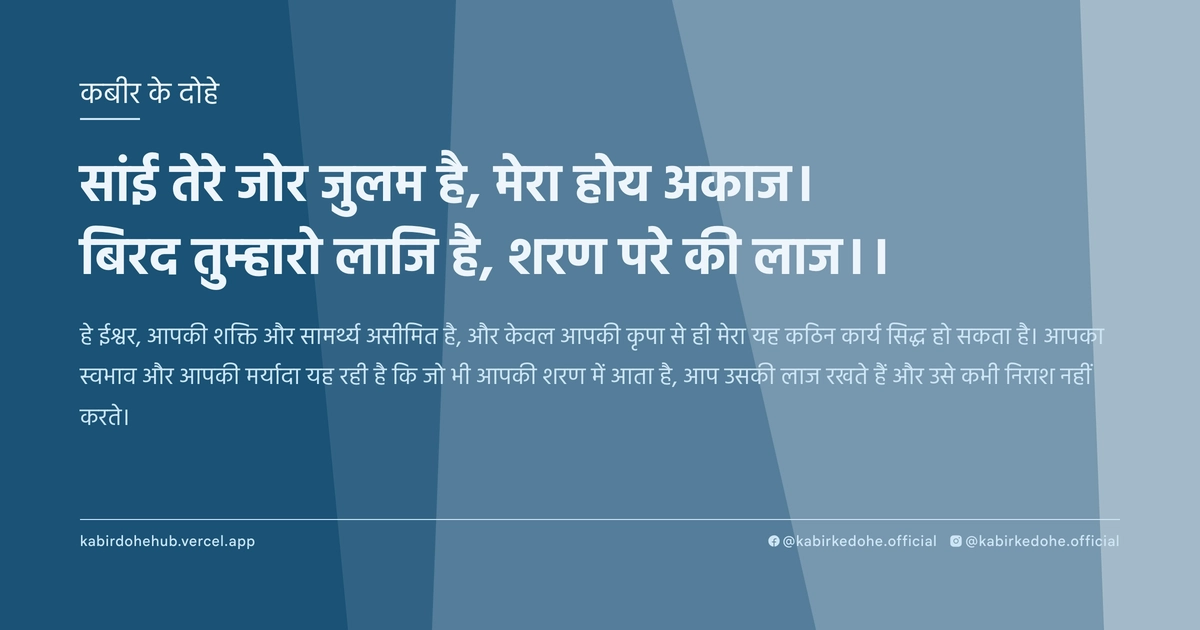
सांई तेरे जोर जुलम है, मेरा होय अकाज।
बिरद तुम्हारो लाजि है, शरण परे की लाज।।
Sai tere jor julum hai, mera hoye akaaj. Birad tumharo laaji hai, sharan pare ki laaj.
इस पृष्ठ पर इस कबीर दोहे का अर्थ (meaning), हिंदी व्याख्या और अंग्रेज़ी अनुवाद, दार्शनिक विश्लेषण और व्यावहारिक जीवन सीख दी गई है। यह दोहा प्रपत्ति (Surrender) विषय से जुड़ा है — Kabir doha meaning and explanation in Hindi and English.
अर्थ (Meaning):
हे ईश्वर, आपकी शक्ति और सामर्थ्य असीमित है, और केवल आपकी कृपा से ही मेरा यह कठिन कार्य सिद्ध हो सकता है। आपका स्वभाव और आपकी मर्यादा यह रही है कि जो भी आपकी शरण में आता है, आप उसकी लाज रखते हैं और उसे कभी निराश नहीं करते।
O Divine Lord, Your power is absolute and overwhelming, and only through Your intervention can my impossible task be accomplished. It is Your eternal reputation and sacred honor to protect and uphold those who surrender themselves completely to Your sanctuary.
व्याख्या (Interpretation):
इस दोहे का शाब्दिक अर्थ एक भक्त की पुकार है जो अपनी असमर्थता को स्वीकार कर ईश्वर की सर्वशक्तिमानता पर भरोसा करता है। गहरे स्तर पर, यह 'पूर्ण समर्पण' (Prapatti) की स्थिति है जहाँ अहंकार का विसर्जन होता है। 'जुलुम' शब्द यहाँ दमन के लिए नहीं, बल्कि ईश्वर की उस प्रचंड शक्ति के लिए प्रयुक्त है जो माया के बंधनों को काट सकती है। यह निर्गुण भक्ति का वह मोड़ है जहाँ साधक समझ जाता है कि व्यक्तिगत प्रयास (Sadhana) तब तक निष्फल हैं जब तक कि ईश्वरीय अनुग्रह (Grace) प्राप्त न हो। यह आत्मा और परमात्मा के बीच के द्वैत को समाप्त कर, स्वयं को उस विराट चेतना के हवाले करने की प्रक्रिया है।
Literally, this couplet is a devotee's plea, acknowledging personal helplessness while trusting in Divine omnipotence. On a deeper level, it represents the state of 'Prapatti' or total surrender, where the ego is completely dissolved. The word 'julum' here does not imply tyranny, but rather the overwhelming, irresistible power of the Divine that can shatter the shackles of Maya. It marks a pivotal point in Nirgun Bhakti where the seeker realizes that individual effort (Sadhana) remains futile without Divine Grace. It is the process of erasing the duality between the Atman and Brahman by merging the self into the vast, formless consciousness.
दार्शनिक विश्लेषण (Philosophical Analysis):
कबीर का यह दोहा उस समय के सामाजिक और धार्मिक परिवेश में लिखा गया जब कर्मकांड और बाहरी आडंबर चरम पर थे। कबीर ने मंदिर-मस्जिद के बजाय 'शरण' की अवधारणा पर जोर दिया, जो किसी भौतिक स्थान के बजाय एक आंतरिक मानसिक अवस्था है। यह विचार सूफी मत के 'फना' (अहंकार का विनाश) और अद्वैत वेदांत के 'ब्रह्म' के साथ मेल खाता है, जहाँ व्यक्ति अपनी सीमित पहचान को त्यागकर अनंत में विलीन हो जाता है।
यहाँ 'लाज' शब्द केवल सामाजिक सम्मान नहीं, बल्कि ब्रह्मांडीय सत्य (Cosmic Truth) है। कबीर तर्क देते हैं कि यदि ईश्वर वास्तव में सर्वव्यापी और दयालु है, तो उसकी मर्यादा यह होनी चाहिए कि वह अपने अंश (आत्मा) को भटकने न दे। यह तर्क ईश्वर को एक न्यायाधीश के बजाय एक रक्षक के रूप में प्रस्तुत करता है।
कबीर जाति और वर्ण व्यवस्था को नकारते हुए यह संदेश देते हैं कि ईश्वर की शरण सबके लिए खुली है। यह एक क्रांतिकारी विचार था जिसने भक्ति आंदोलन को लोकतांत्रिक बनाया। यहाँ भक्ति का अर्थ केवल प्रार्थना नहीं, बल्कि पूर्ण विश्वास है कि सत्य अंततः विजयी होगा।
मनोवैज्ञानिक स्तर पर, यह दोहा 'अहंकार के विसर्जन' की प्रक्रिया है। जब मनुष्य यह स्वीकार करता है कि वह अकेला कुछ नहीं कर सकता, तब उसके भीतर का 'मैं' समाप्त होता है और वह उस सार्वभौमिक शक्ति के साथ एकरूप हो जाता है। यह मानसिक तनाव से मुक्ति और शांति का मार्ग है।
अंततः, यह दोहा सिखाता है कि सच्ची प्रार्थना माँगने में नहीं, बल्कि समर्पित होने में है। जब हम अपनी इच्छाओं को ईश्वर की इच्छा के साथ जोड़ देते हैं, तो हमारा 'अकाज' (असंभव कार्य) स्वतः ही संभव हो जाता है क्योंकि कर्ता अब हम नहीं, बल्कि वह परमात्मा है।
Kabir composed this couplet during an era dominated by rigid rituals and outward displays of piety. He emphasized the concept of 'Sharan' (sanctuary), which is not a physical location but an internal psychological state, aligning his teachings with the Sufi concept of 'Fana' (annihilation of the self) and the Advaita Vedanta realization of Brahman.
The term 'Laaj' (honor/shame) here refers not to social reputation, but to a Cosmic Truth. Kabir argues that if the Divine is truly omnipresent and compassionate, His inherent nature must be to protect the soul. This frames the Divine not as a judgmental deity, but as a compassionate protector of the essence.
By rejecting caste and creed, Kabir asserts that the Divine sanctuary is open to all. This was a revolutionary act that democratized the Bhakti movement, shifting the focus from priestly mediation to a direct, heartfelt connection with the Formless One.
Psychologically, this verse describes the process of 'ego dissolution.' When a human accepts their absolute limitation, the 'I' vanishes, allowing the universal power to flow through them. This transition from resistance to acceptance is the key to spiritual liberation and mental peace.
Ultimately, the poem teaches that true prayer is not about asking for favors, but about total surrender. When individual will aligns with the Divine will, the 'impossible task' becomes possible because the actor is no longer the limited ego, but the Infinite Consciousness itself.
मूल संदेश (Core Message):
- अहंकार का त्याग ही वास्तविक शक्ति की प्राप्ति का एकमात्र द्वार है।
- जब व्यक्तिगत प्रयास विफल होते हैं, तब ईश्वरीय अनुग्रह का मार्ग खुलता है।
- समर्पण का अर्थ कमजोरी नहीं, बल्कि अनंत शक्ति के साथ एकरूपता है।
- सच्ची शांति तब आती है जब हम नियंत्रण की इच्छा को पूरी तरह छोड़ देते हैं।
- ब्रह्मांडीय न्याय कभी विफल नहीं होता; शरण में आने वाले की लाज सदैव रहती है।
- Relinquishing the ego is the only gateway to attaining true spiritual power.
- When individual efforts fail, the path of Divine Grace opens wide.
- Surrender is not a sign of weakness, but an alignment with Infinite Power.
- True peace arrives only when the desire for control is completely abandoned.
- Cosmic justice never fails; the honor of those who surrender is always upheld.
व्यावहारिक उदाहरण (Practical Example):
एक समय की बात है, बनारस के घाटों पर रहने वाली एक वृद्ध विधवा, जानकी, का जीवन अत्यंत कठिन था। समाज ने उसे हाशिए पर धकेल दिया था और उसके पास जीविका का कोई साधन नहीं था। वह हर दिन गंगा किनारे बैठकर केवल एक ही बात दोहराती थी कि वह ईश्वर की शरण में है, चाहे परिस्थिति कैसी भी हो।
एक समय ऐसा आया जब उसके पास रहने के लिए छत भी नहीं बची और वह कड़ाके की ठंड में सड़क पर आ गई। उसके आसपास के लोग उसे उपदेश देते थे कि उसे मेहनत करनी चाहिए या किसी संस्था से मदद माँगनी चाहिए, लेकिन जानकी का विश्वास अडिग था कि उसकी 'लाज' उसका मालिक रखेगा।
एक दिन, शहर का एक समृद्ध व्यापारी, जो अपने जीवन के तनावों से बुरी तरह परेशान था, जानकी को उस शांति में बैठे देखा। उसने देखा कि जानकी के पास कुछ नहीं था, फिर भी उसके चेहरे पर एक ऐसी तृप्ति थी जो उस व्यापारी के पास करोड़ों रुपयों के बाद भी नहीं थी।
व्यापारी ने उससे पूछा, "माता, आप इस अभाव में भी इतनी शांत कैसे हैं?" जानकी ने मुस्कुराकर कहा, "बेटा, मैंने अपना बोझ उस कंधे पर रख दिया है जो पूरे ब्रह्मांड को थामे हुए है। अब मैं केवल उसकी इच्छा का इंतज़ार करती हूँ।"
यह सुनकर व्यापारी के भीतर कुछ टूट गया। उसे अहसास हुआ कि वह अपनी समस्याओं को अपने अकेले दम पर हल करने की कोशिश में खुद को नष्ट कर रहा था। उसने जानकी के चरणों में सिर झुकाया और उस समर्पण के भाव को सीखने का निर्णय लिया।
कुछ ही दिनों बाद, व्यापारी ने जानकी के लिए एक छोटा सा आश्रम बनवाया जहाँ अन्य बेसहारा वृद्ध महिलाएं रह सकें। उसने जानकी को वहां की मार्गदर्शक बनाया।
जानकी के लिए यह 'अकाज' (असंभव कार्य) था कि वह समाज के तिरस्कार के बीच सम्मानजनक जीवन पाए, लेकिन उसके पूर्ण समर्पण ने एक अहंकारी व्यापारी का हृदय बदल दिया।
यहाँ 'कबीर ट्विस्ट' यह है कि जानकी ने कुछ माँगा नहीं, बल्कि अपनी स्थिति को ईश्वर की इच्छा मानकर स्वीकार कर लिया। इसी स्वीकृति ने उसे उस शक्ति से जोड़ दिया जिसने अंततः उसकी भौतिक और सामाजिक स्थिति को बदल दिया।
यह कहानी दर्शाती है कि जब हम अपनी लाचारी को पूरी ईमानदारी से स्वीकार कर लेते हैं, तो हम वास्तव में सबसे अधिक शक्तिशाली हो जाते हैं क्योंकि हम ब्रह्मांडीय शक्ति के साथ संरेखित हो जाते हैं।
अंत में, जानकी का जीवन केवल एक उदाहरण नहीं, बल्कि इस बात का प्रमाण बन गया कि शरण में आने वाले की लाज वास्तव में रखी जाती है।
Once, in the ghats of Varanasi, lived an elderly widow named Janaki. Her life was fraught with hardship; society had marginalized her, and she had no means of livelihood. Every day, she sat by the Ganges, repeating only one truth: she was in the sanctuary of the Divine, regardless of her circumstances.
There came a time when she lost her meager shelter and found herself on the streets during a biting winter. People around her lectured her on the need for hard work or seeking charity from institutions, but Janaki's faith remained unshakable that her 'honor' would be upheld by the Master.
One day, a wealthy merchant from the city, crippled by the stress of his business and personal life, saw Janaki sitting in profound peace. He noticed that despite having nothing, her face radiated a contentment that he lacked despite his millions.
The merchant asked, "Mother, how are you so peaceful in such deprivation?" Janaki smiled and replied, "Son, I have placed my burden on the shoulders that hold the entire universe. Now, I simply await His will."
Hearing this, something broke inside the merchant. He realized he was destroying himself by trying to solve every problem through the sheer force of his own limited ego.
He bowed at Janaki's feet and decided to learn the art of surrender. Within a few days, the merchant built a small ashram for Janaki and other homeless elderly women, appointing her as their spiritual guide.
For Janaki, it was an 'impossible task' (akaaj) to find dignity and shelter amidst social ostracization, but her total surrender transformed the heart of a powerful man.
The 'Kabir Twist' here is that Janaki did not beg or strive; she accepted her state as the Divine's will. This acceptance connected her to a power that eventually altered her physical and social reality.
This story illustrates that when we honestly accept our limitations, we actually become most powerful because we align ourselves with the cosmic flow.
In the end, Janaki's life became a living testament that those who truly seek sanctuary are never abandoned.
अभ्यास मार्गदर्शन (Practice Guidance):
- प्रतिदिन 20 मिनट 'पूर्ण समर्पण' का अभ्यास करें: एक शांत स्थान पर बैठें और कल्पना करें कि आप अपने जीवन की सभी चिंताओं, डर और इच्छाओं को एक अदृश्य दिव्य शक्ति को सौंप रहे हैं।
- आत्म-पूछताछ जर्नल: हर रात लिखें कि आज आपने कहाँ अपनी 'ईगो' (अहंकार) के कारण संघर्ष किया और यदि आप उस स्थिति को 'ईश्वरीय इच्छा' मानकर स्वीकार करते, तो आपका मानसिक तनाव कितना कम होता।
- व्यवहारिक परिवर्तन: जब भी कोई कठिन परिस्थिति आए, तो तुरंत प्रतिक्रिया देने के बजाय 5 मिनट का मौन रखें और मन में कहें, "मैं इस स्थिति को उस सर्वशक्तिमान की शरण में छोड़ता हूँ।"
- डायग्नोस्टिक चेकलिस्ट: यदि आप अभी भी क्रोध, अत्यधिक चिंता या नियंत्रण की तीव्र इच्छा महसूस कर रहे हैं, तो इसका अर्थ है कि आप अभी भी 'कर्ता' बने हुए हैं और 'शरण' में नहीं आए हैं।
- Practice 'Total Surrender' for 20 minutes daily: Sit in silence and visualize yourself handing over all your worries, fears, and desires to an invisible Divine Power.
- Self-Inquiry Journaling: Every night, record instances where your ego caused struggle and reflect on how your stress would have diminished if you had accepted the situation as Divine Will.
- Behavioral Shift: Whenever a crisis arises, instead of reacting immediately, observe 5 minutes of silence and mentally affirm, "I surrender this situation to the Omnipotent One."
- Diagnostic Checklist: If you still experience chronic anger, intense anxiety, or an obsessive need for control, it is a sign that you are still operating as the 'doer' and have not yet entered the state of 'Sharan'.
चिंतन प्रश्न (Reflection Questions):
- मेरे जीवन का वह कौन सा 'असंभव कार्य' है जिसे मैं अपनी ईगो के बल पर हल करने की कोशिश कर रहा हूँ?
- क्या मेरा 'समर्पण' वास्तव में पूर्ण है, या मैं केवल तब समर्पित होता हूँ जब मेरे पास कोई और विकल्प नहीं बचता?
- मेरी सार्वजनिक छवि (Public Identity) कितनी हद तक मेरे आंतरिक खालीपन और डर को छिपाने का एक मुखौटा है?
- यदि मैं आज अपनी सारी उपलब्धियों और पहचान को खो दूँ, तो क्या मेरे भीतर वह विश्वास बचेगा कि मैं अभी भी सुरक्षित हूँ?
- मैं अपनी समस्याओं के लिए दूसरों को दोष देता हूँ या उन्हें अपनी आध्यात्मिक उन्नति के अवसर के रूप में देखता हूँ?
- What is that 'impossible task' in my life that I am trying to solve using only the force of my ego?
- Is my 'surrender' truly absolute, or do I only surrender when I am left with no other options?
- To what extent is my public identity merely a mask hiding my internal emptiness and fear?
- If I were to lose all my achievements and identity today, would I still have the faith that I am fundamentally safe?
- Do I blame others for my struggles, or do I view them as opportunities for spiritual evolution?