
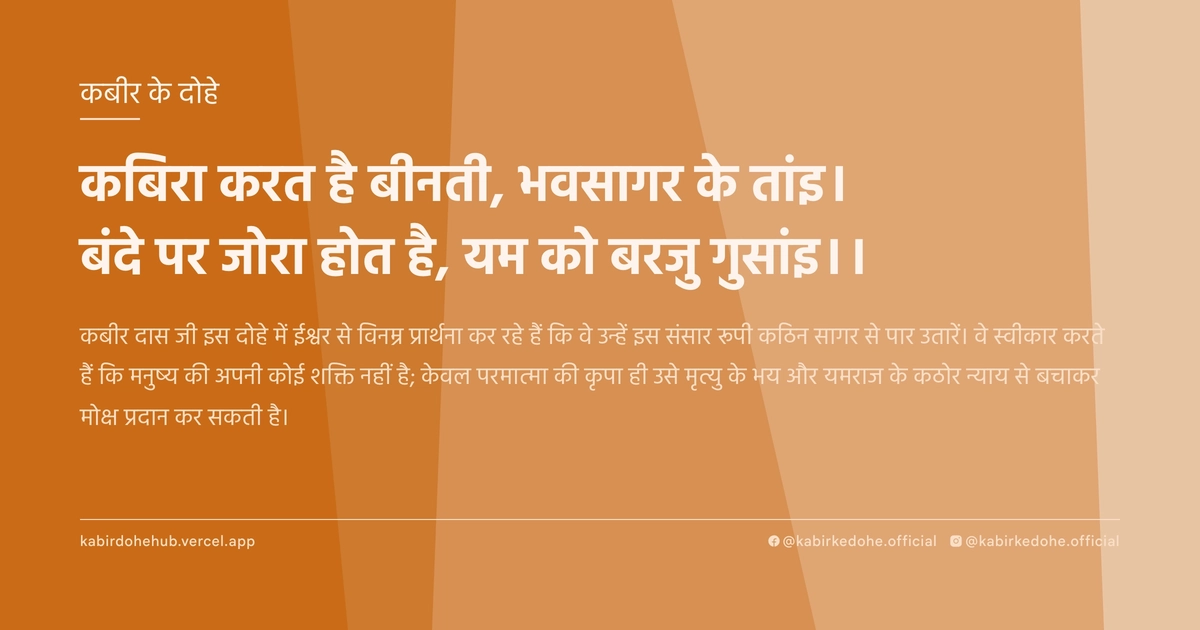
कबिरा करत है बीनती, भवसागर के तांइ।
बंदे पर जोरा होत है, यम को बरजु गुसांइ।।
Kabira karat hai beenati, bhavsagar ke taain. Bande par jora hot hai, yam ko barju gusain.
इस पृष्ठ पर इस कबीर दोहे का अर्थ (meaning), हिंदी व्याख्या और अंग्रेज़ी अनुवाद, दार्शनिक विश्लेषण और व्यावहारिक जीवन सीख दी गई है। यह दोहा प्रपत्ति (Surrender) विषय से जुड़ा है — Kabir doha meaning and explanation in Hindi and English.
अर्थ (Meaning):
कबीर दास जी इस दोहे में ईश्वर से विनम्र प्रार्थना कर रहे हैं कि वे उन्हें इस संसार रूपी कठिन सागर से पार उतारें। वे स्वीकार करते हैं कि मनुष्य की अपनी कोई शक्ति नहीं है; केवल परमात्मा की कृपा ही उसे मृत्यु के भय और यमराज के कठोर न्याय से बचाकर मोक्ष प्रदान कर सकती है।
Kabir offers a humble plea to the Divine to navigate the treacherous waters of the worldly ocean of existence. He acknowledges that human effort alone is insufficient; only the supreme grace of the Almighty can shield a devotee from the clutches of death and the stern judgment of Yama, the lord of death.
व्याख्या (Interpretation):
शाब्दिक रूप से यह दोहे एक प्रार्थना है, परंतु आध्यात्मिक स्तर पर यह 'अहंकार' के विसर्जन की प्रक्रिया है। 'भवसागर' केवल जन्म-मृत्यु का चक्र नहीं, बल्कि वह माया है जो आत्मा को उसके वास्तविक स्वरूप से अलग करती है। यहाँ 'यम' केवल मृत्यु के देवता नहीं, बल्कि उस कर्मफल के प्रतीक हैं जो अज्ञानता के कारण मनुष्य को बांधे रखते हैं। जब साधक यह अनुभव करता है कि उसकी व्यक्तिगत इच्छाशक्ति (ego-will) शून्य है, तब वह 'निरगुण' ब्रह्म की शरण में जाता है। यह अद्वैत वेदांत के उस सत्य को दर्शाता है जहाँ जीव और ब्रह्म का मिलन केवल तब होता है जब 'मैं' का भाव समाप्त हो जाए। यह विरोधाभास है कि पूर्ण समर्पण ही वास्तविक स्वतंत्रता का एकमात्र मार्ग है।
Literally, this verse is a prayer, but spiritually, it represents the process of dissolving the ego. The 'Bhavsagar' or worldly ocean is not merely the cycle of birth and death, but the veil of Maya that separates the soul from its primordial essence. Here, 'Yama' is not just the deity of death, but a symbol of the karmic consequences that bind a soul steeped in ignorance. When the seeker realizes that their individual will is an illusion, they surrender to the Nirgun Brahman. This aligns with Advaita Vedanta, where the union of Atman and Brahman occurs only when the sense of 'I' vanishes. It presents the central paradox: absolute surrender is the only path to absolute liberation.
दार्शनिक विश्लेषण (Philosophical Analysis):
कबीर का यह दोहा उस युग की उपज है जहाँ धर्म बाहरी कर्मकांडों और डर पर आधारित था। कबीर ने ritualism का विरोध करते हुए आंतरिक शुद्धि और प्रेम पर बल दिया। यहाँ 'बीनती' (प्रार्थना) किसी बाहरी देवता को प्रसन्न करने के लिए नहीं, बल्कि अंतर्मन की पुकार है। यह सूफी मत के 'फना' (अहंकार का विनाश) के सिद्धांत से मेल खाता है, जहाँ प्रेमी अपने अस्तित्व को मिटाकर परमात्मा में विलीन हो जाता है।
ऐतिहासिक रूप से, कबीर ने जाति और धर्म की दीवारों को तोड़कर एक ऐसे मार्ग का 제시 किया जो केवल भक्ति और सत्य पर आधारित था। उन्होंने बताया कि मोक्ष किसी विशेष जाति या मंदिर-मस्जिद जाने से नहीं, बल्कि आत्म-साक्षात्कार से मिलता है। यह दृष्टिकोण उस समय के कट्टरपंथ के विरुद्ध एक क्रांतिकारी प्रहार था।
दार्शनिक स्तर पर, यह दोहा 'शरणागति' के महत्व को रेखांकित करता है। जब मनुष्य यह समझ जाता है कि वह प्रकृति के नियमों और काल (Time) के अधीन है, तब वह अपनी सीमाओं को स्वीकार करता है। यह स्वीकृति ही उसे मानसिक शांति प्रदान करती है और उसे भयमुक्त बनाती है।
अद्वैत वेदांत के अनुसार, मृत्यु एक भ्रम है क्योंकि आत्मा अमर है। परंतु, जब तक मनुष्य स्वयं को शरीर मानता है, वह यमराज (मृत्यु) से डरता है। कबीर इस डर को परमात्मा के प्रेम में बदलने की बात कर रहे हैं।
अंततः, यह विश्लेषण हमें सिखाता है कि आध्यात्मिक प्रगति का पहला कदम अपनी तुच्छता को स्वीकार करना है। जब हम यह मान लेते हैं कि हम कुछ नहीं हैं, तभी हम उस 'अनंत' को अपने भीतर समाहित कर सकते हैं। यह अहंकार का विलोपन ही वास्तविक मोक्ष है।
This couplet emerges from an era where religion was heavily predicated on external rituals and fear. Kabir countered this by emphasizing internal purification and divine love. The 'beenati' or prayer here is not an attempt to appease an external deity but is a visceral cry from the depths of the soul. This mirrors the Sufi concept of 'Fana' (annihilation), where the lover dissolves their identity to merge with the Beloved.
Historically, Kabir dismantled the barriers of caste and creed, proposing a path rooted solely in devotion and truth. He asserted that liberation is not achieved through specific castes or the visitation of temples and mosques, but through self-realization. This was a revolutionary strike against the dogmatism of his time.
Philosophically, the verse underscores the significance of 'Saranagati' or total surrender. When a human recognizes their subordination to the laws of nature and Time, they accept their limitations. This acceptance is the gateway to mental peace and the cessation of existential dread.
According to Advaita Vedanta, death is an illusion because the Atman is eternal. However, as long as one identifies with the physical body, the fear of Yama persists. Kabir suggests transforming this fear into a profound love for the Formless Divine.
Ultimately, this analysis teaches us that the first step toward spiritual evolution is the acknowledgment of one's own insignificance. Only when we realize we are 'nothing' can we encompass the 'Infinite' within us. This dissolution of the ego is the true meaning of liberation.
मूल संदेश (Core Message):
- अहंकार ही वह सबसे बड़ी दीवार है जो हमें परमात्मा से अलग करती है।
- सच्ची प्रार्थना शब्दों में नहीं, बल्कि पूर्ण समर्पण के भाव में होती है।
- मृत्यु का भय केवल तब तक है जब तक हम शरीर को ही सत्य मानते हैं।
- कर्मकांड बाहरी आवरण हैं; आंतरिक प्रेम ही वास्तविक मोक्ष का मार्ग है।
- जब 'मैं' मिटता है, तब 'वह' (परमात्मा) प्रकट होता है।
- The ego is the primary wall separating the individual from the Divine.
- True prayer lies not in words, but in the state of absolute surrender.
- The fear of death persists only as long as we mistake the body for the truth.
- Rituals are mere outer shells; internal love is the only path to liberation.
- When the 'I' vanishes, the 'Infinite' manifests.
व्यावहारिक उदाहरण (Practical Example):
एक समय की बात है, वाराणसी के घाटों पर रामदीन नाम का एक वृद्ध बुनकर रहता था। रामदीन अपने काम में निपुण था, लेकिन उसका मन हमेशा इस चिंता में रहता था कि उसके बाद उसके परिवार का क्या होगा और मृत्यु के बाद उसका हिसाब-किताब कैसे होगा। वह हर दिन महंगे पंडितों को दान देता और कठिन उपवास रखता ताकि वह यमराज को 'खुश' कर सके।
उसका जीवन डर और गणनाओं से भरा था। वह अपनी कला से ज्यादा अपनी मुक्ति की चिंता करता था। एक दिन वह कबीर के एक अनुयायी से मिला, जिसने उसे केवल एक बात कही: "रामदीन, तू यमराज से डर रहा है क्योंकि तू अभी भी 'मैं' और 'मेरा' के जाल में फंसा है। जिस दिन तू यह मान लेगा कि तू केवल एक निमित्त है, डर गायब हो जाएगा।"
रामदीन को पहले तो यह बात समझ नहीं आई। उसने सोचा कि बिना कर्मकांड के मुक्ति कैसे संभव है? लेकिन उसने प्रयोग करने का निर्णय लिया। उसने अपनी सारी चिंताएं ईश्वर को सौंप दीं और यह मान लिया कि जो कुछ भी होगा, वह ईश्वरीय इच्छा है।
धीरे-धीरे उसका व्यवहार बदलने लगा। वह अब केवल अपने परिवार के लिए नहीं, बल्कि राह चलते किसी भी जरूरतमंद के लिए कपड़े बुनने लगा। उसने अपनी कला को एक सेवा बना लिया। अब वह यह नहीं सोचता था कि उसे क्या मिलेगा, बल्कि यह कि वह क्या दे सकता है।
एक रात उसे बहुत तेज बुखार आया। उसके परिवार वाले घबरा गए, लेकिन रामदीन के चेहरे पर एक अद्भुत शांति थी। उसने अपनी आँखें बंद कीं और महसूस किया कि वह अब उस 'भवसागर' की लहरों से नहीं डर रहा है, बल्कि वह स्वयं उस सागर का हिस्सा बन गया है।
उसने महसूस किया कि जब तक वह खुद को 'बचाने' की कोशिश कर रहा था, वह डर रहा था। लेकिन जब उसने खुद को 'समर्पित' कर दिया, तो मृत्यु का भय एक मीठी नींद में बदल गया।
उसने अपने बेटों को बुलाया और कहा, "बेटा, जीवन की सबसे बड़ी जीत यह नहीं है कि हम मृत्यु को जीत लें, बल्कि यह है कि हम मृत्यु के समय तक अपने अहंकार को जीत लें।"
रामदीन की यह मानसिक स्थिति एक 'कबीर ट्विस्ट' थी। उसने बाहरी अनुष्ठानों को छोड़कर आंतरिक समर्पण को चुना। उसका जीवन अब डर से नहीं, बल्कि प्रेम से संचालित था।
अंततः, रामदीन ने शांति से प्राण त्यागे। उसके जाने के बाद लोगों ने देखा कि उसने अपनी सारी संपत्ति गरीबों में बांट दी थी। उसकी मुक्ति किसी मंत्र से नहीं, बल्कि उसके अहंकार के विसर्जन से हुई थी।
यह कहानी हमें सिखाती है कि जब हम नियंत्रण छोड़ने का साहस करते हैं, तभी हम वास्तव में स्वतंत्र होते हैं।
Once, in the ghats of Varanasi, lived an elderly weaver named Ramdeen. Ramdeen was masterful in his craft, but his mind was perpetually plagued by anxiety about his family's future and the divine accounting that awaited him after death. He spent his days donating to expensive priests and observing rigorous fasts, hoping to 'appease' Yama, the lord of death.
His life was a ledger of fears and calculations. He worried more about his salvation than the art of his loom. One day, he encountered a follower of Kabir, who told him simply: "Ramdeen, you fear Yama because you are still trapped in the web of 'I' and 'Mine'. The day you realize you are merely an instrument, the fear will vanish."
Ramdeen was initially perplexed. How could liberation be possible without rituals? However, he decided to experiment. He surrendered all his anxieties to the Divine and accepted that whatever occurred was the will of the Supreme.
Gradually, his behavior shifted. He stopped weaving only for his family's profit and began creating clothes for any needy passerby. He transformed his craft into a service. He no longer thought about what he would receive, but what he could give.
One night, he was struck by a severe fever. While his family panicked, a strange serenity washed over Ramdeen's face. He closed his eyes and felt that he was no longer fighting the waves of the 'Bhavsagar', but had become the ocean itself.
He realized that as long as he tried to 'save' himself, he remained afraid. But the moment he 'surrendered' himself, the fear of death transformed into a sweet slumber.
He called his sons and whispered, "My children, the greatest victory in life is not to conquer death, but to conquer the ego before death arrives."
This shift in Ramdeen's consciousness was the 'Kabir Twist'. He abandoned external rituals in favor of internal surrender. His life was no longer driven by fear, but by love.
Ultimately, Ramdeen passed away in absolute peace. After his departure, people discovered he had distributed all his wealth among the poor. His liberation came not from a mantra, but from the dissolution of his ego.
This story teaches us that only when we have the courage to let go of control do we truly become free.
अभ्यास मार्गदर्शन (Practice Guidance):
- प्रतिदिन 20 मिनट मौन ध्यान करें, जहाँ आप अपने अस्तित्व को एक छोटे बिंदु के रूप में देखें और फिर उसे ब्रह्मांडीय चेतना में विलीन होते हुए महसूस करें।
- एक 'समर्पण जर्नल' लिखें: प्रतिदिन एक ऐसी चीज़ लिखें जिसे आप नियंत्रित करने की कोशिश कर रहे थे, और फिर सचेत रूप से उसे ईश्वर/ब्रह्मांड को सौंप दें।
- व्यवहार परिवर्तन: दिन में कम से कम एक ऐसा कार्य करें जिसमें आपका कोई व्यक्तिगत लाभ न हो और आप पूरी तरह से निस्वार्थ भाव से सेवा करें।
- डायग्नोस्टिक चेकलिस्ट: क्या आप छोटी बातों पर क्रोधित होते हैं? क्या आप भविष्य की चिंता में वर्तमान को खो रहे हैं? यदि हाँ, तो यह संकेत है कि आपका 'अहंकार' अभी भी नियंत्रण चाहता है।
- Practice 20 minutes of silent meditation daily, visualizing your existence as a tiny dot that gradually merges into the vast cosmic consciousness.
- Maintain a 'Surrender Journal': Record one thing each day that you were trying to control, and consciously surrender it to the Divine/Universe.
- Behavioral Shift: Perform at least one act of service daily where there is zero personal gain, acting purely as an instrument of grace.
- Diagnostic Checklist: Do you react with anger to minor inconveniences? Are you losing the present moment to future anxieties? If yes, your ego is still clinging to the illusion of control.
चिंतन प्रश्न (Reflection Questions):
- आपकी वह कौन सी 'डिजिटल पहचान' या सामाजिक छवि है जिसे खोने का डर आपको मानसिक रूप से बांधे रखता है?
- यदि आज आपका सब कुछ छिन जाए, तो आपके भीतर क्या बचेगा जिसे आप 'मैं' कह सकें?
- क्या आपकी प्रार्थनाएं वास्तव में समर्पण हैं, या वे ईश्वर के साथ किया गया एक सौदा हैं?
- आप किन गुप्त पूर्वाग्रहों को ढो रहे हैं जो आपको दूसरों में उसी परमात्मा को देखने से रोकते हैं?
- मृत्यु का विचार आपको भयभीत करता है या यह आपको जीवन की क्षणभंगुरता के प्रति जागरूक करता है?
- What 'digital identity' or social image are you clinging to that keeps you mentally imprisoned?
- If everything you own were stripped away today, what would remain within you that you could call 'I'?
- Are your prayers truly an act of surrender, or are they merely a transaction with the Divine?
- What hidden biases are you carrying that prevent you from seeing the same Divinity in others?
- Does the thought of death terrify you, or does it awaken you to the profound impermanence of life?