
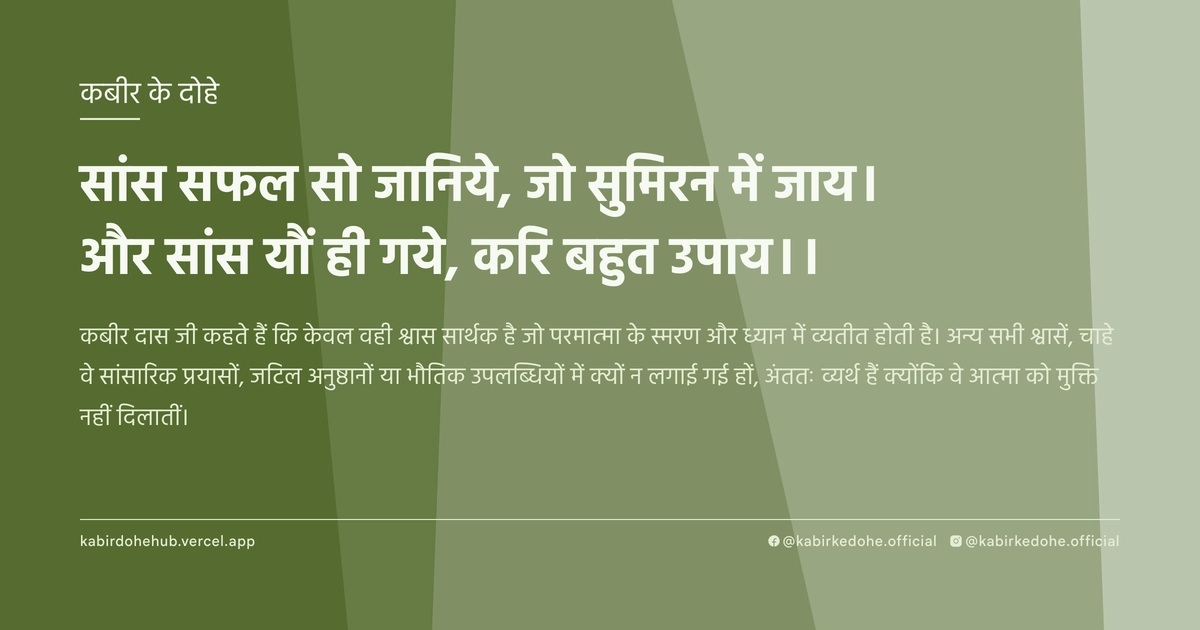
सांस सफल सो जानिये, जो सुमिरन में जाय।
और सांस यौं ही गये, करि बहुत उपाय।।
Saans safal so jaaniye, jo sumiran me jaaye. Aur saans yaun hi gaye, kari bahut upaay.
इस पृष्ठ पर इस कबीर दोहे का अर्थ (meaning), हिंदी व्याख्या और अंग्रेज़ी अनुवाद, दार्शनिक विश्लेषण और व्यावहारिक जीवन सीख दी गई है। यह दोहा समय का महत्व (The Value of Time) विषय से जुड़ा है — Kabir doha meaning and explanation in Hindi and English.
अर्थ (Meaning):
कबीर दास जी कहते हैं कि केवल वही श्वास सार्थक है जो परमात्मा के स्मरण और ध्यान में व्यतीत होती है। अन्य सभी श्वासें, चाहे वे सांसारिक प्रयासों, जटिल अनुष्ठानों या भौतिक उपलब्धियों में क्यों न लगाई गई हों, अंततः व्यर्थ हैं क्योंकि वे आत्मा को मुक्ति नहीं दिलातीं।
Kabir asserts that only the breath spent in the remembrance of the Divine is truly successful. All other breaths, wasted in worldly pursuits, complex rituals, or material acquisitions, are ultimately futile, as they fail to lead the soul toward spiritual liberation and eternal truth.
व्याख्या (Interpretation):
इस दोहे का शाब्दिक अर्थ है कि जीवन की गणना श्वासों से होती है। गहराई में, 'सुमिरन' केवल नाम जपना नहीं, बल्कि निरंतर जागरूकता (Mindfulness) है। यह निर्गुण भक्ति का सार है जहाँ ईश्वर बाहर नहीं, बल्कि श्वास-श्वास में निहित है। माया हमें यह विश्वास दिलाती है कि बाहरी 'उपाय' या कर्मकांड हमें मोक्ष देंगे, जबकि सत्य केवल अंतर्मुखी होने में है। यहाँ श्वास आत्मा और परमात्मा के बीच का सेतु है। जब अहंकार मिटता है, तब श्वास केवल शारीरिक क्रिया न रहकर एक आध्यात्मिक प्रार्थना बन जाती है। यह द्वैत से अद्वैत की यात्रा है।
Literally, the verse suggests that life is measured by breaths. Metaphorically, 'Sumiran' is not mere repetition of a name but a state of continuous conscious awareness. This aligns with Nirgun Bhakti, where the Divine is not an external entity but resides within every breath. Maya creates the illusion that external 'upayas' or rituals lead to salvation, whereas truth lies in introspection. The breath serves as the bridge between the Atman and Brahman. When the ego dissolves, breathing ceases to be a biological function and becomes a spiritual prayer, marking the transition from duality to non-duality.
दार्शनिक विश्लेषण (Philosophical Analysis):
कबीर का यह दर्शन उस समय के कट्टरपंथी कर्मकांडों और बाहरी आडंबरों के विरुद्ध एक सशक्त प्रहार था। उन्होंने देखा कि लोग तीर्थयात्राओं और कठिन उपवासों में अपनी ऊर्जा नष्ट कर रहे थे, जबकि वास्तविक ईश्वर उनके भीतर ही था। यह दृष्टिकोण अद्वैत वेदांत के करीब है, जहाँ जीव और ब्रह्म की एकता पर बल दिया गया है। कबीर के लिए, 'सुमिरन' का अर्थ है स्वयं के वास्तविक स्वरूप को पहचानना।
सूफी मत के 'जिक्र' (निरंतर स्मरण) के साथ इसका गहरा संबंध है, जहाँ साधक अपने हृदय को ईश्वर की याद से इतना भर देता है कि दुनिया का अस्तित्व मिट जाता है। कबीर यहाँ मनोवैज्ञानिक रूपांतरण की बात कर रहे हैं; वे चाहते हैं कि मनुष्य अपनी चेतना को बाहरी दुनिया से हटाकर आंतरिक केंद्र पर ले आए।
ritualism का विरोध करते हुए वे बताते हैं कि 'उपाय' (तरीके) केवल मानसिक उलझनें पैदा करते हैं। जब तक 'मैं' (अहंकार) जीवित है, कोई भी उपाय सफल नहीं हो सकता। केवल समर्पण और निरंतर जागरूकता ही अहंकार का विसर्जन कर सकती है।
ऐतिहासिक रूप से, कबीर ने जाति और धर्म की दीवारों को तोड़कर एक ऐसा मार्ग दिखाया जो सरल और सुलभ था। उन्होंने सिखाया कि मोक्ष किसी विशेष वर्ग के लिए नहीं, बल्कि हर उस व्यक्ति के लिए है जो अपनी श्वासों को सचेत करता है।
अंततः, यह दोहा समय की नश्वरता की याद दिलाता है। जीवन सीमित है, और यदि हम इसे केवल भौतिक संग्रह में बिताते हैं, तो हम अस्तित्व के वास्तविक उद्देश्य को खो देते हैं। यह एक आह्वान है कि हम अपनी जैविक जीवन प्रक्रिया को आध्यात्मिक साधना में बदल दें।
Kabir's philosophy serves as a potent critique of the rigid ritualism and external ostentations prevalent during his era. He observed people exhausting their energy in pilgrimages and severe fasts, oblivious to the Divine residing within. This perspective closely aligns with Advaita Vedanta, emphasizing the fundamental unity between the individual soul (Atman) and the universal consciousness (Brahman).
There is a profound connection here to the Sufi practice of 'Zikr' (constant remembrance), where the seeker fills the heart with the Divine until the external world fades. Kabir advocates for a psychological transformation, urging the human consciousness to shift from the periphery of worldly distraction to the internal center of being.
By rejecting ritualism, he argues that 'upayas' (methods/contrivances) often create mental clutter. As long as the 'I' (ego) persists, no external method can be successful. Only total surrender and continuous awareness can dissolve the ego's grip.
Historically, Kabir dismantled the barriers of caste and creed, offering a path that was simple and accessible to all. He taught that liberation is not the prerogative of a specific class but is available to anyone who brings consciousness to their breath.
Ultimately, this doha reminds us of the transience of time. Life is finite, and if spent solely in material accumulation, the true purpose of existence is lost. It is a call to transmute the biological process of breathing into a spiritual discipline.
मूल संदेश (Core Message):
- बाहरी कर्मकांड केवल भ्रम हैं, आंतरिक जागरूकता ही सत्य है।
- सार्थक जीवन वह है जहाँ हर श्वास परमात्मा के प्रति समर्पित हो।
- अहंकार के 'उपाय' आत्मा की वास्तविक यात्रा में बाधा हैं।
- शांति खोजने का प्रयास छोड़कर, स्वयं शांति बन जाना ही सुमिरन है।
- अद्वैत का अनुभव श्वास की सचेत लय में छिपा है।
- External rituals are mere illusions; internal awareness is the only truth.
- A meaningful life is one where every breath is dedicated to the Divine.
- The 'methods' of the ego are obstacles to the soul's true journey.
- Cease striving for peace and instead become peace; that is true Sumiran.
- The experience of non-duality is hidden within the conscious rhythm of breath.
व्यावहारिक उदाहरण (Practical Example):
वाराणसी के घाटों पर रहने वाले एक वृद्ध विधवा, जानकी, का जीवन केवल परंपराओं और शोक के इर्द-गिर्द घूमता था। वह प्रतिदिन घंटों कठिन पूजा करती और शास्त्रों के अनुसार कड़े नियम मानती, लेकिन उसके मन में हमेशा एक अधूरापन और क्रोध रहता था। वह मानती थी कि उसकी मुक्ति केवल इन बाहरी नियमों के पालन में है।
एक दिन उसकी मुलाकात एक घुमक्कड़ साधु से हुई, जिसने उसे कबीर का यह दोहा सुनाया। साधु ने उससे पूछा, 'क्या तुम्हारी पूजा के दौरान तुम्हारी श्वासें शांत हैं, या वे केवल नियमों के बोझ तले दबी हैं?' जानकी को पहली बार एहसास हुआ कि वह पूजा तो कर रही थी, लेकिन उसका मन अतीत के दुखों और भविष्य की चिंताओं में भटक रहा था।
उसने महसूस किया कि उसके द्वारा किए गए सभी 'उपाय'—कठोर उपवास, लंबी मालाएं—केवल एक मानसिक ढाल थे। वह वास्तव में स्वयं से और ईश्वर से कटी हुई थी। उसने धीरे-धीरे बाहरी दिखावे को कम किया और अपना ध्यान केवल अपनी श्वास पर केंद्रित करना शुरू किया।
अब वह पूजा के समय केवल मंत्र नहीं पढ़ती थी, बल्कि हर आती-जाती श्वास के साथ यह अनुभव करती थी कि वह उस अनंत चेतना का हिस्सा है। उसने पाया कि जब वह श्वास के प्रति सचेत हुई, तो उसका क्रोध शांत होने लगा।
उसने देखा कि उसके आसपास के लोग, जिन्हें वह अब तक 'अपवित्र' मानती थी, वास्तव में उसी एक ईश्वरीय प्रकाश के प्रतिबिंब थे। उसका व्यवहार बदल गया; वह अब केवल नियमों की रक्षक नहीं, बल्कि करुणा की मूरत बन गई।
उसने अपने घर के दरवाजे उन सभी के लिए खोल दिए जिन्हें समाज ने ठुकरा दिया था। वह अब घंटों बैठकर केवल अपनी श्वासों को महसूस करती और मुस्कुराती, क्योंकि उसे समझ आ गया था कि असली 'सुमिरन' शांति में है, शोर में नहीं।
उसकी जीवन यात्रा अब 'उपायों' से 'अनुभव' की ओर मुड़ गई थी। उसने पाया कि जब श्वास सचेत होती है, तो जीवन का हर क्षण एक उत्सव बन जाता है।
अंत में, जानकी ने महसूस किया कि वह अब मृत्यु से नहीं डरती, क्योंकि उसने अपनी हर श्वास को सार्थक बना लिया था। उसकी मुक्ति किसी मंदिर या घाट में नहीं, बल्कि उसकी अपनी जागरूकता में थी।
Janaki, an elderly widow living on the ghats of Varanasi, spent her life revolving around rigid traditions and mourning. She spent hours in arduous worship and followed strict scriptural rules, yet her heart remained filled with a sense of incompleteness and latent anger. She believed her liberation lay solely in the adherence to these external mandates.
One day, she encountered a wandering monk who recited this doha of Kabir. The monk asked her, 'During your worship, are your breaths peaceful, or are they merely crushed under the weight of rules?' For the first time, Janaki realized that while she was performing rituals, her mind was drifting through past sorrows and future anxieties.
She recognized that all her 'upayas'—the severe fasts and long prayer beads—were merely psychological shields. She was, in reality, disconnected from herself and the Divine. Slowly, she reduced the external displays and began focusing solely on the rhythm of her breath.
Now, during her prayers, she didn't just recite mantras; with every inhalation and exhalation, she experienced herself as a part of the infinite consciousness. She discovered that as she became conscious of her breath, her anger began to subside.
She noticed that the people around her, whom she had previously deemed 'impure,' were actually reflections of the same divine light. Her behavior transformed; she was no longer a guardian of rules, but an embodiment of compassion.
She opened her doors to all those rejected by society. She would now sit for hours, simply feeling her breath and smiling, understanding that true 'Sumiran' exists in silence, not in noise.
Her life journey shifted from 'methods' to 'experience.' She found that when the breath is conscious, every moment of life becomes a celebration.
Ultimately, Janaki realized she no longer feared death, for she had made every breath meaningful. Her liberation was not found in a temple or on a ghat, but within her own awareness.
अभ्यास मार्गदर्शन (Practice Guidance):
- प्रतिदिन 20 मिनट 'साक्षी भाव' का अभ्यास करें: अपनी श्वास को नियंत्रित करने के बजाय, केवल उसे आते-जाते देखें।
- स्व-पूछताछ जर्नल: दिन के अंत में लिखें कि कितनी बार आपका मन 'उपायों' (चिंताओं, योजनाएं) में उलझा रहा और कितनी बार आप वर्तमान क्षण में उपस्थित थे।
- व्यवहारिक परिवर्तन: किसी भी कार्य को करते समय (जैसे चलना या भोजन करना), अपनी श्वास को उस कार्य के साथ जोड़ें, जिससे वह कार्य एक ध्यान बन जाए।
- निदान चेकलिस्ट: क्या आप अभी भी बाहरी मान्यतायों के आधार पर अपनी आध्यात्मिक प्रगति माप रहे हैं? यदि हाँ, तो आप अभी भी 'उपायों' के जाल में हैं।
- Practice 'Witness Consciousness' for 20 minutes daily: Instead of controlling your breath, simply observe its natural flow of coming and going.
- Self-Inquiry Journaling: At the end of the day, record how often your mind was entangled in 'upayas' (worries, planning) versus how often you were truly present in the moment.
- Behavioral Shift: While performing any mundane task (like walking or eating), synchronize your awareness with your breath, turning the action into a meditation.
- Diagnostic Checklist: Are you still measuring your spiritual progress based on external validations or rituals? If yes, you are still trapped in the web of 'upayas'.
चिंतन प्रश्न (Reflection Questions):
- मेरे जीवन के वे कौन से 'उपाय' हैं जिन्हें मैं आध्यात्मिक प्रगति समझ रहा हूँ, लेकिन वे वास्तव में केवल मेरा अहंकार संतुष्ट कर रहे हैं?
- यदि मेरी सभी सामाजिक पहचान और उपलब्धियाँ छीन ली जाएँ, तो क्या मेरी श्वासों में अभी भी कोई शांति शेष रहेगी?
- मैं अपनी डिजिटल पहचान (सोशल मीडिया) को संवारने में कितनी श्वासें व्यर्थ करता हूँ, जबकि मेरी आंतरिक दुनिया उपेक्षित है?
- क्या मेरा 'ईश्वर' केवल एक बाहरी विचार है, या मैंने उसे अपनी श्वासों की गहराई में महसूस किया है?
- जब मैं क्रोध या भय में होता हूँ, तो मेरी श्वासें मुझे कहाँ ले जाती हैं, और मैं उन्हें वापस कैसे ला सकता हूँ?
- Which 'upayas' in my life am I mistaking for spiritual progress, while they are actually just feeding my ego?
- If all my social identities and achievements were stripped away, would there be any peace remaining in my breaths?
- How many breaths do I waste polishing my digital identity while my internal world remains neglected?
- Is my 'God' merely an external concept, or have I felt the Divine in the depths of my own breathing?
- When I am consumed by anger or fear, where do my breaths take me, and how can I bring them back to the center?