
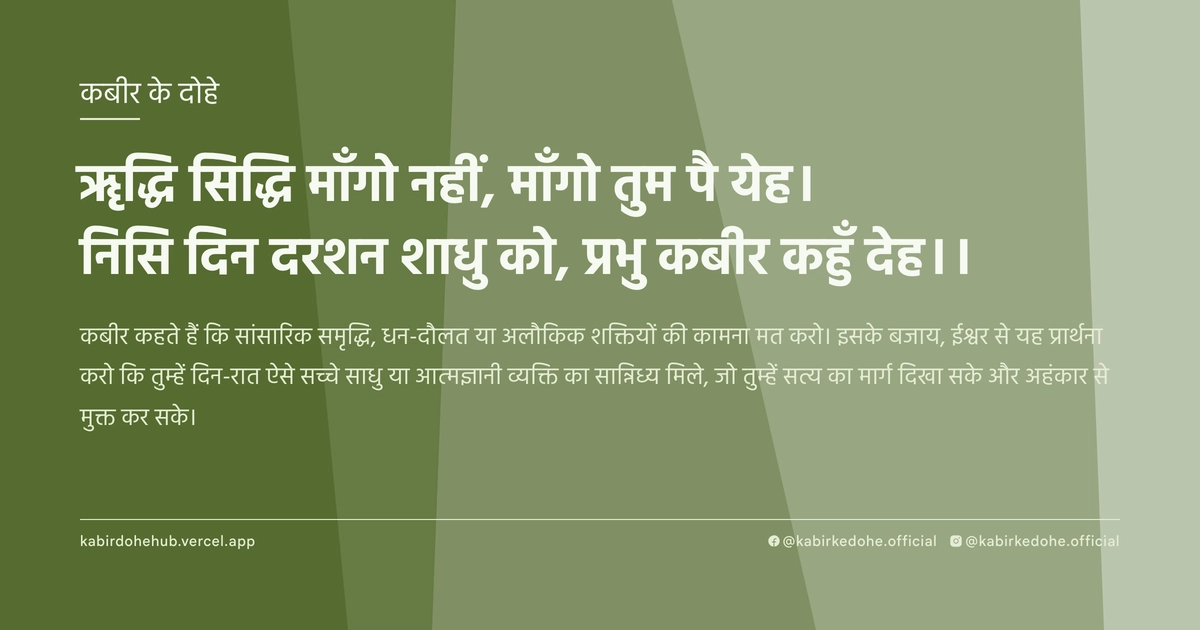
ॠद्धि सिद्धि माँगो नहीं, माँगो तुम पै येह।
निसि दिन दरशन शाधु को, प्रभु कबीर कहुँ देह।।
Riddhi siddhi maango nahi, maango tum pai yeh. Nisi din darshan shadhu ko, prabhu Kabir kahun deh.
इस पृष्ठ पर इस कबीर दोहे का अर्थ (meaning), हिंदी व्याख्या और अंग्रेज़ी अनुवाद, दार्शनिक विश्लेषण और व्यावहारिक जीवन सीख दी गई है। यह दोहा सत्संग (Satsang) विषय से जुड़ा है — Kabir doha meaning and explanation in Hindi and English.
अर्थ (Meaning):
कबीर कहते हैं कि सांसारिक समृद्धि, धन-दौलत या अलौकिक शक्तियों की कामना मत करो। इसके बजाय, ईश्वर से यह प्रार्थना करो कि तुम्हें दिन-रात ऐसे सच्चे साधु या आत्मज्ञानी व्यक्ति का सान्निध्य मिले, जो तुम्हें सत्य का मार्ग दिखा सके और अहंकार से मुक्त कर सके।
Kabir advises against craving material prosperity, worldly success, or supernatural powers. Instead, he urges the seeker to pray for the constant presence and guidance of a true saint or an enlightened soul, as their company is the only catalyst for genuine spiritual awakening and liberation from the ego.
व्याख्या (Interpretation):
इस दोहे का शाब्दिक अर्थ है कि भौतिक उपलब्धियों की इच्छा का त्याग कर सत्संग की कामना करना। गहरे स्तर पर, 'ॠद्धि-सिद्धि' माया के उन सूक्ष्म जाल हैं जो साधक को आध्यात्मिक मार्ग से भटकाते हैं। कबीर यहाँ निर्गुण भक्ति का संदेश दे रहे हैं, जहाँ ईश्वर किसी बाहरी मूर्ति में नहीं, बल्कि उस शुद्ध चेतना में है जो एक जाग्रत साधु के माध्यम से प्रतिबिंबित होती है। यह अद्वैत वेदांत के उस सिद्धांत को दर्शाता है जहाँ गुरु का सान्निध्य अज्ञान की परतों को हटाकर आत्मा और ब्रह्म की एकता का अनुभव कराता है। यहाँ 'साधु' केवल एक व्यक्ति नहीं, बल्कि उस उच्च चेतना का प्रतीक है जो साधक को उसके अपने आंतरिक शून्य से परिचित कराता है।
Literally, the verse suggests replacing the desire for material gain with a longing for the company of the wise. Metaphorically, 'Riddhi-Siddhi' represents the subtle traps of Maya—the illusions of power and prestige that often masquerade as spiritual achievements. Kabir emphasizes Nirgun Bhakti, where the Divine is not found in rituals but in the living embodiment of Truth. This aligns with Advaita Vedanta, where the Guru acts as a mirror, reflecting the seeker's own inherent divinity. The 'Sadhu' here is not merely a person in saffron robes, but a symbol of awakened consciousness that helps the seeker navigate the paradox of being a finite body while possessing an infinite soul, eventually leading to the annihilation of the separate self.
दार्शनिक विश्लेषण (Philosophical Analysis):
कबीर का यह विचार उनके युग के उस सामाजिक और धार्मिक परिवेश की प्रतिक्रिया है जहाँ लोग धर्म का उपयोग केवल व्यक्तिगत लाभ, मोक्ष के शॉर्टकट या सामाजिक प्रतिष्ठा पाने के लिए कर रहे थे। उन्होंने स्पष्ट रूप से कर्मकांडों और बाहरी आडंबरों का विरोध किया, क्योंकि उनका मानना था कि बाहरी चमत्कार व्यक्ति के अहंकार को और अधिक पुष्ट करते हैं, उसे शांत नहीं करते।
दार्शनिक रूप से, यह दोहा सूफी मत के 'पीर' और वेदांत के 'गुरु' की अवधारणा का संगम है। सूफीवाद में 'इश्क-ए-हकीकी' (ईश्वर के प्रति प्रेम) के लिए एक मार्गदर्शक की आवश्यकता होती है, जो साधक को 'नफ्स' (अहंकार) के विनाश की ओर ले जाए। कबीर यहाँ तर्क देते हैं कि सिद्धियाँ वास्तव में आध्यात्मिक बाधाएँ हैं; यदि कोई व्यक्ति अपनी साधना से शक्तियाँ प्राप्त करता है, तो वह अक्सर उन शक्तियों का दास बन जाता है, जिससे उसका वास्तविक लक्ष्य—आत्म-साक्षात्कार—दूर हो जाता है।
यह शिक्षण मनोवैज्ञानिक रूपांतरण पर केंद्रित है। जब हम भौतिक सुख माँगते हैं, तो हम अपनी कमी (lack) को पुष्ट करते हैं। लेकिन जब हम एक साधु का सान्निध्य माँगते हैं, तो हम अपनी चेतना के विस्तार की माँग कर रहे होते हैं। यह 'स्व' से 'सर्व' की ओर संक्रमण है।
कबीर का विरोध उन पाखंडियों से था जो धर्म के नाम पर धन संचय करते थे। वे सिखाते हैं कि वास्तविक समृद्धि आंतरिक शांति और सत्य का ज्ञान है। उनके लिए, एक सच्चा साधु वह है जिसने अपनी वासनाओं को जीत लिया है और जो बिना किसी स्वार्थ के सत्य का प्रसार करता है।
अंततः, यह दोहा हमें सिखाता है कि आध्यात्मिक यात्रा अकेले नहीं, बल्कि एक ऐसे मार्गदर्शक के साथ की जानी चाहिए जिसने उस रास्ते को पहले ही पार किया हो। यह अद्वैत की उस स्थिति की ओर ले जाता है जहाँ साधक, गुरु और ईश्वर के बीच का भेद समाप्त हो जाता है और केवल शुद्ध अस्तित्व शेष रहता है।
Kabir’s insight is a direct response to the socio-religious climate of his era, where spirituality was often reduced to a means for personal gain, shortcuts to salvation, or social prestige. He vehemently rejected ritualism and external displays of piety, arguing that supernatural powers (Siddhis) often reinforce the ego rather than dissolve it, creating a new layer of spiritual pride that obstructs the path to liberation.
Philosophically, this verse synthesizes the Sufi concept of the 'Pir' and the Vedantic tradition of the 'Guru'. In Sufism, the journey toward 'Ishq-e-Haqiqi' (Divine Love) requires a guide to help the seeker navigate the annihilation of the 'Nafs' (the lower self). Kabir posits that material and psychic powers are actually spiritual hurdles; if a practitioner gains powers through austerity, they risk becoming a slave to those powers, drifting away from the ultimate goal of Self-realization.
This teaching focuses on psychological transformation. By asking for material wealth, we reinforce the feeling of scarcity and separation. However, by seeking the company of a realized soul, we are asking for the expansion of our consciousness. This is a transition from the 'I' to the 'All'.
Kabir’s critique extends to the hypocrisy of those who used religion for financial accumulation. He asserts that true prosperity is not found in gold, but in the stillness of the mind and the clarity of Truth. To him, a true Sadhu is one who has conquered desire and transmits truth without ulterior motives.
Ultimately, the verse teaches that the spiritual journey is not a solitary trek into the void, but a guided ascent. It leads toward the state of Non-duality (Advaita), where the distinction between the seeker, the guide, and the Divine vanishes, leaving only the singular, luminous reality of Pure Existence.
मूल संदेश (Core Message):
- बाहरी चमत्कार केवल मन का भ्रम हैं, आंतरिक शांति ही वास्तविक सिद्धि है।
- अहंकार की तृप्ति आध्यात्मिक पतन का मार्ग है, आत्म-समर्पण ही उत्थान है।
- सच्चा गुरु वह है जो आपको आपसे ही मिला दे।
- भौतिक समृद्धि क्षणभंगुर है, लेकिन बोध शाश्वत है।
- इच्छाओं का त्याग ही वास्तविक प्राप्ति की पहली सीढ़ी है।
- External miracles are mere mental illusions; inner stillness is the only true attainment.
- Feeding the ego leads to spiritual decline; total surrender is the path to ascent.
- A true guide is one who introduces you to your own authentic self.
- Material prosperity is ephemeral, but spiritual awakening is eternal.
- The cessation of craving is the first step toward absolute fulfillment.
व्यावहारिक उदाहरण (Practical Example):
वाराणसी के घाटों पर रहने वाली एक वृद्ध विधवा, जानकी, का जीवन केवल यादों और अभावों से भरा था। वह हर दिन मंदिर जाकर अपनी गरीबी दूर करने और अपने मृत बेटे की आत्मा की शांति के लिए चमत्कारिक शक्तियों की प्रार्थना करती थी। वह मानती थी कि यदि उसे कोई दैवीय शक्ति मिल जाए, तो उसका दुख समाप्त हो जाएगा।
एक दिन, घाट की सीढ़ियों पर एक फकीर बैठा था, जो न कुछ माँग रहा था और न ही किसी को चमत्कार दिखा रहा था। वह बस शांत था, और उसकी आँखों में एक असीम करुणा थी। जानकी उसके पास गई और अपनी व्यथा सुनाई, यह उम्मीद करते हुए कि वह फकीर उसे कोई ऐसा मंत्र देगा जिससे उसकी दरिद्रता मिट जाए।
फकीर ने उसकी बात सुनी और बस इतना कहा, 'माँ, तू उस चीज़ की माँग कर रही है जो तुझे फिर से बंधन में बाँध देगी। तू गरीबी से नहीं, बल्कि इस दुख के प्रति अपने लगाव से परेशान है।'
जानकी को पहले तो यह बात अजीब लगी, लेकिन वह उस फकीर के सान्निध्य में कुछ दिन बिताने लगी। उसने देखा कि फकीर के पास कुछ नहीं था, फिर भी वह सबसे अधिक समृद्ध दिख रहा था। उसकी शांति संक्रामक थी।
धीरे-धीरे, जानकी ने महसूस किया कि उसकी प्रार्थनाएँ अब धन के लिए नहीं, बल्कि उस आंतरिक शांति के लिए थीं जो उसने उस फकीर में देखी थी। उसने महसूस किया कि उसकी 'गरीबी' वास्तव में उसके मन की तड़प थी, न कि संसाधनों की कमी।
एक शाम, फकीर ने उसे समझाया कि कैसे उसका दुख उसके अहंकार का एक हिस्सा है जो यह मानता है कि 'मैं दुखी हूँ'। जब उसने इस विचार को छोड़ दिया, तो उसे एक ऐसी खुशी मिली जो किसी भी भौतिक समृद्धि से बड़ी थी।
जानकी का व्यवहार बदल गया। अब वह अन्य दुखी महिलाओं की मदद करने लगी, उन्हें वह शांति बाँटने लगी जो उसने पाई थी। उसने अब चमत्कार नहीं माँगे, बल्कि स्वयं एक शांत उपस्थिति बन गई।
यह 'कबीर ट्विस्ट' था: जानकी ने बाहरी अभाव को दूर करने की कोशिश छोड़ दी और आंतरिक पूर्णता को खोज लिया। उसकी दुनिया नहीं बदली, लेकिन दुनिया को देखने वाला उसका नजरिया बदल गया, जिससे उसका जीवन वास्तव में समृद्ध हो गया।
Janaki, an elderly widow living on the ghats of Varanasi, spent her days immersed in memories and deprivation. Every day, she visited the temple, praying for miraculous powers to erase her poverty and grant peace to her deceased son's soul. She believed that a divine miracle was the only escape from her suffering.
One day, she encountered a Fakir sitting on the stone steps of the river. He asked for nothing and performed no miracles; he was simply still, his eyes radiating an infinite, silent compassion. Janaki approached him, hoping he possessed a secret mantra that could instantly vanish her misery.
The Fakir listened and replied softly, 'Mother, you are asking for things that will only bind you tighter to your chains. You are not suffering from poverty, but from your attachment to the identity of being a sufferer.'
Initially, Janaki found this confusing, but she began spending time in his presence. She noticed that while the Fakir possessed nothing, he appeared to be the wealthiest man she had ever known. His peace was contagious, filling the space around him.
Gradually, Janaki’s prayers shifted. She no longer asked for gold or miracles; she began to long for the internal stillness she witnessed in the Fakir. She realized that her 'poverty' was actually a mental turbulence, not a lack of resources.
One evening, the Fakir explained that her grief was a facet of the ego that clung to the story of 'I am miserable.' Once she surrendered this narrative, she discovered a joy that transcended any material acquisition.
Janaki’s behavior transformed. She began supporting other grieving women on the ghats, sharing the serenity she had discovered. She stopped seeking miracles and instead became a miraculous presence of peace for others.
This was the 'Kabir Twist': Janaki stopped trying to fix her external lack and instead discovered her internal abundance. Her circumstances remained the same, but her perception shifted, rendering her life truly prosperous for the first time.
अभ्यास मार्गदर्शन (Practice Guidance):
- प्रतिदिन 20 मिनट मौन अभ्यास करें, जहाँ आप किसी बाहरी इच्छा के बजाय केवल अपनी श्वास और वर्तमान क्षण की उपस्थिति पर ध्यान केंद्रित करें।
- एक 'इच्छा-विश्लेषण' जर्नल बनाएँ: लिखें कि आप क्या माँग रहे हैं और फिर स्वयं से पूछें, 'क्या यह माँग मेरे अहंकार को बढ़ा रही है या मेरी चेतना को?'
- सच्चे मार्गदर्शन की पहचान के लिए एक चेकलिस्ट: क्या यह व्यक्ति मुझे अपनी प्रशंसा करने के लिए प्रेरित कर रहा है, या मुझे मेरे स्वयं के भ्रमों का आइना दिखा रहा है?
- व्यवहारिक परिवर्तन: सप्ताह में एक बार किसी ऐसे व्यक्ति की सेवा करें जिससे आपको कोई लाभ न मिले, ताकि 'लेन-देन' की मानसिकता समाप्त हो सके।
- Practice 20 minutes of daily silence, focusing not on external desires but on the sheer presence of your breath and the current moment.
- Maintain a 'Desire-Analysis' journal: List your current cravings and ask yourself, 'Is this request feeding my ego or expanding my consciousness?'
- Diagnostic Checklist for True Guidance: Does this teacher encourage me to praise them, or do they hold up a mirror to my own illusions and shadows?
- Behavioral Shift: Once a week, perform a selfless act for someone from whom you can gain nothing, systematically dismantling the 'transactional' mindset of the ego.
चिंतन प्रश्न (Reflection Questions):
- क्या मेरी आध्यात्मिक खोज वास्तव में सत्य के लिए है, या मैं केवल अपनी वर्तमान समस्याओं से बचने के लिए 'चमत्कार' ढूँढ रहा हूँ?
- मैं किन लोगों को 'साधु' या 'गुरु' मानता हूँ, और क्या मेरा यह मानना उनके गुणों पर आधारित है या उनकी सामाजिक छवि पर?
- यदि मेरे जीवन से मेरी सारी भौतिक उपलब्धियाँ और पहचान छीन ली जाएँ, तो मेरे भीतर क्या बचेगा?
- मेरे भीतर का कौन सा हिस्सा अभी भी यह मानता है कि मुझे पूर्ण होने के लिए किसी बाहरी चीज़ की आवश्यकता है?
- क्या मैं सत्य को सुनने के लिए तैयार हूँ, भले ही वह मेरे सबसे प्रिय विश्वासों को नष्ट कर दे?
- Is my spiritual quest truly for Truth, or am I merely seeking 'miracles' as an escape from my current life problems?
- Who do I categorize as a 'saint' or 'guru', and is this based on their actual virtues or their curated social image?
- If all my material achievements and social identities were stripped away, what would actually remain of me?
- Which part of me still believes that I need something external to be complete or whole?
- Am I truly ready to hear the Truth, even if it annihilates my most cherished beliefs and biases?