
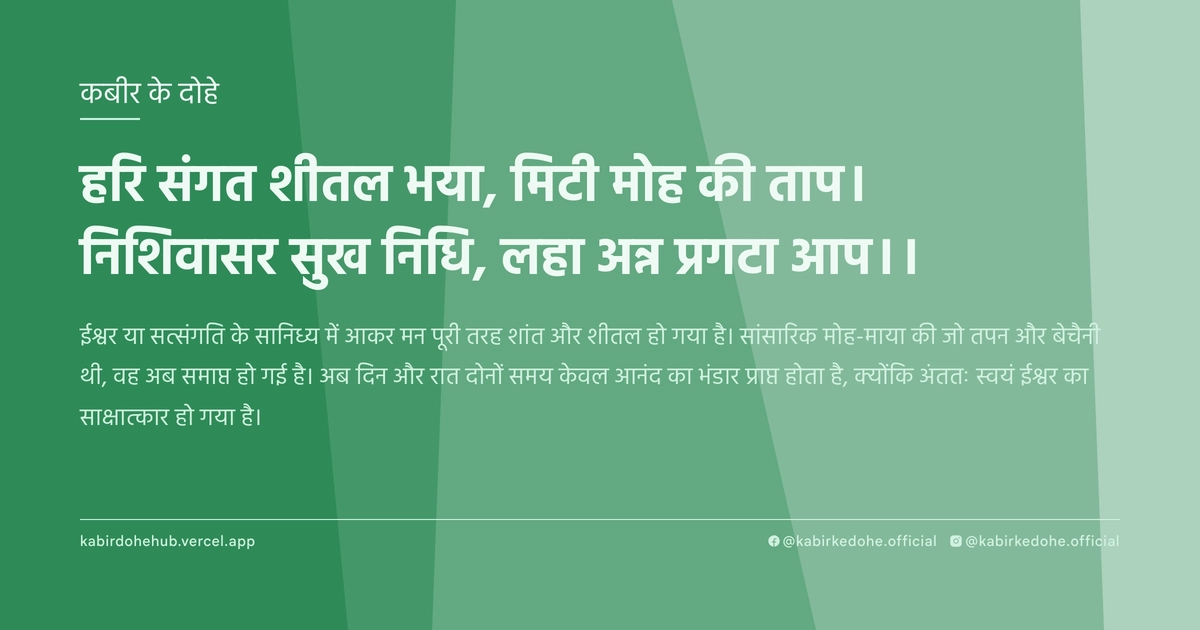
हरि संगत शीतल भया, मिटी मोह की ताप।
निशिवासर सुख निधि, लहा अन्न प्रगटा आप।।
Hari sangat sheetal bhaya, miti moh ki taap. Nishivasar sukh nidhi, laha ann pragata aap.
इस पृष्ठ पर इस कबीर दोहे का अर्थ (meaning), हिंदी व्याख्या और अंग्रेज़ी अनुवाद, दार्शनिक विश्लेषण और व्यावहारिक जीवन सीख दी गई है। यह दोहा सत्संग (Satsang) विषय से जुड़ा है — Kabir doha meaning and explanation in Hindi and English.
अर्थ (Meaning):
ईश्वर या सत्संगति के सानिध्य में आकर मन पूरी तरह शांत और शीतल हो गया है। सांसारिक मोह-माया की जो तपन और बेचैनी थी, वह अब समाप्त हो गई है। अब दिन और रात दोनों समय केवल आनंद का भंडार प्राप्त होता है, क्योंकि अंततः स्वयं ईश्वर का साक्षात्कार हो गया है।
By associating with the Divine or the company of the enlightened, the mind has become profoundly cool and serene. The scorching heat of worldly attachment and delusion has vanished. Now, throughout the day and night, an endless treasure of bliss is attained, for the Divine Presence has finally revealed itself within.
व्याख्या (Interpretation):
इस दोहे का शाब्दिक अर्थ है कि सत्संग से मन की शांति मिलती है। लेकिन गहरा आध्यात्मिक अर्थ यह है कि 'हरि' यहाँ केवल एक बाहरी देवता नहीं, बल्कि वह शुद्ध चेतना (Pure Consciousness) है जो हमारे भीतर है। 'मोह की ताप' उस मानसिक पीड़ा और अतृप्ति का प्रतीक है जो द्वैत (Duality) के कारण पैदा होती है। जब साधक निरगुण भक्ति के माध्यम से बाहरी आडंबरों को त्यागकर अंतर्मुखी होता है, तो माया का पर्दा हट जाता है। यह अद्वैत वेदांत की उस स्थिति को दर्शाता है जहाँ आत्मा और परमात्मा के बीच का अंतर समाप्त हो जाता है। शीतल होना वास्तव में अहंकार के पिघलने और शांति के उदय होने की प्रक्रिया है। अंततः, जब 'हरि आप' प्रकट होते हैं, तो यह इस सत्य की पुष्टि है कि ईश्वर कहीं बाहर नहीं, बल्कि स्वयं साधक के वास्तविक स्वरूप में ही विद्यमान था।
Literally, the verse speaks of the peace found in holy company. Metaphorically, 'Hari' represents the Pure Consciousness residing within, rather than an external deity. The 'heat of attachment' symbolizes the psychological suffering and restlessness born from the illusion of duality (Maya). In the tradition of Nirgun Bhakti, this cooling effect is the dissolution of the ego. As the seeker moves beyond ritualism, the veil of illusion lifts, aligning with Advaita Vedanta's realization of non-duality (Atman-Brahman). The 'cooling' is the alchemy of transforming passion into peace. When 'Hari reveals Himself,' it signifies the ultimate epiphany: the Divine is not a distant entity to be reached, but the very essence of the seeker's own being, emerging once the noise of the ego falls silent.
दार्शनिक विश्लेषण (Philosophical Analysis):
कबीर का यह दोहा उस कालखंड की उपज है जब धर्म केवल कर्मकांडों और बाहरी दिखावे तक सीमित था। कबीर ने मंदिर-मस्जिद के विवादों से ऊपर उठकर 'सत्संग' को प्राथमिकता दी। यहाँ सत्संग का अर्थ केवल लोगों से मिलना नहीं, बल्कि सत्य (Truth) का संग करना है। यह सूफी मत के 'इश्क-ए-हकीकी' (ईश्वरीय प्रेम) के समान है, जहाँ प्रेमी और प्रियतम का भेद मिट जाता है।
दार्शनिक स्तर पर, यह दोहा अद्वैत वेदांत के 'अहं ब्रह्मास्मि' के विचार को पुष्ट करता है। मोह की ताप वह अज्ञान है जो हमें यह विश्वास दिलाता है कि हम शरीर हैं। जब यह अज्ञान मिटता है, तो जो शेष बचता है वह 'शीतलता' या परम शांति है। कबीर यहाँ यह समझा रहे हैं कि मोक्ष कोई बाहरी गंतव्य नहीं, बल्कि एक आंतरिक स्थिति है।
कबीर ने जाति और वर्ण व्यवस्था का कड़ा विरोध किया क्योंकि उनका मानना था कि ईश्वर का प्रकाश किसी विशेष जाति की बपौती नहीं है। उनके लिए 'हरि' वह सार्वभौमिक ऊर्जा है जो हर जीव में समान रूप से प्रवाहित है। यह विश्लेषण स्पष्ट करता है कि आध्यात्मिक प्रगति के लिए बाहरी अनुष्ठानों की नहीं, बल्कि आंतरिक शुद्धि और सही मार्गदर्शन की आवश्यकता है।
मनोवैज्ञानिक दृष्टिकोण से, 'मोह की ताप' चिंता, ईर्ष्या और भय का मिश्रण है। जब व्यक्ति अपनी पहचान को अपनी उपलब्धियों या रिश्तों से जोड़ता है, तो वह तनाव में रहता है। सत्संग या आत्म-साक्षात्कार इस झूठी पहचान को नष्ट कर देता है, जिससे मानसिक स्वास्थ्य और भावनात्मक स्थिरता प्राप्त होती है।
अंततः, यह दोहा इस विरोधाभास को सुलझाता है कि हम जिसे बाहर खोज रहे हैं, वह वास्तव में हमारे भीतर ही छिपा है। 'प्रगट भया हरि आप' का अर्थ है कि जब खोजकर्ता ही खोज का विषय बन जाता है, तब द्वैत समाप्त हो जाता है और केवल अनंत आनंद शेष रहता है।
This couplet emerges from an era where religion was largely reduced to rigid rituals and external displays. Kabir transcends the temple-mosque divide by prioritizing 'Satsang'—not merely as social gathering, but as communion with Truth. This mirrors the Sufi concept of 'Ishq-e-Haqiqi' (Divine Love), where the distinction between the lover and the Beloved dissolves into oneness.
Philosophically, the verse reinforces the Advaita Vedanta principle of 'Aham Brahmasmi' (I am Brahman). The 'heat of attachment' is the primordial ignorance (Avidya) that convinces us we are limited physical entities. Once this ignorance is incinerated, the resulting state is 'coolness'—the profound peace of the Absolute. Kabir posits that liberation is not a destination to be reached after death, but a state of consciousness to be realized here and now.
Kabir’s fierce rejection of caste and creed is central here; he asserts that the Divine Light is not the monopoly of any specific social strata. For him, 'Hari' is the universal energy flowing equally through all beings. This analysis highlights that spiritual evolution requires internal purification and the guidance of a realized soul rather than the performance of mechanical rites.
Psychologically, the 'heat of attachment' represents the friction caused by anxiety, jealousy, and the fear of loss. When an individual anchors their identity in transient achievements or external relationships, they exist in a state of perpetual tension. The realization of the Divine disrupts this false identity, replacing it with an unshakable emotional stability.
Ultimately, the verse resolves the paradox of the spiritual search: the seeker is the sought. 'Hari reveals Himself' signifies the moment the observer and the observed become one, extinguishing the ego and leaving behind only the eternal treasure of bliss.
मूल संदेश (Core Message):
- बाहरी शोर को शांत करें ताकि आंतरिक संगीत सुनाई दे सके।
- मोह की अग्नि केवल जागरूकता के जल से ही बुझाई जा सकती है।
- सच्चा सत्संग वह है जो आपको स्वयं से मिला दे।
- शांति कोई उपलब्धि नहीं, बल्कि आपका वास्तविक स्वभाव है।
- जब 'मैं' मिटता है, तभी 'वह' प्रकट होता है।
- Silence the external noise to hear the internal symphony.
- The fire of attachment can only be extinguished by the water of awareness.
- True fellowship is that which reunites you with your own Self.
- Peace is not an achievement, but your original nature.
- Only when the 'I' vanishes does the 'Divine' reveal itself.
व्यावहारिक उदाहरण (Practical Example):
वाराणसी के घाटों पर रहने वाली एक वृद्ध विधवा, जानकी, का जीवन अकेलेपन और पुराने दुखों की तपिश से भरा था। वह अपने बीते हुए कल की कड़वाहट और अपनों के खोने के गम में जल रही थी। उसके लिए धर्म का अर्थ था केवल घंटों माला जपना और यह सोचना कि उसके पापों का दंड उसे मिल रहा है।
एक दिन उसकी मुलाकात एक घुमक्कड़ संत से हुई, जो किसी आश्रम से नहीं जुड़े थे। उस संत ने जानकी से कहा, 'तुम पत्थर की मूर्तियों में जिसे खोज रही हो, वह तुम्हारे भीतर की शांति में छिपा है। माला फेरना ठीक है, लेकिन क्या तुम उस हाथ को महसूस करती हो जो माला को घुमा रहा है?'
जानकी ने पहले तो इसे साधारण बात माना, लेकिन फिर उसने संत के साथ समय बिताना शुरू किया। संत ने उसे सिखाया कि कैसे अपने दुखों को एक साक्षी (Witness) की तरह देखा जाए, न कि उनमें डूबकर।
धीरे-धीरे, जानकी ने महसूस किया कि उसकी आंतरिक बेचैनी, जिसे वह 'भाग्य' मानती थी, वास्तव में उसकी अपनी पकड़ और मोह था। वह अपनी यादों के प्रति आसक्त थी, और वही यादें उसे जला रही थीं।
जैसे-जैसे वह मौन और आत्म-निरीक्षण का अभ्यास करने लगी, उसके मन की 'ताप' कम होने लगी। उसने पाया कि जब वह दूसरों की सेवा बिना किसी उम्मीद के करती है, तो उसका मन शीतल हो जाता है।
एक शाम, गंगा आरती के समय, उसे अचानक एक गहरा अनुभव हुआ। उसे महसूस हुआ कि वह अकेली नहीं है; पूरा ब्रह्मांड उसके भीतर है और वह ब्रह्मांड में है। वह जो 'हरि' को बाहर खोज रही थी, वह उसकी अपनी ही चेतना का विस्तार था।
उसकी कड़वाहट गायब हो गई। अब वह घाट पर आने वाले हर अजनबी से ऐसे मिलती थी जैसे वे उसके अपने हों। उसके चेहरे पर एक ऐसी शांति थी जिसे देखकर लोग उससे पूछने लगे कि उसने कौन सा नया मंत्र सीखा है।
जानकी का जवाब सरल था: 'मैंने मंत्र नहीं सीखा, मैंने बस अपनी पकड़ छोड़ दी।' यह कबीर का वह मोड़ था जहाँ बाहरी खोज समाप्त हुई और आंतरिक प्रकाश प्रकट हुआ।
Janaki, an elderly widow living on the ghats of Varanasi, spent her days consumed by the scorching heat of loneliness and old regrets. Her life was a cycle of bitterness over lost loved ones and a rigid adherence to rituals, believing her suffering was a divine punishment for past sins.
One day, she encountered a wandering mystic who belonged to no sect. The mystic told her, 'The one you seek in stone idols is hidden within your own silence. Chanting beads is fine, but do you feel the hand that moves the beads?'
Initially, Janaki dismissed this as simple talk, but she began spending time with him. The mystic taught her the art of being a 'Sakshi' (witness) to her pain, rather than drowning in it.
Slowly, Janaki realized that the restlessness she attributed to 'fate' was actually the friction of her own attachments. She was clinging to memories of a dead past, and those memories were the fire burning her from within.
As she practiced silence and self-inquiry, the 'heat' of her mind began to subside. She discovered that when she served others without expectation, her heart felt a cooling sensation of genuine peace.
One evening, during the Ganga Aarti, she had a profound epiphany. She felt that she was not a fragmented, lonely soul, but an extension of the entire universe. The 'Hari' she had been searching for in rituals was the very essence of her own consciousness.
Her bitterness vanished. She began greeting every stranger on the ghats with a warmth that bordered on the divine. People began asking her which new mantra she had mastered to achieve such serenity.
Janaki’s answer was simple: 'I did not learn a mantra; I simply let go of my grip.' This was the 'Kabir Twist'—the transition from seeking a distant God to realizing the Indwelling Presence.
अभ्यास मार्गदर्शन (Practice Guidance):
- प्रतिदिन 20 मिनट 'साक्षी भाव' का अभ्यास करें: अपने विचारों को बिना किसी निर्णय के केवल देखें, जैसे आप सड़क पर चलती गाड़ियों को देखते हैं।
- आत्म-पूछताछ जर्नल: प्रतिदिन लिखें कि आज किस बात ने आपके मन में 'ताप' (क्रोध, ईर्ष्या, तनाव) पैदा किया और वह किस मोह से जुड़ा था।
- मौन का समय: दिन में एक घंटा पूर्ण मौन रहें, न केवल वाणी से, बल्कि डिजिटल उपकरणों से भी दूर रहकर अपने आंतरिक केंद्र से जुड़ें।
- डायग्नोस्टिक चेकलिस्ट: क्या आप अभी भी दूसरों में दोष खोज रहे हैं? क्या आपकी शांति बाहरी परिस्थितियों पर निर्भर है? यदि हाँ, तो आप अभी भी 'मोह की ताप' में हैं।
- Practice 'Witness Consciousness' for 20 minutes daily: Observe your thoughts without judgment, as if you are watching cars pass by on a street.
- Self-Inquiry Journaling: Record daily instances where 'heat' (anger, jealousy, stress) arose and identify the specific attachment (Moh) fueling it.
- Sacred Silence: Dedicate one hour a day to total silence—not just from speaking, but from all digital noise—to reconnect with your internal center.
- Diagnostic Checklist: Are you still seeking faults in others? Is your peace dependent on external circumstances? If yes, you are still residing in the 'heat of attachment'.
चिंतन प्रश्न (Reflection Questions):
- आपकी पहचान का वह कौन सा हिस्सा है जिसे खोने के डर से आप सबसे ज्यादा तनाव में रहते हैं?
- क्या आपका आध्यात्मिक अभ्यास आपको वास्तव में शांत कर रहा है, या यह केवल आपके अहंकार को 'पवित्र' महसूस कराने का एक तरीका है?
- यदि आपकी सभी सामाजिक उपलब्धियाँ और रिश्ते छीन लिए जाएँ, तो जो बचेगा, क्या आप उस 'शून्य' के साथ सहज हैं?
- आपकी डिजिटल पहचान (Social Media Ego) आपके वास्तविक आंतरिक स्वरूप से कितनी दूर है?
- क्या आप वास्तव में सत्य की खोज कर रहे हैं, या केवल अपनी मान्यताओं की पुष्टि करने वाले लोगों की खोज कर रहे हैं?
- Which part of your identity do you fear losing so much that it keeps you in a state of perpetual tension?
- Is your spiritual practice actually calming you, or is it merely a tool to make your ego feel 'holy'?
- If all your social achievements and relationships were stripped away, would you be comfortable with the 'void' that remains?
- How far has your digital persona (Social Media Ego) drifted from your authentic internal essence?
- Are you truly seeking the Truth, or are you merely seeking people who confirm your existing biases?