
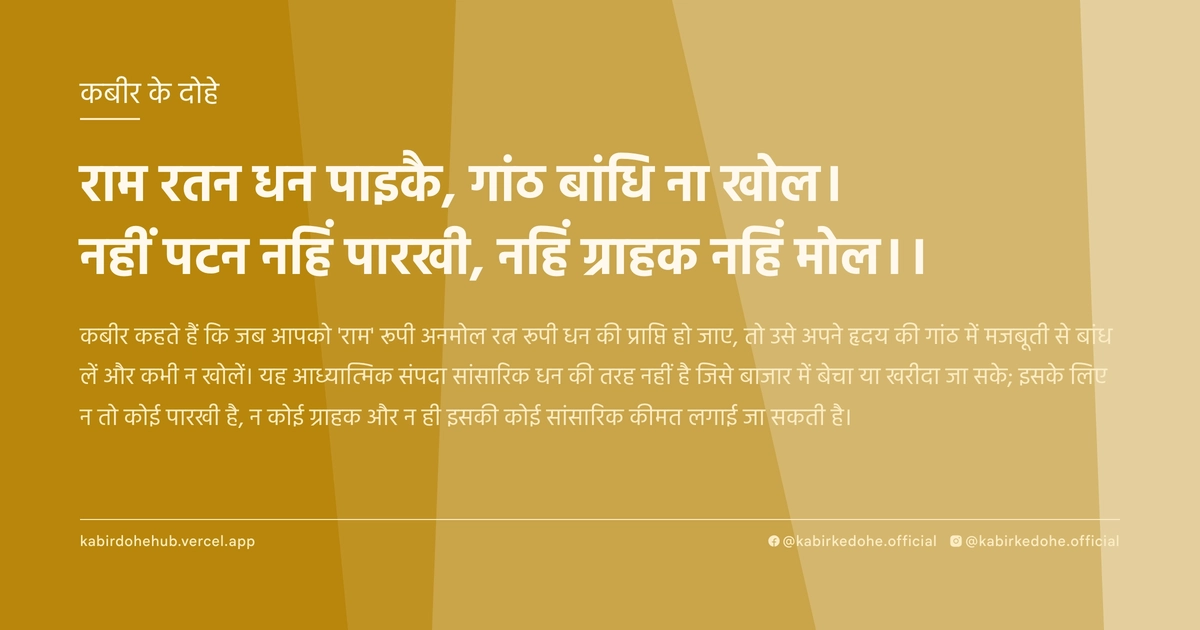
राम रतन धन पाइकै, गांठ बांधि ना खोल।
नहीं पटन नहिं पारखी, नहिं ग्राहक नहिं मोल।।
Ram ratan dhan paikai, ganth bandhi na khol. Nahin patan nahin parkhi, nahin grahak nahin mol.
इस पृष्ठ पर इस कबीर दोहे का अर्थ (meaning), हिंदी व्याख्या और अंग्रेज़ी अनुवाद, दार्शनिक विश्लेषण और व्यावहारिक जीवन सीख दी गई है। यह दोहा भक्ति (Bhakti) विषय से जुड़ा है — Kabir doha meaning and explanation in Hindi and English.
अर्थ (Meaning):
कबीर कहते हैं कि जब आपको 'राम' रूपी अनमोल रत्न रूपी धन की प्राप्ति हो जाए, तो उसे अपने हृदय की गांठ में मजबूती से बांध लें और कभी न खोलें। यह आध्यात्मिक संपदा सांसारिक धन की तरह नहीं है जिसे बाजार में बेचा या खरीदा जा सके; इसके लिए न तो कोई पारखी है, न कोई ग्राहक और न ही इसकी कोई सांसारिक कीमत लगाई जा सकती है।
Kabir proclaims that once you have attained the priceless treasure of 'Ram'—the divine consciousness—tie it securely within the knot of your heart and never let it go. This spiritual wealth is unlike worldly riches; it cannot be traded in a marketplace, for there is no appraiser to value it, no customer to buy it, and no earthly price that can encompass its infinite worth.
व्याख्या (Interpretation):
यहाँ 'राम' शब्द किसी विशेष धर्म के देवता के लिए नहीं, बल्कि उस निर्गुण ब्रह्म या सार्वभौमिक चेतना के लिए प्रयुक्त हुआ है जो कण-कण में व्याप्त है। 'रत्न' और 'धन' का रूपक यह दर्शाता है कि आत्म-साक्षात्कार दुनिया की सबसे बड़ी उपलब्धि है। 'गांठ बांधना' एकाग्रता और निरंतर स्मृति (Smarana) का प्रतीक है, जहाँ साधक अपनी चेतना को बाहरी माया से हटाकर भीतर स्थिर करता है। यह दोहा अद्वैत वेदांत के उस सत्य को उजागर करता है जहाँ आत्मा और परमात्मा का भेद मिट जाता है। जब यह बोध घटित होता है, तो व्यक्ति को बाहरी दुनिया की प्रशंसा या आलोचना की आवश्यकता नहीं रहती। यह एक आंतरिक पूर्णता है जो किसी बाहरी सत्यापन (validation) पर निर्भर नहीं है। अंततः, यह विरोधाभास है कि जिसे पाने के लिए पूरा जीवन लगता है, वह वास्तव में हमारे भीतर ही सदैव मौजूद था।
Here, 'Ram' does not refer to a sectarian deity, but to the Nirgun Brahman—the formless, universal consciousness pervading every atom. The metaphors of 'gem' and 'wealth' signify that self-realization is the ultimate human achievement. 'Tying the knot' symbolizes unwavering concentration and constant remembrance (Smarana), where the seeker withdraws consciousness from external Maya and anchors it within. This verse illuminates the Advaita Vedanta truth of non-duality, where the distinction between Atman and Brahman dissolves. Once this realization occurs, the seeker no longer craves external validation or fear of criticism. It is an internal wholeness that transcends the need for worldly appraisal. Ultimately, it presents the paradox that the treasure sought through a lifetime of struggle was always present within the self.
दार्शनिक विश्लेषण (Philosophical Analysis):
कबीर का यह दोहा उस युग की उपज है जहाँ धर्म बाहरी कर्मकांडों, तीर्थयात्राओं और जातिगत श्रेष्ठता के बोझ तले दबा था। कबीर ने इस 'रत्न' के माध्यम से यह संदेश दिया कि ईश्वर मंदिर या मस्जिद में नहीं, बल्कि मनुष्य के अपने भीतर है। यह दृष्टिकोण सूफी मत के 'वह्दत-उल-वजूद' (अस्तित्व की एकता) और वेदांत के 'अहं ब्रह्मास्मि' के समानांतर है। वे तर्क देते हैं कि बाहरी पूजा केवल अहंकार को बढ़ाती है, जबकि आंतरिक खोज अहंकार का विसर्जन करती है।
दार्शनिक स्तर पर, 'गांठ बांधना' का अर्थ है मन की चंचलता को समाप्त करना। जब तक मन बाहरी दुनिया के आकर्षणों (माया) में भटकता रहता है, वह इस आंतरिक धन को खो देता है। कबीर यहाँ चेतावनी देते हैं कि आध्यात्मिक अनुभव अत्यंत सूक्ष्म होते हैं; यदि उन्हें सचेत रूप से संजोया न जाए, तो वे दैनिक जीवन के शोर में लुप्त हो जाते हैं।
यह दोहा भौतिकवाद और आध्यात्मिकता के बीच के बुनियादी अंतर को स्पष्ट करता है। सांसारिक धन का मूल्य 'बाजार' (समाज) तय करता है, लेकिन आध्यात्मिक धन का मूल्य 'अनुभव' तय करता है। यहाँ 'पारखी' और 'ग्राहक' का अभाव यह दर्शाता है कि सत्य का कोई व्यापार नहीं होता; यह केवल समर्पण और मौन के माध्यम से प्राप्त किया जा सकता है।
कबीर का विरोध उन पाखंडियों से था जो धर्म को एक व्यवसाय की तरह चलाते थे। वे स्पष्ट करते हैं कि वास्तविक भक्ति कोई सौदा नहीं है। यह एक पूर्ण समर्पण है जहाँ 'मैं' (अहंकार) पूरी तरह मिट जाता है और केवल 'वह' (परमात्मा) शेष रहता है।
अंततः, यह विश्लेषण हमें बताता है कि मनोवैज्ञानिक रूपांतरण तब होता है जब हम अपनी पहचान बाहरी उपाधियों से हटाकर आंतरिक शांति में खोजते हैं। यह अहंकार के विलोपन की प्रक्रिया है, जहाँ व्यक्ति यह समझ जाता है कि वह स्वयं वह अनंत सत्य है जिसे वह बाहर खोज रहा था।
This couplet emerges from an era where religion was burdened by external rituals, pilgrimages, and caste hierarchies. Through the metaphor of the 'gem,' Kabir asserts that the Divine resides not in temples or mosques, but within the human heart. This perspective aligns with the Sufi concept of 'Wahdat-ul-Wujud' (Unity of Existence) and the Vedantic 'Aham Brahmasmi' (I am Brahman).
Philosophically, 'tying the knot' refers to the cessation of the mind's restlessness. As long as the mind wanders in the attractions of Maya, it loses this internal wealth. Kabir warns that spiritual experiences are subtle; if not consciously preserved, they vanish amidst the noise of mundane existence.
The verse clarifies the fundamental distinction between materialism and spirituality. Worldly wealth is valued by the 'market' (society), but spiritual wealth is valued by 'experience.' The absence of an 'appraiser' or 'customer' signifies that Truth cannot be traded; it can only be attained through surrender and silence.
Kabir's critique is aimed at those who treated religion as a commercial enterprise. He clarifies that genuine devotion is not a transaction. It is a total surrender where the 'I' (ego) is completely annihilated, leaving only the 'One' (the Divine).
Ultimately, this analysis reveals that psychological transformation occurs when we shift our identity from external titles to internal peace. It is the process of ego-dissolution, where the individual realizes they are the very infinite truth they were searching for externally.
मूल संदेश (Core Message):
- बाहरी खोज एक भ्रम है; वास्तविक सत्य भीतर स्थित है।
- अहंकार का विसर्जन ही आध्यात्मिक संपदा की एकमात्र कुंजी है।
- शांति वह धन है जिसका कोई बाजार नहीं, केवल अनुभव है।
- एकाग्रता और निरंतरता ही आंतरिक बोध को सुरक्षित रखती हैं।
- जब आप स्वयं को जान लेते हैं, तो दुनिया की सारी कमी पूरी हो जाती है।
- External searching is an illusion; the ultimate truth resides within.
- The dissolution of ego is the only key to spiritual wealth.
- Peace is the only currency that has no market, only experience.
- Concentration and consistency preserve the internal realization.
- Once you know yourself, all worldly deficiencies vanish.
व्यावहारिक उदाहरण (Practical Example):
वाराणसी के एक पुराने घाट पर रहने वाले माधव नाम के एक वृद्ध बुनकर थे। माधव अपनी पूरी जिंदगी बेहतरीन रेशमी साड़ियाँ बुनने में बिता चुके थे, लेकिन उनका मन कभी शांत नहीं रहा। वे हमेशा इस चिंता में रहते थे कि उनके द्वारा बुनी गई साड़ियों की कीमत बाजार में कितनी मिलेगी और क्या उनके ग्राहक उन्हें उचित मूल्य देंगे। उनकी खुशी इस बात पर निर्भर थी कि दुनिया उनके काम को कैसे देखती है।
एक दिन, माधव की मुलाकात एक घुमक्कड़ संत से हुई जिसने उन्हें कबीर का यह दोहा सुनाया। संत ने उनसे कहा, "माधव, तुम अपनी साड़ियों की कीमत दूसरों से पूछ रहे हो, लेकिन क्या तुमने कभी उस अनमोल रत्न की कीमत जांची है जो तुम्हारे भीतर है?" माधव को पहले तो यह बात समझ नहीं आई, लेकिन उन्होंने संत के सुझाव पर प्रतिदिन एक घंटा मौन रहकर अपने भीतर झांकना शुरू किया।
शुरुआत में, माधव का मन उनकी पुरानी चिंताओं—पैसे, प्रतिष्ठा और प्रतिस्पर्धा—में भटकता रहा। लेकिन धीरे-धीरे, उन्होंने महसूस किया कि जब वे मौन होते हैं, तो उन्हें एक ऐसी शांति का अनुभव होता है जिसे कोई भी बाहरी धन नहीं खरीद सकता। उन्होंने पाया कि उनकी खुशी अब इस बात पर निर्भर नहीं थी कि उनकी साड़ी कितनी महंगी बिकी, बल्कि इस बात पर थी कि वे उस शांति के साथ कितने जुड़े हुए हैं।
एक समय ऐसा आया जब माधव के शहर में एक बड़ा मेला लगा। बड़े-बड़े व्यापारी उनकी साड़ियों की तारीफ कर रहे थे और उन्हें भारी कीमत देने को तैयार थे। पहले का माधव शायद इस प्रशंसा में डूब जाता, लेकिन अब वह शांत था। उसने महसूस किया कि यह प्रशंसा केवल एक बाहरी शोर है, जबकि उसके भीतर का 'राम रत्न' उसे पूर्णता का अहसास करा रहा था।
एक दिन एक अहंकारी व्यापारी ने माधव का मजाक उड़ाते हुए कहा कि उसकी साड़ियाँ अब उतनी 'चमकदार' नहीं रहीं क्योंकि माधव अब उनमें उतनी बेचैनी से मेहनत नहीं करता। माधव मुस्कुराए और शांति से बोले, "सेठ जी, चमक अब कपड़ों में नहीं, मेरी आत्मा में है।"
व्यापारी हैरान था कि माधव की आँखों में एक ऐसी चमक थी जो किसी हीरे से कम नहीं थी। माधव ने अब अपनी कला को केवल पैसे कमाने का जरिया नहीं, बल्कि ध्यान का एक माध्यम बना लिया था। वे अब कपड़े नहीं बुनते थे, बल्कि हर धागे के साथ अपनी चेतना को परमात्मा से जोड़ते थे।
गाँव के लोग अब माधव के पास केवल साड़ियाँ खरीदने नहीं, बल्कि मानसिक शांति पाने के लिए आने लगे। माधव ने उन्हें सिखाया कि असली धन वह नहीं है जिसे तिजोरी में रखा जाए, बल्कि वह है जिसे हृदय की गांठ में बांधा जाए।
माधव का जीवन पूरी तरह बदल गया। उन्होंने अपनी भौतिक संपत्ति का एक बड़ा हिस्सा गरीबों में बांट दिया, क्योंकि उन्हें एहसास हुआ कि जिस रत्न को उन्होंने पा लिया है, उसे कोई चुरा नहीं सकता और न ही वह कभी कम होगा। वे अब एक ऐसे अमीर व्यक्ति थे जिनके पास भौतिक रूप से कुछ नहीं था, लेकिन आध्यात्मिक रूप से वे ब्रह्मांड के सबसे धनी व्यक्ति थे।
In the ancient ghats of Varanasi lived an elderly weaver named Madhav. Madhav had spent his entire life weaving the finest silk sarees, yet his mind was never at peace. He lived in constant anxiety over how much his sarees would fetch in the market and whether his customers would pay a fair price. His happiness depended entirely on how the world perceived his work.
One day, Madhav met a wandering saint who recited this doha of Kabir. The saint asked, "Madhav, you seek the value of your sarees from others, but have you ever appraised the priceless gem that resides within you?" Initially, Madhav was confused, but following the saint's advice, he began spending an hour each day in silence, looking inward.
At first, Madhav's mind drifted toward old worries—money, prestige, and competition. However, gradually, he discovered that in silence, he experienced a peace that no amount of external wealth could purchase. He realized his happiness no longer depended on the price of his sarees, but on his connection to that inner stillness.
Eventually, a grand fair was held in the city. Wealthy merchants praised his sarees and offered exorbitant prices. The old Madhav would have been swept away by this praise, but the new Madhav remained detached. He felt that this praise was merely external noise, while the 'Ram-gem' within provided a sense of absolute wholeness.
One day, an arrogant merchant mocked Madhav, saying his sarees had lost their 'luster' because Madhav no longer worked with the same desperate intensity. Madhav smiled and replied calmly, "Seth ji, the luster is no longer in the fabric, but in my soul."
The merchant was stunned to see a glow in Madhav's eyes that surpassed any diamond. Madhav had transformed his art from a means of earning into a medium of meditation. He no longer just wove cloth; with every thread, he connected his consciousness to the Divine.
People from the village began visiting Madhav not just to buy sarees, but to find mental peace. Madhav taught them that true wealth is not that which is kept in a vault, but that which is tied in the knot of the heart.
Madhav's life was completely transformed. He gave away a large portion of his material wealth to the poor, realizing that the gem he had found could neither be stolen nor diminished. He became a man who possessed nothing materially, yet was the wealthiest being in the universe spiritually.
अभ्यास मार्गदर्शन (Practice Guidance):
- प्रतिदिन 20 मिनट 'साक्षी भाव' का अभ्यास करें: अपने विचारों को बिना किसी निर्णय के देखें, जैसे वे बादल हों, और अपने भीतर की उस शांत उपस्थिति (राम रत्न) को महसूस करें।
- स्व-पूछताछ जर्नल: प्रतिदिन लिखें कि आज आपने कितनी बार अपनी खुशी को बाहरी प्रशंसा या भौतिक वस्तुओं (बाजार) पर निर्भर किया और उस समय आपके भीतर क्या कमी महसूस हुई।
- मौन व्रत: सप्ताह में एक दिन या दिन में कुछ घंटे पूर्ण मौन रहें। यह 'गांठ बांधने' का अभ्यास है, जहाँ आप बाहरी शोर को रोककर आंतरिक ध्वनि को सुनते हैं।
- डायग्नोस्टिक चेकलिस्ट: यदि आप छोटी सी आलोचना से विचलित होते हैं या नई उपलब्धि पर अत्यधिक उत्तेजित होते हैं, तो समझें कि आपकी 'गांठ' ढीली है। यदि आप विपरीत परिस्थितियों में भी एक आंतरिक स्थिरता महसूस करते हैं, तो आप इस ज्ञान को जी रहे हैं।
- Practice 'Witness Consciousness' for 20 minutes daily: Observe your thoughts without judgment, as if they were passing clouds, and feel the silent presence (the Ram-gem) within.
- Self-Inquiry Journaling: Record daily instances where you relied on external praise or material objects (the market) for happiness, and note the void felt during those moments.
- Vow of Silence: Observe complete silence for one day a week or a few hours daily. This is the practice of 'tying the knot,' shutting out external noise to hear the inner sound.
- Diagnostic Checklist: If you are easily shaken by minor criticism or overly excited by new achievements, your 'knot' is loose. If you maintain an inner stability despite adverse circumstances, you are living this wisdom.
चिंतन प्रश्न (Reflection Questions):
- मेरी वह कौन सी 'डिजिटल पहचान' या सामाजिक छवि है जिसे मैं इतनी मजबूती से पकड़े हुए हूँ कि वह मेरे वास्तविक स्वरूप को ढक रही है?
- यदि आज मुझसे मेरी सभी उपाधियाँ, संपत्ति और संबंध छीन लिए जाएँ, तो मेरे भीतर ऐसा क्या बचेगा जिसे मैं 'अविनाशी' कह सकूँ?
- मैं अपनी खुशी के लिए किन 'बाहरी पारखियों' (लोगों) की राय पर निर्भर हूँ, और यह निर्भरता मुझे कैसे सीमित कर रही है?
- क्या मेरा आध्यात्मिक अभ्यास केवल एक और 'उपलब्धि' पाने का जरिया बन गया है, या यह वास्तव में मेरे अहंकार को मिटा रहा है?
- मेरे जीवन का वह कौन सा कोना है जहाँ मैं अभी भी 'सौदा' (लेन-देन) कर रहा हूँ, जबकि मुझे वहां निस्वार्थ समर्पण की आवश्यकता है?
- What 'digital identity' or social image am I clinging to so tightly that it obscures my true nature?
- If all my titles, possessions, and relationships were stripped away today, what would remain within me that I could call 'indestructible'?
- Which 'external appraisers' (people) do I rely on for my happiness, and how is this dependence limiting me?
- Has my spiritual practice become just another 'achievement' to acquire, or is it truly dissolving my ego?
- In which area of my life am I still 'trading' (transactional behavior), where I actually need selfless surrender?