
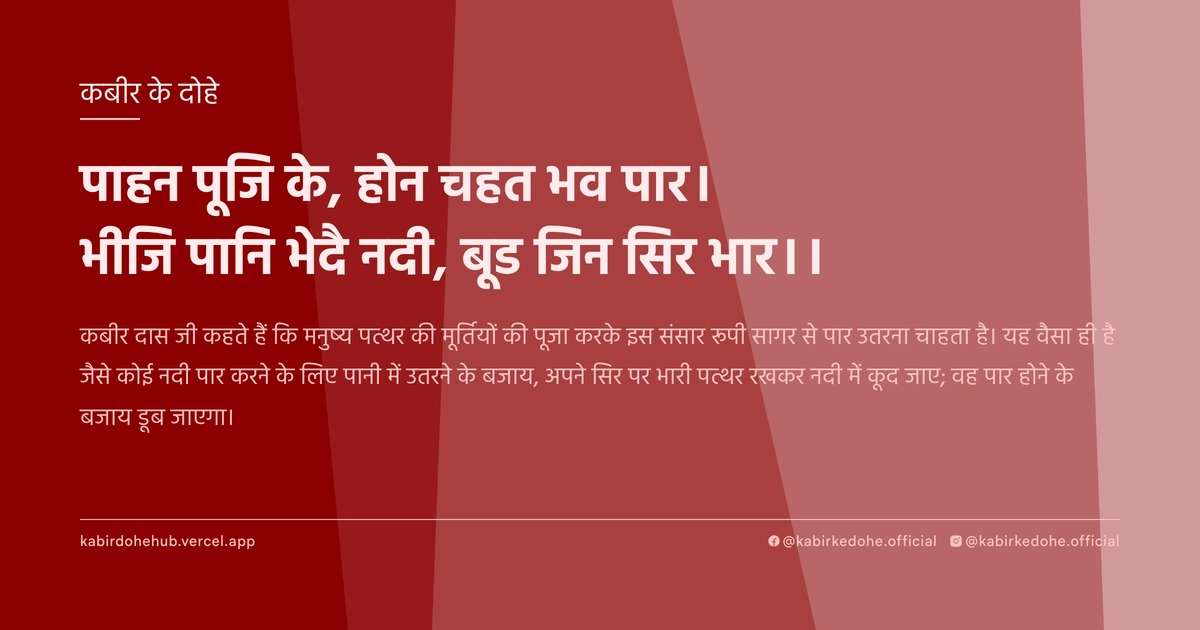
पाहन पूजि के, होन चहत भव पार।
भीजि पानि भेदै नदी, बूड जिन सिर भार।।
Pahan pooji ke, hon chahat bhav paar. Bheeji paani bhedai nadi, bood jin sir bhaar.
इस पृष्ठ पर इस कबीर दोहे का अर्थ (meaning), हिंदी व्याख्या और अंग्रेज़ी अनुवाद, दार्शनिक विश्लेषण और व्यावहारिक जीवन सीख दी गई है। यह दोहा मूर्ति पूजा विरोध (Condemnation of Idolatry) विषय से जुड़ा है — Kabir doha meaning and explanation in Hindi and English.
अर्थ (Meaning):
कबीर दास जी कहते हैं कि मनुष्य पत्थर की मूर्तियों की पूजा करके इस संसार रूपी सागर से पार उतरना चाहता है। यह वैसा ही है जैसे कोई नदी पार करने के लिए पानी में उतरने के बजाय, अपने सिर पर भारी पत्थर रखकर नदी में कूद जाए; वह पार होने के बजाय डूब जाएगा।
Kabir asserts that humans seek liberation from the cycle of worldly existence by worshipping stone idols. He compares this act to someone attempting to cross a river by carrying a heavy stone upon their head; instead of reaching the other shore, the weight of the stone ensures they sink into the depths.
व्याख्या (Interpretation):
इस दोहे का शाब्दिक अर्थ मूर्ति पूजा की व्यर्थता को दर्शाता है। रूपक के माध्यम से, कबीर 'पाहन' (पत्थर) को बाहरी कर्मकांडों और अहंकार का प्रतीक बताते हैं। निर्गुण भक्ति के अनुसार, ईश्वर निराकार है और उसे किसी भौतिक आकार में सीमित नहीं किया जा सकता। जब साधक बाहरी प्रतीकों में उलझता है, तो वह वास्तव में अपनी आध्यात्मिक यात्रा में बाधाएँ उत्पन्न करता है। यह माया का प्रभाव है जो हमें सत्य के बजाय प्रतीकों से जोड़ता है। अंततः, यह दोहा आत्मा और ब्रह्म की एकता (अद्वैत) की ओर संकेत करता है, जहाँ मध्यस्थों की आवश्यकता समाप्त हो जाती है।
Literally, the couplet critiques the futility of idol worship. Metaphorically, the 'stone' represents the burden of external rituals and the ego's attachment to form. In the tradition of Nirgun Bhakti, the Divine is formless and cannot be confined to a physical idol. When a seeker clings to external symbols, they inadvertently create obstacles in their own spiritual ascent. This is the play of Maya, which distracts the consciousness from the internal Truth by offering a tangible but illusory substitute. Ultimately, the verse points toward the non-duality of Atman and Brahman, suggesting that liberation occurs only when the mediator—the stone—is discarded.
दार्शनिक विश्लेषण (Philosophical Analysis):
कबीर का यह प्रहार उनके समय के धार्मिक पाखंड और कर्मकांडीय कठोरता के विरुद्ध था। उन्होंने देखा कि लोग धर्म के नाम पर केवल बाहरी क्रियाओं में लीन थे, जबकि आंतरिक शुद्धि की उपेक्षा कर रहे थे। यह दृष्टिकोण सूफी मत के 'तौहीद' (ईश्वर की एकता) और अद्वैत वेदांत के 'अहं ब्रह्मास्मि' से मेल खाता है, जहाँ ईश्वर को किसी मंदिर या मस्जिद में नहीं, बल्कि स्वयं के भीतर खोजा जाता है।
कबीर का तर्क है कि पत्थर पूजने वाला व्यक्ति वास्तव में ईश्वर को नहीं, बल्कि अपनी धारणाओं को पूज रहा है। यह मनोवैज्ञानिक रूप से 'अहंकार' का विस्तार है, जहाँ मनुष्य सोचता है कि वह एक विशिष्ट वस्तु के माध्यम से ईश्वर को नियंत्रित या प्राप्त कर सकता है। यह 'साधन' और 'साध्य' के बीच का भ्रम है।
यहाँ 'भव पार' होने का अर्थ केवल मृत्यु के बाद मोक्ष नहीं, बल्कि जीवित रहते हुए अज्ञानता से मुक्ति है। कबीर के अनुसार, जब तक मनुष्य बाहरी आडंबरों के भार से दबा है, वह आंतरिक शांति और सत्य का अनुभव नहीं कर सकता।
उनका दर्शन सामाजिक समानता पर आधारित था। उन्होंने जाति और धर्म के आधार पर विभाजित समाज को यह याद दिलाया कि सत्य सार्वभौमिक है और वह किसी विशेष मूर्ति या अनुष्ठान का बंधक नहीं है।
अंततः, यह विश्लेषण हमें यह सिखाता है कि आध्यात्मिक प्रगति के लिए 'त्याग' आवश्यक है—न केवल भौतिक वस्तुओं का, बल्कि उन मानसिक धारणाओं का भी जो हमें सत्य से दूर रखती हैं।
Kabir's critique is a direct assault on the ritualistic rigidity and religious hypocrisy of his era. He observed that people were immersed in external formalities while neglecting the essential purification of the heart. This perspective aligns closely with the Sufi concept of 'Tawhid' (the oneness of God) and the Advaita Vedanta realization of 'Aham Brahmasmi', where the Divine is sought within the self rather than in a temple or mosque.
Kabir argues that the idol worshipper is not worshipping God, but rather their own preconceived notions. Psychologically, this is an extension of the ego, where the individual believes they can control or access the Divine through a specific material object. It is a fundamental confusion between the 'means' and the 'end'.
In this context, 'crossing the ocean of existence' (Bhav Paar) refers not merely to post-mortem salvation, but to liberation from ignorance while still alive. Kabir suggests that as long as a person is weighed down by the burden of external pomposity, they cannot experience internal peace or ultimate Truth.
His philosophy was rooted in social egalitarianism. He reminded a society fractured by caste and creed that Truth is universal and cannot be held hostage by a specific idol or ritual.
Ultimately, this analysis teaches us that spiritual progress requires 'renunciation'—not just of material possessions, but of the mental constructs and intellectual burdens that distance us from the immediate experience of the Formless.
मूल संदेश (Core Message):
- बाहरी प्रतीकों की पूजा अक्सर आंतरिक सत्य की खोज में बाधा बनती है।
- ईश्वर किसी पत्थर में नहीं, बल्कि चेतना के शुद्धतम रूप में विद्यमान है।
- कर्मकांड अहंकार को पुष्ट करते हैं, जबकि समर्पण उसे मिटाता है।
- सच्ची भक्ति वह है जो हमें बोझिल नहीं, बल्कि हल्का और मुक्त बनाती है।
- आत्मा का मिलन केवल तब संभव है जब मध्यस्थों का भ्रम समाप्त हो जाए।
- Worshipping external symbols often obstructs the discovery of internal Truth.
- The Divine exists not in stone, but in the purest form of consciousness.
- Rituals reinforce the ego, while true surrender annihilates it.
- Genuine devotion is that which makes us light and free, not burdened.
- Union of the soul is possible only when the illusion of intermediaries vanishes.
व्यावहारिक उदाहरण (Practical Example):
एक समय की बात है, वाराणसी के घाटों पर रहने वाला एक वृद्ध बुनकर था जिसका नाम माधव था। माधव जीवन भर धर्म के नाम पर भारी दान करता और दिन-रात मूर्तियों की पूजा में समय बिताता, यह सोचकर कि इससे उसके पाप धुल जाएंगे।
वह इतना अंधविश्वासी हो गया था कि उसने अपने परिवार की जरूरतों को नजरअंदाज करना शुरू कर दिया। वह मानता था कि यदि वह मंदिर में अधिक समय बिताएगा, तो उसका जीवन अपने आप सुधर जाएगा।
एक दिन उसकी मुलाकात एक घुमक्कड़ फकीर से हुई, जिसने माधव को उसकी मूर्तियों की ओर देखते हुए पाया। फकीर ने उससे पूछा, 'क्या यह पत्थर तुम्हें भूख से बचा सकता है?'
माधव ने गर्व से कहा, 'यह पत्थर नहीं, मेरा भगवान है, जो मुझे मोक्ष दिलाएगा।'
फकीर मुस्कुराया और उसने माधव को एक प्रयोग करने को कहा। उसने माधव से कहा कि वह एक भारी पत्थर को अपने सिर पर रखकर गंगा नदी के किनारे खड़ा रहे और तब तक प्रार्थना करे जब तक वह नदी पार न कर ले।
माधव ने वैसा ही किया। कुछ ही देर में पत्थर के वजन से उसकी गर्दन झुक गई और वह संतुलन खोकर पानी में गिर गया। वह डूबने लगा और घबराकर चिल्लाने लगा।
जब फकीर ने उसे बाहर निकाला, तो माधव हांफ रहा था। फकीर ने कहा, 'जैसे इस पत्थर ने तुम्हें डूबने पर मजबूर किया, वैसे ही तुम्हारे बाहरी कर्मकांड तुम्हारी आत्मा को सत्य से दूर ले जा रहे हैं।'
माधव को अचानक बोध हुआ कि वह ईश्वर को बाहर खोज रहा था, जबकि उसके भीतर की करुणा और मानवता मर रही थी।
उस दिन के बाद, माधव ने मूर्तियों की पूजा छोड़ दी। उसने अपने समय का उपयोग गरीबों की मदद करने और अपने परिवार की सेवा करने में लगाया।
उसने महसूस किया कि असली 'मोक्ष' मंदिर की दीवारों में नहीं, बल्कि दूसरों के दुख दूर करने और अपने भीतर की शांति खोजने में है।
Once, in the ghats of Varanasi, lived an elderly weaver named Madhav. Throughout his life, Madhav gave lavish donations in the name of religion and spent his days and nights worshipping idols, believing this would cleanse his sins.
He became so consumed by ritualism that he began to ignore the basic needs of his own family. He believed that the more time he spent in the temple, the more his life would automatically improve.
One day, he encountered a wandering fakir who observed Madhav gazing at his idols. The fakir asked him, 'Can this stone save you from hunger?'
Madhav replied with pride, 'This is not a stone, but my God, who will grant me liberation.'
The fakir smiled and proposed an experiment. He asked Madhav to balance a heavy stone on his head and stand by the banks of the Ganges, praying until he could cross the river.
Madhav complied. Within moments, the weight of the stone forced his neck to bend, he lost his balance, and plunged into the water. He began to sink and cried out in panic.
As the fakir pulled him out, Madhav was gasping for air. The fakir said, 'Just as this stone forced you to sink, your external rituals are dragging your soul away from the Truth.'
Madhav suddenly realized that he had been searching for God externally, while the compassion and humanity within him were dying.
From that day forward, Madhav ceased his idol worship. He dedicated his time to helping the poor and serving his family.
He realized that true 'liberation' was not found within the walls of a temple, but in alleviating the suffering of others and finding peace within his own heart.
अभ्यास मार्गदर्शन (Practice Guidance):
- प्रतिदिन 20 मिनट मौन ध्यान करें, जहाँ आप किसी भी बाहरी छवि या देवता के बजाय केवल अपनी श्वास और आंतरिक उपस्थिति पर ध्यान केंद्रित करें।
- एक 'मानसिक बोझ' जर्नल बनाएँ: उन सभी धार्मिक या सामाजिक धारणाओं को लिखें जिन्हें आप केवल 'दिखावे' के लिए निभा रहे हैं, और विचार करें कि उन्हें छोड़ने पर आप कैसा महसूस करेंगे।
- व्यवहार परिवर्तन: किसी मंदिर या तीर्थ यात्रा पर जाने के बजाय, सप्ताह में एक बार किसी ऐसे व्यक्ति की निस्वार्थ सेवा करें जिसे समाज ने त्याग दिया हो।
- निदान चेकलिस्ट: क्या मैं शांति के लिए प्रार्थना कर रहा हूँ या केवल फल की इच्छा से? क्या मेरा धर्म मुझे दूसरों के प्रति अधिक संवेदनशील बना रहा है या अधिक श्रेष्ठ (Superior)? यदि उत्तर 'श्रेष्ठ' है, तो आप 'पत्थर का भार' ढो रहे हैं।
- Practice 20 minutes of silent meditation daily, focusing solely on your breath and internal presence rather than any external image or deity.
- Maintain a 'Mental Burden' journal: List all religious or social conventions you follow merely for appearance, and contemplate how you would feel after letting them go.
- Behavioral Shift: Instead of visiting a temple or pilgrimage site, dedicate one day a week to the selfless service of someone marginalized by society.
- Diagnostic Checklist: Am I praying for peace or merely for a reward? Does my faith make me more compassionate toward others or feel more superior? If the answer is 'superior', you are carrying the 'weight of the stone'.
चिंतन प्रश्न (Reflection Questions):
- मेरे जीवन में वे कौन से 'पत्थर' (मान्यताएं/आदतें) हैं जिन्हें मैं पवित्र मानकर ढो रहा हूँ, लेकिन वे वास्तव में मुझे नीचे गिरा रहे हैं?
- क्या मेरी धार्मिक पहचान मुझे दूसरों से जोड़ती है, या यह मेरे और दुनिया के बीच एक दीवार बन गई है?
- यदि मुझसे मेरे सभी बाहरी धार्मिक चिन्ह छीन लिए जाएं, तो क्या मेरे पास ईश्वर से जुड़ने का कोई रास्ता बचेगा?
- मैं अपनी 'आध्यात्मिक श्रेष्ठता' का उपयोग दूसरों को छोटा महसूस कराने के लिए कैसे करता हूँ?
- क्या मैं सत्य की खोज कर रहा हूँ, या केवल एक ऐसी व्यवस्था की तलाश में हूँ जो मुझे बिना प्रयास के मोक्ष का आश्वासन दे?
- What are the 'stones' (beliefs/habits) in my life that I carry as sacred, but are actually dragging me down?
- Does my religious identity connect me to others, or has it become a wall between me and the world?
- If all my external religious symbols were stripped away, would I still have a way to connect with the Divine?
- How do I use my 'spiritual superiority' to make others feel inferior?
- Am I seeking the Truth, or am I merely looking for a system that promises salvation without effort?