
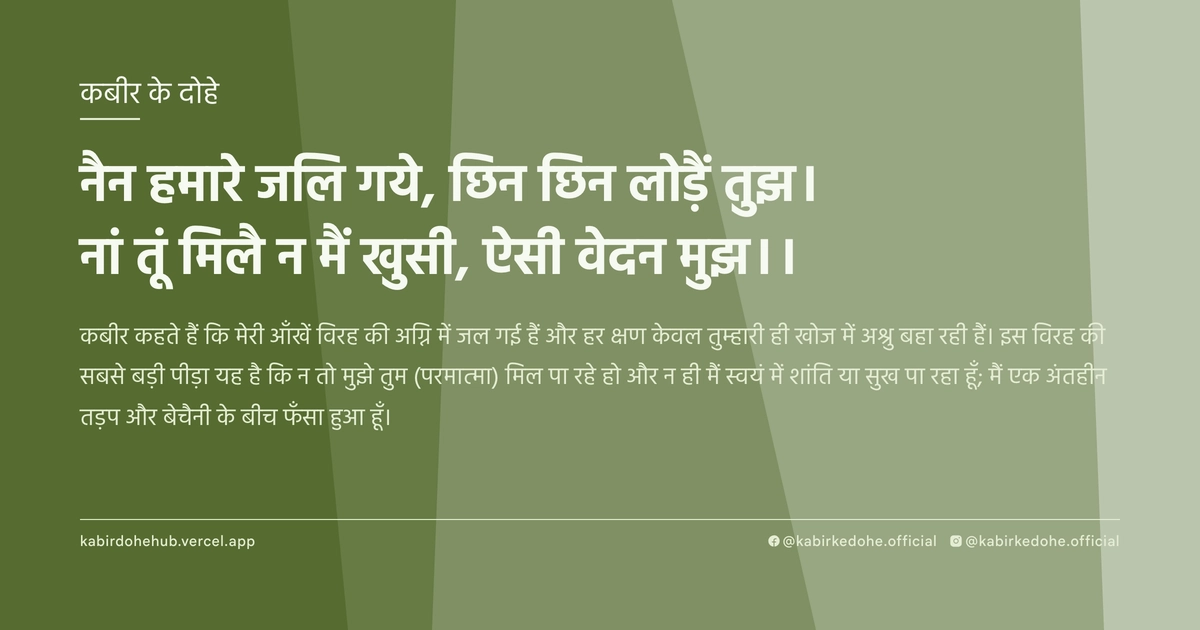
नैन हमारे जलि गये, छिन छिन लोड़ैं तुझ।
नां तूं मिलै न मैं खुसी, ऐसी वेदन मुझ।।
Nain hamare jali gaye, chhin chhin lodaun tujh. Na tun milai na main khusi, aisi vedan mujh.
इस पृष्ठ पर इस कबीर दोहे का अर्थ (meaning), हिंदी व्याख्या और अंग्रेज़ी अनुवाद, दार्शनिक विश्लेषण और व्यावहारिक जीवन सीख दी गई है। यह दोहा प्रपत्ति (Surrender) विषय से जुड़ा है — Kabir doha meaning and explanation in Hindi and English.
अर्थ (Meaning):
कबीर कहते हैं कि मेरी आँखें विरह की अग्नि में जल गई हैं और हर क्षण केवल तुम्हारी ही खोज में अश्रु बहा रही हैं। इस विरह की सबसे बड़ी पीड़ा यह है कि न तो मुझे तुम (परमात्मा) मिल पा रहे हो और न ही मैं स्वयं में शांति या सुख पा रहा हूँ; मैं एक अंतहीन तड़प और बेचैनी के बीच फँसा हुआ हूँ।
Kabir laments that his eyes have been scorched by the fire of separation, shedding tears every fleeting moment in longing for the Divine. The core of his agony lies in a spiritual stalemate: he has not yet attained union with the Beloved, nor can he find solace or contentment within his own existence, leaving him in a state of profound, restless yearning.
व्याख्या (Interpretation):
यह दोहा आत्मा और परमात्मा के बीच के विरह की पराकाष्ठा को दर्शाता है। 'नैन जलि गये' का अर्थ केवल शारीरिक रोना नहीं, बल्कि माया के पर्दे हटने के बाद होने वाली उस तीव्र तड़प से है जहाँ साधक को अपनी पूर्णता की कमी महसूस होती है। यहाँ 'तुम' निर्गुण ब्रह्म हैं, जो सर्वव्यापी होते हुए भी अहंकार के कारण ओझल हैं। यह स्थिति अद्वैत वेदांत के उस पड़ाव की है जहाँ जीव को अपनी पृथकता का अहसास होता है, जो उसे विरह की अग्नि में जलाता है। यह विरोधाभास है कि जब तक यह पीड़ा चरम पर नहीं पहुँचती, तब तक अहंकार का पूर्ण विसर्जन नहीं होता। अंततः, यह विरह ही वह सेतु है जो आत्मा को उसकी मूल पहचान, ब्रह्म, से मिलाता है।
This couplet depicts the zenith of separation between the Atman (soul) and the Paramatman (Supreme Soul). The phrase "eyes have been scorched" refers not to physical weeping, but to the searing intensity of spiritual longing that arises once the veil of Maya is pierced. The "You" represents the Nirgun Brahman—the formless Absolute—who is omnipresent yet hidden by the ego's opacity. In the context of Advaita Vedanta, this is the stage where the seeker realizes their perceived duality, and this realization manifests as an agonizing void. The central paradox is that this very suffering is the catalyst for the annihilation of the 'I'. Only when the fire of longing consumes the ego's residue can the soul transition from the pain of separation to the bliss of non-duality.
दार्शनिक विश्लेषण (Philosophical Analysis):
कबीर का यह विरह सूफी मत के 'इश्क-ए-हकीकी' (ईश्वरीय प्रेम) और भारतीय भक्ति परंपरा के मिलन बिंदु पर स्थित है। ऐतिहासिक रूप से, कबीर ने उस समय के कर्मकांडीय धर्म का विरोध किया जहाँ ईश्वर को मंदिर या मस्जिद में खोजा जाता था। उन्होंने तर्क दिया कि ईश्वर बाहरी अनुष्ठानों में नहीं, बल्कि हृदय की तीव्र तड़प और आंतरिक शुद्धि में मिलता है।
दार्शनिक स्तर पर, यह दोहा 'अद्वैत' की यात्रा का वर्णन करता है। जब साधक कहता है कि "न मैं खुसी", तो वह अपनी उस झूठी पहचान (अहंकार) को नकार रहा है जिसने उसे परमात्मा से अलग किया था। यह मनोवैज्ञानिक रूपांतरण की वह अवस्था है जिसे 'शून्य' की ओर बढ़ना कहते हैं, जहाँ पुराना व्यक्तित्व मर जाता है लेकिन नया आध्यात्मिक जन्म अभी हुआ नहीं है।
यहाँ विरह एक शोधक अग्नि (Purificatory Fire) की तरह है। जिस प्रकार सोने को शुद्ध करने के लिए उसे तपाया जाता है, उसी प्रकार आत्मा को उसके सांसारिक मोह और वासनाओं से मुक्त करने के लिए विरह की अग्नि आवश्यक है। यह केवल दुख नहीं, बल्कि एक सक्रिय आध्यात्मिक प्रक्रिया है जो साधक को निष्क्रियता से सक्रिय खोज की ओर ले जाती है।
कबीर यहाँ यह स्पष्ट करते हैं कि मोक्ष केवल ज्ञान से नहीं, बल्कि प्रेम और तड़प से प्राप्त होता है। बौद्धिक समझ (Intellectual understanding) और अनुभवजन्य बोध (Experiential realization) के बीच का अंतर यही विरह है। जब तक ज्ञान हृदय में नहीं उतरता, वह केवल सूचना रहता है; जब वह विरह बन जाता है, तब वह सत्य बन जाता है।
अंततः, यह दोहा इस सत्य को उद्घाटित करता है कि परमात्मा की अनुपस्थिति का अहसास ही वास्तव में उसकी उपस्थिति का पहला प्रमाण है। यदि विरह नहीं है, तो खोज नहीं है; और यदि खोज नहीं है, तो मिलन की संभावना समाप्त हो जाती है। यह विरह ही वह चुंबकीय शक्ति है जो आत्मा को वापस उसके स्रोत की ओर खींचती है।
Kabir's expression of longing sits at the intersection of the Sufi concept of 'Ishq-e-Haqiqi' (Divine Love) and the Indian Bhakti tradition. Historically, Kabir challenged the ritualistic orthodoxy of his era, which sought the Divine in stone idols or specific geographies. He asserted that the Absolute is found not through external rites, but through the searing intensity of internal yearning and the purification of the heart.
Philosophically, this doha maps the trajectory of Advaita (Non-duality). When the seeker admits, "nor am I happy," he is rejecting the false identity of the ego that created the illusion of separation. This represents a psychological liminal space—a 'void' where the old self has been dismantled, but the realization of oneness has not yet fully dawned. It is the dark night of the soul.
Here, separation acts as a purificatory fire. Just as gold is refined in a crucible, the soul must be scorched by the fire of longing to be stripped of worldly attachments and subconscious biases. This is not mere emotional distress but a rigorous spiritual alchemy that transforms passive existence into an active, urgent quest for Truth.
Kabir emphasizes that liberation is achieved not through sterile intellectualism, but through the alchemy of love. There is a profound distinction between intellectual knowledge and experiential realization. Knowledge remains information until it descends into the heart as longing; only then does it become Truth.
Ultimately, the doha reveals that the acute awareness of the Divine's absence is, in fact, the first evidence of His presence. Without the agony of separation, there is no impetus for the search. This longing is the gravitational pull of the Absolute, drawing the fragmented soul back into the wholeness of the Universal Consciousness.
मूल संदेश (Core Message):
- बाहरी शांति का ढोंग छोड़ें और आंतरिक विरह को स्वीकार करें।
- अहंकार का अंत केवल तीव्र आध्यात्मिक तड़प से संभव है।
- परमात्मा की अनुपस्थिति का बोध ही उनकी उपस्थिति का प्रमाण है।
- कर्मकांड केवल शरीर को संतुष्ट करते हैं, विरह आत्मा को जगाता है।
- जब 'मैं' पूरी तरह मिट जाता है, तभी 'तुम' का साक्षात्कार होता है।
- Abandon the facade of external peace and embrace the authenticity of inner longing.
- The annihilation of the ego is only possible through the fire of spiritual yearning.
- The acute awareness of the Divine's absence is the first evidence of Their presence.
- Rituals satisfy the body and mind, but only longing awakens the dormant soul.
- Only when the 'I' is completely consumed does the 'Thou' reveal Itself.
व्यावहारिक उदाहरण (Practical Example):
वाराणसी के एक पुराने घाट पर रहने वाली एक वृद्ध विधवा, जानकी, का जीवन एक अंतहीन प्रतीक्षा जैसा था। उसने अपना पूरा जीवन धर्मग्रंथों को पढ़ने और कठोर उपवासों में बिता दिया था, यह सोचकर कि यही ईश्वर तक पहुँचने का मार्ग है। वह हर दिन गंगा में स्नान करती और घंटों मंत्र जाप करती, लेकिन उसके भीतर एक गहरी रिक्तता थी, एक ऐसी प्यास जिसे कोई भी अनुष्ठान शांत नहीं कर पा रहा था।
एक दिन, उसने देखा कि एक छोटा बच्चा अपनी माँ से बिछड़ गया था और बेतहाशा रो रहा था। उस बच्चे की चीख में कोई दिखावा नहीं था, केवल एक तीव्र, हृदय-विदारक पुकार थी। जानकी ने महसूस किया कि उसकी अपनी प्रार्थनाएँ केवल एक सामाजिक आदत बन गई थीं, जबकि उस बच्चे का दुख वास्तविक और शुद्ध था।
उसे अचानक कबीर का यह दोहा याद आया कि कैसे विरह की अग्नि आँखों को जला देती है। उसने महसूस किया कि वह अब तक 'ईश्वर को पाने की कोशिश' कर रही थी, जबकि वास्तव में उसे 'ईश्वर के लिए तड़पना' सीखना था। उसने अपने सभी बाहरी दिखावे और कठोर नियमों को त्याग दिया।
अब वह मंत्रों को रटती नहीं थी, बल्कि मौन में बैठकर उस रिक्तता को महसूस करती थी। उसने अपनी पीड़ा को दबाना बंद कर दिया और उसे अपने भीतर बहने दिया। उसने पाया कि जब उसने अपनी 'पवित्रता' के अहंकार को छोड़ा, तो उसकी तड़प और गहरी हो गई।
वह अब मंदिर जाने के बजाय उन लोगों की सेवा करने लगी जो समाज द्वारा ठुकराए गए थे, क्योंकि उसने देखा कि हर दुखी हृदय में वही विरह छिपा है। उसकी आँखों में अब वह पुराना सूखापन नहीं था, बल्कि एक करुणापूर्ण नमी थी।
एक शाम, गंगा की आरती के समय, वह चुपचाप बैठी थी। अचानक, उसे महसूस हुआ कि वह जिसे बाहर खोज रही थी, वह उसकी अपनी तड़प में ही समाया हुआ है। वह विरह, जो उसे अब तक डराता था, अब उसका सबसे बड़ा सहारा बन गया।
उसने महसूस किया कि जब तक वह खुद को 'भक्त' मानकर खुश रहने की कोशिश कर रही थी, वह अलग थी। लेकिन जब उसने स्वीकार किया कि वह पूरी तरह से टूटी हुई और विरही है, तब वह परमात्मा के करीब पहुँच गई।
जानकी का रूपांतरण यह था कि उसने 'शांति' की खोज छोड़ दी और 'तड़प' को गले लगाया। इसी विरोधाभास में उसे वह सुकून मिला जो उसे दशकों के उपवासों और पूजा-पाठ से नहीं मिला था।
In the ancient alleys of Varanasi, an elderly widow named Janaki lived a life of perpetual waiting. She had spent decades immersed in scriptures and rigorous fasting, believing that these were the only ladders to the Divine. Every day, she bathed in the Ganges and chanted mantras for hours, yet a profound emptiness persisted within her—a thirst that no ritual could quench.
One afternoon, she witnessed a small child who had been separated from his mother. The child was wailing uncontrollably; there was no pretense in his cries, only a raw, heart-wrenching urgency. Janaki realized that her own prayers had become a social habit, a performance of piety, whereas the child's grief was authentic and absolute.
In that moment, Kabir's words about the eyes being scorched by longing resonated within her. She understood that she had been 'trying to find God' as a goal, rather than 'longing for God' as a state of being. She decided to strip away the external veneers of her religious identity.
She stopped the mechanical chanting and began to sit in silence, consciously feeling the void within. She stopped suppressing her spiritual loneliness and allowed it to flow through her. She discovered that by abandoning the ego of being a 'devout seeker,' her longing grew more intense.
Instead of spending all her time in the temple, she began serving the outcasts of the city, recognizing that every suffering heart mirrored her own divine separation. The dryness of her ritualistic life was replaced by a compassionate moisture in her eyes.
One evening, during the Ganga Aarti, as she sat in stillness, a realization dawned: the Divine she had been searching for externally was actually woven into the very fabric of her longing. The separation that once terrified her became her greatest sanctuary.
She realized that as long as she tried to be 'content' or 'peaceful' in her identity as a devotee, she remained separate. But when she accepted her total brokenness and her state of longing, the gap vanished.
Janaki's transformation lay in her shift from seeking 'peace' to embracing 'yearning.' In this paradox, she found a solace that decades of asceticism had failed to provide.
अभ्यास मार्गदर्शन (Practice Guidance):
- प्रतिदिन 20 मिनट मौन बैठें और अपने भीतर की उस 'कमी' या 'रिक्तता' को महसूस करें जिसे आप आमतौर पर मनोरंजन या काम से भरने की कोशिश करते हैं।
- एक 'विरह जर्नल' लिखें: उन क्षणों को दर्ज करें जब आप अकेलापन महसूस करते हैं, और उस अकेलेपन को 'ईश्वर के लिए तड़प' के रूप में पुनर्गठित करें।
- व्यवहार परिवर्तन: जब भी आप किसी अन्य व्यक्ति में कमी या दुख देखें, तो उसे अपनी स्वयं की आध्यात्मिक यात्रा के प्रतिबिंब के रूप में देखें और करुणा का अभ्यास करें।
- निदान चेकलिस्ट: क्या आप अभी भी ईश्वर को एक 'पुरस्कार' के रूप में देख रहे हैं? क्या आपकी प्रार्थनाएँ केवल माँगने के लिए हैं? यदि हाँ, तो आप अभी भी अहंकार के दायरे में हैं। यदि आपकी प्रार्थना केवल 'होने' और 'तड़पने' की है, तो आप सही मार्ग पर हैं।
- Spend 20 minutes daily in absolute silence, consciously observing the 'void' or 'lack' within you that you typically try to fill with distractions, digital noise, or work.
- Maintain a 'Longing Journal': Document moments of loneliness or existential angst, and consciously reframe this loneliness as a sacred yearning for the Absolute.
- Behavioral Shift: Whenever you encounter suffering or lack in others, view it as a reflection of the universal separation from the Source, transforming your judgment into deep empathy.
- Diagnostic Checklist: Are you still viewing the Divine as a 'reward' to be earned? Are your prayers primarily requests for gain? If so, the ego is still dominant. If your prayer has shifted to a state of pure yearning and surrender, you are aligning with Kabir's path.
चिंतन प्रश्न (Reflection Questions):
- क्या मेरी आध्यात्मिक खोज वास्तव में सत्य की प्यास है, या केवल मानसिक शांति पाने का एक तरीका?
- मैं अपने जीवन के खालीपन को भरने के लिए किन डिजिटल या भौतिक भ्रमों का सहारा ले रहा हूँ?
- क्या मैं अपनी पीड़ा से डरता हूँ, या मैं इसे रूपांतरण के एक उपकरण के रूप में उपयोग कर सकता हूँ?
- मेरे भीतर का वह कौन सा 'अहंकार' है जो मुझे यह मानने से रोकता है कि मैं पूरी तरह से अधूरा हूँ?
- यदि मुझसे मेरी सभी धार्मिक पहचानें छीन ली जाएँ, तो क्या मेरे भीतर ईश्वर के लिए कोई वास्तविक तड़प बचेगी?
- Is my spiritual quest a genuine thirst for Truth, or merely a sophisticated strategy to achieve mental comfort?
- Which digital or material illusions am I using to anesthetize the existential void within me?
- Do I recoil in fear from my inner pain, or can I utilize it as a tool for spiritual transmutation?
- What specific layer of my ego prevents me from admitting that I am fundamentally incomplete without the Divine?
- If all my religious and social identities were stripped away, would there remain a raw, authentic longing for the Absolute?