
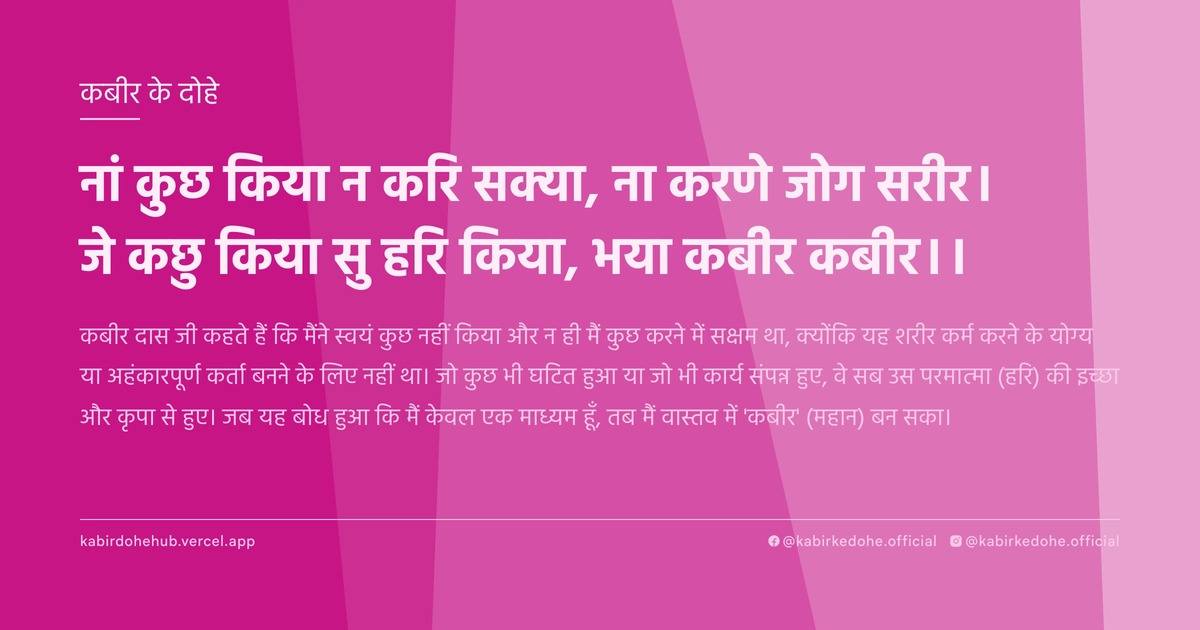
नां कुछ किया न करि सक्या, ना करणे जोग सरीर।
जे कछु किया सु हरि किया, भया कबीर कबीर।।
Na kuch kiya na kari sakya, na karane jog sareer. Je kachu kiya su hari kiya, bhaya kabir kabir.
इस पृष्ठ पर इस कबीर दोहे का अर्थ (meaning), हिंदी व्याख्या और अंग्रेज़ी अनुवाद, दार्शनिक विश्लेषण और व्यावहारिक जीवन सीख दी गई है। यह दोहा प्रपत्ति (Surrender) विषय से जुड़ा है — Kabir doha meaning and explanation in Hindi and English.
अर्थ (Meaning):
कबीर दास जी कहते हैं कि मैंने स्वयं कुछ नहीं किया और न ही मैं कुछ करने में सक्षम था, क्योंकि यह शरीर कर्म करने के योग्य या अहंकारपूर्ण कर्ता बनने के लिए नहीं था। जो कुछ भी घटित हुआ या जो भी कार्य संपन्न हुए, वे सब उस परमात्मा (हरि) की इच्छा और कृपा से हुए। जब यह बोध हुआ कि मैं केवल एक माध्यम हूँ, तब मैं वास्तव में 'कबीर' (महान) बन सका।
Kabir declares that he has neither performed any action nor possessed the inherent capacity to do so, for the physical body is not the true author of spiritual liberation. Whatever was accomplished was solely the work of the Divine (Hari). Only upon realizing his own insignificance and the absolute sovereignty of the Divine did he attain the state of 'Kabir'—becoming truly great through the annihilation of the self.
व्याख्या (Interpretation):
यह दोहा कर्तापन के अहंकार के पूर्ण विसर्जन की बात करता है। शाब्दिक अर्थ में, कबीर अपनी असमर्थता स्वीकार कर रहे हैं, लेकिन आध्यात्मिक स्तर पर यह 'अहंकार' (Ego) का अंत है। यहाँ 'हरि' केवल एक देवता नहीं, बल्कि वह निर्गुण ब्रह्म है जो समस्त सृष्टि का संचालन करता है। जब साधक यह समझ जाता है कि वह केवल एक निमित्त या यंत्र है, तब वह माया के जाल से मुक्त हो जाता है। यह अद्वैत वेदांत के उस सिद्धांत को दर्शाता है जहाँ व्यक्ति और परमात्मा के बीच का द्वैत समाप्त हो जाता है। 'कबीर' शब्द यहाँ एक व्यक्ति का नाम नहीं, बल्कि एक अवस्था है—पूर्णता की अवस्था। यह विरोधाभास है कि जब मनुष्य स्वयं को शून्य मानता है, तभी वह अनंत हो जाता है।
This couplet addresses the total dissolution of the 'doer-ship' or the ego of agency. Literally, Kabir admits his incapacity, but metaphorically, this represents the death of the 'I'. 'Hari' here is not a sectarian deity but the Nirgun Brahman—the formless, all-pervading consciousness. When the seeker realizes they are merely an instrument, the veil of Maya is lifted. This aligns with Advaita Vedanta, where the perceived separation between the Atman (soul) and Brahman (universal soul) is revealed as an illusion. The word 'Kabir' transcends a personal name to signify a state of spiritual wholeness. It presents the central paradox of mysticism: only by becoming nothing does one become everything.
दार्शनिक विश्लेषण (Philosophical Analysis):
कबीर का यह दृष्टिकोण उनके युग के कर्मकांडीय और बाहरी आडंबरों के विरुद्ध एक सशक्त प्रहार है। उस समय समाज में यह धारणा थी कि विशिष्ट अनुष्ठानों या कठोर तपस्या के माध्यम से मोक्ष प्राप्त किया जा सकता है, जिससे व्यक्ति में 'अहंकार' पैदा होता था कि 'मैंने यह किया'। कबीर इस 'मैं' को ही सबसे बड़ा अवरोध मानते हैं। वे सूफी मत के 'फना' (अहंकार का विनाश) के सिद्धांत को अपनाते हैं, जहाँ प्रेमी अपने अस्तित्व को ईश्वर में विलीन कर देता है।
दार्शनिक रूप से, यह दोहा 'निर्गुण भक्ति' का सार है। यहाँ ईश्वर किसी मूर्ति में नहीं, बल्कि उस शक्ति में है जो हर सांस और हर हरकत को संचालित करती है। जब कबीर कहते हैं कि 'शरीर जोग नहीं था', तो वे भौतिक शरीर की सीमाओं और उसकी नश्वरता की ओर संकेत कर रहे हैं। शरीर केवल एक माध्यम है; वास्तविक कर्ता वह चेतना है जो सर्वव्यापी है।
अद्वैत वेदांत के अनुसार, यह संसार एक स्वप्न की तरह है जहाँ हम स्वयं को कर्ता मानते हैं। लेकिन ज्ञानोदय (Enlightenment) तब होता है जब यह बोध होता है कि 'कर्ता' का विचार ही एक भ्रम है। कबीर इस भ्रम को तोड़कर साधक को उस स्थिति में ले जाते हैं जहाँ केवल परमात्मा का अस्तित्व शेष रहता है।
मनोवैज्ञानिक स्तर पर, यह 'सरेंडर' या पूर्ण समर्पण की प्रक्रिया है। जब मनुष्य अपने नियंत्रण की इच्छा को छोड़ देता है, तो वह मानसिक तनाव और चिंता से मुक्त हो जाता है। यह समर्पण कमजोरी नहीं, बल्कि सर्वोच्च शक्ति के साथ एकाकार होने का साहस है।
अंततः, कबीर यह स्पष्ट करते हैं कि महानता (कबीर होना) बाहरी उपलब्धियों से नहीं, बल्कि आंतरिक शून्यता से आती है। जो व्यक्ति स्वयं को मिटा देता है, वही वास्तव में अमर हो जाता है क्योंकि वह अब उस अविनाशी तत्व का हिस्सा है।
Kabir's perspective is a potent critique of the ritualistic and external pomposity of his era. During his time, the prevailing belief was that liberation could be achieved through specific rituals or rigorous penance, which often fostered a sense of spiritual pride—the 'I' who achieves. Kabir identifies this 'I' as the primary obstacle to truth. He mirrors the Sufi concept of 'Fana' (annihilation), where the lover dissolves their identity into the Beloved.
Philosophically, this doha encapsulates the essence of Nirgun Bhakti. God is not found in idols but in the primordial energy that drives every breath and movement. When Kabir states that the body was not 'fit' for the task, he points to the limitations and transience of the physical form. The body is merely a vessel; the true actor is the omnipresent consciousness.
According to Advaita Vedanta, the world is akin to a dream where we mistakenly perceive ourselves as the agents of action. Enlightenment occurs when the notion of the 'doer' is recognized as a delusion. Kabir shatters this illusion, leading the seeker to a state where only the Divine remains.
Psychologically, this is the process of total surrender. By relinquishing the desire for control, the individual is liberated from the anxiety and stress of ownership. This surrender is not an act of weakness but a courageous alignment with the supreme power.
Ultimately, Kabir clarifies that greatness (becoming 'Kabir') is not derived from external achievements but from internal emptiness. He who erases himself becomes immortal, for he has merged with the Indestructible.
मूल संदेश (Core Message):
- अहंकार ही आत्मा और परमात्मा के बीच की सबसे बड़ी दीवार है।
- सच्ची महानता स्वयं को शून्य करने में निहित है, बढ़ाने में नहीं।
- हम केवल माध्यम हैं; कर्ता केवल वह एक निराकार चेतना है।
- समर्पण ही वह कुंजी है जो मानसिक क्लेशों के ताले खोलती है।
- जब 'मैं' मिटता है, तब 'वह' प्रकट होता है।
- The ego is the greatest wall between the soul and the Divine.
- True greatness lies in becoming zero, not in accumulating more.
- We are merely instruments; the only true doer is the formless consciousness.
- Surrender is the key that unlocks the doors of mental suffering.
- When the 'I' vanishes, the 'Divine' manifests.
व्यावहारिक उदाहरण (Practical Example):
वाराणसी के घाटों पर रहने वाले एक वृद्ध बुनकर थे, जिनका नाम माधव था। माधव अपनी कला में निपुण थे और पूरे शहर में उनके बनाए वस्त्रों की चर्चा थी। इस प्रसिद्धि ने उनके भीतर एक सूक्ष्म अहंकार पैदा कर दिया था। वे सोचने लगे थे कि उनकी कुशलता ही उनकी पहचान है और उनके बिना यह कला समाप्त हो जाएगी।
एक बार माधव एक बहुत ही जटिल और शाही वस्त्र बुन रहे थे। उन्होंने हफ़्तों तक दिन-रात एक कर दिया। जैसे ही वस्त्र पूरा होने वाला था, एक छोटी सी दुर्घटना हुई और करघे का एक हिस्सा टूट गया, जिससे पूरा डिजाइन बिगड़ गया। माधव गहरे अवसाद में चले गए। उन्हें लगा कि उनकी सारी मेहनत बेकार गई और उनकी 'कुशलता' विफल रही।
निराश होकर वे एक पुराने मंदिर की सीढ़ियों पर बैठ गए, जहाँ उन्होंने एक फकीर को कबीर के इस दोहे का पाठ करते सुना। फकीर ने उनसे कहा, "माधव, तुम इसलिए दुखी हो क्योंकि तुम मानते हो कि वह वस्त्र 'तुमने' बनाया था। तुमने केवल धागों को छुआ, लेकिन बुनने वाली शक्ति तो उस परमात्मा की थी।"
माधव को पहले तो यह बात समझ नहीं आई। लेकिन फकीर ने आगे समझाया, "यदि तुम खुद को कर्ता मानोगे, तो सफलता में अहंकार और विफलता में शोक मिलेगा। लेकिन यदि तुम खुद को केवल एक माध्यम मानोगे, तो तुम हर परिस्थिति में शांत रहोगे।"
माधव ने अपनी आँखें बंद कीं और गहराई से सोचा। उन्होंने महसूस किया कि उनकी उंगलियों की गति, उनकी दृष्टि और यहाँ तक कि वह सूत भी उन्हीं की देन नहीं था। सब कुछ प्रकृति और ईश्वर का उपहार था। अचानक, उनके मन का बोझ हल्का हो गया।
उन्होंने वापस जाकर करघे को ठीक किया, लेकिन इस बार उनके मन में यह जिद नहीं थी कि 'मुझे' इसे सर्वश्रेष्ठ बनाना है। उन्होंने बस समर्पण के साथ काम करना शुरू किया। उन्होंने प्रार्थना की, "हे प्रभु, मैं केवल आपका यंत्र हूँ, आप ही इस वस्त्र को पूर्ण करें।"
अजीब बात यह हुई कि नया वस्त्र पहले वाले से कहीं अधिक सुंदर और जीवंत बना। माधव की कला में अब एक ऐसी शांति और दिव्यता थी जो पहले कभी नहीं थी। उनकी प्रसिद्धि और बढ़ गई, लेकिन अब वे उस प्रसिद्धि से अप्रभावित थे।
अब जब लोग उनकी प्रशंसा करते, तो माधव विनम्रता से मुस्कुराते और मन ही मन कहते, "मैंने कुछ नहीं किया, सब हरि ने किया।" वे अब एक कुशल बुनकर से बदलकर एक शांत योगी बन चुके थे। उनके जीवन का संघर्ष समाप्त हो गया था क्योंकि उन्होंने 'कर्ता' होने का बोझ उतार फेंका था।
In the ghats of Varanasi lived an elderly weaver named Madhav. Madhav was a master of his craft, and his textiles were renowned throughout the city. This fame had planted a subtle seed of ego within him; he believed his skill was his sole identity and that the art would perish without him.
Once, Madhav was weaving a highly complex royal garment. He worked day and night for weeks. Just as the piece was nearing completion, a small accident occurred—a part of the loom broke, ruining the entire design. Madhav fell into a deep depression, feeling that his hard work was wasted and his 'skill' had failed.
Despondent, he sat on the steps of an old temple where he heard a fakir reciting this specific doha of Kabir. The fakir said, "Madhav, you are grieving because you believe 'you' created that garment. You only touched the threads; the power that wove them belonged to the Divine."
At first, Madhav didn't understand. But the fakir continued, "If you consider yourself the doer, you will find pride in success and sorrow in failure. But if you see yourself as a mere instrument, you will remain peaceful in all circumstances."
Madhav closed his eyes and reflected deeply. He realized that the agility of his fingers, his vision, and even the cotton itself were not his own creations. Everything was a gift from nature and the Divine. Suddenly, the burden on his heart lifted.
He returned to his loom, but this time, he lacked the stubbornness to 'make it the best.' He worked with total surrender, praying, "O Lord, I am but Your instrument; You complete this garment."
Strangely, the new garment became far more beautiful and vibrant than the previous one. There was now a peace and divinity in Madhav's art that had never existed before. His fame grew, yet he remained untouched by it.
Now, when people praised him, Madhav would smile humbly and whisper to himself, "I did nothing; all was done by Hari." He had transformed from a skilled weaver into a serene yogi. His life's struggle ended because he had dropped the heavy burden of being the 'doer.'
अभ्यास मार्गदर्शन (Practice Guidance):
- प्रतिदिन 15 मिनट 'साक्षी भाव' का अभ्यास करें: अपने कार्यों को ऐसे देखें जैसे आप किसी और को काम करते देख रहे हों। यह महसूस करें कि शरीर कार्य कर रहा है, लेकिन आप केवल दृष्टा हैं।
- कृतज्ञता पत्रिका (Gratitude Journaling): दिन के अंत में तीन ऐसी उपलब्धियाँ लिखें जिन्हें आप अपनी मेहनत मानते थे, और फिर विश्लेषण करें कि उनमें किन बाहरी कारकों और दैवीय कृपा का हाथ था।
- व्यवहार परिवर्तन: जब भी कोई आपकी प्रशंसा करे, मन ही मन उस प्रशंसा को उस परम शक्ति की ओर मोड़ दें जिसने आपको वह क्षमता दी। 'मैं' को 'हम' या 'वह' में बदलें।
- निदान चेकलिस्ट (Diagnostic Checklist): क्या आप विफलता पर अत्यधिक क्रोधित होते हैं? क्या सफलता पर आप दूसरों को छोटा समझते हैं? यदि हाँ, तो आप अभी भी 'कर्ता' के भ्रम में हैं। यदि आप दोनों स्थितियों में तटस्थ हैं, तो आप इस ज्ञान को जी रहे हैं।
- Practice 'Witness Consciousness' (Sakshi Bhav) for 15 minutes daily: Observe your actions as if you are watching someone else work. Realize that the body is acting, but you are merely the observer.
- Gratitude Journaling: At the end of the day, list three achievements you attributed to your own effort, then analyze the external factors and divine grace that made them possible.
- Behavioral Shift: Whenever you receive praise, mentally redirect that credit to the Supreme Power that granted you the ability. Shift the internal narrative from 'I' to 'He/It'.
- Diagnostic Checklist: Do you feel extreme anger upon failure? Do you look down on others during success? If yes, you are still trapped in the illusion of the 'doer'. If you remain neutral in both, you are living this wisdom.
चिंतन प्रश्न (Reflection Questions):
- मेरी कौन सी उपलब्धियाँ वास्तव में मेरी हैं, और कौन सी केवल संयोग या दूसरों की कृपा का परिणाम हैं?
- यदि आज मेरी सारी पहचान (पद, प्रतिष्ठा, कौशल) छीन ली जाए, तो मेरे भीतर क्या बचेगा?
- क्या मेरा 'परोपकार' वास्तव में निस्वार्थ है, या यह मेरे 'दाता' होने के अहंकार को संतुष्ट कर रहा है?
- मैं अपनी विफलताओं के लिए दूसरों को दोष देता हूँ, लेकिन सफलताओं का श्रेय स्वयं क्यों लेता हूँ?
- मेरे जीवन का वह कौन सा क्षेत्र है जहाँ मैं नियंत्रण खोने से सबसे ज्यादा डरता हूँ?
- Which of my achievements are truly mine, and which are merely results of coincidence or the grace of others?
- If all my identities (position, prestige, skills) were stripped away today, what would remain within me?
- Is my 'philanthropy' truly selfless, or is it feeding the ego of being a 'provider'?
- Why do I blame others for my failures but claim sole credit for my successes?
- In which area of my life am I most terrified of losing control?