
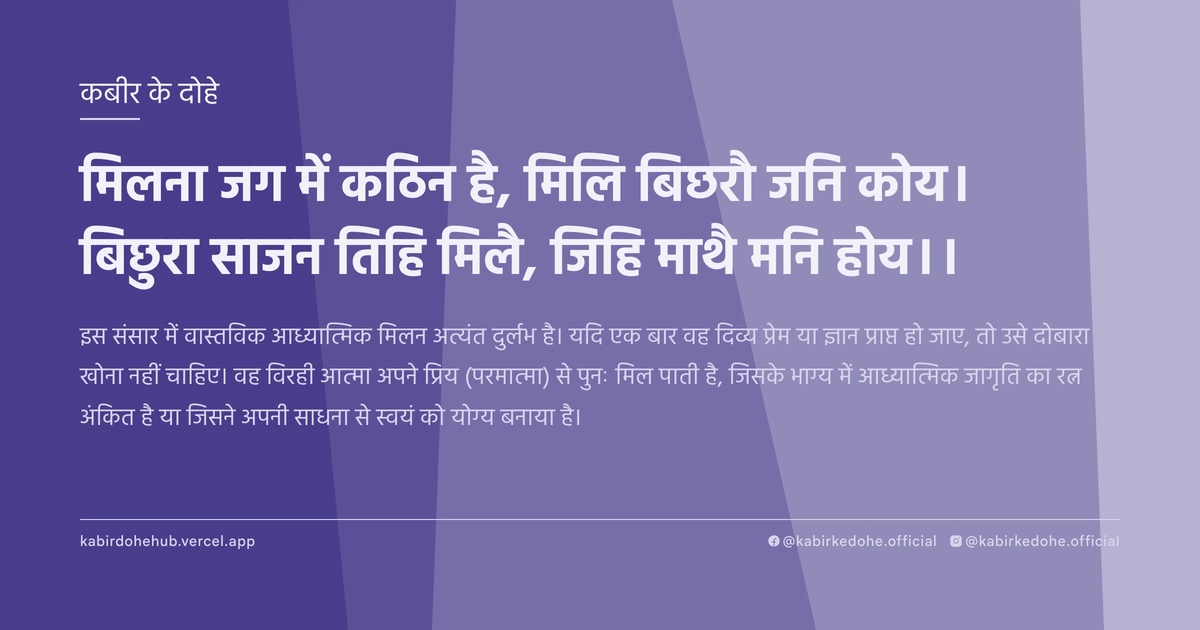
मिलना जग में कठिन है, मिलि बिछरौ जनि कोय।
बिछुरा साजन तिहि मिलै, जिहि माथै मनि होय।।
Milna jag mein kathin hai, mili bichharau jani koy. Bichhura saajan tahi milai, jahi maathai mani hoye.
इस पृष्ठ पर इस कबीर दोहे का अर्थ (meaning), हिंदी व्याख्या और अंग्रेज़ी अनुवाद, दार्शनिक विश्लेषण और व्यावहारिक जीवन सीख दी गई है। यह दोहा भक्ति (Bhakti) विषय से जुड़ा है — Kabir doha meaning and explanation in Hindi and English.
अर्थ (Meaning):
इस संसार में वास्तविक आध्यात्मिक मिलन अत्यंत दुर्लभ है। यदि एक बार वह दिव्य प्रेम या ज्ञान प्राप्त हो जाए, तो उसे दोबारा खोना नहीं चाहिए। वह विरही आत्मा अपने प्रिय (परमात्मा) से पुनः मिल पाती है, जिसके भाग्य में आध्यात्मिक जागृति का रत्न अंकित है या जिसने अपनी साधना से स्वयं को योग्य बनाया है।
True spiritual union in this worldly existence is exceedingly rare. Once such a divine connection is established, one must not allow separation to occur. Only that longing soul can reunite with the Beloved (the Divine) who possesses the 'gem' of spiritual awakening upon their brow, signifying a destiny shaped by intense devotion and readiness.
व्याख्या (Interpretation):
कबीर यहाँ 'मिलन' और 'बिछोह' के माध्यम से आत्मा और परमात्मा के संबंध को दर्शाते हैं। शाब्दिक अर्थ में यह एक प्रेमी और प्रेमिका की विरह व्यथा लग सकती है, परंतु आध्यात्मिक स्तर पर यह जीव का ब्रह्म से अलगाव है। 'मनि' (मणि) यहाँ केवल भाग्य का प्रतीक नहीं है, बल्कि वह 'कुण्डलिनी' या 'सहस्रार' की जागृति है जो अज्ञान के पर्दे को हटाती है। यह निर्गुण भक्ति का सार है जहाँ ईश्वर बाहर नहीं, बल्कि भीतर की खोज का विषय है। माया के प्रभाव से हम विस्मृत हो जाते हैं, और यह विस्मृति ही 'बिछोह' है। जब साधक अपनी अहंकार-रूपी परतों को हटाता है, तब वह उस आंतरिक मणि को प्राप्त करता है जो उसे पुनः शून्य या अनंत में विलीन कर देती है।
Kabir utilizes the metaphors of 'union' and 'separation' to illustrate the cosmic relationship between the Atman (individual soul) and Brahman (Universal Consciousness). While it superficially resembles the grief of lovers, it is fundamentally about the soul's alienation from its source. The 'mani' (gem) is not merely a mark of luck, but a symbol of the awakened consciousness or the opening of the Third Eye, which dissolves the veil of Maya. In Nirgun Bhakti, the Divine is not an external deity but an internal realization. The paradox lies in the fact that we are never truly separated, yet the illusion of duality creates a profound sense of longing. Only when the ego is annihilated does the 'gem' of realization shine, bridging the gap between the seeker and the sought.
दार्शनिक विश्लेषण (Philosophical Analysis):
कबीर का यह दोहा मध्यकालीन भारत के उस सामाजिक-धार्मिक परिवेश से उपजा है जहाँ कर्मकांड और बाहरी आडंबरों का बोलबाला था। कबीर ने स्पष्ट किया कि ईश्वर की प्राप्ति किसी मंदिर, मस्जिद या तीर्थयात्रा से नहीं, बल्कि आंतरिक रूपांतरण से होती है। यह विचार अद्वैत वेदांत के 'अहं ब्रह्मास्मि' (मैं ही ब्रह्म हूँ) के निकट है, जहाँ द्वैत का अंत ही वास्तविक मिलन है।
सूफी मत के 'इश्क-ए-हकीकी' (ईश्वरीय प्रेम) का प्रभाव यहाँ स्पष्ट है, जहाँ परमात्मा को 'साजन' या प्रियतम कहा गया है। यह प्रेम वासना से मुक्त और पूर्णतः समर्पण आधारित है। कबीर यहाँ यह तर्क देते हैं कि आध्यात्मिक प्रगति केवल भाग्य से नहीं, बल्कि तीव्र तड़प (विरह) से आती है। विरह की अग्नि ही अहंकार को जलाकर भस्म करती है।
ritualism के प्रति कबीर का विरोध यहाँ सूक्ष्म है; वे कहते हैं कि बाहरी पूजा-पाठ उस 'मणि' को नहीं दे सकते। वह मणि केवल आत्म-साक्षात्कार और निरंतर सजगता से प्राप्त होती है। यह मनोवैज्ञानिक रूप से उस अवस्था को दर्शाता है जहाँ व्यक्ति अपनी पहचान को सामाजिक मुखौटों से हटाकर शुद्ध चेतना में स्थापित करता है।
इस दर्शन में 'बिछोह' को एक अवसर माना गया है। यदि आप विरह महसूस कर रहे हैं, तो इसका अर्थ है कि आप अपने मूल स्रोत को पहचान चुके हैं। यह तड़प ही वह ईंधन है जो साधक को माया के बंधनों से मुक्त कर परम सत्य की ओर ले जाती है।
अंततः, कबीर यह संदेश देते हैं कि आध्यात्मिक यात्रा व्यक्तिगत है। कोई दूसरा आपको मोक्ष नहीं दिला सकता। जब तक व्यक्ति स्वयं के भीतर उस दिव्य प्रकाश (मणि) को नहीं खोजता, तब तक वह संसार के चक्र में भटकता रहेगा। यह ज्ञान और प्रेम का एक ऐसा संगम है जहाँ तर्क समाप्त होता है और अनुभव प्रारंभ होता है।
This couplet emerges from the socio-religious crucible of medieval India, a time dominated by rigid ritualism and caste hierarchies. Kabir asserts that the Divine is not accessed through temples, mosques, or pilgrimages, but through a profound internal alchemy. This aligns closely with Advaita Vedanta's core tenet of non-duality—the realization that the individual self and the universal absolute are one and the same.
The influence of Sufism's 'Ishq-e-Haqiqi' (Divine Love) is evident in the depiction of the Divine as the 'Beloved' (Saajan). This is not a romantic love but a metaphysical longing for oneness. Kabir suggests that spiritual evolution is driven by 'Viraha' (the agony of separation), which acts as a purifying fire, incinerating the ego and its attachments.
His rejection of ritualism is subtle yet piercing; he implies that external ceremonies cannot bestow the 'gem' of awakening. The 'mani' represents a state of consciousness achieved through rigorous self-inquiry and mindfulness, rather than through the mediation of priests or the performance of rites.
Psychologically, this process involves the shedding of the 'false self'—the social identity constructed by caste, profession, and ego. The 'separation' mentioned is actually the catalyst for growth. To feel the pain of separation is to acknowledge the existence of the Divine; it is the first step toward homecoming.
Ultimately, Kabir emphasizes the sovereignty of individual experience. Salvation is not a gift bestowed by another but a discovery made within. The journey from the illusion of duality to the truth of unity requires a total surrender of the intellect to the heart's intuition, transforming the seeker into the sought.
मूल संदेश (Core Message):
- बाहरी खोज व्यर्थ है; सत्य केवल भीतर मिलता है।
- अहंकार ही वह पर्दा है जो हमें परमात्मा से अलग करता है।
- विरह की तड़प ही आध्यात्मिक जागृति का वास्तविक द्वार है।
- सच्चा मिलन वह है जहाँ 'मैं' और 'तू' का भेद मिट जाए।
- आंतरिक जागरूकता ही वह 'मणि' है जो मोक्ष का मार्ग प्रशस्त करती है।
- External searches are futile; Truth is found only within.
- The ego is the only veil separating the soul from the Divine.
- The agony of longing is the true gateway to spiritual awakening.
- True union occurs when the distinction between 'I' and 'Thou' dissolves.
- Inner awareness is the 'gem' that paves the path to liberation.
व्यावहारिक उदाहरण (Practical Example):
वाराणसी के एक पुराने घाट पर रहने वाले रामदीन नाम के एक वृद्ध बुनकर थे। उन्होंने अपना पूरा जीवन रेशमी धागों को बुनने में बिता दिया, लेकिन उनके मन में हमेशा एक अधूरापन था। वे धर्मग्रंथों को पढ़ते, दान देते और हर साल कुंभ में जाते, फिर भी उन्हें वह शांति नहीं मिली जिसकी उन्हें तलाश थी।
एक दिन उनकी मुलाकात एक घुमक्कड़ फकीर से हुई जिसने उनसे पूछा, 'तुम धागों को तो जोड़ रहे हो, पर क्या तुमने उस धागे को खोजा जो तुम्हारे शरीर और आत्मा को जोड़ता है?' रामदीन को यह बात समझ नहीं आई, लेकिन उन्होंने फकीर के साथ मौन रहने का अभ्यास शुरू किया।
शुरुआत में, रामदीन को बहुत बेचैनी हुई। उन्हें लगा कि वे अपना समय बर्बाद कर रहे हैं। उन्हें अपनी पुरानी पहचान—एक कुशल बुनकर, एक सम्मानित नागरिक—की बहुत याद आती थी। यह उनके लिए 'बिछोह' की अवस्था थी, जहाँ वे अपनी पुरानी दुनिया से दूर हो रहे थे।
धीरे-धीरे, मौन ने उनके भीतर के शोर को शांत करना शुरू किया। उन्होंने महसूस किया कि उनकी सारी तकलीफें इस बात से थीं कि वे खुद को केवल एक 'बुनकर' मानते थे, जबकि वे वास्तव में उस अनंत चेतना का हिस्सा थे।
एक शाम, जब वे गंगा की लहरों को देख रहे थे, अचानक उन्हें एक तीव्र अनुभूति हुई। उन्हें लगा कि वह जिसे बाहर खोज रहे थे, वह हमेशा से उनके भीतर ही था। उनके माथे पर वह 'मणि' चमक उठी—अर्थात, ज्ञान का उदय हुआ।
अब रामदीन ने बुनना नहीं छोड़ा, लेकिन उनके बुनने का तरीका बदल गया। अब वे केवल कपड़ा नहीं बुन रहे थे, बल्कि हर धागे में उस परमात्मा का अनुभव कर रहे थे। उनका अहंकार कि 'मैं महान बुनकर हूँ' पूरी तरह समाप्त हो गया।
उनके व्यवहार में एक अद्भुत करुणा आ गई। वे अब उन लोगों की मदद करने लगे जिन्हें समाज ने ठुकरा दिया था, क्योंकि वे अब हर व्यक्ति में उसी 'साजन' को देखते थे।
जब उनके पुराने साथी उनसे उनकी शांति का रहस्य पूछते, तो वे बस मुस्कुराते और कहते, 'मिलन कठिन था, पर अब बिछड़ने का डर नहीं है।' रामदीन का जीवन अब एक जीवित प्रार्थना बन गया था।
In the ancient ghats of Varanasi lived an elderly weaver named Ramdin. He had spent his entire life weaving exquisite silk threads, yet a persistent sense of emptiness haunted him. He read scriptures, gave alms, and visited the Kumbh Mela annually, but the peace he sought remained elusive.
One day, he encountered a wandering dervish who asked him, 'You spend your days joining threads, but have you found the thread that connects your soul to the Eternal?' Ramdin was perplexed, but he began practicing silence under the dervish's guidance.
Initially, Ramdin felt immense restlessness. He felt he was wasting his time and clung desperately to his identity as a master weaver and a respected citizen. This was his period of 'separation'—the painful shedding of his conditioned ego.
Slowly, the silence began to erode the noise within. He realized that his suffering stemmed from the limitation of seeing himself only as a 'weaver,' forgetting that he was a fragment of the infinite consciousness.
One evening, while watching the ripples of the Ganges, a sudden realization struck him. He felt that the Divine he had been searching for externally had always resided within. The 'gem' awakened on his brow—the light of gnosis dawned.
Ramdin did not stop weaving, but the nature of his work transformed. He was no longer just creating fabric; he was experiencing the Divine in every thread. The egoic pride of being a 'master craftsman' vanished completely.
An extraordinary compassion entered his life. He began serving those marginalized by society, for he now saw the 'Beloved' in every living being, regardless of their status.
When his peers asked the secret of his tranquility, he would simply smile and say, 'The union was difficult to find, but now, there is no fear of separation.' Ramdin's life had become a living prayer.
अभ्यास मार्गदर्शन (Practice Guidance):
- प्रतिदिन 20 मिनट 'साक्षी भाव' का अभ्यास करें: अपने विचारों को बिना किसी निर्णय के केवल देखें, जैसे आप किसी और के विचार देख रहे हों।
- आत्म-पूछताछ जर्नल: प्रतिदिन एक प्रश्न लिखें—'आज मेरे भीतर किस अहंकार ने मुझे दूसरों से अलग किया?' और उसका ईमानदारी से विश्लेषण करें।
- मौन व्रत: सप्ताह में एक बार 3 घंटे का पूर्ण मौन धारण करें। इस दौरान बाहरी दुनिया से कटकर अपने आंतरिक 'साजन' की उपस्थिति को महसूस करें।
- निदान चेकलिस्ट: क्या मैं अभी भी अपनी पहचान अपने पद, धन या ज्ञान से जोड़ रहा हूँ? क्या मैं दूसरों में ईश्वर देखने के बजाय केवल उनकी कमियाँ देख रहा हूँ? यदि हाँ, तो समझें कि 'बिछोह' अभी भी जारी है।
- Practice 'Witness Consciousness' for 20 minutes daily: Observe your thoughts without judgment, as if you are watching someone else's mental stream.
- Self-Inquiry Journaling: Write one daily question—'Which part of my ego created a sense of separation between me and others today?' and analyze it honestly.
- Vow of Silence: Observe complete silence for 3 hours once a week. Disconnect from the external world to feel the presence of the internal 'Beloved'.
- Diagnostic Checklist: Am I still defining my identity through my status, wealth, or knowledge? Do I see flaws in others instead of the Divine? If yes, recognize that the state of 'separation' persists.
चिंतन प्रश्न (Reflection Questions):
- मेरा वह कौन सा 'सामाजिक मुखौटा' है जिसे मैं अपनी वास्तविक पहचान मान बैठा हूँ?
- यदि मेरी सारी उपलब्धियाँ और पद छीन लिए जाएँ, तो मेरे भीतर क्या बचेगा?
- क्या मैं वास्तव में ईश्वर से मिलना चाहता हूँ, या मैं केवल अपनी इच्छाओं की पूर्ति चाहता हूँ?
- मेरे जीवन में 'बिछोह' का अनुभव मुझे कमजोर बना रहा है या मुझे भीतर से मजबूत कर रहा है?
- क्या मेरी भक्ति केवल शब्दों में है, या वह मेरे व्यवहार में करुणा के रूप में झलकती है?
- Which 'social mask' have I mistaken for my true identity?
- If all my achievements and titles were stripped away, what would remain within me?
- Do I truly long for union with the Divine, or am I merely seeking the fulfillment of my desires?
- Is the experience of 'separation' in my life making me fragile, or is it strengthening my inner resolve?
- Is my devotion merely linguistic, or does it manifest as genuine compassion in my actions?