
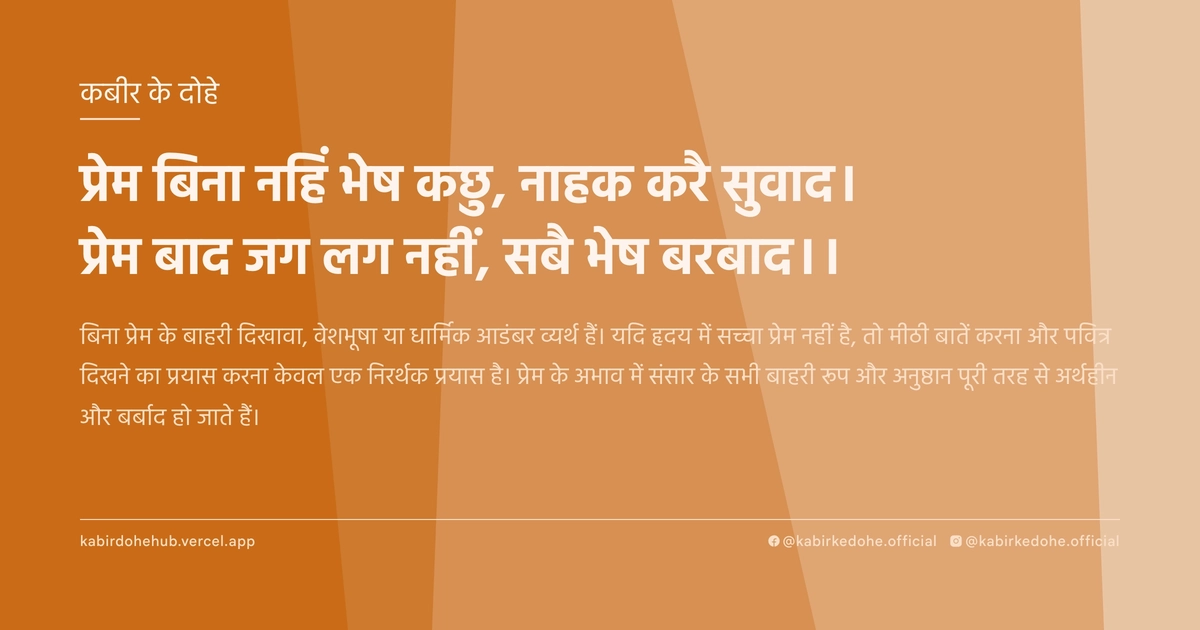
प्रेम बिना नहिं भेष कछु, नाहक करै सुवाद।
प्रेम बाद जग लग नहीं, सबै भेष बरबाद।।
Prem bina nahin bhesh kachu, naahak karai suvaad. Prem baad jag lag nahin, sabai bhesh barbaad.
इस पृष्ठ पर इस कबीर दोहे का अर्थ (meaning), हिंदी व्याख्या और अंग्रेज़ी अनुवाद, दार्शनिक विश्लेषण और व्यावहारिक जीवन सीख दी गई है। यह दोहा भक्ति (Bhakti) विषय से जुड़ा है — Kabir doha meaning and explanation in Hindi and English.
अर्थ (Meaning):
बिना प्रेम के बाहरी दिखावा, वेशभूषा या धार्मिक आडंबर व्यर्थ हैं। यदि हृदय में सच्चा प्रेम नहीं है, तो मीठी बातें करना और पवित्र दिखने का प्रयास करना केवल एक निरर्थक प्रयास है। प्रेम के अभाव में संसार के सभी बाहरी रूप और अनुष्ठान पूरी तरह से अर्थहीन और बर्बाद हो जाते हैं।
Without true love, all outward appearances, religious attire, and formal rituals are meaningless. If the heart lacks genuine love, speaking sweet words or attempting to appear holy is a futile exercise. In the absence of love, all worldly adornments and spiritual pretenses are utterly wasted and void of value.
व्याख्या (Interpretation):
कबीर यहाँ 'भेष' शब्द का प्रयोग केवल कपड़ों के लिए नहीं, बल्कि सामाजिक पहचान और धार्मिक पाखंड के लिए कर रहे हैं। इसका शाब्दिक अर्थ है कि बिना प्रेम के कोई भी वेश व्यर्थ है। रूपक के स्तर पर, यह 'माया' के उस जाल को दर्शाता है जहाँ मनुष्य बाहरी प्रतीकों (जैसे माला, तिलक या विशेष वस्त्र) को आध्यात्मिक उपलब्धि मान लेता है। निर्गुण भक्ति के अनुसार, ईश्वर किसी विशेष रूप या वेश में नहीं, बल्कि प्रेम की शुद्धता में बसता है। यहाँ विरोधाभास यह है कि जो व्यक्ति स्वयं को सबसे अधिक 'धार्मिक' दिखाने का प्रयास करता है, वह अक्सर प्रेम से सबसे दूर होता है। यह आत्मा और परमात्मा के बीच के उस सेतु की बात करता है जिसे केवल प्रेम के माध्यम से पार किया जा सकता है, न कि कर्मकांडों के माध्यम से।
Kabir uses the word 'bhesh' (attire/appearance) not merely to refer to clothing, but as a metaphor for social identity and religious hypocrisy. Literally, he asserts that any appearance is void without love. Metaphorically, this addresses the veil of 'Maya,' where individuals mistake external symbols—such as prayer beads, tilaks, or specific robes—for spiritual attainment. In the tradition of Nirgun Bhakti, the Divine does not reside in a specific form or costume but in the purity of love. The central paradox presented is that those who strive hardest to appear 'holy' are often the furthest from actual love. It emphasizes that the bridge between the Atman (individual soul) and Brahman (universal consciousness) is constructed solely through love, rendering all ritualistic performances obsolete.
दार्शनिक विश्लेषण (Philosophical Analysis):
कबीर का यह दोहा उनके युग के गहरे सामाजिक और धार्मिक संघर्षों की उपज है, जहाँ धर्म बाहरी प्रतीकों और जातिगत श्रेष्ठता में सिमट गया था। उन्होंने देखा कि कैसे पंडित और मुल्ला अपने बाहरी वेश के आधार पर स्वयं को श्रेष्ठ मानते थे, जबकि उनके भीतर करुणा और प्रेम का अभाव था। यह दृष्टिकोण सीधे तौर पर अद्वैत वेदांत से जुड़ता है, जो यह मानता है कि सत्य एक है और वह किसी भी बाहरी ढांचे या नाम से परे है। कबीर का 'प्रेम' यहाँ केवल मानवीय भावना नहीं है, बल्कि वह 'परम प्रेम' है जो अहंकार के विसर्जन से उत्पन्न होता है।
सूफी मत के 'इश्क-ए-हकीकी' (ईश्वरीय प्रेम) के साथ इसका गहरा सामंजस्य है, जहाँ प्रेमी और प्रियतम का भेद मिट जाता है। कबीर तर्क देते हैं कि जब तक 'मैं' (अहंकार) जीवित है, तब तक प्रेम संभव नहीं है, और जब तक प्रेम नहीं है, तब तक कोई भी पूजा केवल एक नाटक है। वे ritualism (कर्मकांड) को एक मानसिक बाधा मानते हैं जो मनुष्य को वास्तविक अनुभव से दूर ले जाती है।
मनोवैज्ञानिक स्तर पर, यह दोहा 'कॉग्निटिव डिसोनेंस' की बात करता है—जहाँ व्यक्ति का बाहरी व्यवहार उसके आंतरिक शून्य को छिपाने का प्रयास करता है। कबीर इस मुखौटे को उतारने की चुनौती देते हैं। वे कहते हैं कि आध्यात्मिक प्रगति का पैमाना यह नहीं है कि आप कितने नियमों का पालन करते हैं, बल्कि यह है कि आपके भीतर प्रेम कितना प्रगाढ़ है।
यह विश्लेषण हमें यह समझने में मदद करता है कि कबीर केवल एक कवि नहीं, बल्कि एक क्रांतिकारी समाजशास्त्री थे। उन्होंने धर्म को मंदिर और मस्जिद से निकालकर हृदय की धड़कन में स्थापित किया। उनके लिए, प्रेम ही एकमात्र वैध 'भेष' है।
अंततः, यह दोहा हमें चेतावनी देता है कि हम अपनी पहचान को बाहरी लेबलों से न जोड़ें। जब हम स्वयं को किसी विशेष समूह या धर्म के 'प्रतिनिधि' के रूप में देखते हैं, तो हम उस सार्वभौमिक प्रेम को खो देते हैं जो हमें सभी जीवित प्राणियों से जोड़ता है।
This couplet is a product of the profound social and religious conflicts of Kabir's era, a time when spirituality had shrunk into external symbols and caste-based superiority. Kabir observed how priests and clerics claimed superiority based on their outward attire while remaining devoid of compassion and love. This perspective aligns directly with Advaita Vedanta, which posits that Truth is one and transcends all external frameworks, names, or forms.
Kabir's concept of 'Love' here is not merely a human emotion, but 'Param Prem' (Supreme Love) that emerges only after the annihilation of the ego. There is a deep resonance here with the Sufi concept of 'Ishq-e-Haqiqi' (Divine Love), where the distinction between the lover and the Beloved vanishes. Kabir argues that as long as the 'I' (ego) persists, true love is impossible, and without love, any act of worship is merely a theatrical performance.
He views ritualism as a psychological barrier that distances the seeker from the actual experience of the Divine. On a psychological level, this doha addresses the dissonance between an individual's external persona and their internal void. Kabir challenges the wearer of the mask to strip away the pretension, asserting that the metric of spiritual progress is not adherence to rules, but the intensity of love within the heart.
This analysis reveals Kabir not just as a poet, but as a revolutionary sociologist. He shifted the locus of religion from the temple and mosque to the heartbeat of the human being. For him, love is the only valid 'attire' one can wear.
Ultimately, the doha warns against tethering one's identity to external labels. When we perceive ourselves as representatives of a specific group or creed, we lose the universal love that connects us to all living beings, replacing a living connection with a dead symbol.
मूल संदेश (Core Message):
- बाहरी प्रतीकों का मोह आध्यात्मिक प्रगति में सबसे बड़ी बाधा है।
- सच्ची पवित्रता कपड़ों में नहीं, बल्कि हृदय की करुणा में निहित है।
- अहंकार द्वारा संचालित धर्म केवल एक सामाजिक नाटक है।
- प्रेम वह एकमात्र चाबी है जो आत्मा को परमात्मा से जोड़ती है।
- जब 'मैं' मिटता है, तभी वास्तविक प्रेम का उदय होता है।
- ईश्वर किसी विशेष वेशभूषा का नहीं, बल्कि शुद्ध भाव का भूखा है।
- Attachment to external symbols is the greatest obstacle to spiritual growth.
- True purity resides in the compassion of the heart, not in attire.
- Religion driven by ego is nothing more than a social performance.
- Love is the only key that connects the individual soul to the Universal.
- Real love emerges only when the 'I' (ego) is annihilated.
- The Divine hungers for pure intention, not for specific costumes.
व्यावहारिक उदाहरण (Practical Example):
एक समय की बात है, वाराणसी के घाटों पर माधव नाम का एक वृद्ध व्यक्ति रहता था। माधव शहर का सबसे प्रतिष्ठित 'धर्म-गुरु' माना जाता था। वह हमेशा शुद्ध सफेद रेशमी वस्त्र पहनता, माथे पर बड़ा तिलक लगाता और गले में कई रुद्राक्ष की मालाएं धारण करता। लोग दूर-दूर से उसके दर्शन करने आते क्योंकि उसकी वाणी बहुत मीठी थी और वह शास्त्रों का गहरा ज्ञान रखता था।
माधव का पूरा दिन पूजा-पाठ और उपदेशों में बीतता। वह सबको बताता कि कैसे पवित्रता बनाए रखनी चाहिए और कैसे बाहरी शुद्धि से ईश्वर मिलते हैं। लेकिन माधव के भीतर एक गहरा अहंकार था। वह उन लोगों को तुच्छ समझता था जो गंदे कपड़ों में थे या जिन्हें शास्त्रों का ज्ञान नहीं था। उसके लिए धर्म एक 'भेष' था जिसे वह बहुत कुशलता से पहनता था।
एक दिन, घाट की सीढ़ियों पर एक बूढ़ी विधवा बैठी थी, जिसके पास पहनने को केवल एक फटी हुई सूती साड़ी थी। वह बीमार थी और भूख से बेहाल थी। माधव वहां से गुजरा। उसने अपनी रेशमी चादर को थोड़ा ऊपर उठाया ताकि वह उस 'अशुद्ध' महिला के संपर्क में न आए। उसने उसे उपदेश दिया कि यदि उसने पिछले जन्म में अच्छे कर्म किए होते, तो वह आज इस स्थिति में न होती।
तभी वहां एक साधारण बुनकर आया, जिसने केवल एक साधारण धोती पहनी थी। उसने बिना कुछ सोचे उस वृद्ध महिला को अपना भोजन दे दिया और उसके पैरों के पास बैठकर उसे सहारा दिया। उस बुनकर की आंखों में एक ऐसी करुणा थी जिसे माधव ने कभी महसूस नहीं किया था।
माधव ने गर्व से कहा, "तुम इस अशुद्ध स्त्री को छू रहे हो? क्या तुम्हें धर्म की मर्यादा नहीं पता? देखो मेरा भेष, मेरी पवित्रता!"
बुनकर ने मुस्कुराते हुए जवाब दिया, "महाराज, आपका भेष तो बहुत सुंदर है, लेकिन क्या इस भेष के अंदर प्रेम भी है? यदि आपका तिलक और आपकी माला आपको एक भूखे इंसान का दर्द महसूस करने से रोक रहे हैं, तो आपका यह सारा श्रृंगार केवल एक बोझ है। ईश्वर रेशम में नहीं, करुणा में बसता है।"
यह शब्द माधव के हृदय पर बिजली की तरह गिरे। उसे अचानक अहसास हुआ कि वह सालों से एक 'भेष' जी रहा था, लेकिन उसने कभी 'प्रेम' नहीं जिया था। उसकी सारी विद्वता और उसकी सारी पवित्रता एक खोखले खोल की तरह थी।
उस रात माधव ने अपनी रेशमी पोशाकें उतार दीं। उसने महसूस किया कि जिस 'शुद्धि' के पीछे वह भाग रहा था, वह वास्तव में उसके अहंकार की दीवार थी। उसने अपनी सारी संपत्ति उन लोगों में बांट दी जो वास्तव में जरूरत मंद थे।
अगले कुछ वर्षों में, माधव बदल गया। अब वह किसी विशेष वेश में नहीं रहता था, लेकिन उसकी उपस्थिति में एक ऐसी शांति और प्रेम था कि लोग अब उसके कपड़ों के कारण नहीं, बल्कि उसकी करुणा के कारण उसके पास आने लगे।
माधव ने जान लिया था कि जब प्रेम आता है, तो भेष की जरूरत खत्म हो जाती है। उसका जीवन अब एक प्रदर्शन नहीं, बल्कि एक प्रार्थना बन गया था।
Once in the ghats of Varanasi, there lived an elderly man named Madhav. Madhav was regarded as the city's most prestigious 'spiritual guide.' He always wore pure white silk robes, a prominent tilak on his forehead, and multiple rudraksha beads around his neck. People traveled from afar to seek his blessings because his speech was sweet and his knowledge of the scriptures was profound.
Madhav spent his entire day in rituals and preaching. He taught everyone how to maintain purity and claimed that external cleanliness was the path to God. However, deep within Madhav lay a profound ego. He looked down upon those in tattered clothes or those ignorant of the scriptures. For him, religion was a 'bhesh' (attire) that he wore with great skill.
One day, an elderly widow sat on the steps of the ghat, wearing nothing but a torn cotton saree. She was ill and starving. Madhav passed by. He lifted his silk shawl slightly to avoid coming into contact with the 'impure' woman. He lectured her, saying that if she had performed good deeds in her past life, she would not be in this state.
Just then, a simple weaver arrived, wearing only a plain dhoti. Without a second thought, he gave his food to the woman and sat beside her to offer support. There was a compassion in the weaver's eyes that Madhav had never experienced.
Madhav said proudly, "You are touching this impure woman? Do you not know the dignity of religion? Look at my attire, my purity!"
The weaver smiled and replied, "Maharaj, your attire is indeed beautiful, but is there love inside this attire? If your tilak and your beads prevent you from feeling the pain of a hungry human, then all your adornments are merely a burden. God does not dwell in silk, but in compassion."
These words struck Madhav like a bolt of lightning. He suddenly realized that for years he had been living a 'bhesh,' but he had never lived 'love.' All his scholarship and purity were like a hollow shell.
That night, Madhav cast off his silk robes. He realized that the 'purity' he had been chasing was actually a wall of ego. He distributed all his wealth among those truly in need.
Over the next few years, Madhav changed. He no longer wore any specific religious attire, but there was such a peace and love in his presence that people began visiting him not because of his clothes, but because of his compassion.
Madhav had learned that when love arrives, the need for a costume vanishes. His life was no longer a performance, but a prayer.
अभ्यास मार्गदर्शन (Practice Guidance):
- दैनिक चिंतन: प्रतिदिन 15 मिनट मौन बैठें और विचार करें कि आज आपने कितनी बार अपनी छवि (Image) को बचाने के लिए सत्य या प्रेम का त्याग किया।
- आत्म-पूछताछ जर्नल: एक डायरी लिखें जिसमें उन क्षणों को दर्ज करें जब आपने किसी की मदद केवल इसलिए की ताकि आप 'अच्छे' दिखें, न कि इसलिए कि आप वास्तव में उनकी परवाह करते थे।
- व्यवहार परिवर्तन: सप्ताह में एक बार किसी ऐसे व्यक्ति की निस्वार्थ सेवा करें जिससे आपका कोई सामाजिक या भावनात्मक संबंध नहीं है और जिसे आप 'अशुद्ध' या 'निम्न' मानते रहे हैं।
- निदान चेकलिस्ट: यदि आप किसी की आलोचना करते समय खुद को श्रेष्ठ महसूस करते हैं, या यदि आपकी धार्मिक पहचान आपके भीतर करुणा बढ़ाने के बजाय अहंकार बढ़ा रही है, तो समझ लें कि आप 'भेष' में फंसे हैं, प्रेम में नहीं।
- Daily Contemplation: Sit in silence for 15 minutes daily and reflect on how many times today you sacrificed truth or love to protect your public image.
- Self-Inquiry Journal: Keep a diary recording moments where you helped someone solely to appear 'good' or 'holy,' rather than out of genuine care.
- Behavioral Shift: Once a week, perform selfless service for someone with whom you have no social or emotional tie, specifically someone you have subconsciously judged as 'impure' or 'inferior.'
- Diagnostic Checklist: If you feel a sense of superiority while criticizing others, or if your religious identity increases your ego rather than your compassion, recognize that you are trapped in 'bhesh' (appearance), not love.
चिंतन प्रश्न (Reflection Questions):
- मेरे जीवन का वह कौन सा 'भेष' (सामाजिक या धार्मिक मुखौटा) है जिसे मैं दुनिया के सामने सबसे अधिक गर्व से पहनता हूँ?
- क्या मेरी धार्मिक या नैतिक मान्यताएं मुझे दूसरों के प्रति अधिक संवेदनशील बनाती हैं, या वे मुझे दूसरों को आंकने का एक औजार दे देती हैं?
- यदि मेरी सारी उपाधियाँ, पद और बाहरी पहचान छीन ली जाएं, तो क्या मेरे भीतर इतना प्रेम बचेगा कि मैं स्वयं को स्वीकार कर सकूँ?
- मैं डिजिटल दुनिया में अपनी जो छवि (Image) बनाता हूँ, वह मेरे वास्तविक आंतरिक स्वभाव से कितनी अलग है?
- क्या मैं प्रेम करता हूँ, या मैं केवल 'प्रेम करने वाले व्यक्ति' की छवि से प्रेम करता हूँ?
- मेरे जीवन में ऐसा कौन सा व्यक्ति है जिसे मैं 'अयोग्य' मानता हूँ, और क्या वह अयोग्यता वास्तव में उसमें है या मेरे अपने पूर्वाग्रहों में?
- What is the 'bhesh' (social or religious mask) that I wear most proudly before the world?
- Do my religious or moral beliefs make me more sensitive to others, or do they provide me with a tool to judge them?
- If all my titles, positions, and external identities were stripped away, would there be enough love left within me to accept myself?
- How different is the image I curate in the digital world from my actual internal nature?
- Do I actually love, or am I merely in love with the image of being a 'loving person'?
- Who is the person in my life that I consider 'unworthy,' and does that unworthiness truly exist in them or in my own biases?