
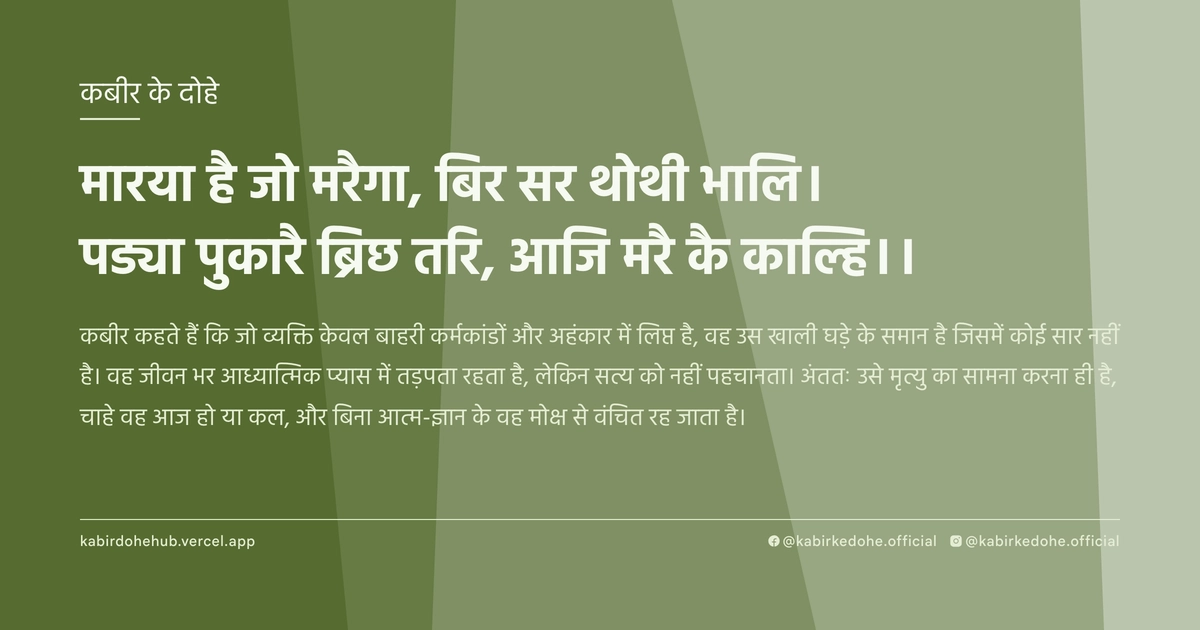
मारया है जो मरैगा, बिर सर थोथी भालि।
पड्या पुकारै ब्रिछ तरि, आजि मरै कै काल्हि।।
Maarya hai jo maraiga, bir sar thothi bhaali. Padya pukarai brich tari, aaji marai kai kaalhi.
इस पृष्ठ पर इस कबीर दोहे का अर्थ (meaning), हिंदी व्याख्या और अंग्रेज़ी अनुवाद, दार्शनिक विश्लेषण और व्यावहारिक जीवन सीख दी गई है। यह दोहा मृतुक्यता (Mortality) विषय से जुड़ा है — Kabir doha meaning and explanation in Hindi and English.
अर्थ (Meaning):
कबीर कहते हैं कि जो व्यक्ति केवल बाहरी कर्मकांडों और अहंकार में लिप्त है, वह उस खाली घड़े के समान है जिसमें कोई सार नहीं है। वह जीवन भर आध्यात्मिक प्यास में तड़पता रहता है, लेकिन सत्य को नहीं पहचानता। अंततः उसे मृत्यु का सामना करना ही है, चाहे वह आज हो या कल, और बिना आत्म-ज्ञान के वह मोक्ष से वंचित रह जाता है।
Kabir asserts that one who clings to external rituals and ego is like an empty pot—hollow and devoid of essence. Such a person wanders in spiritual thirst, crying out for salvation while remaining blind to the internal truth. Ultimately, death is inevitable for all; whether it arrives today or tomorrow, the one without self-realization remains trapped in the cycle of suffering.
व्याख्या (Interpretation):
इस दोहे का शाब्दिक अर्थ एक खाली घड़े और एक प्यासे व्यक्ति की व्यर्थ पुकार से है। रूपक के स्तर पर, 'थोथी भालि' (खाली घड़ा) उस मनुष्य का प्रतीक है जिसने ज्ञान के बिना केवल धार्मिक दिखावा किया है। यह निर्गुण भक्ति के उस सिद्धांत को दर्शाता है जहाँ ईश्वर मंदिर या मस्जिद में नहीं, बल्कि अंतरात्मा में निवास करता है। माया का प्रभाव व्यक्ति को यह विश्वास दिलाता है कि बाहरी अनुष्ठान उसे बचा लेंगे, जबकि वास्तव में वह केवल अपने अहंकार को पोषित कर रहा होता है। आत्मा और ब्रह्म की एकता तब तक संभव नहीं है जब तक 'मैं' का यह खोखला घड़ा टूट न जाए। यह विरोधाभास है कि मनुष्य मृत्यु से डरता है, जबकि मृत्यु ही उस अहंकार का अंत है जो उसे सत्य से दूर रखता है।
Literally, the verse speaks of an empty pot and the futile cries of a thirsty soul. Metaphorically, the 'thothi bhaali' (empty pot) symbolizes the human being who possesses religious form but lacks spiritual substance. This aligns with Nirgun Bhakti, emphasizing that the Divine is not found in external shrines but within the silent depths of the self. Maya creates the illusion that ritualistic adherence guarantees salvation, while in reality, it only reinforces the ego. The non-duality of Atman and Brahman remains obscured as long as the 'hollow vessel' of the individual identity persists. The central paradox lies in the human fear of death, whereas the annihilation of the ego-self is the only gateway to eternal liberation.
दार्शनिक विश्लेषण (Philosophical Analysis):
कबीर का यह दोहा उनके युग के सामाजिक और धार्मिक पाखंड पर एक तीखा प्रहार है। उन्होंने देखा कि लोग तीर्थयात्राओं और कठिन व्रतों में समय व्यतीत करते थे, लेकिन उनके भीतर करुणा और सत्य का अभाव था। यह दृष्टिकोण अद्वैत वेदांत के करीब है, जहाँ बाहरी जगत को मिथ्या माना गया है और केवल शुद्ध चेतना को सत्य। कबीर का तर्क है कि यदि हृदय रिक्त है, तो बाहरी क्रियाएँ केवल बोझ हैं।
सूफी मत के 'फना' (अहंकार का विनाश) के सिद्धांत की तरह, कबीर यहाँ 'मरने' की बात कर रहे हैं। यह शारीरिक मृत्यु नहीं, बल्कि 'जीवित रहते हुए मरना' है—अर्थात वासनाओं और अहंकार का अंत। जब तक व्यक्ति अपनी पहचान को सामाजिक पद या धार्मिक लेबल से जोड़ता है, वह उस खाली घड़े की तरह है जो शोर तो करता है लेकिन तृप्ति नहीं देता।
यहाँ कर्मकांड के प्रति अस्वीकृति केवल विरोध नहीं, बल्कि एक मनोवैज्ञानिक आवश्यकता है। कबीर समझाते हैं कि जब तक हम 'कर्ता' होने का भ्रम पालते हैं, हम सत्य के मार्ग में सबसे बड़ी बाधा होते हैं। यह विश्लेषण हमें बताता है कि आध्यात्मिक प्रगति बाहरी संग्रह से नहीं, बल्कि आंतरिक रिक्तता को सत्य से भरने से आती है।
ऐतिहासिक संदर्भ में, कबीर ने जाति व्यवस्था और ब्राह्मणवादी वर्चस्व को चुनौती दी, क्योंकि ये दोनों ही 'बाहरी पहचान' के प्रतीक थे। उनके लिए, ईश्वर का अनुभव किसी विशेष जाति या धर्म का विशेषाधिकार नहीं था, बल्कि वह हर उस व्यक्ति के लिए उपलब्ध था जिसने अपने अहंकार का त्याग कर दिया हो।
अंततः, यह दोहा हमें चेतावनी देता है कि समय सीमित है। 'आज या कल' की बात यह दर्शाती है कि मृत्यु एक निश्चित सत्य है, और जो व्यक्ति इस सत्य को स्वीकार कर वर्तमान में आत्म-साक्षात्कार नहीं करता, वह अनंत काल तक भटकता रहेगा। यह एक आह्वान है कि हम दिखावे की दुनिया से निकलकर वास्तविक अस्तित्व की खोज करें।
This couplet is a searing critique of the social and religious hypocrisy prevalent during Kabir's era. He observed people spending lifetimes in pilgrimages and rigorous fasts, yet remaining devoid of compassion and truth. This perspective mirrors Advaita Vedanta, where the external world is viewed as Maya (illusion) and only pure consciousness is recognized as the ultimate reality. Kabir argues that if the heart is empty of love and awareness, external rituals are merely burdens.
Parallel to the Sufi concept of 'Fana' (annihilation of the self), Kabir speaks of 'dying.' This is not biological death, but 'dying while alive'—the dissolution of desires and the ego. As long as an individual identifies with social status or religious labels, they remain like the 'empty pot,' creating noise without providing sustenance.
The rejection of ritualism here is not mere rebellion but a psychological necessity. Kabir explains that as long as we maintain the illusion of being the 'doer' (Karta), we remain the primary obstacle to our own liberation. This analysis reveals that spiritual growth is not about accumulating merits but about emptying the self of falsehood to be filled with Truth.
Historically, Kabir challenged the caste system and Brahmanical hegemony because both were anchors of 'external identity.' For him, the experience of the Divine was not a privilege of a specific caste or creed, but accessible to anyone who had surrendered their ego.
Ultimately, the verse warns that time is finite. The mention of 'today or tomorrow' underscores that death is the only certainty. Those who fail to realize the Self in the present moment remain trapped in a cycle of endless longing. It is a call to move beyond the performative aspects of faith and enter the realm of authentic existence.
मूल संदेश (Core Message):
- बाहरी दिखावा आध्यात्मिक रिक्तता का आवरण है।
- अहंकार का विनाश ही वास्तविक पुनर्जन्म है।
- सत्य कर्मकांडों में नहीं, बल्कि आंतरिक शुद्धि में है।
- मृत्यु का भय केवल तब तक है जब तक 'मैं' जीवित है।
- प्रेम और करुणा ही वह जल है जो आत्मा की प्यास बुझाता है।
- External performance is a veil for spiritual emptiness.
- The annihilation of ego is the only true rebirth.
- Truth resides in inner purity, not in ritualistic adherence.
- Fear of death persists only as long as the 'I' exists.
- Love and compassion are the only waters that quench the soul's thirst.
व्यावहारिक उदाहरण (Practical Example):
एक समय की बात है, वाराणसी के घाटों पर माधव नाम का एक वृद्ध बुनकर रहता था। माधव अपने शहर में सबसे बड़ा धर्मपरायण व्यक्ति माना जाता था। वह रोज़ सुबह ब्रह्म मुहूर्त में उठता, गंगा में डुबकी लगाता, घंटों मंत्र जाप करता और शहर के सबसे बड़े मंदिर में भारी दान देता था। उसकी पहचान उसके माथे पर लगे बड़े तिलक और उसके द्वारा पहने गए कई रुद्राक्षों से थी। लोग उसे 'महात्मा' कहकर बुलाते थे, और माधव को इस बात का बहुत गर्व था।
माधव का पूरा जीवन एक प्रदर्शन बन गया था। वह दूसरों को उपदेश देता कि कैसे मोक्ष प्राप्त किया जाए, लेकिन उसके भीतर क्रोध और अहंकार की जड़ें गहरी थीं। वह अपने छोटे बेटे को उसकी गलतियों के लिए बेरहमी से डांटता और अपने पड़ोसियों को उनकी कम धार्मिकता के लिए तुच्छ समझता। उसके लिए धर्म केवल नियमों का पालन और सामाजिक प्रतिष्ठा का साधन था। वह उस 'खाली घड़े' की तरह था जो बाहर से तो चमक रहा था, लेकिन अंदर से पूरी तरह रिक्त था।
एक दिन, माधव की मुलाकात एक फकीर से हुई जो घाट की सीढ़ियों पर चुपचाप बैठा था। फकीर के पास न तो कोई माला थी, न कोई तिलक, और न ही कोई विशेष वस्त्र। माधव ने गर्व से फकीर को अपने ज्ञान और अपनी तपस्या के बारे में बताया। उसने बताया कि उसने कितने व्रत रखे हैं और कितनी बार तीर्थयात्रा की है। फकीर ने शांति से उसकी बात सुनी और फिर एक छोटा सा सवाल पूछा, "महात्मा जी, यदि आपके पास इतना ज्ञान है, तो क्या आपके भीतर का क्रोध शांत हुआ? क्या आप अपने बेटे को बिना शर्त प्रेम कर पाते हैं?"
माधव निरुत्तर हो गया। उसे पहली बार महसूस हुआ कि उसकी सारी पूजा-पाठ केवल एक मुखौटा थी। वह फकीर की आँखों में एक ऐसी गहराई देख पा रहा था जो उसने अपने जीवन के सबसे कठिन तपस्याओं में भी नहीं पाई थी। फकीर ने मुस्कुराते हुए कहा, "तुमने घड़े को बाहर से बहुत सजाया है, लेकिन उसके अंदर पानी की एक बूंद भी नहीं है। तुम केवल शोर कर रहे हो, प्यास बुझा नहीं रहे।"
यह बात माधव के हृदय में बिजली की तरह कौंधी। उसे समझ आया कि वह अब तक केवल एक 'भूमिका' निभा रहा था। उसने महसूस किया कि उसकी धार्मिकता वास्तव में उसके अहंकार को और अधिक पोषण दे रही थी। वह जिस मोक्ष की तलाश में था, वह बाहरी क्रियाओं में नहीं, बल्कि उसके भीतर के प्रेम और करुणा में छिपा था।
अगले कुछ महीनों में, माधव का जीवन पूरी तरह बदल गया। उसने भारी दान देना बंद नहीं किया, लेकिन अब वह दान गुप्त रूप से और बिना किसी अहंकार के करता था। उसने अपने बेटे के साथ संबंध सुधारने शुरू किए और अपनी गलतियों को स्वीकार करना सीखा। उसने तिलक लगाना छोड़ दिया और अपनी पहचान एक 'महात्मा' के बजाय एक 'सेवक' के रूप में बनानी शुरू की।
उसने पाया कि जब उसने अपनी 'धार्मिक पहचान' का बोझ उतारा, तो उसे वास्तव में शांति का अनुभव हुआ। अब वह मंदिर केवल प्रार्थना के लिए जाता था, प्रशंसा पाने के लिए नहीं। उसका हृदय, जो पहले एक खाली घड़ा था, अब करुणा और विनम्रता से भर गया था।
माधव ने सीखा कि वास्तविक मृत्यु तब होती है जब अहंकार मरता है, और वास्तविक जीवन तब शुरू होता है जब हम स्वयं को दूसरों की सेवा में विलीन कर देते हैं। वह अब उस प्यास से मुक्त था जिसने उसे वर्षों तक तड़पाया था, क्योंकि उसने सत्य को बाहर नहीं, बल्कि अपने भीतर खोज लिया था।
Once, on the ghats of Varanasi, lived an elderly weaver named Madhav. Madhav was regarded as the most pious man in his neighborhood. He woke up during the Brahma Muhurta, bathed in the Ganges, chanted mantras for hours, and made lavish donations to the city's largest temple. His identity was defined by the large tilak on his forehead and the numerous rudraksha beads he wore. People called him a 'Mahatma,' and Madhav took immense pride in this title.
Madhav's entire life had become a performance. He lectured others on how to achieve salvation, yet within him, the roots of anger and ego ran deep. He would harshly berate his young son for minor mistakes and look down upon his neighbors for their perceived lack of religiosity. For him, religion was merely a set of rules to follow and a means to attain social prestige. He was like that 'empty pot'—polished and shining on the outside, but utterly hollow within.
One day, Madhav encountered a wandering fakir sitting silently on the steps of the ghat. The fakir had no beads, no tilak, and wore no special robes. With pride, Madhav told the fakir about his vast knowledge and his rigorous penance. He listed the fasts he had kept and the pilgrimages he had completed. The fakir listened calmly and then asked a simple question: "Mahatma ji, if you possess such knowledge, has the anger within you subsided? Can you love your son unconditionally?"
Madhav was speechless. For the first time, he realized that all his rituals were merely a mask. He saw a depth in the fakir's eyes that he had never found in his most strenuous austerities. The fakir smiled and said, "You have decorated the pot beautifully from the outside, but there isn't a single drop of water inside. You are only making noise; you are not quenching the thirst."
These words struck Madhav like a bolt of lightning. He understood that he had been playing a 'role' rather than living a truth. He realized that his religiosity was actually feeding his ego. The salvation he sought was not in external acts, but hidden within love and compassion.
Over the next few months, Madhav's life transformed completely. He did not stop giving, but he began to give secretly and without ego. He worked on repairing his relationship with his son and learned to acknowledge his own flaws. He stopped wearing the tilak and shifted his identity from being a 'Mahatma' to being a 'servant' of humanity.
He discovered that once he shed the burden of his 'religious identity,' he finally experienced true peace. He visited the temple to pray, not to be praised. His heart, once an empty vessel, was now filled with compassion and humility.
Madhav learned that true death occurs when the ego dies, and true life begins when we dissolve ourselves in the service of others. He was finally free from the thirst that had tormented him for years, for he had found the Truth not in the world, but within himself.
अभ्यास मार्गदर्शन (Practice Guidance):
- दैनिक आत्म-निरीक्षण: प्रतिदिन 15 मिनट मौन बैठें और विचार करें कि आज आपने कितनी बार अपनी 'छवि' (Image) को बचाने के लिए झूठ बोला या दिखावा किया।
- अहंकार का विसर्जन: सप्ताह में एक बार ऐसा कार्य करें जिससे आपकी सामाजिक प्रतिष्ठा को ठेस पहुंचे लेकिन किसी और का भला हो (जैसे किसी ऐसे व्यक्ति की मदद करना जो आपको नापसंद करता हो)।
- जर्नलिंग प्रॉम्प्ट: लिखें—"यदि मेरी सारी उपाधियाँ, संपत्ति और धार्मिक पहचान छीन ली जाए, तो वास्तव में मैं कौन हूँ?"
- डायग्नोस्टिक चेकलिस्ट: क्या मैं दूसरों की भक्ति को देखकर उन्हें छोटा महसूस करता हूँ? क्या मेरी प्रार्थनाएँ दूसरों को प्रभावित करने के लिए हैं? यदि हाँ, तो मैं अभी भी 'खाली घड़े' की स्थिति में हूँ।
- Daily Self-Inquiry: Spend 15 minutes in silence daily, reflecting on how many times you acted to preserve your 'image' or performed for others' validation.
- Ego Dissolution: Once a week, perform an act of service that challenges your social status or ego (e.g., helping someone who dislikes you or performs a 'lowly' task).
- Journaling Prompt: Write—"If all my titles, possessions, and religious identities were stripped away, who would I actually be?"
- Diagnostic Checklist: Do I feel superior when seeing others' lack of ritual adherence? Is my spirituality a source of pride rather than humility? If yes, I am still in the state of the 'empty pot'.
चिंतन प्रश्न (Reflection Questions):
- मेरी कौन सी धार्मिक या नैतिक मान्यताएँ वास्तव में मेरे अहंकार को पोषण दे रही हैं?
- क्या मैं वास्तव में ईश्वर की खोज कर रहा हूँ, या मैं केवल एक 'आध्यात्मिक व्यक्ति' कहलाने की इच्छा रखता हूँ?
- मेरे जीवन का वह कौन सा हिस्सा है जहाँ मैं केवल 'शोर' कर रहा हूँ, लेकिन कोई वास्तविक परिणाम नहीं दे रहा?
- यदि आज मेरी मृत्यु हो जाए, तो क्या मेरे पीछे केवल एक 'खाली घड़ा' बचेगा या प्रेम की कोई विरासत?
- मैं अपनी डिजिटल पहचान (सोशल मीडिया) को कितना सत्य मानता हूँ और वह मेरे वास्तविक स्वरूप से कितना अलग है?
- Which of my religious or moral beliefs are actually feeding my ego rather than dissolving it?
- Am I truly seeking the Divine, or am I merely desiring the identity of being a 'spiritual person'?
- In which area of my life am I merely making 'noise' without producing any real spiritual fruit?
- If I were to die today, would I leave behind only an 'empty pot' or a legacy of genuine love?
- How much of my digital identity is a curated performance, and how far is it from my authentic shadow self?