
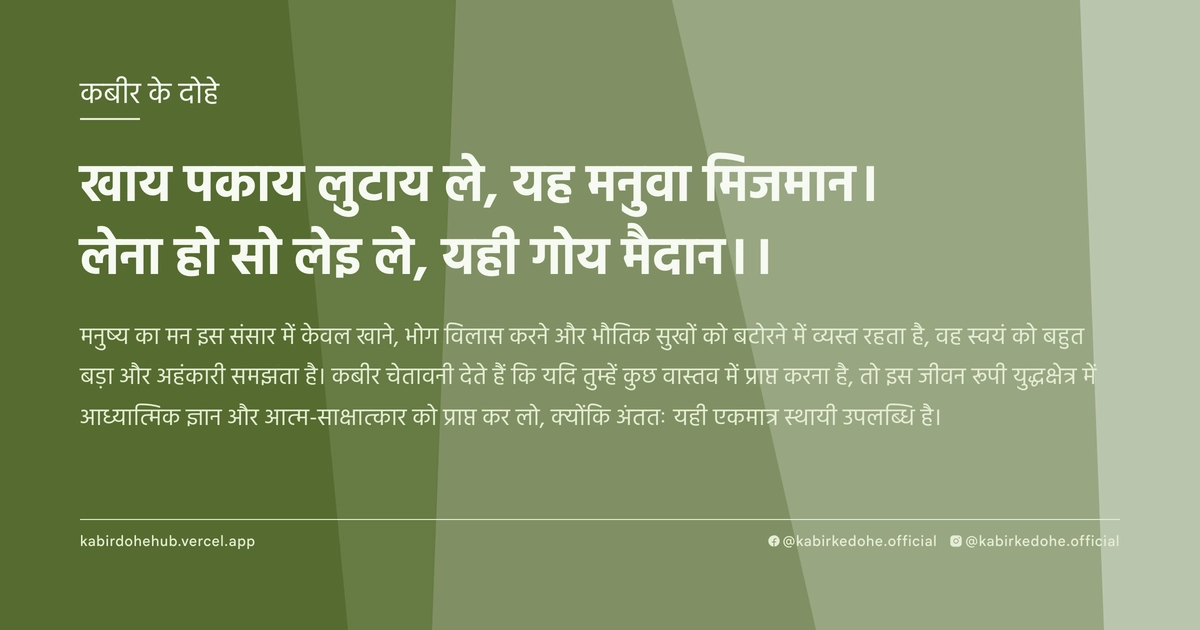
खाय पकाय लुटाय ले, यह मनुवा मिजमान।
लेना हो सो लेइ ले, यही गोय मैदान।।
Khaay pakay lutay le, yeh manuva mijmaan. Lena ho so lei le, yahi goy maidan.
इस पृष्ठ पर इस कबीर दोहे का अर्थ (meaning), हिंदी व्याख्या और अंग्रेज़ी अनुवाद, दार्शनिक विश्लेषण और व्यावहारिक जीवन सीख दी गई है। यह दोहा मृतुक्यता (Mortality) विषय से जुड़ा है — Kabir doha meaning and explanation in Hindi and English.
अर्थ (Meaning):
मनुष्य का मन इस संसार में केवल खाने, भोग विलास करने और भौतिक सुखों को बटोरने में व्यस्त रहता है, वह स्वयं को बहुत बड़ा और अहंकारी समझता है। कबीर चेतावनी देते हैं कि यदि तुम्हें कुछ वास्तव में प्राप्त करना है, तो इस जीवन रूपी युद्धक्षेत्र में आध्यात्मिक ज्ञान और आत्म-साक्षात्कार को प्राप्त कर लो, क्योंकि अंततः यही एकमात्र स्थायी उपलब्धि है।
The human mind remains preoccupied with consuming, indulging, and accumulating material pleasures, blinded by its own arrogance and perceived importance. Kabir warns that if one truly wishes to gain anything of value, they must seize spiritual enlightenment and self-realization within this earthly battlefield, for these are the only enduring achievements in a transient existence.
व्याख्या (Interpretation):
यहाँ 'खाय पकाय' भौतिक उपभोग और इंद्रिय सुखों का प्रतीक है, जबकि 'मिजमान' उस अहंकार को दर्शाता है जो मनुष्य को यह विश्वास दिलाता है कि वह इस संसार का स्वामी है। कबीर इस दुनिया को 'गोय मैदान' यानी एक युद्धक्षेत्र या खेल के मैदान के रूप में देखते हैं जहाँ आत्मा और माया के बीच संघर्ष चलता है। यह दोहा निर्गुण भक्ति के उस सिद्धांत पर आधारित है जहाँ बाहरी कर्मकांडों के बजाय आंतरिक शुद्धि पर बल दिया गया है। माया हमें भ्रमित करती है कि संचय ही सफलता है, जबकि वास्तविक सफलता 'अहं' का विसर्जन है। अद्वैत वेदांत के अनुसार, जब तक मन स्वयं को शरीर और अहंकार से जोड़कर देखता है, वह इस खेल में हार रहा है। मुक्ति तब मिलती है जब साधक यह समझता है कि वह इस खेल का खिलाड़ी नहीं, बल्कि वह अनंत चेतना है जिसमें यह सारा नाटक घटित हो रहा है।
Here, 'khay pakay' symbolizes material consumption and sensory indulgence, while 'mijmaan' represents the ego that convinces a human they are the master of this world. Kabir views the world as 'goy maidaan'—a battlefield or a playground where a constant struggle between the soul and Maya (illusion) unfolds. This couplet is rooted in the principle of Nirgun Bhakti, emphasizing internal purification over external rituals. Maya deceives us into believing that accumulation equals success, whereas true success lies in the dissolution of the 'I'. According to Advaita Vedanta, as long as the mind identifies itself with the body and ego, it remains a loser in this game. Liberation occurs when the seeker realizes they are not the player in the game, but the infinite consciousness in which this entire drama is enacted.
दार्शनिक विश्लेषण (Philosophical Analysis):
कबीर का यह दोहा उनके युग के सामाजिक और धार्मिक पाखंड पर एक तीखा प्रहार है। उस समय समाज बाहरी दिखावे, जातिगत श्रेष्ठता और जटिल धार्मिक अनुष्ठानों में उलझा हुआ था। कबीर ने 'मिजमान' शब्द का प्रयोग करके उस मानसिक स्थिति को लक्षित किया है जहाँ व्यक्ति अपनी सामाजिक स्थिति या धार्मिक पहचान को अपनी वास्तविक पहचान मान लेता है। यह सूफी मत के 'फना' (अहंकार का विनाश) के सिद्धांत से मेल खाता है, जहाँ ईश्वर तक पहुँचने के लिए स्वयं के अस्तित्व को मिटाना आवश्यक है।
दार्शनिक स्तर पर, कबीर यहाँ 'सांसारिक लाभ' और 'आध्यात्मिक लाभ' के बीच के विरोधाभास को स्पष्ट कर रहे हैं। वे तर्क देते हैं कि जो कुछ भी भौतिक है, वह नश्वर है और अंततः नष्ट हो जाएगा। इसलिए, भौतिक वस्तुओं को 'लुटाय ले' (बटोरना) व्यर्थ है। यह विचार अद्वैत वेदांत के 'माया' सिद्धांत के अनुरूप है, जहाँ संसार को एक मिथ्या प्रतीत होने वाला सत्य माना गया है।
कबीर की दृष्टि में, मनुष्य का सबसे बड़ा शत्रु उसका अपना अहंकार है। वह अहंकार जो उसे यह विश्वास दिलाता है कि वह दूसरों से श्रेष्ठ है या वह समय को नियंत्रित कर सकता है। जब कबीर 'गोय मैदान' की बात करते हैं, तो वे जीवन को एक अवसर के रूप में देखते हैं। यह मैदान वह स्थान है जहाँ मनुष्य या तो अपनी वासनाओं के जाल में फँसकर हार जाता है, या फिर आत्म-ज्ञान के माध्यम से मुक्त हो जाता है।
उनका विरोध केवल कर्मकांडों से नहीं, बल्कि उस मानसिकता से है जो धर्म को एक व्यापार या सामाजिक प्रतिष्ठा का साधन बनाती है। वे सिखाते हैं कि वास्तविक भक्ति मंदिर या मस्जिद में नहीं, बल्कि मन की उस गहराई में है जहाँ 'मैं' और 'तू' का भेद समाप्त हो जाता है। यह मनोवैज्ञानिक रूपांतरण है जहाँ व्यक्ति बाहरी दुनिया से अपनी दृष्टि हटाकर आंतरिक शून्य की ओर मुड़ता है।
अंततः, यह दोहा हमें याद दिलाता है कि जीवन की सार्थकता इस बात में नहीं है कि हमने कितना संचित किया, बल्कि इस बात में है कि हमने अपने भीतर से कितने विकारों को हटाया। यह एक आह्वान है कि हम इस क्षणभंगुर जीवन के खेल में उस शाश्वत सत्य को खोजें जो जन्म और मृत्यु के चक्र से परे है।
This couplet is a sharp critique of the social and religious hypocrisy of Kabir's era. At that time, society was entangled in external displays, caste superiority, and complex religious rituals. By using the word 'mijmaan', Kabir targets the psychological state where an individual mistakes their social status or religious identity for their true essence. This aligns with the Sufi concept of 'Fana' (annihilation of the ego), where the dissolution of the self is necessary to attain union with the Divine.
On a philosophical level, Kabir clarifies the paradox between 'worldly gain' and 'spiritual gain'. He argues that everything material is transient and will eventually perish; therefore, 'lutay le' (accumulating) material goods is futile. This perspective mirrors the Advaita Vedanta theory of 'Maya', where the world is seen as a perceived reality that is ultimately illusory.
In Kabir's view, the greatest enemy of a human is their own ego. It is this ego that convinces a person they are superior to others or that they can control time. When Kabir refers to the 'goy maidaan', he views life as a singular opportunity. This field is the arena where a human either loses by becoming trapped in the web of desires or wins through the attainment of self-knowledge.
His opposition is not merely toward rituals, but toward the mindset that treats religion as a business or a tool for social prestige. He teaches that true devotion is not found in temples or mosques, but in the depths of the mind where the distinction between 'I' and 'Thou' vanishes. This is a psychological transformation where the individual shifts their gaze from the external world to the internal void.
Ultimately, this couplet reminds us that the meaning of life lies not in how much we have accumulated, but in how many impurities we have removed from within. It is a call to seek the eternal truth that exists beyond the cycle of birth and death within the fleeting game of existence.
मूल संदेश (Core Message):
- भौतिक संचय एक क्षणभंगुर भ्रम है।
- अहंकार सत्य और आत्मा के बीच की सबसे बड़ी दीवार है।
- जीवन एक अवसर है, इसे केवल उपभोग में न गंवाएं।
- वास्तविक लाभ आंतरिक शांति और आत्म-साक्षात्कार है।
- अहंकार का विसर्जन ही ईश्वर से मिलन का एकमात्र मार्ग है।
- Material accumulation is a fleeting illusion.
- Ego is the greatest wall between the self and the Truth.
- Life is an opportunity; do not waste it on mere consumption.
- The only real gain is inner peace and self-realization.
- The dissolution of ego is the only path to Divine union.
व्यावहारिक उदाहरण (Practical Example):
राजस्थान के एक छोटे से गाँव में राम सिंह नाम का एक किसान रहता था। वह अपने क्षेत्र का सबसे समृद्ध किसान था और उसे अपनी उपजाऊ भूमि और अनाज के बड़े भंडारों पर बहुत गर्व था। वह अक्सर गाँव के अन्य किसानों को नीची नज़र से देखता था और अपनी समृद्धि को अपनी श्रेष्ठता का प्रमाण मानता था। उसका पूरा जीवन केवल और अधिक भूमि खरीदने और अपने भंडार भरने में बीता।
एक बार गाँव में भीषण अकाल पड़ा। राम सिंह के पास अनाज तो बहुत था, लेकिन उसके अहंकार ने उसे इतना अंधा कर दिया था कि उसने संकट के समय दूसरों की मदद करने के बजाय अपने अनाज की कीमतें बढ़ा दीं। वह सोचता था कि उसकी संपत्ति उसे हमेशा सुरक्षित रखेगी। लेकिन नियति को कुछ और ही मंजूर था। एक रात भीषण आग लगी और उसके गोदाम पूरी तरह जलकर राख हो गए।
एक ही पल में, वह 'मिजमान' (अहंकारी) किसान सड़क पर आ गया। जिस समृद्धि पर उसे गर्व था, वह धुएँ में बदल गई। वह हताश होकर एक पुराने बरगद के पेड़ के नीचे बैठा था, जहाँ गाँव का एक वृद्ध, जिसे लोग 'साधु' कहते थे, शांत मुद्रा में बैठे थे। राम सिंह ने रोते हुए पूछा, 'मैंने जीवन भर इतनी मेहनत की, इतना संचित किया, फिर भी मैं आज खाली हाथ क्यों हूँ?'
साधु ने मंद मुस्कान के साथ कहा, 'पुत्र, तूने केवल उस अनाज को संचित किया जो सड़ जाता है या जल जाता है। तूने इस जीवन रूपी मैदान में वह धन नहीं कमाया जो कभी नष्ट नहीं होता—करुणा, संतोष और आत्म-ज्ञान। तूने पेट तो भरा, लेकिन आत्मा को भूखा रखा।'
राम सिंह को पहली बार कबीर की वह बात समझ आई कि यह संसार केवल एक खेल का मैदान है। उसे अहसास हुआ कि उसकी असली हार अनाज खोने में नहीं, बल्कि उस अहंकार में थी जिसने उसे मानवता से दूर कर दिया था। उसने महसूस किया कि वह अब तक केवल 'खाय पकाय' में व्यस्त था, जबकि वास्तविक 'लेना' तो आंतरिक शांति को प्राप्त करना था।
उस दिन के बाद राम सिंह पूरी तरह बदल गया। उसने बचे हुए थोड़े से संसाधनों से गाँव के लिए एक सामुदायिक कुआँ बनवाया। उसने अपनी शेष आयु दूसरों की सेवा में लगा दी। अब वह अनाज के भंडारों से नहीं, बल्कि लोगों के प्रेम और दुआओं से अपनी समृद्धि मापता था।
उसने सीखा कि जब हम 'मैं' को त्यागकर 'हम' में विलीन होते हैं, तभी हम वास्तव में कुछ प्राप्त करते हैं। उसका अहंकार अब शांत था, और उसके मन में एक ऐसी तृप्ति थी जो उसे पहले कभी महसूस नहीं हुई थी।
राम सिंह की कहानी यह सिखाती है कि भौतिक संचय एक भ्रम है। वास्तविक उपलब्धि वह है जो मृत्यु के समय भी हमारे साथ रहे—हमारी चेतना का विस्तार और आत्मा की पवित्रता।
In a small village in Rajasthan lived a farmer named Ram Singh. He was the wealthiest farmer in his region and took immense pride in his fertile lands and vast granaries. He often looked down upon other farmers, viewing his prosperity as proof of his inherent superiority. His entire life was spent solely on acquiring more land and filling his stores.
Once, a severe famine struck the village. Ram Singh had plenty of grain, but his ego had blinded him to the point that instead of helping others in crisis, he increased the prices of his grain. He believed his wealth would keep him eternally secure. However, destiny had other plans. One night, a massive fire broke out, and his warehouses were completely reduced to ashes.
In a single moment, the 'mijmaan' (arrogant) farmer was left with nothing. The prosperity he prided himself on vanished into smoke. Desperate, he sat beneath an old banyan tree where a village elder, known as the 'Sadhu', sat in deep peace. Ram Singh asked tearfully, 'I worked so hard all my life, I accumulated so much, yet why am I empty-handed today?'
The Sadhu smiled gently and said, 'Son, you only accumulated grain that rots or burns. In this battlefield of life, you failed to earn the wealth that never perishes—compassion, contentment, and self-knowledge. You fed your stomach, but left your soul starving.'
For the first time, Ram Singh understood Kabir's teaching that this world is merely a playground. He realized his true failure was not the loss of grain, but the ego that had distanced him from humanity. He understood that he had been preoccupied only with 'khay pakay' (consuming and indulging), while the real 'gain' was to be found in inner peace.
After that day, Ram Singh changed completely. With the few resources he had left, he built a community well for the village. He spent the remainder of his life in the service of others. He no longer measured his wealth by granaries, but by the love and blessings of the people.
He learned that when we discard the 'I' and merge into the 'We', we truly attain something. His ego was now silent, and he felt a level of fulfillment he had never experienced before.
Ram Singh's story teaches us that material accumulation is an illusion. The only real achievement is that which remains with us at the moment of death—the expansion of our consciousness and the purity of our soul.
अभ्यास मार्गदर्शन (Practice Guidance):
- दैनिक आत्म-निरीक्षण: प्रतिदिन 15 मिनट मौन बैठें और विचार करें कि आज आपने कितनी बार 'मैं' (अहंकार) का प्रयोग किया और कितनी बार 'सेवा' का।
- अनासक्ति अभ्यास: सप्ताह में एक बार ऐसी वस्तु का दान करें जिससे आप भावनात्मक रूप से जुड़े हों, ताकि संचय की प्रवृत्ति कम हो सके।
- साक्षी भाव: जब भी क्रोध या गर्व महसूस हो, तो स्वयं को एक तीसरे व्यक्ति की तरह देखें और पूछें, 'यह अहंकार किसका है?'
- डायग्नोस्टिक चेकलिस्ट: यदि आप दूसरों की सफलता से ईर्ष्या महसूस करते हैं या अपनी उपलब्धियों का श्रेय केवल स्वयं को देते हैं, तो समझें कि आप अभी भी 'मिजमान' (अहंकारी) अवस्था में हैं।
- Daily Self-Inquiry: Sit in silence for 15 minutes daily and observe how many times you acted from the 'I' (ego) versus how many times you acted from 'service'.
- Detachment Practice: Once a week, donate an object you are emotionally attached to, in order to weaken the instinct of accumulation.
- Witness Consciousness: Whenever you feel anger or pride, observe yourself as a third party and ask, 'To whom does this ego belong?'
- Diagnostic Checklist: If you feel jealousy toward others' success or take sole credit for your achievements, recognize that you are still in the state of 'mijmaan' (arrogance).
चिंतन प्रश्न (Reflection Questions):
- मेरी कौन सी उपलब्धियां वास्तव में मेरी हैं, और कौन सी केवल सामाजिक मुखौटे हैं?
- यदि आज मेरी सारी भौतिक संपत्ति छीन ली जाए, तो मेरे व्यक्तित्व में क्या बचेगा?
- मैं अपनी श्रेष्ठता सिद्ध करने के लिए दूसरों को किस तरह अदृश्य रूप से छोटा महसूस कराता हूँ?
- क्या मेरा 'धार्मिक' होना वास्तव में आध्यात्मिक प्रगति है या केवल एक नया अहंकार?
- मैं अपनी डिजिटल पहचान (सोशल मीडिया) के माध्यम से किस 'मिजमान' को संतुष्ट कर रहा हूँ?
- Which of my achievements are truly mine, and which are merely social masks?
- If all my material possessions were stripped away today, what would remain of my personality?
- In what subtle ways do I make others feel inferior to prove my own superiority?
- Is my 'religiousness' actually spiritual progress, or just a new form of ego?
- Which part of my 'mijmaan' (ego) am I feeding through my digital identity on social media?