
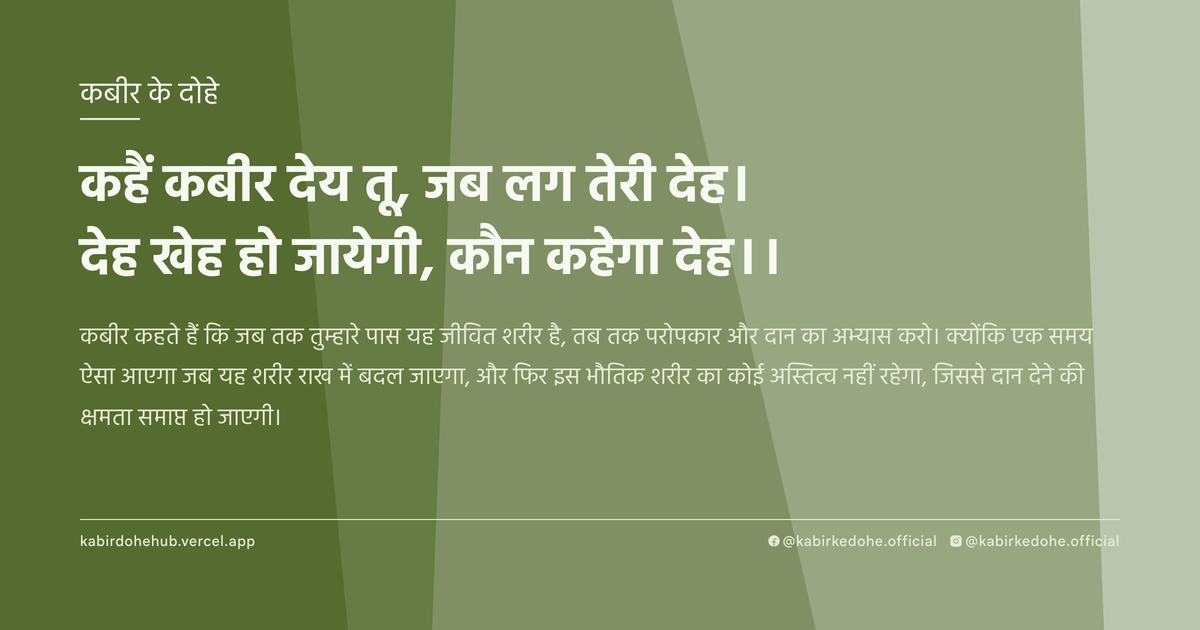
कहैं कबीर देय तू, जब लग तेरी देह।
देह खेह हो जायेगी, कौन कहेगा देह।।
Kahen kabir dey tu, jab lag teri deh. Deh kheh ho jayegi, kaun kahega deh.
इस पृष्ठ पर इस कबीर दोहे का अर्थ (meaning), हिंदी व्याख्या और अंग्रेज़ी अनुवाद, दार्शनिक विश्लेषण और व्यावहारिक जीवन सीख दी गई है। यह दोहा दान (Generosity) विषय से जुड़ा है — Kabir doha meaning and explanation in Hindi and English.
अर्थ (Meaning):
कबीर कहते हैं कि जब तक तुम्हारे पास यह जीवित शरीर है, तब तक परोपकार और दान का अभ्यास करो। क्योंकि एक समय ऐसा आएगा जब यह शरीर राख में बदल जाएगा, और फिर इस भौतिक शरीर का कोई अस्तित्व नहीं रहेगा, जिससे दान देने की क्षमता समाप्त हो जाएगी।
Kabir urges the seeker to practice generosity and selfless giving while the physical body still exists and functions. He warns that the body is transient and will eventually turn to ash, at which point the physical capacity to act or give in the material world will vanish entirely.
व्याख्या (Interpretation):
इस दोहे का शाब्दिक अर्थ शरीर की नश्वरता है, लेकिन इसका गहरा आध्यात्मिक अर्थ 'अहंकार के विसर्जन' से जुड़ा है। कबीर यहाँ केवल भौतिक दान की बात नहीं कर रहे, बल्कि उस 'मैं' को त्यागने की बात कर रहे हैं जो शरीर को अपनी स्थायी पहचान मानता है। निर्गुण भक्ति के अनुसार, शरीर एक माध्यम है, साध्य नहीं। जब तक यह माध्यम उपलब्ध है, इसका उपयोग आत्म-साक्षात्कार और मानवता की सेवा के लिए करना चाहिए। माया हमें यह विश्वास दिलाती है कि हम यह शरीर हैं, जबकि वास्तव में हम वह अविनाशी आत्मा हैं। यह विरोधाभास है कि शरीर के रहते हुए ही शरीर के मोह को त्यागना होगा ताकि वह राख बनने के बाद भी सत्य के रूप में जीवित रहे।
Literally, the verse addresses the impermanence of the body, but metaphorically, it targets the dissolution of the ego. Kabir is not merely advocating for material charity, but for the surrender of the 'I' that identifies solely with the physical form. In the context of Nirgun Bhakti, the body is a vehicle, not the destination. While this vehicle is operational, it must be used for the realization of the Self and the service of humanity. Maya creates the illusion of permanence in the flesh, whereas the Atman is eternal. The central paradox lies in the necessity of transcending the body while still inhabiting it, ensuring that when the form turns to ash, the essence remains aligned with the Absolute Truth.
दार्शनिक विश्लेषण (Philosophical Analysis):
कबीर का यह दृष्टिकोण उनके युग के कर्मकांडीय आडंबरों पर एक तीखा प्रहार है। उस समय लोग मोक्ष के लिए कठिन अनुष्ठानों और बाहरी दिखावे पर जोर देते थे, जबकि कबीर ने आंतरिक शुद्धता और व्यावहारिक करुणा को प्राथमिकता दी। यह विचार अद्वैत वेदांत के इस सिद्धांत से मेल खाता है कि शरीर केवल एक आवरण है और वास्तविक स्वरूप ब्रह्म है। जब व्यक्ति यह समझ लेता है कि शरीर नश्वर है, तो वह संचय की प्रवृत्ति को छोड़कर वितरण की प्रवृत्ति अपनाता है।
सूफी मत के 'फना' (अहंकार का विनाश) के सिद्धांत के समान, कबीर यहाँ शरीर के अंत से पहले अहंकार के अंत की बात कर रहे हैं। यदि शरीर के साथ-साथ अहंकार भी राख हो जाए, तो व्यक्ति वास्तव में मुक्त हो जाता है। यहाँ 'देय' (देना) का अर्थ केवल धन देना नहीं, बल्कि अपने समय, प्रेम और करुणा को साझा करना है।
कबीर जाति और धर्म की सीमाओं को तोड़ते हुए यह समझाते हैं कि मृत्यु सबको समान बनाती है। राख में न कोई ब्राह्मण होता है और न कोई शूद्र। इसलिए, जीवन के दौरान किया गया निस्वार्थ कर्म ही एकमात्र स्थायी निवेश है। यह मनोवैज्ञानिक रूपांतरण है जहाँ व्यक्ति 'मेरा' से 'हमारा' की ओर बढ़ता है।
अक्सर लोग इस दोहे को केवल मृत्यु के भय के रूप में देखते हैं, लेकिन यह वास्तव में जीवन की सार्थकता का आह्वान है। यह हमें याद दिलाता है कि समय सीमित है और आध्यात्मिक अभ्यास को कल पर टालना एक भ्रम है।
अंततः, यह दर्शन हमें सिखाता है कि शरीर का उपयोग आत्मा की शुद्धि के लिए करना चाहिए। जब हम दूसरों की सेवा करते हैं, तो हम वास्तव में अपने भीतर के उस ईश्वर को पहचानते हैं जो हर जीव में विद्यमान है। यही निर्गुण भक्ति का सार है—बिना किसी मूर्ति या मंदिर के, स्वयं के भीतर और मानवता में परमात्मा को खोजना।
Kabir's perspective serves as a sharp critique of the ritualistic pomposity of his era. While contemporaries emphasized rigid rituals and external displays for salvation, Kabir prioritized internal purity and practical compassion. This aligns with the Advaita Vedanta principle that the body is merely a sheath (Kosha), and the true essence is Brahman. Once the realization of the body's transience dawns, the instinct for accumulation shifts toward the instinct for distribution.
Parallel to the Sufi concept of 'Fana' (annihilation of the ego), Kabir advocates for the death of the ego before the death of the body. If the ego is incinerated along with the physical form, the seeker achieves true liberation. Here, 'giving' transcends material charity; it encompasses the sharing of time, love, and empathy.
By dismantling caste and religious hierarchies, Kabir posits that death is the ultimate equalizer. In the ash, there is no distinction between a priest and a laborer. Consequently, selfless action during one's lifetime is the only enduring investment. This represents a psychological shift from the 'mine' to the 'ours'.
Common literalist interpretations often view this verse as a memento mori rooted in fear, but it is actually a call for existential authenticity. It warns that postponing spiritual practice is a delusion fueled by the illusion of infinite time.
Ultimately, this philosophy teaches that the body should be utilized as a tool for the purification of the soul. By serving others, one recognizes the immanent Divine residing in every living being. This is the core of Nirgun Bhakti—finding the Formless Absolute not in temples or idols, but within the self and the collective humanity.
मूल संदेश (Core Message):
- शरीर नश्वर है, लेकिन निस्वार्थ कर्म शाश्वत हैं।
- संग्रह करना मोह है, वितरण करना मुक्ति है।
- अहंकार का विसर्जन ही वास्तविक दान है।
- माया शरीर को स्थायी मानती है, सत्य इसे राख मानता है।
- मानवता की सेवा ही परमात्मा की सच्ची पूजा है।
- The body is transient, but selfless actions are eternal.
- Accumulation is bondage; distribution is liberation.
- The dissolution of the ego is the ultimate offering.
- Maya views the body as permanent; Truth views it as ash.
- Service to humanity is the truest worship of the Divine.
व्यावहारिक उदाहरण (Practical Example):
वाराणसी के एक पुराने घाट पर रहने वाले एक वृद्ध बुनकर थे, जिनका नाम माधव था। माधव अपनी कला में निपुण थे और उन्होंने जीवन भर केवल अपने परिवार के लिए धन संचित किया। वे मानते थे कि जितना अधिक वे जोड़ेंगे, उनका भविष्य उतना ही सुरक्षित होगा। उनके पास रेशमी वस्त्रों का बड़ा भंडार था, लेकिन उनका हृदय संकीर्ण था।
एक दिन उन्होंने एक युवा साधु को देखा जो फटे कपड़ों में था लेकिन उसके चेहरे पर एक असीम शांति थी। माधव ने उससे पूछा, "तुमने कुछ जमा नहीं किया, फिर भी तुम इतने खुश कैसे हो?"
साधु ने मुस्कुराते हुए माधव के रेशमी कपड़ों की ओर इशारा किया और कहा, "ये वस्त्र सुंदर हैं, लेकिन क्या ये आपकी आत्मा को ढक सकते हैं? जिस दिन आप इस शरीर को छोड़ेंगे, ये रेशम आपके काम नहीं आएंगे, केवल वह आएगा जो आपने दूसरों को दिया है।"
माधव को पहले तो यह बात अजीब लगी, लेकिन उस रात उन्हें नींद नहीं आई। उन्हें याद आया कि कैसे उन्होंने अपने पड़ोस के गरीब बच्चों को स्कूल भेजने से मना कर दिया था क्योंकि उन्हें डर था कि उनके पैसे कम हो जाएंगे।
अगले दिन, माधव ने अपने जीवन का सबसे बड़ा निर्णय लिया। उन्होंने अपने बेहतरीन वस्त्रों का एक बड़ा हिस्सा स्थानीय अनाथालय को दान कर दिया और अपनी कार्यशाला को उन युवाओं के लिए खोल दिया जो बुनना सीखना चाहते थे लेकिन उनके पास संसाधन नहीं थे।
शुरुआत में उनके परिवार ने विरोध किया, लेकिन धीरे-धीरे माधव ने महसूस किया कि जो खुशी उन्हें धन संचय करने में नहीं मिली, वह दूसरों की आँखों में संतोष देखकर मिल रही थी। उनका तनाव कम हो गया और उनकी नींद गहरी हो गई।
समय बीतता गया और माधव अब वृद्ध और बीमार हो गए। जब वे अपने अंतिम समय में थे, तो उनके पास भौतिक संपत्ति तो कम थी, लेकिन उनके चारों ओर उन सैकड़ों लोगों की भीड़ थी जिन्हें उन्होंने कुछ न कुछ दिया था।
उनके चेहरे पर एक ऐसी चमक थी जो पहले कभी नहीं थी। उन्होंने महसूस किया कि शरीर तो राख होने की ओर बढ़ रहा है, लेकिन उन्होंने अपने जीवन के माध्यम से एक ऐसा प्रभाव छोड़ा है जो कभी राख नहीं होगा।
माधव की यह यात्रा 'संग्रह' से 'समर्पण' की ओर थी। उन्होंने यह जान लिया था कि शरीर केवल एक माध्यम है और असली संपत्ति वह है जिसे हम दूसरों के जीवन में निवेश करते हैं।
अंत में, जब माधव का शरीर अग्नि को समर्पित हुआ, तो वहां मौजूद हर व्यक्ति की आँखों में आंसू थे, क्योंकि उन्होंने एक शरीर को नहीं, बल्कि एक जीवित करुणा को विदा किया था।
In the ancient ghats of Varanasi lived an elderly weaver named Madhav. Madhav was a master of his craft and had spent his entire life accumulating wealth for his family. He believed that the more he hoarded, the more secure his future would be. He possessed a vast store of exquisite silk fabrics, yet his heart remained narrow.
One day, he encountered a young monk dressed in tattered rags, yet possessing an immeasurable peace on his countenance. Madhav asked, "You have accumulated nothing, yet how are you so content?"
The monk smiled, pointed toward Madhav's luxurious silks, and replied, "These fabrics are beautiful, but can they clothe your soul? The day you leave this body, these silks will be useless; only that which you gave away will accompany you."
Initially, Madhav found this absurd, but that night, sleep evaded him. He recalled how he had refused to help poor neighborhood children attend school, fearing his savings would dwindle.
The next day, Madhav made the most significant decision of his life. He donated a large portion of his finest silks to a local orphanage and opened his workshop to youth who wished to learn weaving but lacked resources.
His family initially protested, but gradually, Madhav realized that the joy he never found in hoarding was now flooding his heart through the satisfaction in others' eyes. His chronic stress vanished, and his sleep became deep and restful.
Years passed, and Madhav became frail and ill. As he approached his final moments, his material wealth was diminished, but he was surrounded by hundreds of people whose lives he had touched.
There was a radiance on his face that had never been there before. He realized that while the body was drifting toward ash, he had created an impact that would never incinerate.
Madhav's journey was a transition from 'accumulation' to 'surrender'. He understood that the body is merely a medium and true wealth is that which is invested in the lives of others.
Finally, when Madhav's body was committed to the funeral pyre, every person present wept, for they were not bidding farewell to a body, but to a living embodiment of compassion.
अभ्यास मार्गदर्शन (Practice Guidance):
- दैनिक चिंतन: प्रतिदिन 10 मिनट मौन बैठें और विचार करें कि यदि आज आपका शरीर समाप्त हो जाए, तो आपके पीछे केवल आपकी भौतिक वस्तुएं रहेंगी या आपकी करुणा के निशान?
- सचेत दान: केवल धन का दान न करें। प्रतिदिन कम से कम एक व्यक्ति को अपना समय, ध्यान या ज्ञान निस्वार्थ भाव से दें।
- अहंकार डायरी: एक जर्नल रखें जिसमें उन क्षणों को लिखें जब आपने 'मेरा' या 'मैं' के कारण किसी की मदद करने से मना किया, और फिर उसे सुधारने का प्रयास करें।
- निदान चेकलिस्ट: क्या आप अभी भी भविष्य के डर से वर्तमान में संचय कर रहे हैं? क्या दूसरों की प्रगति देखकर आपको ईर्ष्या होती है? यदि हाँ, तो आप अभी भी शरीर और माया के मोह में हैं।
- Daily Contemplation: Spend 10 minutes in silence reflecting: If the body ceased to exist today, would only material objects remain, or would the imprint of your compassion endure?
- Conscious Giving: Move beyond monetary charity. Dedicate at least one instance daily to giving your time, undivided attention, or knowledge selflessly to another.
- Ego Journaling: Maintain a journal to record moments where 'mine' or 'I' prevented you from helping others, and consciously strategize how to dissolve that barrier.
- Diagnostic Checklist: Are you still hoarding out of fear of the future? Do you feel envy at others' progress? If yes, you are still entangled in the illusion of the body and Maya.
चिंतन प्रश्न (Reflection Questions):
- यदि आपकी सारी सामाजिक पहचान और संपत्ति छीन ली जाए, तो आपके पास ऐसा क्या बचेगा जिसे आप 'मैं' कह सकें?
- आपकी डिजिटल पहचान (सोशल मीडिया) आपके वास्तविक आंतरिक स्वरूप को कितना छिपाती है?
- क्या आपका दान दूसरों की मदद के लिए है, या अपनी छवि को बेहतर बनाने के लिए?
- आप किस डर के कारण उन चीजों को नहीं छोड़ पा रहे हैं जिनकी आपको वास्तव में आवश्यकता नहीं है?
- क्या आप शरीर की मृत्यु से पहले अपने भीतर के अहंकार की मृत्यु का अनुभव कर चुके हैं?
- If all your social identities and assets were stripped away, what would remain that you could still call 'I'?
- To what extent does your digital persona mask your authentic internal state?
- Is your generosity intended to help others, or to polish your own public image?
- What specific fear prevents you from letting go of things you no longer truly need?
- Have you experienced the death of the ego before the inevitable death of the physical body?