
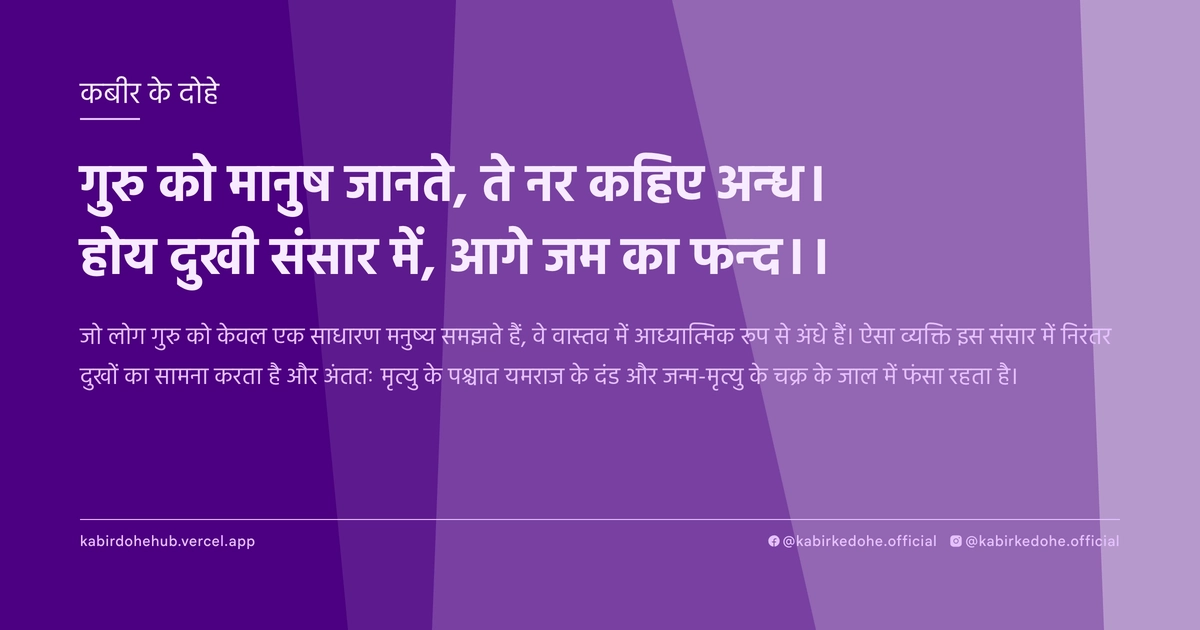
गुरु को मानुष जानते, ते नर कहिए अन्ध।
होय दुखी संसार में, आगे जम का फन्द।।
Guru ko manush jaante, te nar kahiye andh. Hoye dukhi sansar me, aage jam ka fannad.
इस पृष्ठ पर इस कबीर दोहे का अर्थ (meaning), हिंदी व्याख्या और अंग्रेज़ी अनुवाद, दार्शनिक विश्लेषण और व्यावहारिक जीवन सीख दी गई है। यह दोहा गुरु महत्व (The Guru's Importance) विषय से जुड़ा है — Kabir doha meaning and explanation in Hindi and English.
अर्थ (Meaning):
जो लोग गुरु को केवल एक साधारण मनुष्य समझते हैं, वे वास्तव में आध्यात्मिक रूप से अंधे हैं। ऐसा व्यक्ति इस संसार में निरंतर दुखों का सामना करता है और अंततः मृत्यु के पश्चात यमराज के दंड और जन्म-मृत्यु के चक्र के जाल में फंसा रहता है।
Those who perceive the Guru as merely a human being are considered spiritually blind. Such individuals remain entangled in the sorrows of the worldly existence and, upon death, find themselves trapped in the snares of Yama, the lord of death, and the cycle of rebirth.
व्याख्या (Interpretation):
इस दोहे का शाब्दिक अर्थ है कि गुरु की भौतिक देह को देखना अज्ञानता है। आध्यात्मिक स्तर पर, गुरु वह माध्यम है जो जीव को उसकी वास्तविक पहचान 'ब्रह्म' से मिलाता है। जब हम गुरु को केवल मांस और हड्डियों का ढांचा मानते हैं, तो हम उस दिव्य चेतना को अनदेखा कर देते हैं जो उनके माध्यम से बोल रही है। यह 'अंधापन' माया का प्रभाव है, जो हमें सत्य को देखने से रोकता है। निर्गुण भक्ति में, गुरु वह प्रकाश है जो अद्वैत वेदांत के उस सत्य को उजागर करता है कि आत्मा और परमात्मा एक ही हैं। बिना इस दृष्टि के, मनुष्य संसार की नश्वरता में भटकता रहता है और अहंकार के कारण मुक्ति के द्वार बंद कर लेता है।
Literally, the verse suggests that viewing the Guru as a mere mortal is a sign of ignorance. On a deeper metaphorical level, the Guru is not the physical body but the principle of enlightenment that guides the seeker from the unreal to the real. When one sees only the human shell, they miss the divine resonance of the Atman. This 'blindness' is the veil of Maya, which obscures the non-dual nature of existence. In the context of Nirgun Bhakti, the Guru acts as the catalyst for the realization of Advaita (non-duality). Without this spiritual awakening, the individual remains trapped in the paradox of seeking permanence in a transient world, eventually falling into the 'snares' of karmic retribution and existential suffering.
दार्शनिक विश्लेषण (Philosophical Analysis):
कबीर का यह दोहा उस युग की सामाजिक और धार्मिक जड़ता पर प्रहार करता है जहाँ गुरु-शिष्य परंपरा अक्सर केवल औपचारिक बन गई थी। कबीर यहाँ 'मानुष' शब्द का प्रयोग शरीर के लिए कर रहे हैं, न कि उस चेतना के लिए जो गुरु के भीतर वास करती है। यह विचार सूफी मत के 'पीर' और वेदांत के 'सद्गुरु' की अवधारणा से मेल खाता है, जहाँ गुरु को ईश्वर का प्रतिबिंब माना जाता है।
कबीर ritualism या कर्मकांड के सख्त खिलाफ थे। उनके लिए गुरु की पूजा मूर्ति की तरह करना व्यर्थ है; वास्तविक पूजा गुरु के ज्ञान को अपने जीवन में उतारना है। जब कोई शिष्य गुरु को केवल एक व्यक्ति मानता है, तो वह अहंकार से ग्रसित रहता है कि वह भी वैसा ही बन सकता है, जिससे समर्पण (Surrender) की प्रक्रिया बाधित होती है।
अद्वैत वेदांत के अनुसार, अज्ञान (Avidya) ही सभी दुखों का मूल कारण है। यहाँ 'अन्' (अंधा) शब्द इसी अज्ञानता को दर्शाता है। जब तक साधक यह नहीं समझता कि गुरु वास्तव में उसकी अपनी ही उच्चतम चेतना का बाहरी प्रक्षेपण है, तब तक वह माया के जाल से मुक्त नहीं हो सकता।
सूफीवाद में 'फना' होने की प्रक्रिया गुरु के प्रति पूर्ण समर्पण से शुरू होती है। यदि गुरु को केवल मनुष्य माना जाए, तो 'अहं' का विसर्जन संभव नहीं है। कबीर चेतावनी देते हैं कि यह अहंकार व्यक्ति को संसार के दुखों में बांधे रखता है क्योंकि वह सत्य के बजाय भ्रम का पीछा करता है।
अंततः, 'जम की फंद' केवल मृत्यु के बाद के दंड का संकेत नहीं है, बल्कि यह उस मानसिक और आध्यात्मिक कारागार का प्रतीक है जिसे हम अपनी सीमित सोच और पहचान से बनाते हैं। मुक्ति केवल तभी संभव है जब हम देह से परे तत्व को देखने की क्षमता विकसित करें।
Kabir's verse strikes at the heart of the social and religious inertia of his era, where the Guru-disciple relationship had often devolved into mere formality. By using the word 'manush' (human), Kabir distinguishes between the physical vessel and the timeless consciousness that resides within. This aligns with the Sufi concept of the 'Pir' and the Vedantic 'Sadguru,' where the teacher is seen as a mirror reflecting the Divine.
Kabir was vehemently opposed to ritualism. For him, idolizing a Guru as a physical object is futile; true worship lies in embodying the Guru's wisdom. When a seeker views the Guru as merely a person, they remain trapped in the ego, believing they can achieve enlightenment through intellectual effort rather than spiritual surrender.
According to Advaita Vedanta, ignorance (Avidya) is the root of all suffering. The term 'ann' (blind) symbolizes this spiritual blindness. Until the seeker realizes that the Guru is actually the external projection of their own highest consciousness, they remain entangled in the illusions of Maya.
In Sufism, the process of 'Fana' (annihilation of the self) begins with total surrender to the guide. If the Guru is perceived only as a human, the ego cannot be dissolved. Kabir warns that this ego keeps the individual bound to worldly sorrows because they chase the shadow rather than the light.
Ultimately, the 'snares of Yama' are not merely threats of post-mortem punishment but symbols of the mental and spiritual prisons created by limited perception and identity. Liberation is only possible when one develops the capacity to see the essence beyond the form.
मूल संदेश (Core Message):
- बाहरी रूप का मोह ही आध्यात्मिक अंधापन है।
- गुरु शरीर नहीं, बल्कि वह प्रकाश है जो अज्ञान मिटाता है।
- अहंकार का विसर्जन ही वास्तविक शिष्यत्व की शुरुआत है।
- सत्य को देखने के लिए भौतिक दृष्टि नहीं, अंतर्दृष्टि चाहिए।
- जब तक हम मनुष्य को देखते हैं, हम परमात्मा को नहीं देख पाते।
- Attachment to external forms is the essence of spiritual blindness.
- The Guru is not the body, but the light that dissolves ignorance.
- The dissolution of ego is the true beginning of discipleship.
- Seeing the Truth requires inner vision, not physical sight.
- As long as we see the human, we fail to perceive the Divine.
व्यावहारिक उदाहरण (Practical Example):
वाराणसी के एक घाट पर माधव नाम का एक वृद्ध बुनकर रहता था। वह बहुत कुशल था, लेकिन उसका मन हमेशा अशांत रहता था। उसने एक संत से दीक्षा ली, लेकिन वह संत को केवल एक 'ज्ञानी व्यक्ति' मानता था जिसके पास अच्छी बातें थीं। वह संत की बातों को बौद्धिक स्तर पर तो समझता था, लेकिन उन्हें अपने जीवन में नहीं उतारता था क्योंकि उसे लगता था कि संत भी तो एक साधारण मनुष्य है, जो खाता-पीता और सोता है।
माधव अपने काम में perfection चाहता था, लेकिन उसका अहंकार उसे दूसरों से श्रेष्ठ दिखाता था। वह अक्सर अपने साथी बुनकरों का उपहास करता था। उसे लगता था कि वह आध्यात्मिक मार्ग पर है क्योंकि वह एक गुरु के पास जाता है, लेकिन उसका व्यवहार कड़वा बना रहा।
एक दिन, संत ने माधव को एक पुराने, फटे हुए कपड़े को बुनने के लिए कहा। माधव ने चिढ़कर कहा, "महाराज, मैं श्रेष्ठ वस्त्र बनाता हूँ, इस कचरे को क्यों बुनूँ? आप भी शायद मेरी कला को नहीं समझते, आप तो बस एक साधु हैं।"
संत मुस्कुराए और बोले, "माधव, तूने मुझे केवल एक साधु देखा, लेकिन उस दृष्टि को नहीं देखा जो तुझे देख रही है। तू कपड़े की सिलाई तो देख रहा है, लेकिन उस धागे को भूल गया है जो सबको जोड़ता है। जब तक तू मुझे केवल एक मनुष्य देखेगा, तू अपनी सीमाओं में कैद रहेगा।"
उस क्षण माधव को एक गहरा झटका लगा। उसे अहसास हुआ कि उसने गुरु को केवल एक 'सूचना केंद्र' समझा था, न कि एक 'परिवर्तनकारी शक्ति'। उसने महसूस किया कि उसका अहंकार ही वह पर्दा था जिसने उसे अंधा बना रखा था।
उसने तुरंत अपने अहंकार को त्याग दिया और संत के चरणों में गिर पड़ा। उसने महसूस किया कि गुरु का शरीर केवल एक द्वार है; असली गुरु वह ज्ञान और प्रेम है जो उस द्वार से आता है।
अगले कुछ महीनों में, माधव का व्यवहार पूरी तरह बदल गया। वह अब साथी बुनकरों की मदद करने लगा और विनम्र हो गया। उसकी कला में अब केवल कौशल नहीं, बल्कि एक दिव्य शांति झलकने लगी।
उसने पाया कि जब उसने गुरु को 'मनुष्य' से ऊपर उठाकर 'तत्व' के रूप में देखा, तो उसके जीवन के सारे आंतरिक संघर्ष समाप्त हो गए। वह अब संसार में रहते हुए भी उससे मुक्त महसूस करने लगा।
On a ghat in Varanasi lived an elderly weaver named Madhav. He was highly skilled, but his mind was perpetually restless. He had taken initiation from a saint, but he viewed the saint merely as a 'learned man' who possessed good information. Madhav understood the teachings intellectually but failed to embody them because he believed the saint was just another human who ate, slept, and existed in a physical body.
Madhav sought perfection in his craft, but his ego made him feel superior to others. He often mocked his fellow weavers, believing he was on a spiritual path simply because he visited a Guru, while his behavior remained caustic.
One day, the saint asked Madhav to weave a piece of old, torn cloth. Madhav replied with irritation, "Maharaj, I create exquisite garments; why should I weave this trash? Perhaps you do not understand my art; after all, you are just a monk."
The saint smiled and said, "Madhav, you have seen me only as a monk, but you have missed the Vision that is looking through me. You see the stitching of the cloth, but you have forgotten the single thread that binds everything. As long as you see me only as a human, you will remain imprisoned within your own limits."
In that moment, Madhav felt a profound shock. He realized he had treated the Guru as a mere 'information center' rather than a 'transformative power.' He understood that his ego was the veil that had rendered him spiritually blind.
He immediately cast aside his pride and fell at the saint's feet. He realized that the Guru's body was merely a gateway; the true Guru was the wisdom and love flowing through that gate.
Over the following months, Madhav's behavior transformed completely. He began helping his fellow weavers and became deeply humble. His art no longer displayed just skill, but a divine serenity.
He discovered that once he stopped seeing the Guru as a 'human' and started perceiving him as the 'Essence,' all his internal conflicts vanished. He began to feel liberated even while remaining in the world.
अभ्यास मार्गदर्शन (Practice Guidance):
- प्रतिदिन 20 मिनट मौन रहकर इस विचार पर चिंतन करें कि आपके जीवन में मार्गदर्शन देने वाली शक्ति केवल एक व्यक्ति नहीं, बल्कि एक सार्वभौमिक चेतना है।
- एक डायरी लिखें जिसमें आप उन क्षणों को दर्ज करें जब आपने किसी की बाहरी छवि (पद, रूप, जाति) के कारण उनके भीतर के ज्ञान को अनदेखा किया।
- व्यवहार परिवर्तन: जब भी आप किसी गुरु या मार्गदर्शक से बात करें, तो यह कल्पना करें कि आप उनके शरीर से नहीं, बल्कि उनके भीतर की आत्मा से बात कर रहे हैं।
- डायग्नोस्टिक चेकलिस्ट: क्या मैं गुरु की बातों को केवल 'सुझाव' मानता हूँ या 'परिवर्तनकारी सत्य'? क्या मैं गुरु की त्रुटियों को ढूंढकर अपने अहंकार को संतुष्ट करता हूँ? यदि हाँ, तो मैं अभी भी 'अन्' (अंधा) हूँ।
- Spend 20 minutes daily in silence, contemplating that the guiding force in your life is not merely a person, but a universal consciousness.
- Maintain a journal recording instances where you ignored the inner wisdom of someone because of their external image (status, appearance, or caste).
- Behavioral Shift: Whenever interacting with a mentor or Guru, imagine you are communicating not with the physical body, but with the soul residing within.
- Diagnostic Checklist: Do I treat the Guru's words as mere 'suggestions' or as 'transformative truths'? Do I seek out the Guru's flaws to satisfy my own ego? If yes, I am still 'ann' (blind).
चिंतन प्रश्न (Reflection Questions):
- मैं अपने गुरु या मार्गदर्शकों के बारे में क्या धारणाएं रखता हूँ जो मुझे उनके वास्तविक ज्ञान को ग्रहण करने से रोकती हैं?
- क्या मेरा 'बौद्धिक अहंकार' मुझे यह विश्वास दिलाता है कि मैं बिना किसी मार्गदर्शन के सत्य को जान सकता हूँ?
- मेरे जीवन में वह कौन सा 'पर्दा' है जो मुझे दूसरों में भी उसी दिव्य चेतना को देखने से रोकता है जिसे मैं गुरु में ढूंढ रहा हूँ?
- क्या मैं केवल उन्हीं गुरुओं का सम्मान करता हूँ जो मेरी सामाजिक मान्यताओं में फिट बैठते हैं?
- मृत्यु के भय (जम की फंद) से बचने के लिए मैं बाहरी अनुष्ठानों पर निर्भर हूँ या आंतरिक रूपांतरण पर?
- What assumptions do I hold about my mentors that prevent me from absorbing their true wisdom?
- Does my 'intellectual ego' convince me that I can find the Truth without any guidance?
- What is the 'veil' in my life that prevents me from seeing the same divine consciousness in others that I seek in a Guru?
- Do I only respect those teachers who fit into my social and cultural biases?
- To escape the fear of death (the snares of Yama), am I relying on external rituals or internal transformation?