
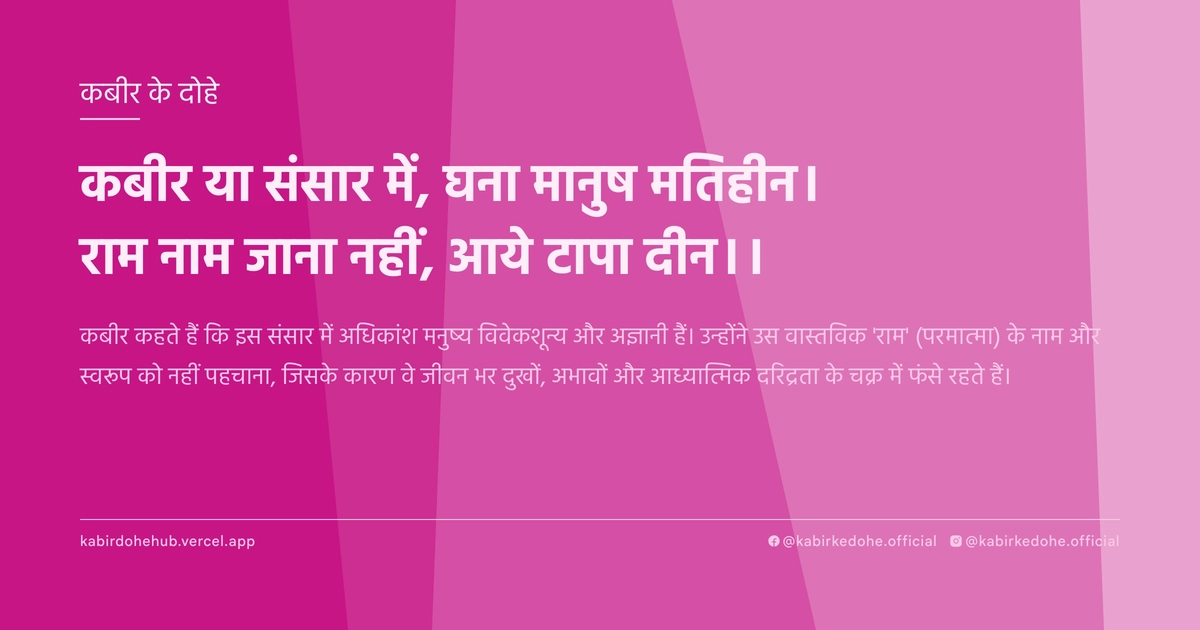
कबीर या संसार में, घना मानुष मतिहीन।
राम नाम जाना नहीं, आये टापा दीन।।
Kabir ya sansar me, ghana manush matiheen. Ram naam jana nahi, aaye tapa deen.
इस पृष्ठ पर इस कबीर दोहे का अर्थ (meaning), हिंदी व्याख्या और अंग्रेज़ी अनुवाद, दार्शनिक विश्लेषण और व्यावहारिक जीवन सीख दी गई है। यह दोहा आत्मनिरीक्षण (Self-introspection) विषय से जुड़ा है — Kabir doha meaning and explanation in Hindi and English.
अर्थ (Meaning):
कबीर कहते हैं कि इस संसार में अधिकांश मनुष्य विवेकशून्य और अज्ञानी हैं। उन्होंने उस वास्तविक 'राम' (परमात्मा) के नाम और स्वरूप को नहीं पहचाना, जिसके कारण वे जीवन भर दुखों, अभावों और आध्यात्मिक दरिद्रता के चक्र में फंसे रहते हैं।
Kabir observes that a vast majority of people in this world are devoid of true spiritual intelligence. Having failed to recognize the essence of the Divine Name (Ram), they remain trapped in a cycle of suffering, misery, and spiritual poverty throughout their existence.
व्याख्या (Interpretation):
साब्दिक अर्थ यह है कि लोग ईश्वर के नाम को भूल गए हैं। परंतु गहरा अर्थ यह है कि 'राम' यहाँ किसी व्यक्ति या मूर्ति नहीं, बल्कि उस निर्गुण चेतना का प्रतीक है जो हर कण में व्याप्त है। मतिहीनता का अर्थ बौद्धिक कमी नहीं, बल्कि आत्म-बोध का अभाव है। जब मनुष्य बाहरी माया और सामाजिक पहचान में उलझता है, तो वह अपनी आंतरिक दिव्यता को खो देता है। यह विस्मृति ही 'दीनता' या दरिद्रता का मूल कारण है। अद्वैत वेदांत के अनुसार, जब तक जीव स्वयं को ब्रह्म से अलग मानता है, वह दुख का अनुभव करता है। यह दोहा उस विरोधाभास को दर्शाता है जहाँ मनुष्य सब कुछ पाकर भी खाली है क्योंकि उसने अपने वास्तविक स्रोत को नहीं पहचाना।
Literally, it suggests people have forgotten the name of God. However, the deeper metaphorical layer reveals that 'Ram' is not a sectarian deity but the Nirgun (formless) consciousness pervading every atom. 'Matiheen' (lack of intellect) does not refer to academic ignorance, but to the absence of self-realization. When a human becomes entangled in Maya (illusion) and social constructs, they lose sight of their inherent divinity. This spiritual amnesia is the root of all 'deenta' or existential poverty. According to Advaita Vedanta, as long as the Jiva (individual soul) perceives itself as separate from Brahman, it suffers. The doha highlights the paradox of a human who possesses everything materially yet remains empty because the connection to the Source is severed.
दार्शनिक विश्लेषण (Philosophical Analysis):
कबीर का यह दोहा तत्कालीन समाज में व्याप्त पाखंड और बाहरी कर्मकांडों पर एक तीखा प्रहार है। उनके समय में धर्म केवल मंदिर-मस्जिद जाने या माला जपने तक सीमित था, जबकि वास्तविक 'नाम' का अर्थ था आंतरिक जागृति। कबीर यहाँ 'मति' (विवेक) की बात कर रहे हैं, जो व्यक्ति को यह समझने में मदद करती है कि परमात्मा बाहर नहीं, बल्कि भीतर है।
यह विचार सूफीवाद के 'फना' (अहंकार का विनाश) और अद्वैत वेदांत के 'अहं ब्रह्मास्मि' के करीब है। जब तक मनुष्य अपनी सामाजिक पहचान, जाति और अहंकार को ही अपनी वास्तविकता मानता है, वह 'मतिहीन' रहता है। कबीर का तर्क है कि वास्तविक दरिद्रता धन का अभाव नहीं, बल्कि चेतना का अभाव है।
वे ritualism (कर्मकांड) का विरोध करते हैं क्योंकि वह मनुष्य को सत्य से दूर ले जाता है। उनके लिए 'राम नाम' एक मंत्र नहीं, बल्कि एक अवस्था है—एक ऐसी स्थिति जहाँ ज्ञाता, ज्ञान और ज्ञेय एक हो जाते हैं। यह मनोवैज्ञानिक रूपांतरण की मांग करता है जहाँ व्यक्ति अपनी बाहरी पहचान को त्यागकर शून्य में विलीन हो जाए।
ऐतिहासिक रूप से, कबीर ने एक ऐसे समाज को चुनौती दी जो धर्म को बाहरी प्रतीकों से मापता था। उन्होंने सिखाया कि भक्ति का अर्थ है स्वयं का साक्षात्कार। यदि आप स्वयं को नहीं जानते, तो आप दुनिया के सबसे अमीर व्यक्ति होकर भी आध्यात्मिक रूप से कंगाल हैं।
अंततः, यह दोहा मनुष्य को उसकी वर्तमान स्थिति से ऊपर उठकर उस अनंत सत्य की खोज करने के लिए प्रेरित करता है जो समय और स्थान से परे है। यह केवल एक चेतावनी नहीं, बल्कि एक निमंत्रण है कि हम अपनी आंतरिक अंधता को त्यागकर उस प्रकाश को पहचानें जो हमारे भीतर ही जल रहा है।
This doha is a sharp critique of the hypocrisy and outward ritualism prevalent in Kabir's era. During his time, religion was reduced to visiting temples or mosques and repetitive chanting, whereas the true 'Name' signified internal awakening. Kabir speaks of 'Mati' (discernment), which allows an individual to realize that the Divine is not external but immanent within.
This perspective aligns closely with the Sufi concept of 'Fana' (annihilation of the ego) and the Advaita Vedanta realization of 'Aham Brahmasmi' (I am Brahman). As long as a person identifies solely with their social status, caste, or ego, they remain 'matiheen' or spiritually blind. Kabir argues that true poverty is not the lack of material wealth, but the absence of conscious awareness.
He rejects ritualism because it creates a veil between the seeker and the Truth. For Kabir, 'Ram Naam' is not a mere mantra but a state of being—a condition where the knower, the known, and the knowledge merge into one. This requires a psychological transformation where the individual sheds the false identity to merge into the Void.
Historically, Kabir challenged a society that measured spirituality through external symbols. He taught that true devotion is the act of self-discovery. If one does not know their own essence, they remain an existential pauper regardless of their material riches.
Ultimately, the doha urges the human spirit to transcend its current limitations and seek the infinite truth that exists beyond time and space. It is not merely a warning but an invitation to discard spiritual blindness and recognize the eternal light burning within.
मूल संदेश (Core Message):
- बाहरी आडंबर केवल आत्मा की दरिद्रता को छुपाने का प्रयास हैं।
- विवेक का अर्थ है स्वयं के भीतर छिपे परमात्मा को पहचानना।
- अहंकार वह पर्दा है जो हमें सत्य के दर्शन से रोकता है।
- वास्तविक समृद्धि भौतिक धन नहीं, बल्कि आत्म-साक्षात्कार है।
- जब 'मैं' मिटता है, तब 'राम' (अनंत चेतना) प्रकट होता है।
- External rituals are merely attempts to mask spiritual poverty.
- True discernment is recognizing the Divine residing within oneself.
- The ego is the veil that obstructs the vision of Truth.
- Real prosperity is self-realization, not the accumulation of wealth.
- When the 'I' dissolves, the 'Ram' (Infinite Consciousness) emerges.
व्यावहारिक उदाहरण (Practical Example):
एक समय की बात है, वाराणसी के घाटों पर माधव नाम का एक वृद्ध बुनकर रहता था। वह अपनी कला में निपुण था और शहर के सबसे अमीर व्यापारियों को रेशमी वस्त्र बेचता था। माधव के पास धन की कोई कमी नहीं थी, लेकिन उसका मन हमेशा अशांत रहता था। वह अपनी श्रेष्ठता के अहंकार में डूबा रहता और अन्य बुनकरों को तुच्छ समझता था।
वह हर दिन बड़े मंदिर में दान देता और घंटों पूजा करता, फिर भी उसे लगता कि उसके जीवन में कुछ अधूरा है। वह अक्सर कहता, 'मैंने सब कुछ पा लिया है, फिर भी यह खालीपन क्यों?'
एक दिन उसकी मुलाकात एक फकीर से हुई जो घाट की सीढ़ियों पर बैठा था। फकीर ने माधव के महंगे कपड़ों को देखा और मुस्कुराते हुए कहा, 'माधव, तुमने शरीर के लिए तो बहुत सुंदर वस्त्र बुन लिए, लेकिन अपनी आत्मा के लिए एक धागा भी नहीं काता।'
माधव को यह बात चुभी। उसने पूछा, 'मैं तो रोज पूजा करता हूँ, फिर मैं क्या भूल रहा हूँ?' फकीर ने उत्तर दिया, 'तुम उस राम को खोज रहे हो जो पत्थर की मूर्तियों में है, जबकि वह राम तुम्हारे भीतर की सांसों में है। तुम बाहरी दिखावे के इतने अंधे हो गए कि अपनी आंतरिक ज्योति को देख ही नहीं पाए। यही तुम्हारी असली दरिद्रता है।'
यह बात माधव के हृदय पर प्रहार कर गई। उसे महसूस हुआ कि उसकी सारी संपत्ति और ज्ञान केवल एक मुखौटा थे। वह जिस 'राम' को बाहर खोज रहा था, वह वास्तव में उसकी अपनी चेतना का शुद्ध रूप था जिसे उसने अहंकार की परतों के नीचे दबा दिया था।
अगले कुछ महीनों तक माधव ने बाहरी दिखावे को त्याग दिया। उसने अपनी श्रेष्ठता का भाव छोड़ा और गरीब बुनकरों की मदद करना शुरू किया। उसने समझा कि सेवा और विनम्रता ही वास्तविक 'राम नाम' का जाप है।
धीरे-धीरे उसका मानसिक तनाव समाप्त हो गया। अब वह केवल वस्त्र नहीं बुनता था, बल्कि हर धागे में प्रेम और करुणा पिरोने लगा। उसकी कला और भी निखर गई क्योंकि अब वह अहंकार से नहीं, बल्कि समर्पण से काम कर रहा था।
अंत में, माधव ने महसूस किया कि वह पहले अमीर होकर भी भिखारी था, और अब साधारण होकर भी सम्राट बन गया है। उसने जान लिया कि वास्तविक समृद्धि आत्मा का बोध है, न कि सोने के सिक्कों का ढेर।
Once, on the ghats of Varanasi, lived an elderly weaver named Madhav. He was a master of his craft, selling exquisite silk garments to the city's wealthiest merchants. Madhav lacked nothing in terms of money, yet his mind was perpetually restless. He was consumed by the ego of his superiority, viewing other weavers as inferior.
He donated generously to the great temple every day and spent hours in prayer, yet he felt a lingering void. He often lamented, 'I have attained everything, so why does this emptiness persist?'
One day, he encountered a wandering fakir sitting on the stone steps of the ghat. The fakir looked at Madhav's expensive attire and smiled, saying, 'Madhav, you have woven beautiful clothes for the body, but you haven't spun a single thread for your soul.'
Madhav felt stung by the remark. He asked, 'I pray every day, so what am I missing?' The fakir replied, 'You seek the Ram who resides in stone idols, while the true Ram is in the very breath you draw. You have become so blinded by external displays that you cannot see your own inner light. This is your true poverty.'
These words struck a chord in Madhav's heart. He realized that his wealth and knowledge were merely masks. The 'Ram' he sought externally was actually the pure form of his own consciousness, buried under layers of ego.
Over the next few months, Madhav abandoned all outward pretenses. He let go of his sense of superiority and began helping struggling weavers. He understood that service and humility were the true forms of chanting the 'Name of Ram.'
Gradually, his mental turmoil vanished. He no longer just wove fabric; he began weaving love and compassion into every thread. His art flourished even more because he was working from a place of surrender rather than ego.
In the end, Madhav realized that he had been a beggar while being rich, and had now become an emperor while being simple. He understood that true prosperity is the awakening of the soul, not a hoard of gold coins.
अभ्यास मार्गदर्शन (Practice Guidance):
- प्रतिदिन 20 मिनट मौन बैठें और अपने भीतर उठने वाले विचारों को बिना किसी निर्णय के देखें। यह पहचानें कि आप विचार नहीं, बल्कि वह साक्षी हैं जो उन्हें देख रहा है।
- एक डायरी लिखें जिसमें आप अपनी उन आदतों को दर्ज करें जहाँ आपका अहंकार (Ego) आपके विवेक (Mati) पर हावी हो जाता है। पूछें: 'यहाँ मैं कौन बनने की कोशिश कर रहा हूँ?'
- व्यवहार परिवर्तन: दिन में कम से कम एक बार किसी ऐसे व्यक्ति की निस्वार्थ मदद करें जिससे आपको कोई लाभ न हो, ताकि आप अपनी 'श्रेष्ठता' के भ्रम को तोड़ सकें।
- निदान चेकलिस्ट: क्या आप दूसरों को नीचा दिखाकर खुद को श्रेष्ठ महसूस करते हैं? क्या आप ईश्वर को केवल मंदिर/मस्जिद में खोजते हैं? यदि हाँ, तो आप अभी भी 'मतिहीन' अवस्था में हैं।
- Sit in silence for 20 minutes daily and observe the thoughts arising within without judgment. Recognize that you are not the thought, but the witness observing it.
- Maintain a journal to record instances where your ego overrides your discernment. Ask yourself: 'Who am I trying to be in this moment?'
- Behavioral Change: Perform one act of selfless service daily for someone who cannot benefit you in return, effectively breaking the illusion of your own superiority.
- Diagnostic Checklist: Do you feel superior by belittling others? Do you seek the Divine only in religious structures? If yes, you are still operating from a state of 'spiritual blindness'.
चिंतन प्रश्न (Reflection Questions):
- यदि आपकी सारी सामाजिक उपलब्धियाँ और पद छीन लिए जाएँ, तो आपकी असल पहचान क्या रह जाएगी?
- आप अपनी आध्यात्मिक यात्रा में 'ईश्वर' को खोज रहे हैं या केवल अपनी इच्छाओं की पूर्ति के लिए एक माध्यम?
- वह कौन सा झूठ है जिसे आप दुनिया के सामने सच बताकर अपनी 'श्रेष्ठता' बनाए रखते हैं?
- क्या आपकी भक्ति आपको विनम्र बना रही है, या यह आपके अहंकार को और अधिक पोषण दे रही है?
- आपकी आंतरिक 'दरिद्रता' का वह कौन सा हिस्सा है जिसे आप भौतिक सुखों से भरने की कोशिश कर रहे हैं?
- If all your social achievements and titles were stripped away, what would remain of your identity?
- In your spiritual journey, are you seeking the Divine, or merely a medium to fulfill your desires?
- What is the lie you tell the world to maintain an image of superiority?
- Is your devotion making you humble, or is it feeding your ego in a more subtle way?
- Which part of your internal 'poverty' are you trying to fill with material pleasures?