
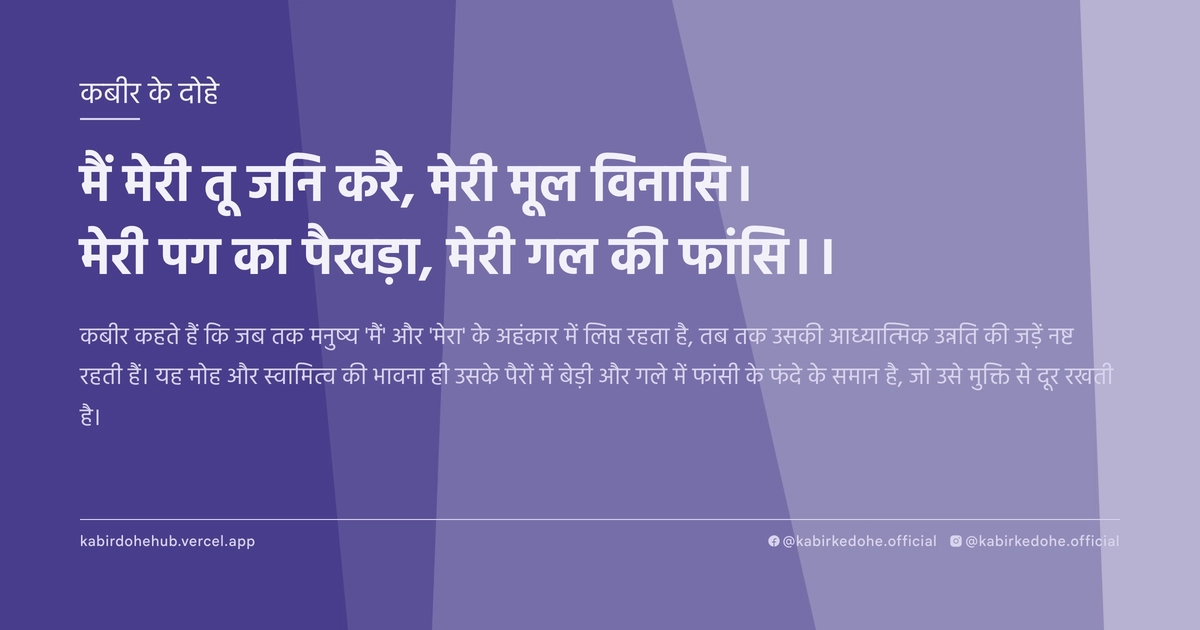
मैं मेरी तू जनि करै, मेरी मूल विनासि।
मेरी पग का पैखड़ा, मेरी गल की फांसि।।
Main meri tu jani karai, meri mool vinasi. Meri pag ka paikhada, meri gal ki phansi.
इस पृष्ठ पर इस कबीर दोहे का अर्थ (meaning), हिंदी व्याख्या और अंग्रेज़ी अनुवाद, दार्शनिक विश्लेषण और व्यावहारिक जीवन सीख दी गई है। यह दोहा अहंकार (The Ego) विषय से जुड़ा है — Kabir doha meaning and explanation in Hindi and English.
अर्थ (Meaning):
कबीर कहते हैं कि जब तक मनुष्य 'मैं' और 'मेरा' के अहंकार में लिप्त रहता है, तब तक उसकी आध्यात्मिक उन्नति की जड़ें नष्ट रहती हैं। यह मोह और स्वामित्व की भावना ही उसके पैरों में बेड़ी और गले में फांसी के फंदे के समान है, जो उसे मुक्ति से दूर रखती है।
Kabir asserts that as long as a human clings to the ego of 'I' and 'Mine', the very root of their spiritual existence remains destroyed. This obsessive attachment to ownership and identity acts as a shackle upon the feet and a noose around the neck, trapping the soul in the cycle of suffering.
व्याख्या (Interpretation):
इस दोहे का शाब्दिक अर्थ है कि 'मैं' और 'मेरा' का दावा विनाशकारी है। रूपकात्मक रूप से, कबीर यहाँ 'अहंकार' (Ego) को एक मानसिक कारागार के रूप में चित्रित कर रहे हैं। निर्गुण भक्ति के अनुसार, परमात्मा निराकार है और उसमें विलीन होने के लिए व्यक्तिगत पहचान का विसर्जन आवश्यक है। जब साधक कहता है 'यह मेरा है', तो वह वास्तव में माया के जाल में फंस रहा होता है। यह द्वैत (Duality) ही अज्ञानता है। आत्मन और ब्रह्म की एकता तब तक संभव नहीं जब तक 'मैं' का पर्दा बीच में रहे। यहाँ 'पैखड़ा' (कांटा/बेड़ी) और 'फांसी' उस मानसिक बोझ का प्रतीक हैं जो मनुष्य ने स्वयं अपनी इच्छाओं और आसक्तियों से बनाया है।
Literally, the verse warns that the claim of 'I' and 'Mine' is destructive. Metaphorically, Kabir portrays the ego as a psychological prison. In the tradition of Nirgun Bhakti, the Divine is formless, and merging with this Truth requires the dissolution of the individual identity. When a seeker claims 'this is mine', they are entangling themselves in Maya (illusion). This duality is the essence of ignorance. The non-duality of Atman and Brahman remains unattainable as long as the veil of 'I' persists. The 'thorn/shackle' and 'noose' symbolize the mental burdens created by one's own desires and attachments, turning the perceived security of ownership into a spiritual death sentence.
दार्शनिक विश्लेषण (Philosophical Analysis):
कबीर का यह दोहा मध्यकालीन भारत के उस सामाजिक-धार्मिक परिवेश की प्रतिक्रिया है जहाँ कर्मकांड और बाहरी पहचान (जाति, धर्म, पद) को ही सत्य माना जाता था। कबीर ने स्पष्ट किया कि मोक्ष किसी मंदिर या मस्जिद में नहीं, बल्कि अहंकार के विसर्जन में है। यह विचार अद्वैत वेदांत के 'अहं ब्रह्मास्मि' के करीब है, लेकिन यहाँ जोर 'अहं' के विनाश पर है ताकि केवल 'ब्रह्म' शेष रहे।
सूफीवाद के 'फना' (Fana) के सिद्धांत के साथ इसका गहरा संबंध है, जहाँ साधक अपनी व्यक्तिगत इच्छाओं को ईश्वर की इच्छा में मिटा देता है। कबीर का तर्क है कि स्वामित्व की भावना एक भ्रम है क्योंकि आत्मा न तो कुछ लाती है और न ले जाती है।
यहाँ 'मूल विनासि' का अर्थ है कि जब तक अहंकार जीवित है, तब तक सत्य की जड़ें नहीं पनप सकतीं। अहंकार वह विष है जो विवेक को नष्ट कर देता है। कबीर ritualism का विरोध करते हुए कहते हैं कि माला जपना या तीर्थ यात्रा करना व्यर्थ है यदि हृदय में 'मैं' का भाव बना रहे।
मनोवैज्ञानिक स्तर पर, यह दोहा पहचान के संकट (Identity Crisis) को संबोधित करता है। मनुष्य अपनी पहचान बाहरी वस्तुओं और संबंधों से जोड़ता है, जिससे वह असुरक्षा और भय के चक्र में फंस जाता है।
अंततः, कबीर यह संदेश देते हैं कि मुक्ति का मार्ग 'संग्रह' (Accumulation) में नहीं, बल्कि 'त्याग' (Renunciation) में है। जब 'मैं' मिटता है, तब जो बचता है वही शाश्वत सत्य है।
This couplet is a reaction to the socio-religious climate of medieval India, where rituals and external identities—caste, creed, and status—were mistaken for spiritual truth. Kabir clarifies that liberation is found not in temples or mosques, but in the dissolution of the ego. This aligns with Advaita Vedanta's 'Aham Brahmasmi', yet Kabir emphasizes the destruction of the 'Aham' (ego) so that only the Brahman remains.
There is a profound connection here to the Sufi concept of 'Fana', where the seeker annihilates their individual will into the Divine Will. Kabir argues that the sense of ownership is a delusion, as the soul neither brings anything into the world nor takes anything away.
The phrase 'mool vinasi' implies that as long as the ego survives, the roots of Truth cannot take hold. Ego is the poison that destroys discernment. Rejecting ritualism, Kabir suggests that chanting beads or visiting pilgrimages is futile if the sense of 'I' persists in the heart.
On a psychological level, the verse addresses the crisis of identity. Humans tether their identity to external objects and relationships, which traps them in a cycle of insecurity and fear.
Ultimately, Kabir teaches that the path to liberation lies not in accumulation, but in renunciation. When the 'I' vanishes, that which remains is the Eternal Truth.
मूल संदेश (Core Message):
- अहंकार ही आत्मा की वास्तविक प्रगति में सबसे बड़ी बाधा है।
- स्वामित्व का भ्रम मानसिक बंधन और आध्यात्मिक मृत्यु का कारण है।
- जब 'मैं' मिटता है, तभी अनंत सत्य का उदय होता है।
- सच्ची स्वतंत्रता बाहरी उपलब्धियों में नहीं, आंतरिक विसर्जन में है।
- अद्वैत की प्राप्ति के लिए द्वैत (मैं और तू) का अंत अनिवार्य है।
- The ego is the primary obstacle to the soul's genuine evolution.
- The illusion of ownership creates mental bondage and spiritual stagnation.
- Only when the 'I' vanishes does the Infinite Truth emerge.
- True freedom lies not in external gains, but in internal dissolution.
- The end of duality (I vs You) is essential to realize non-dual oneness.
व्यावहारिक उदाहरण (Practical Example):
एक समय की बात है, वाराणसी के घाटों पर रहने वाला एक वृद्ध बुनकर था, जिसका नाम माधव था। माधव अपनी कला में निपुण था और शहर के सबसे महंगे वस्त्र बनाता था। उसकी प्रसिद्धि इतनी बढ़ गई कि वह खुद को 'सबसे महान बुनकर' मानने लगा। वह अपने शिष्यों से कहता, 'देखो, यह मेरी तकनीक है, यह मेरा हुनर है, और यह मेरी श्रेष्ठता है।'
धीरे-धीरे माधव का अहंकार उसके रिश्तों पर हावी होने लगा। उसने अपने सहयोगियों को नीचा दिखाना शुरू कर दिया और यह मानने लगा कि उसके बिना यह व्यापार चल ही नहीं सकता। वह अपनी सफलता को अपनी व्यक्तिगत उपलब्धि मानता था, जबकि वह वास्तव में उसके पूर्वजों और प्रकृति द्वारा दिए गए सूत का परिणाम था।
एक दिन, एक घुमंतू संत उसके पास आए। उन्होंने माधव के सबसे सुंदर वस्त्र को देखा और मुस्कुराते हुए पूछा, 'माधव, इस वस्त्र में तुम्हारा कौन सा धागा है?' माधव हैरान था। उसने कहा, 'महाराज, यह पूरा वस्त्र ही मेरी मेहनत का फल है, इसमें मेरा हुनर है।'
संत ने शांति से उत्तर दिया, 'धागा कपास का है, रंग प्रकृति का है, और हाथ चलाने की शक्ति प्राणवायु की है। इसमें तुम्हारा 'मैं' कहाँ है? तुम तो बस एक माध्यम हो। जिसे तुम 'मेरा' कह रहे हो, वही तुम्हें इस अहंकार की फांसी में जकड़े हुए है।'
माधव को गहरा धक्का लगा। उसने महसूस किया कि उसकी 'मैं' की भावना ने उसे अपनों से दूर कर दिया था। वह जिस श्रेष्ठता का गर्व करता था, वह वास्तव में उसके मानसिक बंधन की बेड़ियाँ थीं।
उस रात माधव सो नहीं सका। उसने विचार किया कि कैसे उसने अपनी कला को अपनी पहचान बना लिया था। उसने महसूस किया कि जब वह कहता था 'मेरा हुनर', तो वह वास्तव में अपनी आत्मा को एक छोटे से दायरे में कैद कर रहा था।
अगले दिन से माधव ने अपना व्यवहार बदल दिया। उसने अपने शिष्यों को बताना शुरू किया कि कला ईश्वर की देन है और हम केवल उसके सेवक हैं। उसने अपनी श्रेष्ठता का दावा छोड़ दिया और विनम्रता से काम करने लगा।
जैसे ही 'मैं' का भाव कम हुआ, माधव के जीवन से तनाव गायब हो गया। उसके और उसके सहयोगियों के बीच का कड़वापन समाप्त हो गया। वह अब वस्त्र इसलिए नहीं बनाता था कि वह 'महान' कहलाए, बल्कि इसलिए कि वह उस अनंत सुंदरता का हिस्सा बन सके।
माधव ने पाया कि जब उसने 'मेरा' शब्द का त्याग किया, तो उसे वह शांति मिली जो उसे दुनिया की सबसे महंगी साड़ियों में भी नहीं मिली थी। उसकी कला अब और भी निखर गई क्योंकि अब उसमें अहंकार का बोझ नहीं था।
यह माधव का 'कबीर ट्विस्ट' था—उसने समझा कि स्वामित्व का भ्रम ही दुख का कारण है, और समर्पण ही वास्तविक स्वतंत्रता है।
Once, in the ghats of Varanasi, lived an elderly weaver named Madhav. Madhav was a master of his craft, creating the most expensive textiles in the city. His fame grew so much that he began to believe he was the 'greatest weaver'. He would tell his apprentices, 'Look, this is my technique, this is my skill, and this is my superiority.'
Gradually, Madhav's ego began to dominate his relationships. He started belittling his colleagues and believed the trade could not survive without him. He viewed his success as a purely personal achievement, ignoring that it was the result of ancestral knowledge and the cotton provided by nature.
One day, a wandering saint visited him. The saint looked at Madhav's most beautiful cloth and asked with a smile, 'Madhav, which thread in this fabric is yours?' Madhav was puzzled. He replied, 'Maharaj, this entire cloth is the fruit of my hard work; my skill is woven into it.'
The saint replied calmly, 'The thread is from the cotton, the color is from nature, and the strength to move your hands is from the breath of life. Where is your "I" in this? You are merely a medium. That which you call "mine" is the very noose tightening around your neck.'
Madhav was shaken. He realized that his sense of 'I' had alienated him from his loved ones. The superiority he prided himself on was actually the shackle of his mental bondage.
That night, Madhav could not sleep. He contemplated how he had turned his art into his identity. He realized that by saying 'my skill', he was confining his soul within a tiny, suffocating boundary.
From the next day, Madhav changed his conduct. He began telling his apprentices that art is a gift from the Divine and they are merely its servants. He abandoned his claims of superiority and worked with humility.
As the sense of 'I' diminished, the stress in Madhav's life vanished. The bitterness between him and his colleagues evaporated. He no longer wove to be called 'great', but to become a part of that infinite beauty.
Madhav discovered that by relinquishing the word 'mine', he found a peace that the most expensive silks could never provide. His art flourished even more because it was no longer burdened by ego.
This was Madhav's 'Kabir Twist'—he understood that the illusion of ownership is the root of suffering, and surrender is the only true freedom.
अभ्यास मार्गदर्शन (Practice Guidance):
- दैनिक साक्षी भाव: दिन भर में जब भी आप 'मेरा' (मेरा घर, मेरी प्रतिष्ठा, मेरा विचार) कहें, तो रुकें और पूछें—'क्या यह वास्तव में मेरा है, या मैं बस इसे पकड़े हुए हूँ?'
- अहंकार विसर्जन जर्नल: प्रतिदिन एक ऐसी घटना लिखें जहाँ आपने अपनी श्रेष्ठता सिद्ध करने की कोशिश की। विश्लेषण करें कि उस समय आपको किस डर या असुरक्षा ने प्रेरित किया।
- सेवा अभ्यास: बिना किसी पहचान या प्रशंसा की इच्छा के किसी की गुप्त रूप से सहायता करें। यह अनुभव करें कि जब 'मैं' अदृश्य होता है, तो आनंद बढ़ जाता है।
- डायग्नोस्टिक चेकलिस्ट: यदि आप छोटी आलोचना पर क्रोधित होते हैं, दूसरों की सफलता से ईर्ष्या करते हैं, या अपनी उपलब्धियों का बार-बार बखान करते हैं, तो समझ लें कि 'पैखड़ा' (बेड़ी) अभी भी पैर में है।
- Daily Witnessing: Whenever you use the word 'Mine' (my house, my reputation, my idea) during the day, pause and ask—'Is this truly mine, or am I merely clinging to it?'
- Ego-Dissolution Journal: Daily record one instance where you tried to prove your superiority. Analyze what fear or insecurity drove that need for validation.
- Anonymity Practice: Help someone secretly without any desire for recognition or praise. Experience how joy increases when the 'I' becomes invisible.
- Diagnostic Checklist: If you react with anger to minor criticism, feel envy at others' success, or constantly recount your achievements, recognize that the 'shackle' is still around your feet.
चिंतन प्रश्न (Reflection Questions):
- यदि आज आपकी सारी उपलब्धियां, पद और संपत्ति छीन ली जाएं, तो आपके पास 'मैं' के रूप में क्या बचेगा?
- आपकी कौन सी ऐसी 'पहचान' है जिसे आप खोने से सबसे ज्यादा डरते हैं, और वह डर आपको कैसे नियंत्रित करता है?
- क्या आपकी धार्मिक या आध्यात्मिक साधना वास्तव में अहंकार को मिटा रही है, या वह एक 'आध्यात्मिक अहंकार' (Spiritual Ego) को जन्म दे रही है?
- जब आप किसी की मदद करते हैं, तो क्या आप उस व्यक्ति को देखते हैं या उस 'मददगार' छवि को जिसे आप दुनिया को दिखाना चाहते हैं?
- आपके जीवन का वह कौन सा क्षेत्र है जहाँ आप अभी भी 'मेरा' शब्द का प्रयोग कर रहे हैं, जो वास्तव में आपके तनाव का मुख्य कारण है?
- If all your achievements, titles, and possessions were stripped away today, what would remain of your 'I'?
- Which part of your identity are you most terrified of losing, and how does that fear control your daily actions?
- Is your spiritual practice actually dissolving the ego, or is it merely creating a 'Spiritual Ego' that feels superior to others?
- When you help someone, do you truly see the other person, or do you see the 'helper' image you wish to project to the world?
- In which area of your life are you still clinging to the word 'Mine', and how is that specific attachment the primary source of your stress?