
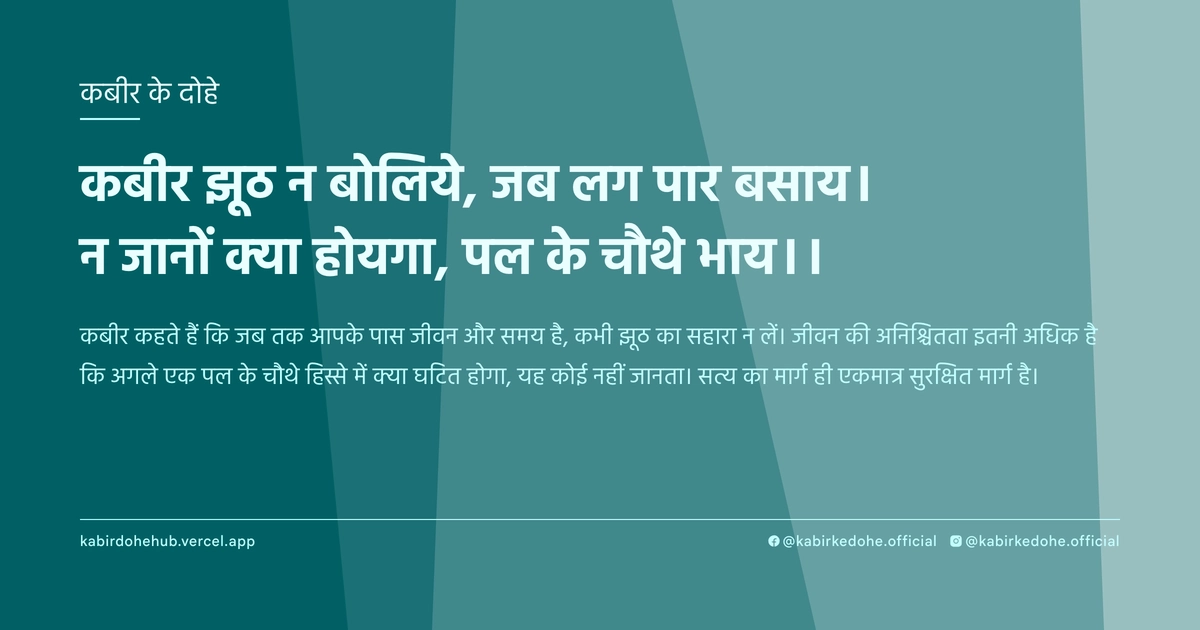
कबीर झूठ न बोलिये, जब लग पार बसाय।
न जानों क्या होयगा, पल के चौथे भाय।।
Kabir jhooth na boliye, jab lag paar basay. Na jaano kya hoyega, pal ke chauthe bhay.
इस पृष्ठ पर इस कबीर दोहे का अर्थ (meaning), हिंदी व्याख्या और अंग्रेज़ी अनुवाद, दार्शनिक विश्लेषण और व्यावहारिक जीवन सीख दी गई है। यह दोहा सत्य (Truth) विषय से जुड़ा है — Kabir doha meaning and explanation in Hindi and English.
अर्थ (Meaning):
कबीर कहते हैं कि जब तक आपके पास जीवन और समय है, कभी झूठ का सहारा न लें। जीवन की अनिश्चितता इतनी अधिक है कि अगले एक पल के चौथे हिस्से में क्या घटित होगा, यह कोई नहीं जानता। सत्य का मार्ग ही एकमात्र सुरक्षित मार्ग है।
Kabir advises against speaking falsehoods as long as one exists in this world. He emphasizes the extreme fragility and unpredictability of life, noting that one cannot know what will happen in the smallest fraction of a moment, urging a life rooted in truth.
व्याख्या (Interpretation):
शाब्दिक रूप से यह दोहा झूठ बोलने के विरुद्ध एक चेतावनी है। आध्यात्मिक स्तर पर, 'झूठ' केवल शब्दों का मिथ्या होना नहीं है, बल्कि स्वयं के वास्तविक स्वरूप (आत्मा) से विमुख होकर एक कृत्रिम पहचान (माया) को सत्य मानना है। यह निर्गुण भक्ति के उस सिद्धांत को दर्शाता है जहाँ सत्य ही ईश्वर है। जब साधक झूठ बोलता है, वह अपने और परमात्मा के बीच एक पर्दा डाल देता है। यह विरोधाभास है कि मनुष्य एक क्षणभंगुर शरीर के लिए शाश्वत सत्य का त्याग कर देता है। अंततः, यह दोहा अद्वैत वेदांत के उस सत्य की ओर संकेत करता है जहाँ केवल 'सत्य' ही शेष रहता है और मिथ्या का अस्तित्व समाप्त हो जाता है।
Literally, this couplet serves as a warning against lying. On a deeper metaphysical level, 'falsehood' is not merely the utterance of untruths, but the act of drifting away from one's true essence (Atman) to embrace a fabricated identity (Maya). It aligns with Nirgun Bhakti, where Truth itself is the Divine. When a seeker lies, they create a veil between themselves and the Absolute. The central paradox lies in the human tendency to sacrifice eternal Truth for the sake of a fleeting, temporal advantage. Ultimately, it points toward the Advaita Vedanta realization that only the Absolute Truth persists, while all illusions eventually dissolve.
दार्शनिक विश्लेषण (Philosophical Analysis):
कबीर का यह संदेश उस युग की प्रतिक्रिया है जहाँ धार्मिक पाखंड और सामाजिक आडंबर चरम पर थे। वे केवल नैतिक उपदेश नहीं दे रहे, बल्कि 'अहंकार' के विनाश की बात कर रहे हैं। झूठ बोलना अहंकार की एक रक्षा प्रणाली है, जिसके माध्यम से व्यक्ति अपनी कमियों को छिपाकर एक झूठी छवि बनाता है। कबीर इसे 'माया' का जाल कहते हैं।
अद्वैत वेदांत के परिप्रेक्ष्य में, सत्य (Sat) ही ब्रह्म है। जो असत्य है, वह केवल एक भ्रम है। जब हम झूठ बोलते हैं, हम उस भ्रम को और गहरा करते हैं, जिससे आत्मा का परमात्मा से मिलन कठिन हो जाता है। कबीर का दृष्टिकोण सूफी मत के 'फना' (अहंकार का विलीनीकरण) के समान है, जहाँ सत्य की खोज के लिए पहले झूठे 'मैं' को मारना आवश्यक है।
वे कर्मकांडों के बजाय आंतरिक शुद्धि पर जोर देते हैं। उनके लिए मंदिर या मस्जिद जाने से अधिक महत्वपूर्ण यह है कि व्यक्ति की वाणी और अंतरात्मा में सामंजस्य हो। यदि वाणी असत्य है, तो समस्त पूजा-पाठ व्यर्थ है। यह मनोवैज्ञानिक रूपांतरण की प्रक्रिया है जहाँ व्यक्ति बाहरी दुनिया को प्रभावित करने के बजाय आंतरिक सत्य को स्वीकार करता है।
कबीर यह स्पष्ट करते हैं कि मृत्यु का समय अनिश्चित है। यह 'क्षणभंगुरता' का बोध मनुष्य को वर्तमान में जागरूक बनाता है। जब मृत्यु सामने होती है, तब केवल सत्य ही साथ देता है, क्योंकि झूठ एक सामाजिक निर्माण है जो मृत्यु के साथ समाप्त हो जाता है।
अंततः, यह दोहा हमें सिखाता है कि सत्य बोलना केवल एक नैतिक गुण नहीं, बल्कि एक आध्यात्मिक साधना है। यह मन की उन परतों को हटाता है जो हमें हमारी वास्तविक प्रकृति से अलग करती हैं। सत्य का पालन करना ही वास्तव में निर्गुण ईश्वर की सच्ची आराधना है।
Kabir's message is a direct response to an era dominated by religious hypocrisy and social pretension. He is not merely offering a moral lecture but is discussing the annihilation of the 'ego.' Lying is a defense mechanism of the ego, used to mask inadequacies and project a false persona. Kabir identifies this as the web of 'Maya.'
From the perspective of Advaita Vedanta, Truth (Sat) is Brahman. That which is false is merely an illusion. By lying, we deepen this illusion, making the union of the Atman with the Absolute more difficult. Kabir's approach mirrors the Sufi concept of 'Fana' (annihilation of the self), where the destruction of the false 'I' is a prerequisite for discovering the Truth.
He emphasizes internal purification over external rituals. For Kabir, the alignment of one's speech with their inner soul is far more significant than visiting temples or mosques. If the speech is false, all ritualistic worship becomes futile. This is a process of psychological transformation where the individual stops trying to manipulate the external world and instead accepts internal reality.
Kabir highlights the unpredictability of death to instill a sense of presence and mindfulness. In the face of death, only Truth remains, as falsehood is a social construct that expires with the physical body.
Ultimately, this doha teaches that speaking the truth is not just a moral virtue but a spiritual discipline (Sadhana). It strips away the layers of the mind that separate us from our true nature. Living in truth is the highest form of worship of the Formless Divine.
मूल संदेश (Core Message):
- झूठ अहंकार का कवच है, सत्य आत्मा की मुक्ति है।
- क्षणभंगुर लाभ के लिए शाश्वत सत्य का त्याग आत्मघाती है।
- सत्य केवल शब्दों में नहीं, बल्कि अस्तित्व के हर आयाम में होना चाहिए।
- मृत्यु की अनिश्चितता ही जीवन में सत्य की अनिवार्यता को सिद्ध करती है।
- जब 'मैं' (अहंकार) मिटता है, तब केवल सत्य (ब्रह्म) शेष रहता है।
- Falsehood is the shield of the ego; Truth is the liberation of the soul.
- Sacrificing eternal Truth for momentary gain is spiritual suicide.
- Truth must reside not just in words, but in every dimension of existence.
- The uncertainty of death proves the absolute necessity of Truth in life.
- When the 'I' (ego) dissolves, only the Truth (Brahman) remains.
व्यावहारिक उदाहरण (Practical Example):
वाराणसी के एक पुराने घाट पर रामदीन नाम का एक वृद्ध नाविक रहता था। वह अपनी ईमानदारी के लिए जाना जाता था, लेकिन उसके जीवन में एक गहरा संघर्ष था। उसके बेटे ने शहर जाकर उसे धोखा दिया और उसके नाम पर कर्ज ले लिया। रामदीन के पास केवल उसकी छोटी सी नाव और उसकी सत्यनिष्ठा थी।
एक दिन, एक धनी व्यापारी की नाव पलट गई और उसका कीमती सामान, जिसमें सोने के सिक्के और दुर्लभ रत्न थे, नदी की गहराई में गिर गए। रामदीन ने अपनी नाव की मदद से उस सामान को खोज निकाला। सामान की कीमत इतनी थी कि रामदीन अपने जीवन की सारी गरीबी मिटा सकता था और अपने बेटे के सारे कर्ज चुका सकता था।
उस रात रामदीन सो नहीं सका। उसके मन में एक द्वंद्व था। एक तरफ उसकी गरीबी और पारिवारिक संकट था, और दूसरी तरफ कबीर का वह सत्य था जिसे उसने बचपन से सुना था। उसने सोचा, 'यदि मैं यह सामान रख लूँ, तो मैं दुनिया की नजर में अमीर हो जाऊँगा, लेकिन अपनी नजर में हमेशा के लिए झूठ बन जाऊँगा।'
अगली सुबह, उसने वह सारा सामान उस व्यापारी को लौटा दिया। व्यापारी उसकी ईमानदारी से इतना प्रभावित हुआ कि उसने न केवल उसे इनाम दिया, बल्कि उसके बेटे के सारे कर्ज भी चुका दिए और उसे एक सम्मानजनक व्यवसाय शुरू करने में मदद की।
लेकिन कहानी का 'कबीर मोड़' यहाँ नहीं था। असली बदलाव तब आया जब रामदीन ने महसूस किया कि सामान लौटाने के बाद उसे जो मानसिक शांति मिली, वह उस सोने से कहीं अधिक मूल्यवान थी। उसने अनुभव किया कि जब वह सत्य के साथ खड़ा था, तो वह अकेला नहीं था, बल्कि पूरे ब्रह्मांड की शक्ति उसके साथ थी।
उसने देखा कि उसके बेटे ने भी पिता की इस ईमानदारी की खबर सुनी और उसे अपनी गलती का एहसास हुआ। बेटा वापस लौटा, न कि पैसों के लिए, बल्कि उस सत्य की खोज में जिसने उसके पिता को इतना शांत और निडर बना दिया था।
रामदीन ने अब नाव चलाना केवल जीविका के लिए नहीं, बल्कि लोगों को सत्य और संतोष का मार्ग दिखाने के लिए शुरू किया। उसने सीखा कि झूठ एक क्षणिक लाभ दे सकता है, लेकिन सत्य एक शाश्वत मुक्ति प्रदान करता है।
उसकी कहानी यह सिद्ध करती है कि सत्य का मार्ग कठिन हो सकता है, लेकिन इसका परिणाम न केवल भौतिक लाभ है, बल्कि आत्मा की वह गहराई है जहाँ डर समाप्त हो जाता है।
In the ancient ghats of Varanasi lived an elderly boatman named Ramdin. He was known for his honesty, but his life was fraught with struggle. His son had moved to the city, deceived him, and taken loans in his name, leaving Ramdin with nothing but his small boat and his integrity.
One day, a wealthy merchant's boat capsized, and his precious belongings, including gold coins and rare gems, sank into the depths of the river. Using his skill and boat, Ramdin managed to recover the treasure. The value of the items was enough for Ramdin to erase his poverty and clear his son's debts instantly.
That night, Ramdin could not sleep. A conflict raged within him. On one side was his crushing poverty and family crisis; on the other was the Truth of Kabir he had heard since childhood. He thought, 'If I keep this, I will be rich in the eyes of the world, but I will be a lie in my own eyes forever.'
The next morning, he returned everything to the merchant. The merchant was so moved by his honesty that he not only rewarded him handsomely but also paid off his son's debts and helped him start a respectable business.
However, the 'Kabir Twist' was not in the reward. The real transformation occurred when Ramdin realized that the mental peace he felt after returning the treasure was far more valuable than the gold. He experienced that by standing with Truth, he was not alone, but supported by the power of the entire universe.
His son, hearing of his father's unwavering honesty, felt a profound sense of shame and realization. The son returned, not for money, but to seek the Truth that had made his father so serene and fearless.
Ramdin then began to use his boat trips not just for livelihood, but as a means to share stories of truth and contentment with his passengers. He learned that while a lie may offer a momentary advantage, Truth provides eternal liberation.
His story proves that the path of truth may be arduous, but its result is not just material gain, but a depth of soul where fear ceases to exist.
अभ्यास मार्गदर्शन (Practice Guidance):
- दैनिक मौन अभ्यास: प्रतिदिन 20 मिनट मौन रहें और अपने भीतर उठने वाले उन विचारों को पहचानें जो आपको झूठ बोलने या छवि बनाने के लिए प्रेरित करते हैं।
- सत्य-लेखन (Journaling): रात को सोने से पहले लिखें कि आज आपने कहाँ सत्य का पालन किया और कहाँ डर या लालच के कारण सत्य से समझौता किया।
- व्यवहारिक परिवर्तन: अगले 21 दिनों तक 'सत्य व्रत' लें, जहाँ आप न केवल प्रत्यक्ष झूठ से बचें, बल्कि अर्ध-सत्य और चापलूसी का भी त्याग करें।
- निदान चेकलिस्ट: क्या मैं दूसरों की प्रशंसा पाने के लिए अपनी उपलब्धियों को बढ़ा-चढ़ाकर बता रहा हूँ? क्या मैं अपनी गलतियों को छिपाने के लिए बहाने बना रहा हूँ? क्या मेरी वाणी और मेरे कर्म एक ही दिशा में हैं?
- Daily Silence Practice: Spend 20 minutes in silence daily, observing the thoughts that urge you to lie or curate a false image of yourself.
- Truth-Journaling: Before sleep, record instances where you upheld the truth and moments where fear or greed led you to compromise it.
- Behavioral Shift: Commit to a 'Truth Vow' for 21 days, avoiding not only direct lies but also half-truths and sycophancy.
- Diagnostic Checklist: Am I exaggerating achievements to gain validation? Am I creating excuses to hide mistakes? Is there a seamless alignment between my words and my actions?
चिंतन प्रश्न (Reflection Questions):
- वह कौन सा झूठ है जिसे मैं खुद को हर दिन बताता हूँ ताकि मैं अपनी वास्तविकता का सामना न कर सकूँ?
- यदि आज मेरा अंतिम क्षण हो, तो क्या मेरी वर्तमान पहचान एक सत्य होगी या केवल एक सामाजिक मुखौटा?
- मैं अपनी डिजिटल पहचान (सोशल मीडिया) पर कितना सत्य प्रस्तुत करता हूँ और कितना भ्रम?
- क्या मेरी ईमानदारी केवल तब तक है जब तक मुझे उसका कोई लाभ मिल रहा है, या यह मेरा स्वभाव बन चुका है?
- सत्य बोलने के बाद आने वाला डर मुझे क्या सिखाता है—मेरे अहंकार के बारे में या मेरी आत्मा की शक्ति के बारे में?
- What is the lie I tell myself every day to avoid facing my own reality?
- If this were my final moment, would my current identity be a truth or merely a social mask?
- How much of my digital identity is an authentic reflection and how much is a curated illusion?
- Is my honesty conditional upon reward, or has it become my inherent nature?
- What does the fear that follows speaking the truth teach me—about my ego or the strength of my soul?