
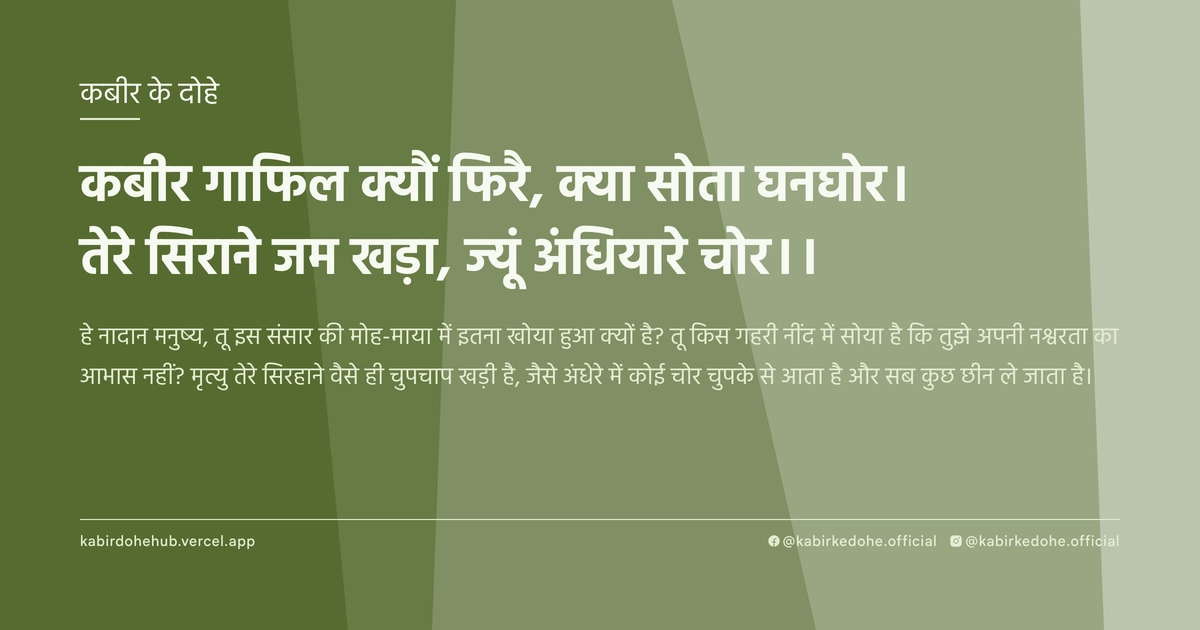
कबीर गाफिल क्यौं फिरै, क्या सोता घनघोर।
तेरे सिराने जम खड़ा, ज्यूं अंधियारे चोर।।
Kabir gafil kyon phirae, kya sota ghanghor. Tere sirane jam khada, jyun andhiyare chor.
इस पृष्ठ पर इस कबीर दोहे का अर्थ (meaning), हिंदी व्याख्या और अंग्रेज़ी अनुवाद, दार्शनिक विश्लेषण और व्यावहारिक जीवन सीख दी गई है। यह दोहा जागृति (The Wake-up Call) विषय से जुड़ा है — Kabir doha meaning and explanation in Hindi and English.
अर्थ (Meaning):
हे नादान मनुष्य, तू इस संसार की मोह-माया में इतना खोया हुआ क्यों है? तू किस गहरी नींद में सोया है कि तुझे अपनी नश्वरता का आभास नहीं? मृत्यु तेरे सिरहाने वैसे ही चुपचाप खड़ी है, जैसे अंधेरे में कोई चोर चुपके से आता है और सब कुछ छीन ले जाता है।
O heedless soul, why do you wander in such ignorance? In what profound slumber are you lost? Death stands poised right beside your pillow, stealthy and unseen, much like a thief who arrives under the cover of darkness to steal everything you possess.
व्याख्या (Interpretation):
इस दोहे में 'गाफिल' शब्द का प्रयोग उस व्यक्ति के लिए किया गया है जो जीवन के वास्तविक उद्देश्य को भूलकर इंद्रिय सुखों में लीन है। 'घनघोर नींद' केवल शारीरिक निद्रा नहीं, बल्कि अज्ञान (Avidya) की वह अवस्था है जहाँ मनुष्य स्वयं को शरीर मानता है। कबीर यहाँ मृत्यु को एक 'चोर' के रूप में चित्रित करते हैं, जो बिना किसी पूर्व सूचना के आता है। यह निरगुण भक्ति का आह्वान है, जहाँ साधक को याद दिलाया जाता है कि माया का यह संसार क्षणभंगुर है। जब तक मनुष्य इस द्वैत (Duality) में रहता है कि वह शरीर है, वह भयभीत रहता है; लेकिन जब वह स्वयं को ब्रह्म या शुद्ध चेतना के रूप में पहचानता है, तब मृत्यु का भय समाप्त हो जाता है। यह विरोधाभास है कि जागने के लिए पहले अपनी नींद की गहराई को पहचानना आवश्यक है।
In this couplet, the word 'gafil' refers to the soul immersed in sensory pleasures, oblivious to its divine origin. The 'profound slumber' is not physical sleep but the state of Avidya (spiritual ignorance), where the individual mistakenly identifies with the transient body. Kabir personifies death as a 'thief,' emphasizing its unpredictability and the suddenness of the final transition. This is a call to Nirgun Bhakti, reminding the seeker that the material world is a fleeting illusion (Maya). As long as one exists in the duality of 'I' and 'Other,' death remains a predator; however, by realizing the non-duality of Atman and Brahman, the fear of death dissolves. The central paradox lies in the fact that one must first acknowledge the depth of their spiritual unconsciousness before the awakening can begin.
दार्शनिक विश्लेषण (Philosophical Analysis):
कबीर का यह दोहा मध्यकालीन भारत के उस सामाजिक परिवेश से उपजा है जहाँ लोग कर्मकांडों और बाहरी आडंबरों में इतने व्यस्त थे कि उन्होंने आंतरिक रूपांतरण को पूरी तरह भुला दिया था। कबीर यहाँ केवल मृत्यु का भय नहीं दिखा रहे, बल्कि वे 'मृत्यु-चेतना' (Memento Mori) के माध्यम से जीवन को सार्थक बनाने का मार्ग प्रशस्त कर रहे हैं। उनका दृष्टिकोण अद्वैत वेदांत के करीब है, जहाँ वे कहते हैं कि शरीर नश्वर है और केवल आत्मा सत्य है।
वे ritualism (कर्मकांड) का विरोध करते हैं क्योंकि मंदिर-मस्जिद की दीवारों में कैद ईश्वर को खोजना उस नींद को और गहरा करना है। सूफी मत के 'फना' (अहंकार का विनाश) के सिद्धांत की तरह, कबीर चाहते हैं कि मनुष्य अपने अहंकार को मिटा दे। जब तक 'मैं' (Ego) जीवित है, तब तक चोर (मृत्यु) कुछ चुराने के लिए मौजूद है। यदि कुछ चुराने योग्य बचा ही नहीं (अर्थात अहंकार शून्य हो गया), तो मृत्यु का कोई प्रभाव नहीं रहता।
मनोवैज्ञानिक स्तर पर, यह दोहा संज्ञानात्मक विसंगति (Cognitive Dissonance) पैदा करता है। मनुष्य यह जानता है कि वह मरेगा, फिर भी वह ऐसे जीता है जैसे वह अमर हो। कबीर इस विसंगति को तोड़कर व्यक्ति को वर्तमान क्षण (Present Moment) में लाने का प्रयास करते हैं। वे चेतावनी देते हैं कि समय का सदुपयोग न करना सबसे बड़ी आध्यात्मिक हानि है।
ऐतिहासिक रूप से, कबीर ने जाति और धर्म के भेदों को नकारते हुए यह स्पष्ट किया कि मृत्यु किसी के साथ भेदभाव नहीं करती। चाहे वह पंडित हो या मोची, 'चोर' सबके सिरहाने खड़ा है। यह समानता का सबसे क्रूर लेकिन सबसे सच्चा सत्य है।
अंततः, यह विश्लेषण हमें इस निष्कर्ष पर ले जाता है कि कबीर का उद्देश्य डराना नहीं, बल्कि जगाना है। वे चाहते हैं कि हम अपनी ऊर्जा को बाहरी दुनिया के संचय से हटाकर आंतरिक खोज की ओर मोड़ें। जब हम इस सत्य को स्वीकार कर लेते हैं, तब हम वास्तव में स्वतंत्र होते हैं।
This couplet emerges from the socio-religious landscape of medieval India, where people were deeply entrenched in ritualism and external piety, neglecting internal transformation. Kabir is not merely instilling a fear of death; he is utilizing the concept of 'Memento Mori' to urge a more meaningful existence. His perspective aligns closely with Advaita Vedanta, asserting that while the body is ephemeral, the soul is the only enduring reality.
He rejects ritualism because seeking the Divine within the confines of temples or mosques only deepens the spiritual slumber. Similar to the Sufi concept of 'Fana' (the annihilation of the ego), Kabir advocates for the dissolution of the self. As long as the 'I' (Ego) persists, there is something for the 'thief' (death) to steal. If the ego is completely eradicated, death loses its power to deprive.
Psychologically, the verse addresses a profound cognitive dissonance: the human tendency to live as if immortal despite the absolute certainty of death. Kabir seeks to shatter this delusion, forcing the individual back into the present moment. He warns that the squandering of time is the greatest spiritual bankruptcy.
Historically, by dismissing caste and religious hierarchies, Kabir highlights that death is the ultimate equalizer. Whether a high priest or a cobbler, the 'thief' stands equally at every bedside. This is the most brutal yet honest truth of human existence.
Ultimately, the analysis reveals that Kabir's intent is not to terrify, but to awaken. He encourages a shift in energy from external accumulation to internal exploration. By accepting the inevitability of the end, one paradoxically finds the freedom to truly live.
मूल संदेश (Core Message):
- अज्ञान की नींद सबसे बड़ा बंधन है।
- मृत्यु एक सत्य है, जिसे स्वीकारना ही मुक्ति है।
- बाहरी संचय व्यर्थ है, आंतरिक जागरण अनिवार्य है।
- अहंकार का त्याग ही मृत्यु के भय का अंत है।
- वर्तमान क्षण में जीना ही वास्तविक जागृति है।
- आत्मा अमर है, शरीर केवल एक अस्थायी वस्त्र है।
- The sleep of ignorance is the greatest bondage.
- Death is the only certainty; accepting it is liberation.
- External accumulation is futile; internal awakening is essential.
- Relinquishing the ego is the only way to end the fear of death.
- Living fully in the present is the only true awakening.
- The soul is eternal; the body is but a temporary garment.
व्यावहारिक उदाहरण (Practical Example):
वाराणसी के एक पुराने घाट पर माधव नाम का एक वृद्ध बुनकर रहता था। माधव अपनी कला में निपुण था, लेकिन उसका मन हमेशा भविष्य की चिंताओं और संचित धन के मोह में रहता था। वह दिन-रात केवल अधिक कपड़े बुनने और उन्हें महंगे दामों पर बेचने की योजना बनाता था, ताकि वह अपने जीवन के अंतिम वर्षों में विलासिता का आनंद ले सके।
वह अपने आस-पास के लोगों की मदद नहीं करता था और न ही कभी ध्यान लगाता था। उसके लिए 'सफलता' का अर्थ था तिजोरी में रखे सोने के सिक्के। वह अक्सर कहता, 'अभी तो मैं जवान हूँ, भक्ति और वैराग्य बुढ़ापे के लिए हैं।'
एक रात, माधव ने एक सपना देखा। उसने देखा कि एक काला साया उसके बिस्तर के पास खड़ा है और धीरे-धीरे उसके हाथों से उन रेशमी धागों को खींच रहा है जिनसे उसने अपनी पूरी जिंदगी बुनी थी। वह साया उसके सोने के सिक्कों को धूल में बदल रहा था।
माधव घबराकर जागा। उसके माथे पर पसीना था और दिल तेजी से धड़क रहा था। उसी समय उसकी नजर दीवार पर टंगे कबीर के एक दोहे पर पड़ी, जो उसके दादाजी ने लिखा था: 'तेरे सिराने जम खड़ा, ज्यों अंधियारे चोर'।
उस पल माधव को अहसास हुआ कि वह जिस 'भविष्य' के लिए तैयारी कर रहा था, वह वास्तव में एक भ्रम था। वह जिस धन को अपना मान रहा था, वह वास्तव में उस चोर की संपत्ति थी जो कभी भी उसे वापस ले सकता था।
अगले दिन से माधव का व्यवहार पूरी तरह बदल गया। उसने अपनी कमाई का एक बड़ा हिस्सा उन अनाथ बच्चों की शिक्षा के लिए देना शुरू किया जो घाटों पर भटकते थे।
उसने अपनी बुनाई को केवल व्यापार नहीं, बल्कि एक साधना बना लिया। अब वह कपड़े इसलिए नहीं बुनता था कि वह अमीर बने, बल्कि इसलिए कि वह अपनी कला के माध्यम से दूसरों को खुशी दे सके।
उसने महसूस किया कि जब वह दूसरों की सेवा करता है, तो उसके भीतर का डर कम हो जाता है। वह अब मृत्यु से डरता नहीं था, क्योंकि उसने अपना जीवन 'देने' में लगा दिया था, 'जमा' करने में नहीं।
माधव की इस आंतरिक क्रांति ने उसके पूरे मोहल्ले को प्रभावित किया। लोग अब उसे केवल एक बुनकर नहीं, बल्कि एक शांत और प्रबुद्ध आत्मा के रूप में देखने लगे।
अंत में, माधव ने पाया कि असली संपत्ति वह नहीं थी जो उसने तिजोरी में रखी थी, बल्कि वह शांति थी जो उसने अपने अहंकार को त्याग कर प्राप्त की थी।
On an ancient ghat in Varanasi lived an elderly weaver named Madhav. Madhav was a master of his craft, but his mind was perpetually consumed by future anxieties and the greed for accumulated wealth. He spent his days and nights planning how to weave more cloth and sell it at higher prices, believing that luxury in his final years was the ultimate goal.
He neither helped those around him nor ever practiced mindfulness. For him, 'success' was measured by the gold coins stored in his chest. He often remarked, 'I am still vigorous; devotion and renunciation are for the very old.'
One night, Madhav had a vivid dream. He saw a dark shadow standing beside his bed, slowly pulling away the silken threads he had spent his entire life weaving. The shadow was turning his gold coins into grey dust.
Madhav woke up in a panic, drenched in sweat, his heart racing. At that moment, his eyes fell upon a couplet by Kabir written on the wall by his grandfather: 'Death stands poised by your pillow, like a thief in the dark.'
In that instant, Madhav realized that the 'future' he was preparing for was a mere illusion. The wealth he claimed as his own actually belonged to the thief who could reclaim it at any second.
From the next day, Madhav's behavior underwent a complete transformation. He began donating a significant portion of his earnings to the education of orphaned children wandering the ghats.
He turned his weaving from a mere business into a spiritual practice. He no longer wove to become rich, but to bring joy to others through his art.
He discovered that by serving others, his internal fear diminished. He no longer feared death because he had spent his life 'giving' rather than 'hoarding.'
Madhav's internal revolution influenced his entire neighborhood. People began to see him not just as a weaver, but as a calm and enlightened soul.
Ultimately, Madhav found that true wealth was not what he kept in his chest, but the profound peace he attained by relinquishing his ego.
अभ्यास मार्गदर्शन (Practice Guidance):
- प्रतिदिन 15 मिनट 'मृत्यु-चिंतन' (Death Meditation) करें: कल्पना करें कि यह आपका अंतिम दिन है। विचार करें कि क्या आप अपने वर्तमान कार्यों और विचारों के साथ शांति से विदा हो पाएंगे।
- आत्म-पूछताछ जर्नल: हर रात लिखें—'आज मैंने अपनी पहचान को शरीर या पद से जोड़कर कितना अहंकार किया?' और 'आज मैंने निस्वार्थ भाव से क्या दिया?'
- व्यवहारिक परिवर्तन: किसी एक ऐसी वस्तु या आदत का त्याग करें जिससे आप अत्यधिक मोह रखते हैं, ताकि आप यह अनुभव कर सकें कि आपकी खुशी बाहरी वस्तुओं पर निर्भर नहीं है।
- डायग्नोस्टिक चेकलिस्ट: यदि आप छोटी-छोटी बातों पर क्रोधित हो रहे हैं, भविष्य की चिंता में वर्तमान खो रहे हैं, या केवल भौतिक संचय को ही सफलता मान रहे हैं, तो समझ लें कि आप 'घनघोर नींद' में हैं।
- Daily Death Meditation: Spend 15 minutes contemplating the transience of life. Imagine this is your final day and reflect on whether you can depart in peace with your current actions and thoughts.
- Self-Inquiry Journaling: Each night, record—'How much did I cling to my identity as a body or a title today?' and 'What did I give selflessly today?'
- Behavioral Shift: Consciously renounce one object or habit you are overly attached to, experiencing the realization that your happiness does not depend on external possessions.
- Diagnostic Checklist: If you find yourself reacting with anger to trivialities, losing the present to future anxieties, or equating success solely with material accumulation, recognize that you are in a 'profound slumber'.
चिंतन प्रश्न (Reflection Questions):
- यदि मृत्यु आज रात आए, तो आपके जीवन का कौन सा हिस्सा 'सार्थक' कहलाएगा और कौन सा 'व्यर्थ'?
- आप अपनी सार्वजनिक छवि (Digital/Social Ego) को बनाए रखने के लिए अपनी आंतरिक शांति का कितना बलिदान कर रहे हैं?
- वह कौन सा डर है जो आपको वास्तव में जागने और सत्य को खोजने से रोक रहा है?
- क्या आपकी करुणा केवल उन लोगों के लिए है जिनसे आपको कुछ मिलने की उम्मीद है, या वह वास्तव में निस्वार्थ है?
- यदि आपसे आपकी सारी उपलब्धियां और पद छीन लिए जाएं, तो 'आप' वास्तव में कौन बचेंगे?
- आपकी कौन सी छिपी हुई पूर्वाग्रह (Biases) आपको दूसरों में उसी दिव्य प्रकाश को देखने से रोकती हैं जो आपके भीतर है?
- If death arrived tonight, which part of your life would be deemed 'meaningful' and which 'wasteful'?
- How much of your inner peace are you sacrificing to maintain your public persona (Digital/Social Ego)?
- What is the specific fear that prevents you from truly awakening and seeking the ultimate truth?
- Is your compassion reserved only for those from whom you expect something, or is it genuinely selfless?
- If all your achievements and titles were stripped away, who would 'you' actually be?
- Which hidden biases prevent you from seeing the same divine light in others that exists within you?