
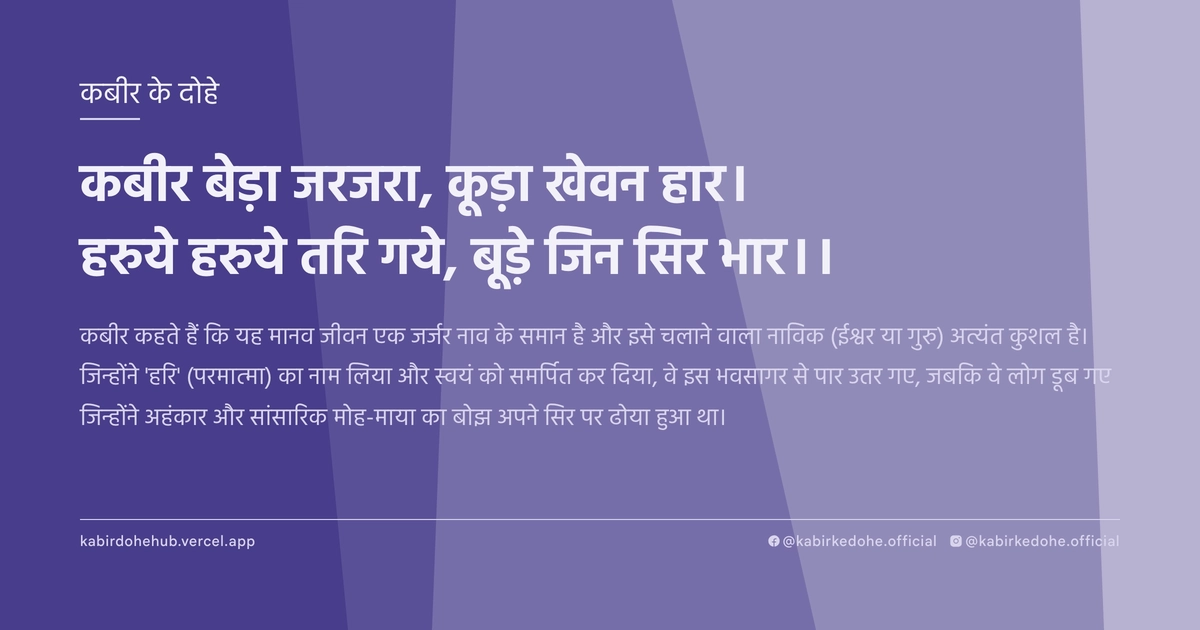
कबीर बेड़ा जरजरा, कूड़ा खेवन हार।
हरुये हरुये तरि गये, बूड़े जिन सिर भार।।
Kabir beda jarjara, kooda khevan haar. Haruye haruye tari gaye, boode jin sir bhaar.
इस पृष्ठ पर इस कबीर दोहे का अर्थ (meaning), हिंदी व्याख्या और अंग्रेज़ी अनुवाद, दार्शनिक विश्लेषण और व्यावहारिक जीवन सीख दी गई है। यह दोहा मुक्ति (Liberation) विषय से जुड़ा है — Kabir doha meaning and explanation in Hindi and English.
अर्थ (Meaning):
कबीर कहते हैं कि यह मानव जीवन एक जर्जर नाव के समान है और इसे चलाने वाला नाविक (ईश्वर या गुरु) अत्यंत कुशल है। जिन्होंने 'हरि' (परमात्मा) का नाम लिया और स्वयं को समर्पित कर दिया, वे इस भवसागर से पार उतर गए, जबकि वे लोग डूब गए जिन्होंने अहंकार और सांसारिक मोह-माया का बोझ अपने सिर पर ढोया हुआ था।
Kabir describes the human life as a dilapidated boat and the ferryman (the Divine or Guru) as the only capable guide. Those who surrendered to the Divine and chanted the name of the Eternal successfully crossed the ocean of existence, while those who clung to the heavy burdens of ego and worldly attachments inevitably sank beneath the waves.
व्याख्या (Interpretation):
यहाँ 'बेड़ा जरजरा' मानव शरीर और उसकी नश्वरता का प्रतीक है, जो किसी भी क्षण नष्ट हो सकता है। 'खेवन हार' वह आध्यात्मिक मार्गदर्शक है जो आत्मा को माया के बंधनों से मुक्त करता है। यह दोहा निरगुण भक्ति के उस सिद्धांत को दर्शाता है जहाँ बाहरी आडंबरों के बजाय आंतरिक समर्पण महत्वपूर्ण है। 'सिर भार' का अर्थ है अहंकार, संचय की वृत्ति और सामाजिक पहचान का मोह, जो आत्मा को भारी बनाकर उसे आध्यात्मिक उत्थान से रोकता है। अद्वैत वेदांत के अनुसार, जब तक 'मैं' और 'मेरा' का बोध रहता है, तब तक जीव माया के जाल में फंसा रहता है। मुक्ति केवल तभी संभव है जब साधक अपने अहंकार का विसर्जन कर दे और स्वयं को उस निराकार ब्रह्म में लीन कर ले।
The 'dilapidated boat' symbolizes the fragile and transient nature of the human body, prone to decay. The 'ferryman' represents the spiritual guide or the Divine consciousness that navigates the soul through the turbulence of existence. This verse embodies the essence of Nirgun Bhakti, emphasizing internal surrender over external rituals. The 'burden on the head' is a metaphor for the ego, the drive for accumulation, and the clinging to social identities, which weigh down the soul and prevent spiritual ascent. According to Advaita Vedanta, as long as the sense of 'I' and 'mine' persists, the individual remains trapped in Maya. Liberation occurs only when the seeker dissolves the ego and realizes the non-duality of the Atman and Brahman.
दार्शनिक विश्लेषण (Philosophical Analysis):
कबीर का यह दोहा उस युग की प्रतिक्रिया है जहाँ धर्म केवल कर्मकांडों और जातिगत श्रेष्ठता तक सीमित हो गया था। कबीर ने स्पष्ट किया कि मोक्ष किसी विशेष जाति, मंदिर या मस्जिद जाने से नहीं, बल्कि अहंकार के त्याग से मिलता है। यह विचार सूफी मत के 'फना' (अहंकार का विनाश) के अत्यंत निकट है, जहाँ साधक अपनी व्यक्तिगत पहचान को ईश्वर की इच्छा में विलीन कर देता है।
दार्शनिक स्तर पर, यह दोहा 'माया' के मनोविज्ञान का विश्लेषण करता है। मनुष्य जिस संपत्ति, पद और प्रतिष्ठा को अपना संबल मानता है, वास्तव में वही उसके डूबने का कारण बनती है। यह एक विरोधाभास है: जिसे हम सुरक्षा कवच समझते हैं, वही आध्यात्मिक बंधन बन जाता है।
अद्वैत वेदांत के परिप्रेक्ष्य में, यह 'अविद्या' (अज्ञानता) की स्थिति है। जब व्यक्ति स्वयं को शरीर और मन समझता है, तो वह बोझिल हो जाता है। जैसे ही वह अपनी वास्तविक प्रकृति—शुद्ध चेतना—को पहचानता है, वह हल्का हो जाता है और पार उतर जाता है।
कबीर यहाँ 'हरि' शब्द का प्रयोग किसी मूर्ति के लिए नहीं, बल्कि उस सर्वव्यापी, निराकार तत्व के लिए कर रहे हैं जो कण-कण में व्याप्त है। यह 'नाम स्मरण' केवल शब्दों का दोहराव नहीं, बल्कि उस परम सत्य के साथ एकाकार होने की प्रक्रिया है।
अंततः, यह दोहा मनोवैज्ञानिक रूपांतरण की बात करता है। यह सिखाता है कि आध्यात्मिक यात्रा 'जोड़ने' की नहीं, बल्कि 'छोड़ने' की यात्रा है। जितना कम बोझ (अहंकार) होगा, उतनी ही सहजता से आत्मा का उत्थान होगा।
Kabir's verse is a profound reaction to an era where religion had devolved into mere ritualism and caste-based superiority. He asserts that liberation is not achieved through specific castes, temples, or mosques, but through the systematic shedding of the ego. This aligns closely with the Sufi concept of 'Fana' (annihilation of the self), where the seeker dissolves their individual identity into the Divine Will.
On a philosophical level, the verse analyzes the psychology of 'Maya'. The wealth, status, and prestige that humans perceive as their support systems are, in reality, the very weights that cause them to sink. It presents a spiritual paradox: the perceived safety nets of the material world are actually the shackles of the soul.
From the perspective of Advaita Vedanta, this represents the state of 'Avidya' (ignorance). When an individual identifies solely with the body and mind, they become burdened. The moment they recognize their true nature as pure consciousness, they become weightless and transcend the cycle of birth and death.
Kabir uses the term 'Hari' not to refer to a deity in human form, but to the all-pervading, formless Absolute that resides in every atom. 'Nam Simran' (remembrance of the Name) is not mere vocal repetition but a process of merging with the Ultimate Truth.
Ultimately, the verse speaks of a psychological transformation. It teaches that the spiritual journey is not one of acquisition, but of subtraction. The lighter the burden of the ego, the more effortless the ascent of the soul becomes.
मूल संदेश (Core Message):
- अहंकार वह पत्थर है जो आत्मा को डुबो देता है।
- सच्ची भक्ति बाहरी दिखावे में नहीं, आंतरिक शून्यता में है।
- जीवन की नश्वरता को स्वीकार करना ही मुक्ति का पहला कदम है।
- समर्पण वह पतवार है जो भवसागर से पार कराती है।
- जब 'मैं' मिटता है, तभी 'वह' प्रकट होता है।
- Ego is the stone that sinks the soul.
- True devotion lies in inner emptiness, not external display.
- Accepting life's transience is the first step toward liberation.
- Surrender is the rudder that navigates the ocean of existence.
- When the 'I' vanishes, the 'Divine' manifests.
व्यावहारिक उदाहरण (Practical Example):
वाराणसी के घाटों पर रहने वाले एक वृद्ध विधवा, जानकी, की कहानी है। जानकी ने अपना पूरा जीवन कठोर नियमों, सामाजिक मर्यादाओं और इस विश्वास में बिताया कि उनकी 'पवित्रता' और 'त्याग' उन्हें मोक्ष दिलाएंगे। वे दूसरों को उनकी गलतियों पर टोकती थीं और स्वयं को आध्यात्मिक रूप से श्रेष्ठ मानती थीं।
उनका 'सिर भार' उनका यह अहंकार था कि वे एक 'आदर्श' विधवा हैं। वे धर्म के नाम पर दूसरों का न्याय करती थीं, लेकिन उनके भीतर शांति नहीं थी। वे अपनी परंपराओं की जर्जर नाव को पकड़े हुए थीं, यह सोचकर कि यही एकमात्र रास्ता है।
एक दिन उन्होंने एक साधारण से साधु को देखा जो केवल मौन रहकर दूसरों की सेवा कर रहा था, बिना किसी धार्मिक पहचान के। उस साधु ने उनसे कहा, 'माँ, तुम मोक्ष का बोझ ढो रही हो, जबकि मोक्ष तो बोझ उतार देने का नाम है।'
यह शब्द जानकी के लिए 'कबीर ट्विस्ट' साबित हुए। उन्हें एहसास हुआ कि उनकी पवित्रता का दावा वास्तव में एक भारी बोझ था जिसने उन्हें प्रेम और करुणा से दूर कर दिया था।
उन्होंने अपनी श्रेष्ठता की भावना को त्याग दिया। उन्होंने उन लोगों की मदद करना शुरू किया जिन्हें समाज 'अपवित्र' मानता था, बिना यह सोचे कि उनकी अपनी छवि क्या होगी।
जैसे-जैसे उन्होंने अपनी 'आदर्श छवि' के बोझ को उतारा, उनका मन हल्का होने लगा। जिस शांति की तलाश में उन्होंने जीवन भर कठोर नियम माने, वह उन्हें तब मिली जब उन्होंने नियमों को छोड़कर मानवता को अपनाया।
अब वे घाटों पर केवल एक विधवा के रूप में नहीं, बल्कि एक करुणामयी माँ के रूप में जानी जाती थीं। उनकी जर्जर नाव अब उनके अहंकार से नहीं, बल्कि प्रेम से संचालित थी।
अंततः, जानकी ने पाया कि जब उन्होंने 'मैं' को खो दिया, तो उन्होंने उस 'हरि' को पा लिया जो सबके भीतर है। उनका जीवन अब एक बोझ नहीं, बल्कि एक प्रवाह बन गया था।
Consider the story of Janaki, an elderly widow living on the ghats of Varanasi. Janaki spent her entire life adhering to rigid rules, social norms, and the belief that her 'purity' and 'sacrifice' would guarantee her salvation. She frequently corrected others for their flaws, believing herself to be spiritually superior.
Her 'burden on the head' was the ego of being an 'ideal' widow. In the name of religion, she judged others, yet she lacked inner peace. She clung to the dilapidated boat of her traditions, believing it was the only path to liberation.
One day, she encountered a simple monk who served others in silence, devoid of any religious labels. The monk told her, 'Mother, you are carrying the burden of salvation, whereas salvation is actually the act of putting down the burden.'
These words served as the 'Kabir Twist' for Janaki. She realized that her claim to purity was actually a heavy weight that had distanced her from genuine love and compassion.
She began to shed her sense of superiority. She started helping those whom society deemed 'impure,' without worrying about how it would affect her own image.
As she discarded the weight of her 'ideal identity,' her heart grew lighter. The peace she had sought through lifelong austerity was finally found when she abandoned rules in favor of humanity.
She was no longer known on the ghats merely as a widow, but as a compassionate mother to all. Her fragile boat was no longer steered by ego, but by love.
Ultimately, Janaki discovered that by losing the 'I,' she found the 'Hari' that resides within everyone. Her life ceased to be a burden and became a flowing river.
अभ्यास मार्गदर्शन (Practice Guidance):
- प्रतिदिन 20 मिनट का मौन ध्यान करें, जहाँ आप अपने विचारों को केवल देखें और उनसे अपनी पहचान न जोड़ें।
- एक 'अहंकार डायरी' बनाएँ: दिन भर में उन क्षणों को लिखें जब आपने स्वयं को दूसरों से श्रेष्ठ या अलग महसूस किया।
- व्यवहार परिवर्तन: दिन में कम से कम एक बार किसी ऐसे व्यक्ति की निस्वार्थ मदद करें जिससे आपका कोई संबंध नहीं है और बदले में किसी प्रशंसा की अपेक्षा न करें।
- निदान चेकलिस्ट: क्या मैं अपनी उपलब्धियों का जिक्र बातचीत में बार-बार करता हूँ? क्या मैं दूसरों की गलतियों पर तुरंत प्रतिक्रिया देता हूँ? यदि हाँ, तो आप अभी भी 'सिर भार' ढो रहे हैं।
- Practice 20 minutes of silent meditation daily, observing your thoughts without attaching your identity to them.
- Maintain an 'Ego Journal': Record moments throughout the day when you felt superior to others or clung to your social status.
- Behavioral Shift: Perform one selfless act of service daily for a stranger, ensuring there is no expectation of praise or recognition.
- Diagnostic Checklist: Do I frequently mention my achievements in conversation? Do I react instantly to others' mistakes? If yes, you are still carrying the 'burden on the head'.
चिंतन प्रश्न (Reflection Questions):
- मेरी वह कौन सी सामाजिक पहचान है जिसे खोने के डर से मैं सबसे ज्यादा घबराता हूँ?
- क्या मेरी धार्मिक या आध्यात्मिक मान्यताएँ मुझे विनम्र बना रही हैं या मुझे दूसरों से श्रेष्ठ महसूस करा रही हैं?
- यदि आज मेरी सारी उपलब्धियाँ और पद छीन लिए जाएँ, तो मेरे भीतर क्या बचेगा?
- मैं किन मानसिक बोझों (पुरानी यादें, कड़वाहट) को 'पवित्रता' या 'सिद्धांत' के नाम पर ढो रहा हूँ?
- क्या मैं वास्तव में ईश्वर की खोज कर रहा हूँ, या केवल अपनी इच्छाओं की पूर्ति के लिए एक माध्यम ढूँढ रहा हूँ?
- Which social identity am I most terrified of losing?
- Are my religious or spiritual beliefs making me humble, or are they fueling a sense of superiority?
- If all my achievements and titles were stripped away today, what would remain of me?
- What mental burdens (old grudges, regrets) am I carrying under the guise of 'principles' or 'purity'?
- Am I truly seeking the Divine, or am I merely searching for a medium to fulfill my own desires?