
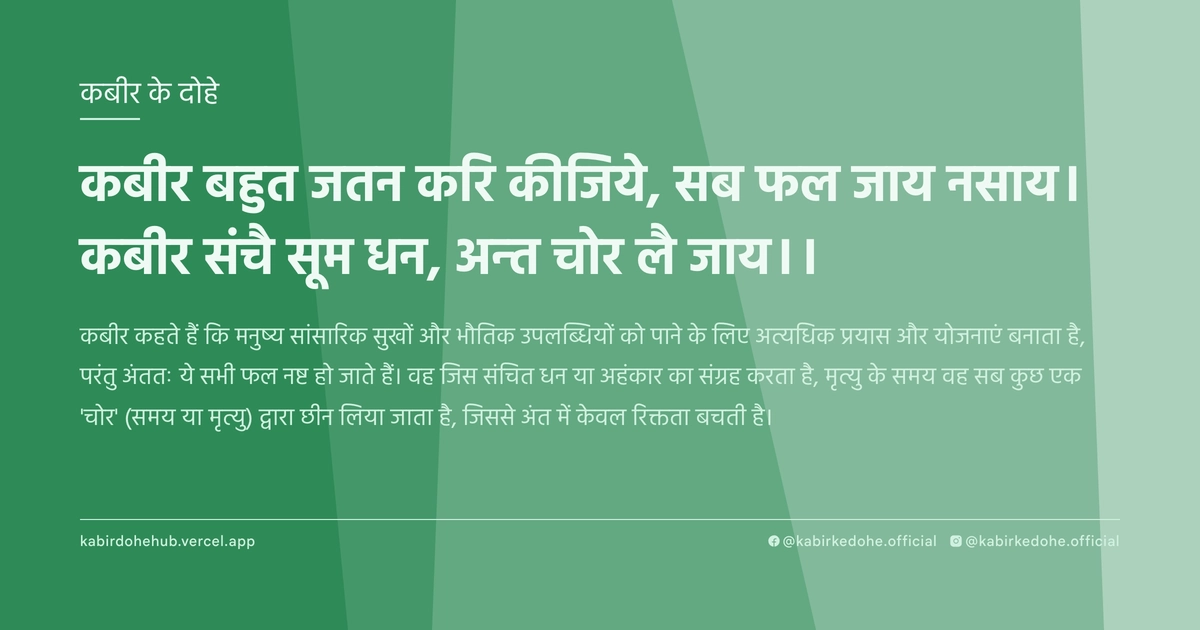
कबीर बहुत जतन करि कीजिये, सब फल जाय नसाय।
कबीर संचै सूम धन, अन्त चोर लै जाय।।
Kabir bahut jatan kari kijiye, sab phal jaaye nasay. Kabir sanchai soom dhan, ant chor lai jaaye.
इस पृष्ठ पर इस कबीर दोहे का अर्थ (meaning), हिंदी व्याख्या और अंग्रेज़ी अनुवाद, दार्शनिक विश्लेषण और व्यावहारिक जीवन सीख दी गई है। यह दोहा अनित्य (Impermanence) विषय से जुड़ा है — Kabir doha meaning and explanation in Hindi and English.
अर्थ (Meaning):
कबीर कहते हैं कि मनुष्य सांसारिक सुखों और भौतिक उपलब्धियों को पाने के लिए अत्यधिक प्रयास और योजनाएं बनाता है, परंतु अंततः ये सभी फल नष्ट हो जाते हैं। वह जिस संचित धन या अहंकार का संग्रह करता है, मृत्यु के समय वह सब कुछ एक 'चोर' (समय या मृत्यु) द्वारा छीन लिया जाता है, जिससे अंत में केवल रिक्तता बचती है।
Kabir observes that humans exert immense effort and meticulous planning to acquire worldly pleasures and material achievements, yet all such fruits eventually perish. The wealth or ego that one painstakingly accumulates is ultimately stolen by a 'thief'—representing time or death—leaving the soul with nothing but emptiness at the final hour.
व्याख्या (Interpretation):
इस दोहे का शाब्दिक अर्थ भौतिक संपत्ति की नश्वरता है, परंतु इसका गहरा आध्यात्मिक अर्थ 'माया' के भ्रम को उजागर करना है। यहाँ 'जतन' केवल भौतिक प्रयास नहीं, बल्कि वह मानसिक संघर्ष है जो हम अपनी पहचान को बाहरी वस्तुओं से जोड़ने में करते हैं। 'सूम धन' उस संचित अहंकार और सांसारिक आसक्ति का प्रतीक है जिसे हम अपना स्थायी साम्राज्य मानते हैं। कबीर यहाँ निर्गुण भक्ति के सिद्धांत को लाते हुए बताते हैं कि जब तक साधक स्वयं को इस नश्वरता से अलग नहीं करता, वह द्वैत के जाल में फंसा रहता है। 'चोर' वास्तव में वह काल है जो हमें याद दिलाता है कि आत्मा और ब्रह्म की एकता ही एकमात्र शाश्वत सत्य है, जबकि शरीर और संपत्ति केवल क्षणभंगुर आवरण हैं। यह विरोधाभास है कि मनुष्य उस चीज़ को बचाने में जीवन बिता देता है जिसे वह कभी साथ ले जा ही नहीं सकता।
While the literal meaning addresses the transience of material wealth, the deeper spiritual interpretation exposes the illusion of 'Maya'. Here, 'jatan' (effort) refers not just to physical labor, but the mental struggle to anchor one's identity in external possessions. 'Soom dhan' (accumulated wealth) symbolizes the stored ego and worldly attachments that we mistake for a permanent empire. Invoking the principles of Nirgun Bhakti, Kabir explains that as long as the seeker does not detach themselves from this impermanence, they remain trapped in the web of duality. The 'thief' is actually Time or Death, which serves as a brutal reminder that the unity of Atman and Brahman is the only eternal truth, while the body and possessions are mere fleeting veils. It is the central paradox of the human condition: spending a lifetime guarding that which cannot be carried beyond the grave.
दार्शनिक विश्लेषण (Philosophical Analysis):
कबीर का यह दोहा उस सामाजिक और धार्मिक परिवेश की प्रतिक्रिया है जहाँ कर्मकांडों और बाहरी आडंबरों के माध्यम से मोक्ष पाने का दावा किया जाता था। कबीर ने स्पष्ट रूप से उन लोगों को चुनौती दी जो सोचते थे कि केवल दान-पुण्य या तीर्थयात्रा से आध्यात्मिक संचय किया जा सकता है। उनके लिए, बाहरी संचय चाहे वह धन हो या धार्मिक श्रेय, अंततः व्यर्थ है यदि हृदय में अहंकार मौजूद है।
अद्वैत वेदांत के परिप्रेक्ष्य में, यह दोहा 'अविद्या' (अज्ञान) पर प्रहार करता है। जब मनुष्य स्वयं को शरीर या संपत्ति के साथ जोड़ता है, तो वह अपनी वास्तविक स्वरूप (ब्रह्म) को भूल जाता है। कबीर का तर्क है कि यह अलगाव ही दुख का मूल कारण है। वे सूफी मत के 'फना' (अहंकार का विनाश) के विचार से मेल खाते हैं, जहाँ ईश्वर तक पहुँचने के लिए स्वयं के 'मैं' को मिटाना आवश्यक है।
ऐतिहासिक रूप से, कबीर ने जाति व्यवस्था और ब्राह्मणवादी श्रेष्ठता को नकारा क्योंकि ये व्यवस्थाएं भी एक प्रकार का 'सामाजिक धन' या 'प्रतिष्ठा' का संचय थीं। उन्होंने सिखाया कि वास्तविक धन 'सहज' अवस्था है, जहाँ व्यक्ति बिना किसी बाहरी सहारे के आंतरिक शांति प्राप्त करता है। यह भौतिकवाद के विरुद्ध एक मनोवैज्ञानिक युद्ध है, जो मनुष्य को बाहरी संग्रह से हटाकर आंतरिक रूपांतरण की ओर ले जाता है।
यहाँ 'चोर' का रूपक अत्यंत शक्तिशाली है। यह केवल मृत्यु नहीं, बल्कि वह निरंतर क्षय है जो हर पल हमारे अस्तित्व को कम कर रहा है। कबीर हमें चेतावनी देते हैं कि यदि हम केवल बाहरी दुनिया को सजाने में लगे रहे, तो हम उस आंतरिक शून्य को कभी नहीं भर पाएंगे जिसे केवल प्रेम और ज्ञान से भरा जा सकता है।
अंततः, यह दर्शन हमें यह सिखाता है कि मुक्ति संचय में नहीं, बल्कि विसर्जन में है। जब हम 'मेरा' और 'तेरा' के भेद को मिटा देते हैं, तब चोर के पास चुराने के लिए कुछ बचता ही नहीं। यही वह अवस्था है जहाँ भक्त और भगवान एक हो जाते हैं, और द्वैत का अंत होता है।
This couplet is a direct reaction to the socio-religious climate of Kabir's era, where salvation was often sought through rigid rituals and external displays of piety. Kabir challenged the notion that spiritual merit could be 'accumulated' through mere charity or pilgrimages. To him, any external accumulation—whether material wealth or religious prestige—is futile if the ego remains intact.
From the perspective of Advaita Vedanta, this verse attacks 'Avidya' (ignorance). When a human identifies themselves with the body or possessions, they forget their true nature as Brahman. Kabir argues that this perceived separation is the root of all suffering. His teachings align with the Sufi concept of 'Fana' (annihilation of the self), where the dissolution of the 'I' is the prerequisite for union with the Divine.
Historically, Kabir rejected the caste system and Brahmanical superiority because these structures were essentially forms of 'social wealth' or 'status accumulation'. He taught that the only true wealth is the 'Sahaj' state—a natural, effortless alignment with the truth that requires no external crutches. This is a psychological war against materialism, shifting the focus from external gathering to internal transformation.
The metaphor of the 'thief' is profoundly potent. It represents not just death, but the constant decay that erodes our existence every second. Kabir warns that if we spend our lives decorating the outer shell, we will never fill the inner void that can only be satiated by divine love and gnosis.
Ultimately, this philosophy teaches that liberation lies not in accumulation, but in surrender. When the distinction between 'mine' and 'thine' is erased, the thief finds nothing left to steal. This is the state where the devotee and the Divine merge, and the illusion of duality finally collapses.
मूल संदेश (Core Message):
- बाहरी संचय एक भ्रम है जो अंततः रिक्तता की ओर ले जाता है।
- मृत्यु वह अंतिम सत्य है जो सभी कृत्रिम पहचानों को मिटा देता है।
- वास्तविक धन आंतरिक शांति और निस्वार्थ प्रेम का अनुभव है।
- अहंकार का त्याग ही एकमात्र स्थायी निवेश है।
- जब 'मैं' मिटता है, तब अनंत ब्रह्म का अनुभव होता है।
- External accumulation is an illusion leading inevitably to emptiness.
- Death is the ultimate truth that erases all artificial identities.
- True wealth is the experience of inner peace and selfless love.
- The surrender of the ego is the only permanent investment.
- When the 'I' dissolves, the experience of the infinite Brahman begins.
व्यावहारिक उदाहरण (Practical Example):
वाराणसी के एक पुराने घाट पर रामदीन नाम का एक वृद्ध बुनकर रहता था। रामदीन ने अपना पूरा जीवन सबसे महीन रेशमी वस्त्र बनाने में लगा दिया। उसने अपनी कला से बहुत धन कमाया और अपने घर को एक छोटे किले की तरह बना लिया, जहाँ वह अपनी तिजोरियों की रखवाली करता था। वह इतना डरता था कि कोई उसकी संपत्ति न चुरा ले कि उसने अपने बेटों और पड़ोसियों पर कभी भरोसा नहीं किया।
उसका पूरा दिन हिसाब-किताब करने और अपनी संपत्ति को बढ़ाने की योजनाओं में बीतता था। वह अक्सर अन्य बुनकरों को उपहास करता था जो अपनी कमाई का कुछ हिस्सा गरीबों में बाँट देते थे। रामदीन का मानना था कि 'जतन' ही जीवन की सफलता की कुंजी है। उसने अपने लिए एक भव्य हवेली बनाई, लेकिन उस हवेली में शांति नहीं थी, केवल सुरक्षा का डर था।
एक दिन, रामदीन बहुत बीमार पड़ गया। वह बिस्तर से उठने में असमर्थ था। उसने अपने सबसे भरोसेमंद नौकर को बुलाया और उसे अपनी गुप्त तिजोरियों की चाबियाँ सौंपी ताकि वह कुछ गहने बेचकर उसका इलाज करा सके। लेकिन जब नौकर ने तिजोरियाँ खोलीं, तो उसने देखा कि सालों की सीलन और दीमकों ने उन कीमती रेशमी कपड़ों को नष्ट कर दिया था और सोने के सिक्कों पर जंग लग गया था।
रामदीन ने महसूस किया कि जिस 'धन' को वह जीवन भर संजोता रहा, वह वास्तव में समय के चोर द्वारा धीरे-धीरे खाया जा रहा था। उसकी हवेली, उसकी तिजोरियाँ और उसका अहंकार—सब मिट्टी हो रहे थे। उसने देखा कि उसके पड़ोसी, जिन्हें वह 'नासमझ' कहता था, उनके पास धन तो कम था, लेकिन उनके पास एक-दूसरे का प्रेम और सम्मान था।
उस क्षण रामदीन को कबीर का वह दोहा याद आया। उसे समझ आया कि उसने केवल वस्तुओं का संचय किया था, अनुभवों और प्रेम का नहीं। उसने अपनी अंतिम सांसों में अपनी बची हुई संपत्ति उन बुनकरों के बच्चों की शिक्षा के लिए दान कर दी जिन्हें उसने कभी नीचा दिखाया था।
जैसे ही उसने यह निर्णय लिया, उसके मन का भारीपन गायब हो गया। उसे पहली बार महसूस हुआ कि असली 'धन' वह नहीं है जिसे तिजोरियों में बंद किया जाए, बल्कि वह है जिसे दूसरों के जीवन में खुशी के रूप में बाँटा जाए।
उसका डर अब शांति में बदल चुका था। उसने महसूस किया कि जब उसने 'मेरा' छोड़ने का निर्णय लिया, तब वह वास्तव में स्वतंत्र हो गया।
रामदीन की मृत्यु के बाद, लोग उसे उसके धन के लिए नहीं, बल्कि उसकी अंतिम उदारता और हृदय परिवर्तन के लिए याद करने लगे। यह उसका वास्तविक संचय था जो मृत्यु के बाद भी जीवित रहा।
On an ancient ghat in Varanasi lived an elderly weaver named Ramdeen. Ramdeen spent his entire life crafting the finest silk garments. Through his art, he amassed great wealth and turned his home into a small fortress, where he spent his days guarding his vaults. He was so consumed by the fear of theft that he never trusted his own sons or neighbors.
His entire day revolved around accounting and planning how to increase his hoard. He often mocked other weavers who shared a portion of their earnings with the poor. Ramdeen believed that 'jatan' (meticulous effort in accumulation) was the sole key to success. He built a grand mansion, but there was no peace within its walls, only the cold anxiety of security.
One day, Ramdeen fell gravely ill. Bedridden and weak, he summoned his most trusted servant and handed him the keys to his secret vaults, instructing him to sell some jewelry to fund his medical treatment. However, when the servant opened the vaults, he discovered that years of dampness and termites had destroyed the precious silks, and the gold coins had tarnished.
Ramdeen realized that the 'wealth' he had spent a lifetime guarding was being slowly eaten away by the thief of time. His mansion, his vaults, and his ego—all were turning to dust. He looked at his neighbors, whom he had called 'fools'; they had little money, but they possessed an abundance of mutual love and respect.
In that moment, Kabir's couplet resonated within him. He understood that he had accumulated only objects, not experiences or love. With his remaining strength, he donated his surviving assets to the education of the weavers' children he had once belittled.
As soon as he made this decision, the heaviness in his heart vanished. He felt for the first time that true 'wealth' is not that which is locked in vaults, but that which is distributed as joy in the lives of others.
His fear transformed into a profound peace. He realized that the moment he decided to let go of 'mine', he became truly free.
After Ramdeen's passing, people remembered him not for his gold, but for his final act of generosity and his transformation of heart. This was his only true accumulation—one that survived the thief of death.
अभ्यास मार्गदर्शन (Practice Guidance):
- दैनिक चिंतन: प्रतिदिन 15 मिनट मौन बैठें और विचार करें कि आपकी कौन सी उपलब्धियाँ वास्तव में स्थायी हैं और कौन सी केवल बाहरी दिखावा हैं।
- अनासक्ति अभ्यास: हर सप्ताह एक ऐसी वस्तु या विचार का त्याग करें जिससे आप अत्यधिक जुड़े हुए हैं, यह महसूस करते हुए कि आप उसके बिना भी पूर्ण हैं।
- आत्म-पूछताछ जर्नल: लिखें—"यदि आज मेरा सब कुछ छीन लिया जाए, तो मेरे भीतर ऐसा क्या बचेगा जिसे कोई चोर नहीं चुरा सकता?"
- निदान चेकलिस्ट: क्या आप अपनी पहचान अपनी पदवी, संपत्ति या ज्ञान से जोड़ रहे हैं? क्या आप खोने के डर से तनावग्रस्त रहते हैं? यदि हाँ, तो आप अभी भी 'माया' के संचय में हैं।
- Daily Contemplation: Sit in silence for 15 minutes daily and reflect on which of your achievements are truly eternal and which are merely external facades.
- Detachment Practice: Every week, consciously let go of one object or a rigid belief you are overly attached to, realizing you remain complete without it.
- Self-Inquiry Journal: Write and reflect on the prompt: "If everything I possess were stolen today, what remains within me that no thief can ever take?"
- Diagnostic Checklist: Do you define your identity by your title, wealth, or knowledge? Do you live in constant anxiety about loss? If yes, you are still operating within the accumulation of 'Maya'.
चिंतन प्रश्न (Reflection Questions):
- आपकी डिजिटल पहचान (सोशल मीडिया प्रोफाइल) आपके वास्तविक स्वरूप को कितना ढक रही है?
- वह कौन सा 'मानसिक धन' (अहंकार/श्रेष्ठता) है जिसे आप सबसे अधिक संजोकर रखते हैं?
- क्या आपकी उदारता वास्तव में निस्वार्थ है, या यह भविष्य में 'पुण्य' संचय करने का एक निवेश है?
- यदि आपकी सभी सामाजिक उपलब्धियाँ छीन ली जाएँ, तो क्या आप स्वयं के साथ समय बिताने में सहज होंगे?
- आप किस डर से अपनी खुशियों को 'कल' के लिए संचित कर रहे हैं?
- क्या आप अपनी धार्मिक मान्यताओं को सत्य खोजने के लिए उपयोग कर रहे हैं या अपनी श्रेष्ठता सिद्ध करने के लिए?
- To what extent does your digital identity (social media profile) obscure your authentic self?
- What 'mental wealth' (ego/superiority complex) do you guard most fiercely?
- Is your generosity truly selfless, or is it an investment to accumulate 'merit' for the future?
- If all your social achievements were stripped away, would you be comfortable in your own company?
- What fear drives you to hoard your happiness for some undefined 'tomorrow'?
- Are you using your religious beliefs to seek the Truth, or to prove your superiority over others?