
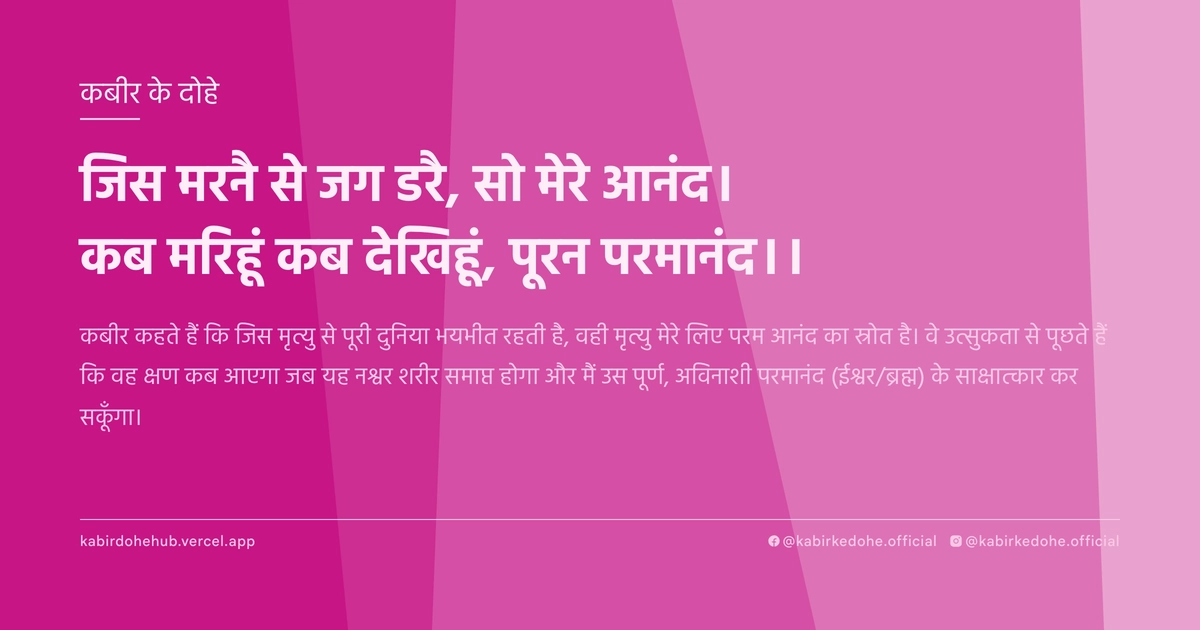
जिस मरनै से जग डरै, सो मेरे आनंद।
कब मरिहूं कब देखिहूं, पूरन परमानंद।।
Jis marnai se jag darai, so mere anand. Kab marihun kab dekhihun, puran parmanand.
इस पृष्ठ पर इस कबीर दोहे का अर्थ (meaning), हिंदी व्याख्या और अंग्रेज़ी अनुवाद, दार्शनिक विश्लेषण और व्यावहारिक जीवन सीख दी गई है। यह दोहा मुक्ति (Liberation) विषय से जुड़ा है — Kabir doha meaning and explanation in Hindi and English.
अर्थ (Meaning):
कबीर कहते हैं कि जिस मृत्यु से पूरी दुनिया भयभीत रहती है, वही मृत्यु मेरे लिए परम आनंद का स्रोत है। वे उत्सुकता से पूछते हैं कि वह क्षण कब आएगा जब यह नश्वर शरीर समाप्त होगा और मैं उस पूर्ण, अविनाशी परमानंद (ईश्वर/ब्रह्म) के साक्षात्कार कर सकूँगा।
Kabir asserts that the very death which the entire world dreads is, for him, a source of supreme bliss. He yearns for the moment when the physical body perishes, allowing him to finally merge with and witness the Absolute, Eternal Bliss of the Divine.
व्याख्या (Interpretation):
इसका शाब्दिक अर्थ शारीरिक मृत्यु की प्रतीक्षा है, परंतु आध्यात्मिक स्तर पर यह 'अहंकार की मृत्यु' का संकेत है। कबीर यहाँ मृत्यु को एक अंत नहीं, बल्कि एक द्वार के रूप में देखते हैं। यह निर्गुण भक्ति का चरम है जहाँ साधक माया के बंधनों को तोड़कर आत्मा का परमात्मा में विलीनीकरण चाहता है। यहाँ 'परमानंद' वह अवस्था है जहाँ द्वैत समाप्त हो जाता है और केवल शुद्ध चेतना शेष रहती है। यह अद्वैत वेदांत के उस सिद्धांत को दर्शाता है जहाँ जीव और ब्रह्म एक ही हैं। मृत्यु केवल उस पर्दे का हटना है जो हमें हमारी वास्तविक प्रकृति से अलग रखता है। इस प्रकार, भय का आनंद में परिवर्तन ही वास्तविक आध्यात्मिक जागृति है।
Literally, this refers to the anticipation of physical death, but metaphorically, it signifies the 'death of the ego'. Kabir views death not as a termination, but as a gateway. This represents the pinnacle of Nirgun Bhakti, where the seeker desires the dissolution of the self into the Formless Divine. 'Parmanand' is the state where duality vanishes, leaving only pure consciousness. This aligns with Advaita Vedanta's principle of non-duality, where the Atman and Brahman are one. Death is merely the lifting of the veil of Maya that obscures our true nature. Thus, the transformation of dread into ecstasy marks the ultimate spiritual awakening.
दार्शनिक विश्लेषण (Philosophical Analysis):
कबीर का यह दोहा मध्यकालीन भारत के उस दौर का है जब धर्म कर्मकांडों और बाहरी आडंबरों में जकड़ा था। कबीर ने इस डर को चुनौती दी कि मृत्यु एक त्रासदी है। उन्होंने इसे एक उत्सव के रूप में प्रस्तुत किया, जो सूफी मत के 'फना' (ईश्वर में विलीन होना) के विचार से गहराई से जुड़ा है। उनके लिए, शरीर एक वस्त्र है जिसे बदलना अनिवार्य है।
यह दर्शन अद्वैत वेदांत के करीब है, जहाँ माना जाता है कि संसार एक भ्रम (माया) है और मृत्यु ही वह क्षण है जब व्यक्ति इस भ्रम से मुक्त होकर सत्य को पहचानता है। कबीर ritualism का विरोध करते हैं क्योंकि वे जानते हैं कि मोक्ष किसी तीर्थ या पूजा से नहीं, बल्कि स्वयं के विसर्जन से मिलता है।
मनोवैज्ञानिक स्तर पर, यह दोहा 'मृत्यु-भय' (Thanatophobia) पर विजय पाने की बात करता है। जब मनुष्य यह स्वीकार कर लेता है कि वह शरीर नहीं बल्कि अविनाशी चेतना है, तो भय समाप्त हो जाता है। यह भय का अंत ही आनंद की शुरुआत है।
कबीर यहाँ यह स्पष्ट करते हैं कि जब तक 'मैं' (अहंकार) जीवित है, तब तक ईश्वर का अनुभव असंभव है। इसलिए, 'मरना' वास्तव में उस झूठी पहचान का अंत है जिसे समाज ने हमें दिया है। यह एक क्रांतिकारी विचार था जिसने जाति और वर्ग के भेदों को अर्थहीन कर दिया।
अंततः, यह दोहा हमें सिखाता है कि आध्यात्मिक पूर्णता केवल तभी संभव है जब हम अपनी नश्वरता को स्वीकार करें और उस अनंतता की ओर बढ़ें जो जन्म और मृत्यु के चक्र से परे है। यह भौतिकता से पारलौकिकता की ओर एक साहसी छलांग है।
This couplet emerges from a medieval Indian era where religion was stifled by rigid rituals and superficiality. Kabir challenges the prevailing notion that death is a tragedy, presenting it instead as a celebration, deeply echoing the Sufi concept of 'Fana' (annihilation of the self in the Divine). For him, the body is merely a garment that must eventually be discarded.
This philosophy aligns closely with Advaita Vedanta, which posits that the material world is Maya (illusion) and death is the moment one awakens from this dream to realize the Absolute Truth. Kabir rejects ritualism, knowing that liberation is not achieved through pilgrimages or rites, but through the total surrender of the individual identity.
Psychologically, the verse addresses the conquest of Thanatophobia. When a human realizes they are not the perishable body but the imperishable consciousness, fear evaporates. The cessation of fear is the birth of ecstasy.
Kabir emphasizes that as long as the 'I' (the ego) persists, the experience of the Divine remains impossible. Therefore, 'dying' is actually the termination of the false identity imposed by society. This was a revolutionary stance that rendered caste and class distinctions irrelevant.
Ultimately, the couplet teaches that spiritual fulfillment is only possible when we embrace our mortality and move toward the infinity that transcends the cycle of birth and death. It is a courageous leap from the material to the transcendental.
मूल संदेश (Core Message):
- मृत्यु भय नहीं, बल्कि मुक्ति का द्वार है।
- अहंकार का विसर्जन ही वास्तविक आनंद की कुंजी है।
- शरीर नश्वर है, परंतु चेतना शाश्वत और अविनाशी है।
- माया के मोह को छोड़कर सत्य के साक्षात्कार की प्यास जगाएं।
- द्वैत से अद्वैत की यात्रा ही जीवन का चरम लक्ष्य है।
- Death is not a terror, but the gateway to liberation.
- The dissolution of ego is the only key to true bliss.
- The body is perishable, but consciousness is eternal and indestructible.
- Shed the illusions of Maya to awaken a thirst for the Absolute Truth.
- The journey from duality to non-duality is the ultimate goal of life.
व्यावहारिक उदाहरण (Practical Example):
वाराणसी के घाटों पर रहने वाली एक वृद्ध विधवा, जानकी, का जीवन केवल शोक और परंपराओं के बोझ तले दबा था। वह हर दिन गंगा किनारे बैठकर अपने मृत पति और बीते समय को याद कर रोती थी, और मृत्यु को एक भयानक अंधेरे के रूप में देखती थी।
उसका पूरा दिन इस डर में बीतता था कि जब वह जाएगी, तो उसके बाद उसका क्या होगा। वह स्वयं को एक असहाय और अकेली स्त्री मानती थी, जिसका अस्तित्व केवल दूसरों की दया पर निर्भर था।
एक दिन उसने एक साधु को कबीर के इस दोहे का पाठ करते सुना। साधु ने समझाया कि मृत्यु अंत नहीं, बल्कि उस परम पिता से मिलन का उत्सव है, जैसे एक बूंद समुद्र में गिरकर समुद्र बन जाती है।
जानकी ने पहले तो इसे नकार दिया, लेकिन फिर उसने विचार करना शुरू किया। उसने सोचा, "यदि मैं वास्तव में वह आत्मा हूँ जो कभी नहीं मरती, तो मैं इस शरीर और इस दुख से क्यों चिपकी हूँ?"
धीरे-धीरे उसका नजरिया बदलने लगा। उसने अपने दुख को एक बोझ के बजाय एक तैयारी के रूप में देखना शुरू किया। उसने महसूस किया कि उसका अकेलापन वास्तव में उसे ईश्वर के करीब ला रहा था।
उसने घाट पर आने वाले अन्य दुखी लोगों की मदद करना शुरू किया, उन्हें यह समझाते हुए कि यह जीवन एक पड़ाव है, मंजिल नहीं। उसका भय अब एक शांत प्रतीक्षा में बदल गया था।
एक रात, जब वह गंभीर रूप से बीमार पड़ी, उसके चेहरे पर डर के बजाय एक अलौकिक मुस्कान थी। उसके परिवार वाले घबराए हुए थे, लेकिन जानकी शांत थी।
उसने अंतिम सांस लेते समय कहा, "मैं अंततः अपने घर जा रही हूँ।" वह मृत्यु को एक शत्रु की तरह नहीं, बल्कि एक पुराने मित्र की तरह गले लगाकर विदा हुई।
जानकी का यह रूपांतरण कबीर के उस सत्य का प्रमाण था कि जब मृत्यु का भय समाप्त हो जाता है, तब जीवन वास्तव में शुरू होता है।
उसकी मृत्यु ने वहां मौजूद हर व्यक्ति को यह सोचने पर मजबूर कर दिया कि क्या वे भी कभी मृत्यु को आनंद के रूप में देख पाएंगे।
Janaki, an elderly widow living on the ghats of Varanasi, spent her life burdened by grief and rigid traditions. Every day, she sat by the Ganges, weeping for her deceased husband and the lost years, viewing death as a terrifying void.
Her days were consumed by the fear of her own inevitable end and the uncertainty of what lay beyond. She perceived herself as a helpless, lonely woman whose existence depended entirely on the mercy of others.
One day, she overheard a monk reciting this specific Doha of Kabir. The monk explained that death is not an end, but a celebratory reunion with the Divine, much like a drop of water merging into the vast ocean.
Initially, Janaki dismissed this, but the seed of thought lingered. She began to wonder, "If I am truly the soul that never dies, why am I clinging so desperately to this decaying body and this sorrow?"
Slowly, her perspective shifted. She stopped viewing her grief as a burden and started seeing it as a preparation. She realized that her loneliness was actually drawing her closer to the Formless Truth.
She began helping other grieving souls on the ghats, teaching them that this life is merely a transit point, not the final destination. Her dread evolved into a serene anticipation.
One night, as she fell gravely ill, her face bore a transcendental smile instead of terror. While her family panicked, Janaki remained profoundly composed.
As she took her final breath, she whispered, "I am finally going home." She embraced death not as an enemy, but as an old friend welcoming her back.
Janaki's transformation was a living testament to Kabir's truth: when the fear of death vanishes, true life begins.
Her passing left everyone present questioning whether they, too, could ever perceive death as a source of ultimate bliss.
अभ्यास मार्गदर्शन (Practice Guidance):
- प्रतिदिन 20 मिनट मौन ध्यान करें, जिसमें आप अपनी सांसों के आने-जाने को देखें और महसूस करें कि शरीर केवल एक माध्यम है, आप उससे परे हैं।
- एक 'मृत्यु-चिंतन' जर्नल लिखें: हर सप्ताह एक बार यह कल्पना करें कि यदि आज अंतिम दिन हो, तो कौन से अहंकार और कौन सी शिकायतें व्यर्थ महसूस होंगी।
- व्यवहार परिवर्तन: जब भी किसी प्रियजन या स्वयं के प्रति मोह (Attachment) बढ़े, तो याद करें कि यह सब क्षणभंगुर है, जिससे वर्तमान क्षण में प्रेम और गहरा होगा।
- डायग्नोस्टिक चेकलिस्ट: क्या आप मृत्यु की बात सुनकर असहज होते हैं? क्या आप भौतिक वस्तुओं को पकड़ने की कोशिश कर रहे हैं? यदि हाँ, तो आप अभी भी माया के प्रभाव में हैं।
- Practice 20 minutes of silent meditation daily, observing the breath and realizing that the body is merely a vehicle, and you are the consciousness beyond it.
- Maintain a 'Mortality Journal': Once a week, imagine that today is your final day and note which egos and grievances feel utterly meaningless in that light.
- Behavioral Shift: Whenever attachment to a loved one or material object intensifies, remind yourself of its transience to deepen your love for the present moment.
- Diagnostic Checklist: Do you feel visceral discomfort when discussing death? Are you clinging desperately to material security? If yes, you are still under the influence of Maya.
चिंतन प्रश्न (Reflection Questions):
- यदि आपका सामाजिक पद, नाम और संपत्ति छीन ली जाए, तो आपके भीतर क्या शेष बचेगा?
- आप किस बात से सबसे अधिक डरते हैं—शारीरिक मृत्यु से या इस डर से कि दुनिया आपको कैसे याद रखेगी?
- क्या आपकी 'आध्यात्मिकता' वास्तव में अहंकार को मिटा रही है, या यह आपके अहंकार को एक 'धार्मिक' पहचान दे रही है?
- आपकी डिजिटल पहचान (Social Media Ego) आपकी वास्तविक आत्मा को कितना ढक चुकी है?
- क्या आप वास्तव में ईश्वर से मिलना चाहते हैं, या आप केवल स्वर्ग जैसी सुख-सुविधाओं की इच्छा रखते हैं?
- If your social status, name, and wealth were stripped away, what would remain of you?
- What do you fear more—physical death, or the fear of how the world will remember you?
- Is your 'spirituality' truly dissolving your ego, or is it merely giving your ego a 'religious' identity?
- To what extent has your digital persona (Social Media Ego) obscured your authentic soul?
- Do you truly desire union with the Divine, or are you merely longing for the comforts of a heavenly afterlife?