
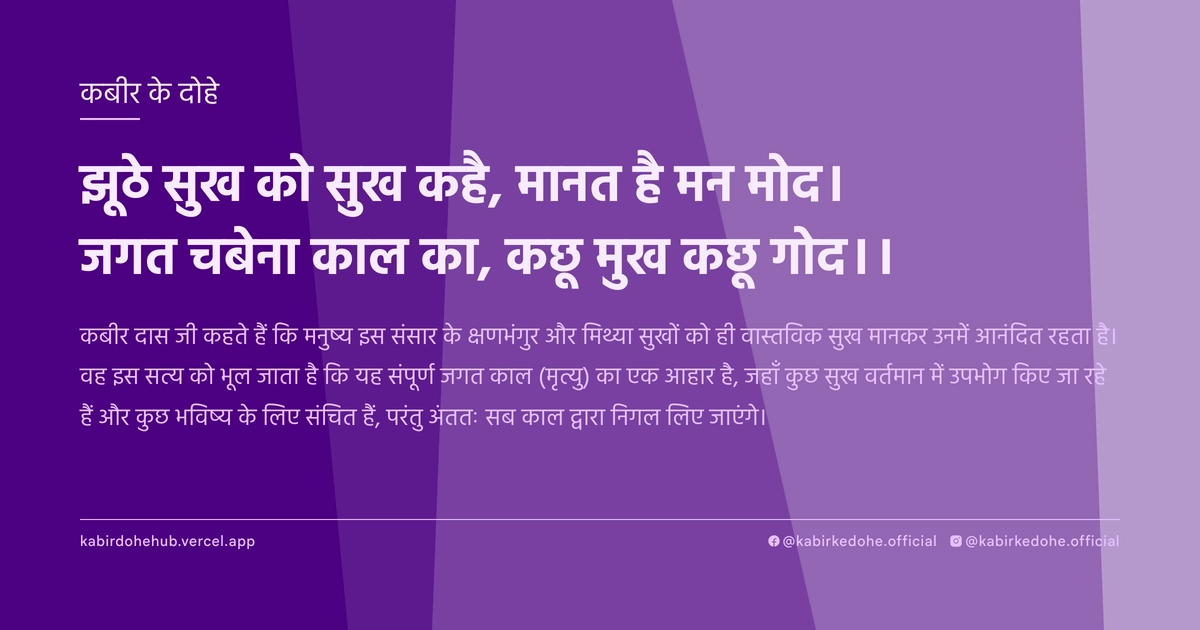
झूठे सुख को सुख कहै, मानत है मन मोद।
जगत चबेना काल का, कछू मुख कछू गोद।।
Jhoothe sukh ko sukh kahe, maanat hai man mod. Jagat chabena kaal ka, kachhu mukh kachhu god.
इस पृष्ठ पर इस कबीर दोहे का अर्थ (meaning), हिंदी व्याख्या और अंग्रेज़ी अनुवाद, दार्शनिक विश्लेषण और व्यावहारिक जीवन सीख दी गई है। यह दोहा अनित्य (Impermanence) विषय से जुड़ा है — Kabir doha meaning and explanation in Hindi and English.
अर्थ (Meaning):
कबीर दास जी कहते हैं कि मनुष्य इस संसार के क्षणभंगुर और मिथ्या सुखों को ही वास्तविक सुख मानकर उनमें आनंदित रहता है। वह इस सत्य को भूल जाता है कि यह संपूर्ण जगत काल (मृत्यु) का एक आहार है, जहाँ कुछ सुख वर्तमान में उपभोग किए जा रहे हैं और कुछ भविष्य के लिए संचित हैं, परंतु अंततः सब काल द्वारा निगल लिए जाएंगे।
Kabir asserts that humans mistake fleeting, illusory pleasures for true happiness, allowing the mind to rejoice in deception. He warns that the entire world is merely a morsel for 'Kaal' (Time/Death); some of these pleasures are already being consumed, while others are stored for later, yet ultimately, everything is destined to be devoured by the inevitable passage of time.
व्याख्या (Interpretation):
इस दोहे का शाब्दिक अर्थ है कि हम जिसे सुख समझते हैं, वह वास्तव में एक भ्रम है। यहाँ 'चबेना' (नाश्ता/भोजन) का रूपक अत्यंत गहरा है, जो दर्शाता है कि संसार और मनुष्य का संबंध वैसा ही है जैसा भोजन और खाने वाले का होता है। यह निर्गुण भक्ति का सार है, जहाँ बाहरी जगत को 'माया' कहा गया है जो आत्मा को सत्य से दूर रखती है। अद्वैत वेदांत के अनुसार, जब तक मनुष्य स्वयं को शरीर और अहंकार से जोड़कर देखता है, वह इस काल-चक्र में फँसा रहता है। यह विरोधाभास है कि हम उसी दुनिया को संजोने की कोशिश करते हैं जो हमें नष्ट करने के लिए बनी है। अंततः, यह दोहा आत्मा को इस नश्वरता से जागृत कर उस अविनाशी ब्रह्म की ओर मुड़ने का आह्वान करता है।
Literally, the verse suggests that what we perceive as happiness is a mirage. The metaphor of 'Chabena' (a snack or meal) is profoundly poignant, illustrating that the relationship between the world and Time is that of a predator and its prey. This aligns with Nirgun Bhakti, where the external world is viewed as 'Maya' (illusion) that veils the soul from the Absolute Truth. According to Advaita Vedanta, as long as the individual identifies with the ego and the physical body, they remain trapped in this temporal cycle. The central paradox lies in our desperate attempt to preserve and accumulate within a realm designed for dissolution. Ultimately, the verse serves as a clarion call for the soul to awaken from this transience and pivot toward the eternal, indestructible Brahman.
दार्शनिक विश्लेषण (Philosophical Analysis):
कबीर का यह दृष्टिकोण उनके समय के कर्मकांडीय आडंबरों और भौतिक संचय की प्रवृत्ति पर एक कड़ा प्रहार है। उन्होंने देखा कि लोग तीर्थयात्राओं और बाहरी दिखावे में सुख खोज रहे थे, जबकि वास्तविक शांति भीतर थी। यह दर्शन सूफीवाद के 'फना' (अहंकार का विनाश) और वेदांत के 'माया' सिद्धांत का संगम है। कबीर यहाँ समय (काल) को एक शिकारी के रूप में चित्रित करते हैं, जो केवल भौतिकता का उपहास करता है।
ऐतिहासिक रूप से, कबीर ने जाति और धर्म की सीमाओं को तोड़कर एक ऐसी सार्वभौमिक सत्यता की बात की जो किसी मंदिर या मस्जिद की मोहताज नहीं थी। उनका विरोध केवल धर्म से नहीं, बल्कि उस मानसिक दासता से था जो मनुष्य को 'क्षणभंगुर' को 'शाश्वत' मानने पर मजबूर करती है। वे समझाते हैं कि जब तक 'मैं' और 'मेरा' का भाव है, तब तक मनुष्य काल के चबेने का हिस्सा बना रहेगा।
मनोवैज्ञानिक स्तर पर, यह दोहा संज्ञानात्मक विसंगति (Cognitive Dissonance) को संबोधित करता है। हम जानते हैं कि मृत्यु निश्चित है, फिर भी हम ऐसे व्यवहार करते हैं जैसे हम अमर हों। यह 'अहंकार' का वह पर्दा है जो हमें सत्य देखने नहीं देता। कबीर इस पर्दे को फाड़ने के लिए 'वैराग्य' का मार्ग सुझाते हैं, जो पलायन नहीं बल्कि जागरूकता है।
अद्वैत दर्शन के संदर्भ में, यह दोहा द्वैत (दो होने का भाव) को समाप्त करने की बात करता है। जब साधक यह समझ जाता है कि वह शरीर नहीं बल्कि शुद्ध चेतना है, तब काल का भय समाप्त हो जाता है। काल केवल शरीर और मन को निगलता है, आत्मा को नहीं।
अंततः, कबीर का संदेश यह है कि वास्तविक सुख वह नहीं जो बाहरी परिस्थितियों पर निर्भर हो, बल्कि वह है जो आत्म-साक्षात्कार से प्राप्त हो। भौतिक सुखों का संचय करना वैसा ही है जैसे रेत को मुट्ठी में पकड़ना; जितना जोर लगाएंगे, वह उतनी ही तेजी से फिसलेगा।
Kabir's perspective is a sharp critique of the ritualistic pomposity and the tendency toward material accumulation prevalent in his era. He observed people seeking solace in pilgrimages and outward displays of piety, while true peace remained internal. This philosophy represents a confluence of the Sufi concept of 'Fana' (annihilation of the ego) and the Vedantic doctrine of 'Maya'. Kabir personifies Time (Kaal) as a predator, mocking the futility of material permanence.
Historically, Kabir transcended the boundaries of caste and creed to speak of a universal truth that required no temple or mosque. His opposition was not merely to religion, but to the mental servitude that compels humans to mistake the 'transient' for the 'eternal'. He explains that as long as the notions of 'I' and 'Mine' persist, the human remains merely a morsel in the mouth of Time.
On a psychological level, this verse addresses cognitive dissonance. We are consciously aware of the certainty of death, yet we behave as though we are immortal. This is the veil of the 'Ego' that obscures reality. Kabir suggests the path of 'Vairagya' (dispassion) to tear this veil—not as an act of escapism, but as an act of profound awareness.
In the context of Advaita Vedanta, the verse advocates for the dissolution of duality. When the seeker realizes they are not the body but pure consciousness, the fear of Time vanishes. Time devours only the physical and mental constructs, never the Atman.
Ultimately, Kabir's message is that true happiness is not contingent upon external circumstances but is derived from self-realization. Accumulating material pleasures is akin to clutching sand in one's fist; the tighter the grip, the faster it slips away.
मूल संदेश (Core Message):
- बाहरी चमक अक्सर आंतरिक रिक्तता का मुखौटा होती है।
- संसार का संचय काल के मुख में एक निवाला मात्र है।
- अहंकार का त्याग ही वास्तविक स्वतंत्रता का एकमात्र द्वार है।
- क्षणभंगुरता को स्वीकार करना ही शाश्वत शांति की शुरुआत है।
- सच्चा सुख वस्तु में नहीं, बल्कि वस्तु के प्रति अनासक्ति में है।
- आत्मा का मिलन केवल तब होता है जब माया का पर्दा गिरता है।
- External luster is often a mask for internal emptiness.
- Material accumulation is but a morsel in the mouth of Time.
- The dissolution of ego is the only gateway to true liberation.
- Accepting transience is the beginning of eternal peace.
- True bliss lies not in the object, but in detachment from it.
- Union with the Divine occurs only when the veil of Maya falls.
व्यावहारिक उदाहरण (Practical Example):
एक समय की बात है, वाराणसी के घाटों पर माधव नाम का एक वृद्ध बुनकर रहता था। माधव अपने जीवन के साठ साल केवल बेहतरीन रेशमी वस्त्र बनाने और उन्हें ऊँचे दामों पर बेचने में लगा दिया। उसने अपना पूरा जीवन इस विश्वास में बिताया कि जितना अधिक धन और विलासिता उसके पास होगी, वह उतना ही सुखी और सुरक्षित महसूस करेगा। उसने अपने लिए एक बड़ा घर बनाया और शहर के सबसे अमीर व्यापारियों के साथ उठना-बैठना शुरू किया।
माधव को लगता था कि उसने जीवन की जंग जीत ली है। वह अपने रेशमी कपड़ों की चमक में इतना खो गया था कि उसने अपने आस-पास के दुखों को देखना बंद कर दिया। वह अक्सर कहता, "देखो, मेरी सफलता ही मेरा असली सुख है।"
एक दिन, माधव की मुलाकात एक फकीर से हुई जो घाट की सीढ़ियों पर बैठा था। फकीर के पास केवल एक फटा हुआ कंबल था, लेकिन उसके चेहरे पर एक ऐसी शांति थी जिसे माधव ने अपने करोड़ों के साम्राज्य में कभी नहीं पाया था। माधव ने अहंकारवश पूछा, "हे फकीर, तुम्हारे पास तो कुछ भी नहीं है, फिर तुम इतने प्रसन्न कैसे हो? क्या तुम्हें भविष्य की चिंता नहीं?"
फकीर ने मुस्कुराकर माधव के हाथ में मौजूद एक कीमती रेशमी कपड़े की ओर इशारा किया और कहा, "माधव, तुम इस कपड़े की चमक को सुख कह रहे हो, लेकिन क्या तुमने सोचा है कि यह कपड़ा भी एक दिन फट जाएगा, और तुम भी? तुम जिसे अपना साम्राज्य कह रहे हो, वह वास्तव में काल का एक छोटा सा नाश्ता है। तुम बस उस भोजन को सजाने में लगे हो जिसे अंततः मृत्यु ही खाएगी।"
यह बात माधव के दिल में एक तीर की तरह लगी। उसने महसूस किया कि उसने अपना पूरा जीवन केवल 'दिखावे के सुख' को संजोने में बिता दिया। उसने उन रिश्तों को नजरअंदाज किया जिन्हें वह समय नहीं दे पाया, और अपनी आत्मा की पुकार को अनसुना किया।
उस रात माधव सो नहीं सका। उसे एहसास हुआ कि उसकी 'गोद' में जो धन था, वह वास्तव में उसके और ईश्वर के बीच की दीवार बन गया था। उसने महसूस किया कि वह जिस सुख को पकड़कर बैठा था, वह वास्तव में एक भ्रम था जो उसे और अधिक लालची और अकेला बना रहा था।
अगले ही दिन से माधव का व्यवहार बदलने लगा। उसने अपनी संपत्ति का एक बड़ा हिस्सा उन लोगों की मदद के लिए समर्पित कर दिया जिनके पास बुनियादी सुविधाएं भी नहीं थीं। उसने रेशम बुनना नहीं छोड़ा, लेकिन अब वह इसे व्यापार के लिए नहीं, बल्कि सेवा और कला के रूप में करने लगा।
अब माधव की खुशी इस बात में नहीं थी कि वह कितना कमाता है, बल्कि इस बात में थी कि वह कितना त्याग कर पाता है। उसने पाया कि जब उसने 'पकड़ने' की इच्छा छोड़ दी, तो उसे वह वास्तविक शांति मिली जिसे वह जीवन भर खोज रहा था।
माधव अब घाट पर उसी फकीर के साथ बैठता था। अब उसके पास रेशमी वस्त्र तो थे, लेकिन उसका मन अब उन वस्त्रों का गुलाम नहीं था। उसने समझ लिया था कि काल सबको निगलता है, इसलिए केवल प्रेम और करुणा ही ऐसी चीजें हैं जो काल के पार जा सकती हैं।
उसकी यह रूपांतरण यात्रा इस बात का प्रमाण थी कि जब मनुष्य 'झूठे सुख' की पहचान कर लेता है, तभी वह 'सच्चे आनंद' की ओर पहला कदम बढ़ाता है।
Once, on the ghats of Varanasi, lived an elderly weaver named Madhav. For sixty years, Madhav dedicated his life to crafting the finest silk garments and selling them at exorbitant prices. He spent his entire existence believing that the more wealth and luxury he accumulated, the happier and more secure he would become. He built a sprawling mansion and began associating with the city's wealthiest merchants.
Madhav believed he had won the battle of life. He became so absorbed in the luster of his silks that he ceased to notice the suffering around him. He would often boast, "Look, my success is my true happiness."
One day, Madhav encountered a wandering ascetic sitting on the steps of the ghat. The ascetic possessed nothing but a tattered blanket, yet his face radiated a peace that Madhav had never found in his multimillion-rupee empire. Driven by ego, Madhav asked, "O ascetic, you have nothing, yet how are you so content? Do you not worry about the future?"
The ascetic smiled, pointed to the expensive silk cloth in Madhav's hand, and said, "Madhav, you call the shimmer of this cloth happiness, but have you considered that this cloth will one day fray, and so will you? What you call your empire is merely a small snack for Time. You are simply decorating the meal that Death will eventually devour."
These words struck Madhav like an arrow. He realized he had spent his entire life gathering 'illusory pleasures'. He had ignored the relationships he failed to nurture and silenced the cries of his own soul.
Madhav could not sleep that night. He realized that the wealth in his 'lap' had actually become a wall between him and the Divine. He understood that the happiness he clung to was a deception that only made him greedier and lonelier.
From the very next day, Madhav's behavior began to shift. He dedicated a significant portion of his wealth to those who lacked basic necessities. He did not stop weaving silk, but he ceased doing it for profit, treating it instead as an act of service and art.
Madhav's joy no longer resided in how much he earned, but in how much he could let go. He discovered that when he ceased the desire to 'grasp', he found the authentic peace he had sought for a lifetime.
Madhav now sat on the ghats with the ascetic. Though he still possessed silk garments, his mind was no longer a slave to them. He understood that while Time devours everything, only love and compassion transcend the temporal realm.
His journey of transformation served as proof that only when a human recognizes the 'false pleasure' can they take the first step toward 'true bliss'.
अभ्यास मार्गदर्शन (Practice Guidance):
- दैनिक चिंतन: प्रतिदिन 15 मिनट मौन बैठें और विचार करें कि आपकी कौन सी इच्छाएं केवल सामाजिक दिखावे (माया) के कारण हैं और कौन सी वास्तव में आपकी आत्मा की आवश्यकता हैं।
- आत्म-पूछताछ जर्नल: एक डायरी लिखें जिसमें आप उन तीन चीजों की सूची बनाएं जिन्हें आप 'सफलता' मानते हैं, और फिर विश्लेषण करें कि 100 साल बाद उनका क्या मूल्य होगा।
- व्यवहारिक परिवर्तन: सचेत रूप से किसी ऐसी वस्तु का त्याग करें जिससे आप बहुत अधिक भावनात्मक रूप से जुड़े हैं, ताकि आप यह अनुभव कर सकें कि आपकी खुशी बाहरी वस्तुओं पर निर्भर नहीं है।
- निदान चेकलिस्ट: यदि आप किसी छोटी सी भौतिक हानि पर अत्यधिक क्रोधित होते हैं या दूसरों की संपत्ति देखकर ईर्ष्या करते हैं, तो यह संकेत है कि आप अभी भी 'झूठे सुख' के प्रभाव में हैं।
- Daily Contemplation: Spend 15 minutes in silence daily, reflecting on which of your desires are driven by social validation (Maya) and which are genuine needs of the soul.
- Self-Inquiry Journaling: Maintain a diary listing three things you define as 'success', then analyze their perceived value a hundred years from now.
- Behavioral Shift: Consciously detach from a material object you are emotionally clinging to, experiencing firsthand that your happiness is not contingent upon external possessions.
- Diagnostic Checklist: If you experience disproportionate anger over a minor material loss or feel envy toward another's possessions, recognize this as a sign that you are still under the spell of 'illusory pleasure'.
चिंतन प्रश्न (Reflection Questions):
- यदि आज आपकी सारी सामाजिक पहचान और संपत्ति छीन ली जाए, तो आपके पास ऐसा क्या बचेगा जिसे आप 'मैं' कह सकें?
- आप अपनी डिजिटल छवि (Social Media Ego) को संवारने में कितना समय व्यतीत करते हैं, और क्या वह छवि आपकी वास्तविक आंतरिक स्थिति का प्रतिबिंब है?
- क्या आप उन सुखों के पीछे भाग रहे हैं जिन्हें समाज ने 'सुख' के रूप में परिभाषित किया है, या आपने स्वयं अपनी शांति की परिभाषा खोजी है?
- आपके जीवन का वह कौन सा 'रेशमी वस्त्र' है जिसे आप पकड़े हुए हैं, जबकि वह आपको आध्यात्मिक रूप से भारी बना रहा है?
- जब आप मृत्यु के विचार से डरते हैं, तो वास्तव में आप किस चीज को खोने से डरते हैं—अपने अस्तित्व को या अपनी उपलब्धियों को?
- क्या आपकी करुणा वास्तविक है, या वह केवल आपके स्वयं के 'अच्छे इंसान' होने के अहंकार को संतुष्ट करने का एक साधन है?
- If all your social identities and assets were stripped away today, what would remain that you could truly call 'I'?
- How much time do you spend polishing your digital persona, and does that image reflect your actual internal state?
- Are you chasing pleasures defined by society, or have you discovered your own definition of peace?
- What is the 'silk garment' in your life that you are clinging to, even though it is weighing you down spiritually?
- When you fear death, what are you actually afraid of losing—your existence or your achievements?
- Is your compassion genuine, or is it merely a tool to satisfy the ego's need to be seen as a 'good person'?