
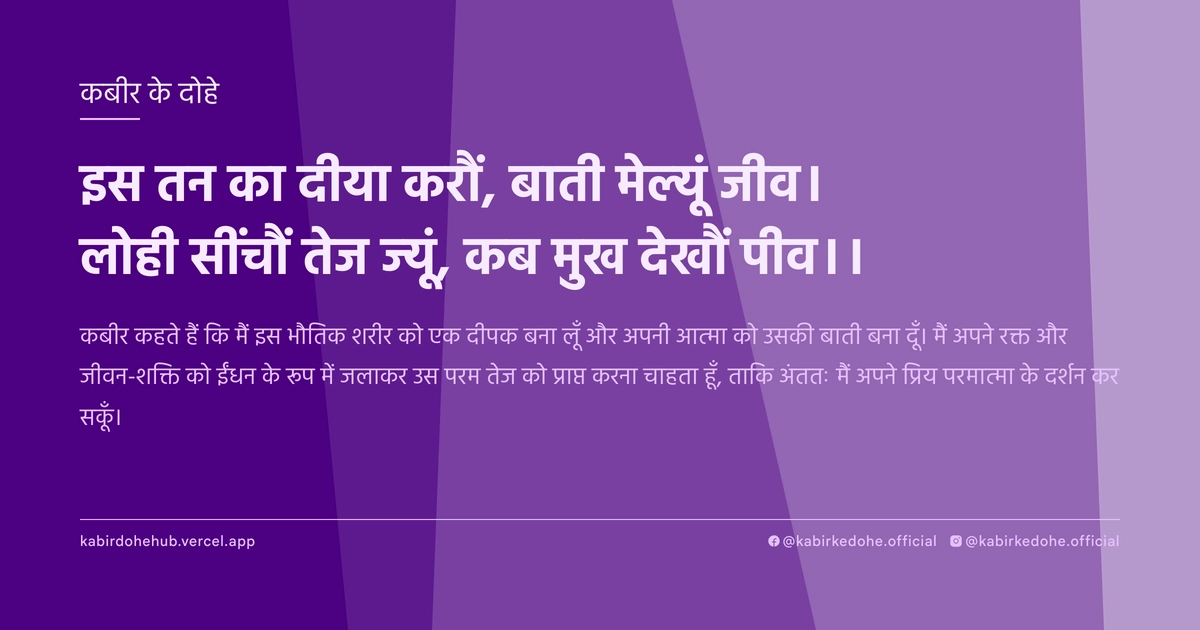
इस तन का दीया करौं, बाती मेल्यूं जीव।
लोही सींचौं तेज ज्यूं, कब मुख देखौं पीव।।
Is tan ka diya karaun, baati melyun jeev. Lohi seenchaun tej jyun, kab mukh dekhaun peev.
इस पृष्ठ पर इस कबीर दोहे का अर्थ (meaning), हिंदी व्याख्या और अंग्रेज़ी अनुवाद, दार्शनिक विश्लेषण और व्यावहारिक जीवन सीख दी गई है। यह दोहा प्रपत्ति (Surrender) विषय से जुड़ा है — Kabir doha meaning and explanation in Hindi and English.
अर्थ (Meaning):
कबीर कहते हैं कि मैं इस भौतिक शरीर को एक दीपक बना लूँ और अपनी आत्मा को उसकी बाती बना दूँ। मैं अपने रक्त और जीवन-शक्ति को ईंधन के रूप में जलाकर उस परम तेज को प्राप्त करना चाहता हूँ, ताकि अंततः मैं अपने प्रिय परमात्मा के दर्शन कर सकूँ।
Kabir expresses a profound longing to transform his physical body into a lamp and his soul into the wick. He desires to fuel this lamp with the essence of his own life-blood and vitality, burning away all impurities to attain a divine radiance that finally allows him to behold the face of his Beloved, the Eternal Truth.
व्याख्या (Interpretation):
यहाँ शरीर को एक दीपक के रूप में देखा गया है, जहाँ 'बाती' जीव या आत्मा का प्रतीक है। literal अर्थ है शरीर का त्याग, लेकिन आध्यात्मिक अर्थ है अहंकार का पूर्ण विसर्जन। यह Nirgun Bhakti का चरम है जहाँ साधक अपनी व्यक्तिगत पहचान को मिटाकर ब्रह्म में विलीन होना चाहता है। 'लोही सींचौं' का अर्थ रक्त नहीं, बल्कि गहन तपस्या और आंतरिक संघर्ष है। यह Advaita Vedanta के उस सिद्धांत को दर्शाता है जहाँ माया का पर्दा केवल तब हटता है जब जीव अपनी सीमित पहचान को जला देता है। यह एक विरोधाभास है: स्वयं को मिटाकर ही स्वयं को पाना संभव है।
The body is metaphorically cast as a lamp, with the 'wick' representing the individual soul (Jiva). While the literal imagery suggests self-immolation, the spiritual essence is the total dissolution of the ego. This represents the pinnacle of Nirgun Bhakti, where the seeker yearns to erase the separate identity to merge with the Formless Absolute. 'Watering with blood' symbolizes the intense austerity and internal struggle required to transcend the physical plane. It aligns with Advaita Vedanta, suggesting that the veil of Maya is lifted only when the illusion of the 'I' is incinerated. It presents the central paradox: only through the annihilation of the self can the True Self be realized.
दार्शनिक विश्लेषण (Philosophical Analysis):
कबीर का यह दोहा मध्यकालीन भारत के उस दौर का है जब धर्म बाहरी कर्मकांडों और मूर्ति पूजा में उलझा था। कबीर ने इन सबको नकारते हुए 'सहज' मार्ग और आंतरिक अनुभव पर जोर दिया। यहाँ शरीर को दीपक बनाना वास्तव में 'कुंभ' (घड़े) के भीतर के जल को पहचानने जैसा है।
यह विचार सूफी मत के 'फना' (Fana) के सिद्धांत से गहराई से जुड़ा है, जहाँ प्रेमी अपने अस्तित्व को मिटाकर केवल प्रिय (ईश्वर) को शेष रखता है। कबीर यहाँ यह समझा रहे हैं कि जब तक 'मैं' मौजूद है, तब तक 'वह' नहीं मिल सकता।
अद्वैत वेदांत के अनुसार, आत्मा और ब्रह्म एक ही हैं, लेकिन अज्ञानता के कारण हम अलग महसूस करते हैं। यह 'दीपक' बनना उस अज्ञानता की अग्नि में जलने की प्रक्रिया है।
कबीर जाति और वर्ग के भेदों को नकारते हैं क्योंकि अग्नि सबको समान रूप से जलाती है। उनके लिए मोक्ष किसी मंदिर या मस्जिद में नहीं, बल्कि शरीर रूपी प्रयोगशाला में स्वयं को तपाने से मिलता है।
मनोवैज्ञानिक स्तर पर, यह दोहा पहचान के संकट और उसके समाधान की बात करता है। यह सिखाता है कि आध्यात्मिक प्रगति के लिए पुराने व्यक्तित्व का मरना अनिवार्य है ताकि एक नया, दैवीय व्यक्तित्व जन्म ले सके।
This couplet emerges from a medieval Indian era dominated by rigid ritualism and idol worship. Kabir rejects these external forms, emphasizing 'Sahaj' (spontaneous) realization and internal experience. Transforming the body into a lamp is akin to recognizing the water within the pot—the essence within the form.
This concept resonates deeply with the Sufi doctrine of 'Fana' (annihilation), where the lover erases their existence so that only the Beloved remains. Kabir posits that as long as the 'I' persists, the 'Thou' remains hidden.
In the context of Advaita Vedanta, the Atman and Brahman are identical, yet perceived as separate due to Avidya (ignorance). The act of becoming a 'lamp' is the process of burning away this ignorance in the fire of spiritual discipline.
Kabir’s rejection of caste and creed is evident here; fire consumes all distinctions equally. For him, liberation is not found in temples or mosques but in the laboratory of the human body through rigorous self-transformation.
Psychologically, this verse addresses the crisis of identity. It suggests that spiritual evolution requires the death of the ego-driven persona to allow the emergence of a divine consciousness, correcting the misconception that spirituality is merely about adding new beliefs.
मूल संदेश (Core Message):
- अहंकार ही वह अंतिम बाधा है जो ईश्वर और जीव के बीच खड़ी है।
- स्वयं का विसर्जन ही वास्तविक आत्म-प्राप्ति का एकमात्र मार्ग है।
- तपस्या का अर्थ शरीर को कष्ट देना नहीं, बल्कि वासनाओं को जलाना है।
- जब 'मैं' मिटता है, तब 'परमात्मा' का प्रकाश स्वतः प्रकट होता है।
- प्रेम की पराकाष्ठा स्वयं को पूरी तरह समर्पित कर देने में है।
- The ego is the final barrier standing between the individual and the Divine.
- The dissolution of the self is the only path to true self-realization.
- Austerity is not about physical pain, but about burning away worldly desires.
- When the 'I' vanishes, the light of the Absolute manifests spontaneously.
- The pinnacle of love is the total surrender of one's separate identity.
व्यावहारिक उदाहरण (Practical Example):
वाराणसी के घाटों पर रहने वाले एक वृद्ध बुनकर थे, जिनका नाम माधव था। माधव ने अपना पूरा जीवन रेशम के धागों को बुनने में बिताया, लेकिन उनका मन हमेशा इस बात से दुखी रहता था कि उनके परिवार के लोग उन्हें केवल एक 'मजदूर' समझते थे।
वह अपनी कला में निपुण थे, लेकिन उनके भीतर एक गहरा अहंकार था कि वह शहर के सबसे बेहतरीन बुनकर हैं। यह अहंकार उन्हें उनके परिवार और समाज से अलग कर रहा था।
एक दिन उन्होंने कबीर के इस दोहे को सुना। उन्हें समझ आया कि उनका 'बुनकर' होने का गर्व ही वह पर्दा है जो उन्हें वास्तविक शांति से दूर रख रहा है।
उन्होंने तय किया कि वह अब केवल कपड़े नहीं बुनेंगे, बल्कि अपने अहंकार को जलाएंगे। उन्होंने अपनी सारी प्रशंसा को अनदेखा करना शुरू किया।
जब उनके बेटे ने उनसे उनके काम की तारीफ की, तो माधव ने मुस्कुराकर कहा, "यह मैं नहीं, वह परमात्मा है जो मेरे हाथों से बुन रहा है।"
धीरे-धीरे, उनकी पहचान एक 'महान बुनकर' से बदलकर एक 'विनम्र सेवक' की हो गई। उन्होंने अपनी कमाई का एक बड़ा हिस्सा अनाथ बच्चों की शिक्षा में लगाना शुरू किया।
उनके व्यवहार में एक ऐसी चमक आई जिसे लोगों ने 'तेज' कहा। अब वह केवल धागों को नहीं, बल्कि लोगों के दिलों को जोड़ रहे थे।
एक शाम, जब वह गंगा किनारे बैठे थे, उन्हें महसूस हुआ कि अब उन्हें किसी बाहरी पहचान की जरूरत नहीं है।
उनका जीवन अब एक दीपक की तरह था, जो स्वयं जलकर दूसरों को रोशनी दे रहा था।
अंततः, माधव ने उस शांति को पा लिया जिसे वह जीवन भर रेशम के महंगे कपड़ों में ढूंढ रहे थे।
In the ghats of Varanasi lived an elderly weaver named Madhav. Madhav had spent his entire life weaving silk threads, but he was perpetually distressed that his family viewed him merely as a 'laborer'.
He was a master of his craft, but within him resided a deep ego—the belief that he was the finest weaver in the city. This pride created a wall between him and his loved ones.
One day, he encountered this specific Doha of Kabir. He realized that his pride in being a 'master weaver' was the very veil preventing him from experiencing true peace.
He decided that he would no longer just weave fabric, but would instead burn his ego. He began to consciously ignore all praise directed toward his skill.
When his son praised his intricate work, Madhav smiled and replied, "It is not I, but the Divine who weaves through my hands."
Gradually, his identity shifted from being a 'great weaver' to a 'humble servant'. He began dedicating a significant portion of his earnings to the education of orphaned children.
A radiance began to emanate from his behavior, which people described as 'Tej' (divine glow). He was no longer just joining threads, but joining hearts.
One evening, while sitting by the Ganges, he felt that he no longer required any external label or identity to feel complete.
His life had become like the lamp in the poem, burning its own selfishness to provide light to others.
Ultimately, Madhav found the serenity that he had spent a lifetime searching for within the expensive silk fabrics he produced.
अभ्यास मार्गदर्शन (Practice Guidance):
- प्रतिदिन 20 मिनट मौन ध्यान करें, जहाँ आप कल्पना करें कि आपका अहंकार एक मोमबत्ती की तरह धीरे-धीरे पिघल रहा है।
- एक 'अहंकार डायरी' लिखें: दिन भर में जब भी आपको अपनी श्रेष्ठता का अहसास हो, उसे लिखें और फिर विश्लेषण करें कि वह भावना कहाँ से आई।
- सेवा का अभ्यास: सप्ताह में एक बार ऐसा कार्य करें जिसमें आपकी पहचान गुप्त रहे और आप बिना किसी श्रेय के दूसरों की मदद करें।
- निदान चेकलिस्ट: क्या मैं प्रशंसा मिलने पर उत्साहित होता हूँ? क्या मैं आलोचना पर क्रोधित होता हूँ? यदि हाँ, तो 'दीपक' अभी पूरी तरह जला नहीं है।
- Practice 20 minutes of silent meditation daily, visualizing your ego melting away like a wax candle.
- Maintain an 'Ego Journal': Record moments during the day when you felt superior to others, then analyze the root of that feeling.
- Practice Anonymous Service: Once a week, perform an act of kindness where your identity remains hidden and you seek no credit.
- Diagnostic Checklist: Do I feel an emotional high from praise? Do I feel anger at criticism? If yes, the 'lamp' of the ego has not yet been fully incinerated.
चिंतन प्रश्न (Reflection Questions):
- यदि आपकी सभी उपलब्धियाँ और पद छीन लिए जाएँ, तो आपके पास क्या बचेगा?
- आपकी वह कौन सी 'पवित्र' पहचान है जिसे आप छोड़ने से सबसे ज्यादा डरते हैं?
- क्या आपकी भक्ति वास्तव में समर्पण है, या यह ईश्वर को प्रभावित करने का एक और तरीका है?
- आपकी डिजिटल पहचान (सोशल मीडिया) आपके वास्तविक आंतरिक शून्य को कितना ढकती है?
- क्या आप वास्तव में सत्य को जानना चाहते हैं, या आप केवल सत्य के बारे में बात करना पसंद करते हैं?
- If all your achievements and titles were stripped away, what would actually remain of you?
- What is that 'sacred' identity you are most terrified of letting go of?
- Is your devotion truly a surrender, or is it just another way to impress the Divine?
- To what extent does your digital persona mask the actual void within your internal self?
- Do you truly desire to know the Truth, or do you simply enjoy talking about the Truth?