
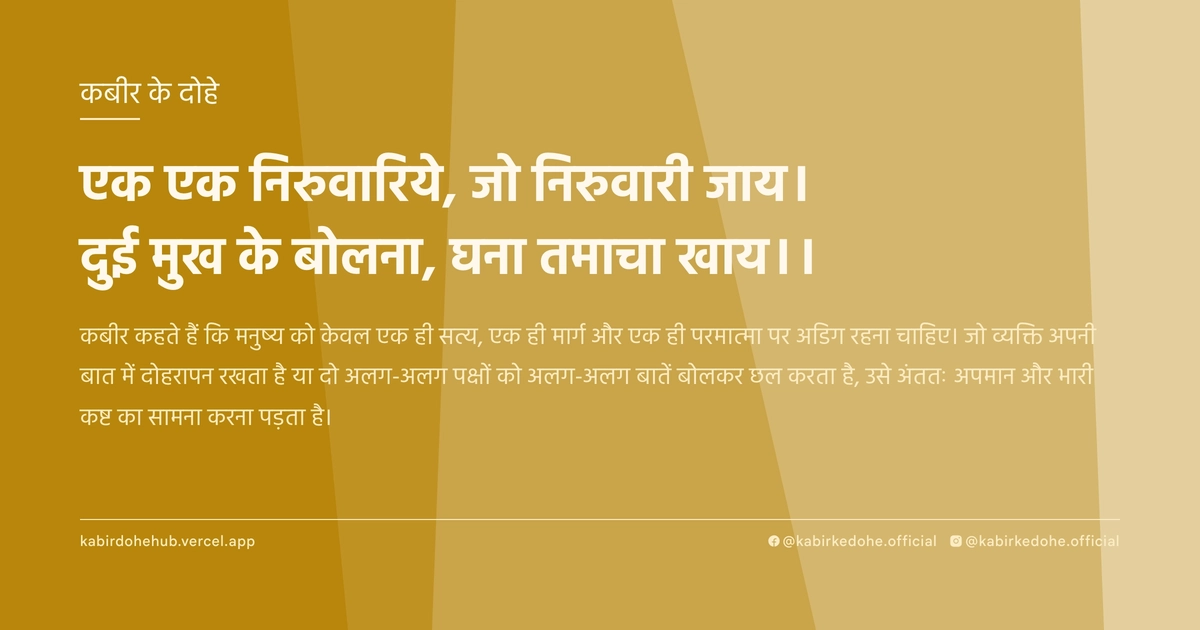
एक एक निरुवारिये, जो निरुवारी जाय।
दुई मुख के बोलना, घना तमाचा खाय।।
Ek ek niruvariye, jo niruvari jaaye. Dui mukh ke bolna, ghana tamacha khaaye.
इस पृष्ठ पर इस कबीर दोहे का अर्थ (meaning), हिंदी व्याख्या और अंग्रेज़ी अनुवाद, दार्शनिक विश्लेषण और व्यावहारिक जीवन सीख दी गई है। यह दोहा सत्य (Truth) विषय से जुड़ा है — Kabir doha meaning and explanation in Hindi and English.
अर्थ (Meaning):
कबीर कहते हैं कि मनुष्य को केवल एक ही सत्य, एक ही मार्ग और एक ही परमात्मा पर अडिग रहना चाहिए। जो व्यक्ति अपनी बात में दोहरापन रखता है या दो अलग-अलग पक्षों को अलग-अलग बातें बोलकर छल करता है, उसे अंततः अपमान और भारी कष्ट का सामना करना पड़ता है।
Kabir asserts that a person must remain steadfast in one truth, one path, and one singular Divine reality. Those who speak with a double tongue—practicing hypocrisy or playing two sides—will eventually encounter severe consequences, social disgrace, and spiritual failure.
व्याख्या (Interpretation):
शाब्दिक अर्थ में यह दोहा पाखंड और दोहराव की चेतावनी है। आध्यात्मिक स्तर पर, 'एक' का अर्थ है अद्वैत (Non-duality), जहाँ आत्मा और परमात्मा एक हैं। 'दुई मुख' माया के उस भ्रम को दर्शाता है जहाँ मनुष्य स्वयं को ईश्वर से अलग मानता है या धर्म और दुनिया के बीच द्वंद्व में जीता है। जब तक मन में द्वैत (Duality) रहता है, तब तक सत्य का अनुभव असंभव है। यह विरोधाभास है कि हम सत्य की खोज तो करते हैं, लेकिन हमारा व्यवहार झूठ और चालाकी से भरा होता है। यह मानसिक विखंडन ही वह 'तमाचा' है जो हमें जीवन के दुखों के रूप में मिलता है।
Literally, this couplet warns against hypocrisy. Spiritually, 'One' refers to Advaita (Non-duality), where the Atman and Brahman are identical. 'Two mouths' symbolize the illusion of Maya, where the human perceives a separation between the self and the Divine, or lives in conflict between spiritual aspiration and worldly deceit. As long as duality persists in the mind, the realization of Truth remains elusive. The central paradox is that while we seek the Absolute, our behavior is often fragmented by ego and manipulation. This psychological fragmentation is the 'slap'—the inevitable suffering resulting from a divided consciousness.
दार्शनिक विश्लेषण (Philosophical Analysis):
कबीर का यह दृष्टिकोण उनके निर्गुण भक्ति मार्ग का प्रतिबिंब है, जहाँ बाहरी आडंबरों और धार्मिक पाखंडों का कड़ा विरोध किया गया है। उनके समय में धर्म के नाम पर लोग दोहरे मापदंड अपनाते थे—एक तरफ वे ईश्वर की बात करते थे और दूसरी तरफ जाति और वर्ण के आधार पर भेदभाव करते थे। कबीर इसे 'दुई मुख' कहते हैं।
अद्वैत वेदांत के अनुसार, सत्य केवल एक है। जब कोई व्यक्ति स्वयं को अलग-अलग पहचानों (जैसे जाति, धर्म या सामाजिक स्थिति) में बाँट लेता है, तो वह सत्य से दूर हो जाता है। यह दोहरापन अहंकार (Ego) का परिणाम है, जो यह सोचता है कि वह चालाकी से दुनिया को जीत सकता है।
सूफी मत में इसे 'नफ्स' (lower self) की जीत कहा जाता है। जब तक मनुष्य अपनी इच्छाओं और सत्य के बीच विभाजित है, वह पूर्णता प्राप्त नहीं कर सकता। कबीर यहाँ मनोवैज्ञानिक रूपांतरण की बात कर रहे हैं, जहाँ व्यक्ति को अपने आंतरिक विरोधाभासों को समाप्त कर 'एक' होना होगा।
ritualism का विरोध करते हुए कबीर समझाते हैं कि मंदिर-मस्जिद जाना तब तक व्यर्थ है जब तक आपका मन और वचन एक न हो जाएँ। यदि आप बाहर से संत और भीतर से षड्यंत्रकारी हैं, तो यह आध्यात्मिक आत्महत्या है।
अंततः, यह दोहा हमें सिखाता है कि सत्य की राह पर चलने के लिए साहस चाहिए। वह साहस जो हमें दुनिया के सामने अपनी बात पर अडिग रहने और अपने भीतर की ईमानदारी को बनाए रखने की शक्ति देता है। बिना इस अखंडता के, कोई भी साधना सफल नहीं होती।
Kabir's perspective reflects the Nirgun Bhakti path, characterized by a fierce rejection of external rituals and religious hypocrisy. In his era, people often adopted double standards—preaching divinity while practicing caste-based discrimination. Kabir labels this fragmentation as 'two mouths.'
According to Advaita Vedanta, Truth is singular. When an individual divides themselves into multiple identities (caste, religion, or social status), they drift away from the Absolute. This duality is a product of the Ego, which believes it can navigate the world through manipulation and strategic deceit.
In Sufism, this is linked to the struggle with the 'Nafs' (the lower self). As long as a person is divided between their base desires and the Ultimate Truth, spiritual wholeness is impossible. Kabir advocates for a psychological transformation where the seeker annihilates internal contradictions to become 'One.'
By opposing ritualism, Kabir explains that visiting temples or mosques is futile if one's mind and speech are not aligned. To be a saint outwardly while remaining a conspirator inwardly is a form of spiritual suicide.
Ultimately, this doha teaches that the path of Truth requires immense courage. It is the courage to remain steadfast in one's convictions and maintain internal integrity. Without this wholeness, no spiritual practice can bear fruit.
मूल संदेश (Core Message):
- द्वैत मन की सबसे बड़ी बाधा है।
- सत्य केवल एक है, उसे विभाजित न करें।
- पाखंड का अंत हमेशा अपमानजनक होता है।
- आंतरिक अखंडता ही वास्तविक आध्यात्मिक शक्ति है।
- ईश्वर को खोजने के लिए पहले स्वयं के झूठ को त्यागें।
- एकनिष्ठता ही मोक्ष का एकमात्र द्वार है।
- Duality is the greatest obstacle of the mind.
- Truth is singular; do not fragment it.
- Hypocrisy inevitably ends in disgrace.
- Internal integrity is the only true spiritual power.
- To find the Divine, first abandon your own deceits.
- Singularity of purpose is the only gateway to liberation.
व्यावहारिक उदाहरण (Practical Example):
एक समय की बात है, बनारस के घाटों पर रहने वाला एक वृद्ध बुनकर था, जिसका नाम माधव था। माधव अपने काम में निपुण था, लेकिन वह स्वभाव से बहुत चतुर था।
वह अपने ग्राहकों से कहता था कि वह केवल शुद्ध रेशम का उपयोग करता है, लेकिन चुपके से वह उसमें सस्ते धागे मिला देता था।
वह समाज में एक बहुत ही धार्मिक व्यक्ति के रूप में जाना जाता था, जो हर सुबह गंगा स्नान करता और सबको ईमानदारी का उपदेश देता था।
गाँव के लोग उसकी बातों पर विश्वास करते थे और उसे एक महान आत्मा मानते थे, जबकि वह भीतर ही भीतर अपनी चालाकी पर मुस्कुराता था।
एक दिन, शहर का एक बड़ा व्यापारी उसके पास आया और उसने एक बहुत ही कीमती साड़ी का ऑर्डर दिया, जिसके लिए उसने भारी अग्रिम भुगतान किया।
माधव ने फिर वही दोहराव किया; उसने व्यापारी को विश्वास दिलाया कि वह सर्वोत्तम सामग्री का उपयोग कर रहा है, जबकि उसने घटिया धागों का प्रयोग किया।
जब वह साड़ी तैयार हुई और व्यापारी ने उसे बारीकी से जांचा, तो उसे धागों की मिलावट का पता चल गया। व्यापारी ने न केवल उसे सबके सामने अपमानित किया, बल्कि उसकी सारी जमापूंजी जब्त कर ली।
माधव की सामाजिक प्रतिष्ठा एक पल में मिट्टी में मिल गई। वह जिस 'धार्मिक' मुखौटे के पीछे छिपा था, वह फट गया और उसे समाज के कड़े 'तमाचे' का सामना करना पड़ा।
उस रात, जब वह अकेला बैठा था, उसे कबीर का यह दोहा याद आया। उसे समझ आया कि उसकी समस्या रेशम की नहीं, बल्कि उसके 'दोहरे मुख' की थी।
उसने तय किया कि वह अब कभी झूठ नहीं बोलेगा। उसने अपनी बची हुई मेहनत से फिर से शुरुआत की, इस बार ईमानदारी को अपना एकमात्र मार्ग बनाया और अंततः वास्तविक शांति प्राप्त की।
Once, in the ghats of Varanasi, lived an elderly weaver named Madhav. Madhav was skilled in his craft, but he possessed a cunning nature.
He would tell his customers that he used only the purest silk, but secretly, he blended in cheaper, inferior threads to increase his profit.
In society, he was known as a deeply religious man who bathed in the Ganges every morning and preached honesty to everyone he met.
The villagers trusted his words and viewed him as a great soul, while he secretly smirked at his own cleverness in deceiving them.
One day, a wealthy merchant from the city arrived and ordered a very expensive saree, paying a substantial advance for the work.
Madhav repeated his duality; he assured the merchant of the finest materials while continuing to use substandard threads in the loom.
When the saree was completed and the merchant inspected it closely, he discovered the adulteration of the threads immediately.
The merchant did not just reject the cloth; he publicly shamed Madhav in the marketplace and reclaimed the advance with heavy penalties.
Madhav's social reputation crumbled in an instant. The 'religious' mask he wore was torn away, and he felt the heavy 'slap' of social and financial ruin.
That night, sitting in silence, he recalled Kabir's words. He realized his failure wasn't about the silk, but about his 'two mouths'—his fragmented integrity.
He decided to never lie again. Starting over with his remaining strength, he made honesty his only path and finally found genuine inner peace.
अभ्यास मार्गदर्शन (Practice Guidance):
- प्रतिदिन 15 मिनट मौन साधना करें और विचार करें कि आपके जीवन में कहाँ 'दोहरापन' है (जैसे: जो आप सोचते हैं और जो आप कहते हैं)।
- एक 'सत्य-डायरी' लिखें: दिन भर में उन क्षणों को दर्ज करें जब आपने अपनी छवि बचाने के लिए झूठ बोला या चालाकी की।
- व्यवहार परिवर्तन: किसी भी ऐसी स्थिति से बचें जहाँ आपको दो अलग-अलग लोगों को अलग-अलग बातें बोलनी पड़ें, भले ही वह छोटा सा सफेद झूठ हो।
- निदान चेकलिस्ट: क्या मैं दूसरों के सामने कुछ और और अकेले में कुछ और हूँ? क्या मेरी कथनी और करनी में अंतर है? क्या मैं अपनी गलतियों को छिपाने के लिए नए झूठ गढ़ता हूँ?
- Practice 15 minutes of daily silence, contemplating where 'duality' exists in your life (e.g., the gap between your thoughts and your words).
- Maintain a 'Truth Journal': Record moments during the day when you lied or manipulated a situation to protect your public image.
- Behavioral Shift: Consciously avoid any situation that requires you to tell different versions of a story to different people, even 'white lies'.
- Diagnostic Checklist: Am I a different person in public than I am in private? Is there a gap between my speech and my actions? Do I create new lies to cover old ones?
चिंतन प्रश्न (Reflection Questions):
- मेरा 'डिजिटल व्यक्तित्व' मेरे वास्तविक व्यक्तित्व से कितना अलग है और क्यों?
- मैं किन लोगों के सामने अपनी छवि को बनाए रखने के लिए झूठ का सहारा लेता हूँ?
- क्या मेरा धर्म केवल एक सामाजिक प्रदर्शन है या यह मेरे निजी आचरण में झलकता है?
- जब मैं दूसरों की आलोचना करता हूँ, तो क्या मैं उन्हीं गलतियों को गुप्त रूप से नहीं करता?
- मेरे जीवन का वह कौन सा सच है जिसे स्वीकार करने में मुझे सबसे अधिक डर लगता है?
- क्या मैं वास्तव में सत्य चाहता हूँ, या मैं केवल सत्य जैसा दिखने का प्रयास कर रहा हूँ?
- How different is my 'digital persona' from my actual self, and why?
- To whom do I lie most frequently just to maintain a curated image?
- Is my spirituality merely a social performance, or does it reflect in my private conduct?
- When I criticize others, am I not secretly committing the same mistakes?
- What is the one truth about my life that I am most terrified to acknowledge?
- Do I truly desire the Truth, or am I merely striving to appear truthful?