
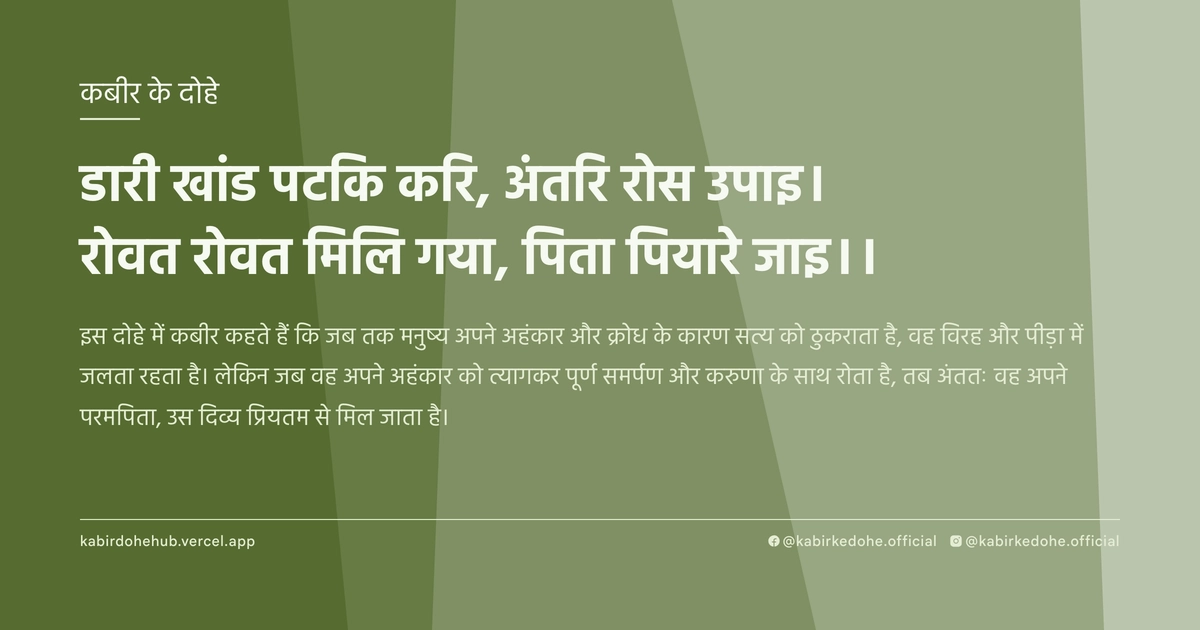
डारी खांड पटकि करि, अंतरि रोस उपाइ।
रोवत रोवत मिलि गया, पिता पियारे जाइ।।
Dari khand patki kari, antari ros upai. Rovat rovat mili gaya, pita piyare jai.
इस पृष्ठ पर इस कबीर दोहे का अर्थ (meaning), हिंदी व्याख्या और अंग्रेज़ी अनुवाद, दार्शनिक विश्लेषण और व्यावहारिक जीवन सीख दी गई है। यह दोहा क्रोध (Anger) विषय से जुड़ा है — Kabir doha meaning and explanation in Hindi and English.
अर्थ (Meaning):
इस दोहे में कबीर कहते हैं कि जब तक मनुष्य अपने अहंकार और क्रोध के कारण सत्य को ठुकराता है, वह विरह और पीड़ा में जलता रहता है। लेकिन जब वह अपने अहंकार को त्यागकर पूर्ण समर्पण और करुणा के साथ रोता है, तब अंततः वह अपने परमपिता, उस दिव्य प्रियतम से मिल जाता है।
Kabir explains that as long as a person rejects the truth due to ego and inner anger, they remain trapped in the agony of separation. However, when the ego dissolves into tears of genuine longing and surrender, the soul finally reunites with the Divine Father, the Beloved Source of all existence.
व्याख्या (Interpretation):
यहाँ 'खांड' (चीनी/मिठास) का अर्थ आध्यात्मिक आनंद है, जिसे मनुष्य अपने क्रोध और अहंकार के कारण 'पटकि' यानी ठुकरा देता है। यह विरोधाभास है कि हम उसी परमात्मा से लड़ रहे हैं जो हमारे भीतर है। जब यह क्रोध शांत होता है और विरह की अग्नि हृदय को पिघलाती है, तब 'रोवत रोवत' यानी गहन आत्म-साक्षात्कार और पश्चाताप के माध्यम से अद्वैत की स्थिति प्राप्त होती है। यह रोना शारीरिक नहीं, बल्कि आत्मा का विलाप है जो माया के पर्दे को हटा देता है। अंततः, आत्मा और परमात्मा का मिलन होता है, जहाँ द्वैत समाप्त हो जाता है और केवल प्रेम शेष रहता है। यह प्रक्रिया निर्गुण भक्ति का सार है, जहाँ बाहरी कर्मकांडों के बजाय आंतरिक भाव की प्रधानता होती है।
The 'khaand' (sugar/sweetness) symbolizes spiritual bliss, which the seeker rejects ('patki') due to ingrained anger and ego. It is a profound paradox: the human soul fights against the very Divinity that resides within. When this inner turmoil subsides and the fire of longing melts the heart, the state of non-duality is achieved through 'rovat rovat'—not mere physical weeping, but a deep existential yearning and repentance. This spiritual weeping strips away the veil of Maya, revealing the Atman-Brahman identity. Ultimately, the soul merges with the Divine Father, the Beloved, where duality vanishes and only pure love remains. This process encapsulates the essence of Nirgun Bhakti, prioritizing internal emotional alchemy over external ritualism.
दार्शनिक विश्लेषण (Philosophical Analysis):
कबीर का यह दोहा मध्यकालीन भारत के उस सामाजिक और धार्मिक संघर्ष को दर्शाता है जहाँ धर्म केवल बाहरी आडंबरों और कठोर नियमों में सिमट गया था। कबीर ने इस 'धार्मिक क्रोध' और कट्टरता को चुनौती दी, जो मनुष्य को उसके वास्तविक स्वभाव से दूर ले जाती है। यहाँ 'रोस' (क्रोध) केवल व्यक्तिगत गुस्सा नहीं है, बल्कि वह अज्ञान (Avidya) है जो हमें यह विश्वास दिलाता है कि हम ईश्वर से अलग हैं।
अद्वैत वेदांत के परिप्रेक्ष्य में, यह दोहा जीव और ब्रह्म के बीच के कृत्रिम अलगाव को मिटाने की बात करता है। जब तक 'मैं' (अहंकार) जीवित है, तब तक परमात्मा 'दूर' प्रतीत होता है। जैसे ही अहंकार पिघलता है, यह बोध होता है कि जिसे हम खोज रहे थे, वह हमेशा से हमारे भीतर ही था। यह 'मिलन' वास्तव में किसी बाहरी यात्रा का परिणाम नहीं, बल्कि आंतरिक पहचान का जागरण है।
सूफीवाद के साथ इसका गहरा संबंध 'इश्क-ए-हकीकी' (दिव्य प्रेम) से है। सूफी संतों की तरह कबीर भी विरह (separation) को मिलन की पहली सीढ़ी मानते हैं। जब तक प्रेमी अपनी विवशता और अपनी तुच्छता को स्वीकार नहीं करता, तब तक वह उस असीम प्रेम में विलीन नहीं हो सकता। यह 'रोना' वास्तव में अहंकार की मृत्यु है, जिसे सूफी 'फना' (annihilation) कहते हैं।
कबीर यहाँ कर्मकांडीय पवित्रता के बजाय भावनात्मक ईमानदारी पर जोर देते हैं। उनके लिए मंदिर या मस्जिद जाना व्यर्थ है यदि हृदय में क्रोध और द्वेष है। वास्तविक शुद्धि केवल उस करुणा से आती है जो मनुष्य को उसके अहंकार से मुक्त कर उसे विनम्र बनाती है। यह विनम्रता ही वह कुंजी है जो मोक्ष के द्वार खोलती है।
मनोवैज्ञानिक स्तर पर, यह दोहा दमित भावनाओं के विमोचन (catharsis) की बात करता है। जब मनुष्य अपने आंतरिक संघर्षों को स्वीकार करता है और अपनी कमजोरी को स्वीकार कर समर्पित होता है, तब वह मानसिक शांति और आध्यात्मिक पूर्णता प्राप्त करता है। यह क्रोध से करुणा की ओर एक संक्रमण है, जो व्यक्ति को उसके उच्चतम स्वरूप से जोड़ता है।
This couplet reflects the socio-religious turmoil of medieval India, where spirituality had been reduced to external rituals and rigid dogmas. Kabir challenges this 'religious anger' and bigotry, which alienates the human being from their true nature. The 'ros' (anger) mentioned here is not merely personal temper, but the primordial ignorance (Avidya) that creates the illusion of separation between the self and the Divine.
From the lens of Advaita Vedanta, the verse speaks of dissolving the artificial boundary between Jiva (individual soul) and Brahman (universal consciousness). As long as the 'I' (ego) persists, the Divine appears distant. Once the ego melts, the realization dawns that the sought-after Beloved was always within. This 'union' is not the result of a physical journey, but an awakening of internal identity.
There is a profound resonance with Sufism, specifically the concept of 'Ishq-e-Haqiqi' (Divine Love). Like the Sufi mystics, Kabir views longing (viraha) as the essential first step toward union. Until the lover acknowledges their helplessness and insignificance, they cannot merge into the Infinite. This 'weeping' is effectively the death of the ego, known in Sufism as 'Fana' (annihilation).
Kabir emphasizes emotional honesty over ritualistic purity. For him, visiting temples or mosques is futile if the heart is clouded by anger and hatred. True purification comes only through the compassion that liberates a person from their ego and renders them humble. This humility is the key that unlocks the gates of liberation.
Psychologically, the verse describes a process of catharsis. When a person accepts their inner conflicts and surrenders their resistance, they achieve mental peace and spiritual wholeness. It is a transition from anger to compassion, aligning the individual with their highest evolutionary potential.
मूल संदेश (Core Message):
- अहंकार वह पर्दा है जो हमें परमात्मा के आनंद से अलग करता है।
- क्रोध वास्तव में आत्मा की वह पुकार है जो अपनी पूर्णता को खो चुकी है।
- समर्पण और विनम्रता ही वह अग्नि है जो अहंकार को भस्म करती है।
- आंतरिक विलाप और पश्चाताप हृदय के द्वार खोलने की कुंजी हैं।
- जब 'मैं' मिटता है, तभी 'वह' (परमात्मा) प्रकट होता है।
- प्रेम ही एकमात्र सेतु है जो जीव को शिव से जोड़ता है।
- Ego is the veil that separates the soul from Divine bliss.
- Anger is actually the cry of a soul that has lost its wholeness.
- Surrender and humility are the fires that incinerate the ego.
- Inner longing and repentance are the keys to opening the heart's doors.
- Only when the 'I' vanishes does the 'He' (Divine) manifest.
- Love is the only bridge connecting the individual to the Universal.
व्यावहारिक उदाहरण (Practical Example):
वाराणसी के एक पुराने घाट पर रहने वाले माधव नाम के एक वृद्ध बुनकर थे। माधव अपने काम में निपुण थे, लेकिन स्वभाव से अत्यंत कठोर और क्रोधी थे। वे मानते थे कि उनकी श्रेष्ठता उनके कौशल और उनकी जाति की शुद्धता में है। वे अक्सर अपने सहायकों और परिवार के सदस्यों पर चिल्लाते थे, और उनके मन में समाज के प्रति एक गहरी कड़वाहट थी।
उनका जीवन एक अंतहीन संघर्ष था। वे जितना अधिक धन कमाते, उतना ही अधिक अकेलापन महसूस करते। उनके भीतर एक निरंतर असंतोष था, जैसे कुछ बहुत कीमती खो गया हो, लेकिन वे इसे क्रोध के पीछे छिपाते थे। वे धर्म के नाम पर उपवास करते और पूजा करते, लेकिन उनके हृदय में करुणा का अभाव था।
एक दिन, उनके घर में एक युवा साधु आए, जिन्होंने माधव के क्रोध को देखा और बस इतना कहा, "तुम उस मिठास को ठुकरा रहे हो जो तुम्हारे भीतर ही बह रही है, क्योंकि तुमने अपने चारों ओर क्रोध की दीवार खड़ी कर ली है।"
माधव को पहले तो यह बात चुभी, लेकिन उस रात उन्हें एक भयानक सपना आया जिसमें वे खुद को एक अंधेरे कुएं में गिरते हुए देख रहे थे, और ऊपर केवल एक हाथ था जो उन्हें बचाने के लिए outstretched था, लेकिन वे अपने अहंकार के कारण उस हाथ को पकड़ नहीं पा रहे थे।
अगली सुबह, माधव जब जागे, तो उन्हें एक अजीब सी रिक्तता महसूस हुई। उन्होंने पहली बार महसूस किया कि उनका क्रोध वास्तव में उनकी अपनी पीड़ा का मुखौटा था। वे अपनी पत्नी के पास गए, जिन्हें उन्होंने सालों से केवल आदेश दिए थे, और बिना किसी कारण के उनके पैरों में गिरकर फूट-फूट कर रोने लगे।
यह रोना केवल दुख का नहीं था, बल्कि वर्षों से जमे हुए अहंकार के पिघलने का था। उन्होंने अपनी गलतियों को स्वीकार किया और उन सभी लोगों से माफी मांगी जिन्हें उन्होंने अपने क्रोध से चोट पहुंचाई थी।
जैसे ही उन्होंने अपना अहंकार त्यागा, उनके जीवन में एक अद्भुत परिवर्तन आया। जिस शांति की तलाश में वे तीर्थयात्राओं पर जाते थे, वह उन्हें अपने ही घर के आंगन में मिल गई।
अब माधव केवल कपड़े नहीं बुनते थे, बल्कि वे प्रेम और करुणा के धागों से लोगों के दिलों को जोड़ते थे। उनका क्रोध अब एक शांत मुस्कान में बदल गया था।
उन्होंने महसूस किया कि जब तक वे 'महान' बनने की कोशिश कर रहे थे, वे ईश्वर से दूर थे, लेकिन जब वे 'छोटे' बन गए, तो वे परमात्मा के सबसे करीब पहुंच गए।
यह माधव का 'कबीर ट्विस्ट' था—अहंकार का विसर्जन और विरह के आंसुओं के माध्यम से परम आनंद की प्राप्ति।
In the ancient ghats of Varanasi lived an elderly weaver named Madhav. Madhav was a master of his craft, but he was notoriously harsh and angry. He believed his superiority lay in his skill and the perceived purity of his caste. He frequently shouted at his assistants and family, harboring a deep-seated bitterness toward society.
His life was a constant struggle. The more wealth he accumulated, the deeper his loneliness grew. There was a persistent dissatisfaction within him, a feeling that something precious had been lost, which he masked with aggression. He fasted and prayed in the name of religion, but his heart lacked compassion.
One day, a young monk visited his home. Observing Madhav's temperament, the monk simply remarked, "You are rejecting the sweetness that flows within you because you have built a wall of anger around your soul."
Madhav was initially offended, but that night he had a vivid dream. He saw himself falling into a dark well; above him, a single hand reached out to save him, but he was unable to grasp it because his ego acted as an invisible barrier.
Upon waking, Madhav felt an unprecedented void. For the first time, he realized that his anger was merely a mask for his own profound suffering. He approached his wife, whom he had treated as a subordinate for years, and collapsed at her feet, weeping uncontrollably.
This weeping was not of sorrow, but the melting of an ego that had frozen for decades. He acknowledged his faults and sought forgiveness from everyone he had wounded with his pride.
As he surrendered his ego, a miraculous transformation occurred. The peace he had sought through countless pilgrimages was suddenly found in his own courtyard.
Madhav no longer just wove fabric; he began weaving threads of love and compassion between people. His rage evolved into a serene, enduring smile.
He realized that while he was striving to be 'great,' he was distant from God; but when he became 'small,' he found himself closest to the Divine.
This was Madhav's 'Kabir Twist'—the dissolution of the ego and the attainment of supreme bliss through the tears of longing.
अभ्यास मार्गदर्शन (Practice Guidance):
- प्रतिदिन 20 मिनट मौन साधना करें, जहाँ आप अपने भीतर के क्रोध और प्रतिरोध को केवल एक साक्षी (witness) की तरह देखें, बिना किसी निर्णय के।
- एक 'अहंकार डायरी' लिखें: दिन भर में उन क्षणों को नोट करें जब आपने अपनी श्रेष्ठता सिद्ध करने के लिए किसी का अपमान किया या क्रोध दिखाया।
- अभ्यास करें कि जब भी क्रोध आए, तो रुकें और स्वयं से पूछें, "इस क्रोध के पीछे कौन सा डर या कौन सी कमी छिपी है?"
- निदान चेकलिस्ट: क्या आप दूसरों की आलोचना करने में आनंद लेते हैं? क्या आप अपनी गलतियों को स्वीकार करने में कठिनाई महसूस करते हैं? यदि हाँ, तो आप अभी भी 'खांड' को ठुकरा रहे हैं।
- सप्ताह में एक बार किसी ऐसे व्यक्ति की निस्वार्थ सेवा करें जिससे आपके वैचारिक मतभेद हों, ताकि हृदय की कठोरता पिघल सके।
- Practice 20 minutes of daily silent meditation, observing your inner anger and resistance as a witness, without judgment.
- Maintain an 'Ego Journal': Note moments during the day when you belittled others or reacted with anger to assert your superiority.
- Whenever anger arises, pause and ask yourself, "What fear or void is this anger attempting to hide?"
- Diagnostic Checklist: Do you find pleasure in criticizing others? Do you struggle to admit your mistakes? If yes, you are still rejecting the 'sweetness' (divinity) within.
- Once a week, perform selfless service for someone with whom you have ideological conflicts to melt the hardness of the heart.
चिंतन प्रश्न (Reflection Questions):
- मेरे जीवन का वह कौन सा 'क्रोध' है जो वास्तव में मेरी असुरक्षा का मुखौटा है?
- मैं अपनी सार्वजनिक छवि को बनाए रखने के लिए अपने भीतर की किस सच्चाई का गला घोंट रहा हूँ?
- क्या मेरा धर्म और आध्यात्मिकता मुझे विनम्र बना रहे हैं, या मुझे दूसरों से श्रेष्ठ महसूस करा रहे हैं?
- यदि आज मेरा सारा पद, प्रतिष्ठा और ज्ञान छीन लिया जाए, तो मेरे भीतर क्या बचेगा?
- मैं किन लोगों के प्रति कठोर हूँ, और वह कठोरता मेरे अपने किस घाव को दर्शाती है?
- क्या मैं वास्तव में ईश्वर से मिलना चाहता हूँ, या मैं केवल अपनी इच्छाओं की पूर्ति चाहता हूँ?
- Which specific 'anger' in my life is actually a mask for my deepest insecurity?
- What internal truth am I suppressing to maintain my curated public identity?
- Is my spirituality making me humble, or is it fueling a sense of superiority over others?
- If all my titles, status, and knowledge were stripped away today, what would remain of me?
- Toward whom am I most rigid, and what wound of my own does that rigidity reflect?
- Do I truly seek union with the Divine, or am I merely seeking the fulfillment of my desires?