
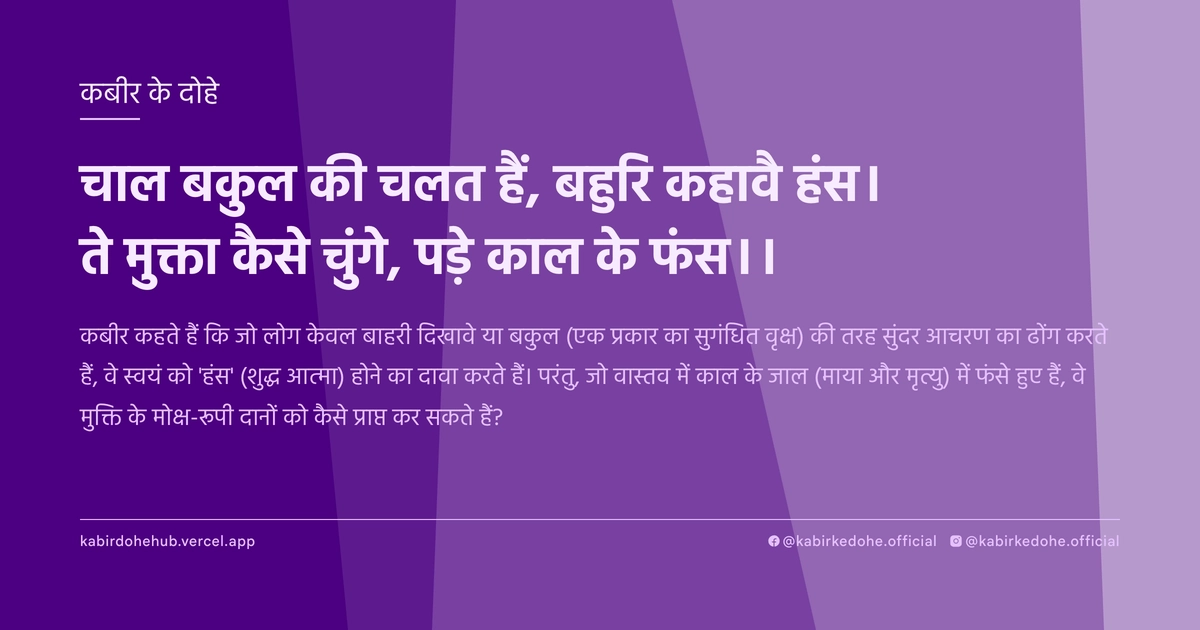
चाल बकुल की चलत हैं, बहुरि कहावै हंस।
ते मुक्ता कैसे चुंगे, पड़े काल के फंस।।
Chaal bakul ki chalat hain, bahuri kahavai hans. Te mukta kaise chunge, pade kaal ke phans.
इस पृष्ठ पर इस कबीर दोहे का अर्थ (meaning), हिंदी व्याख्या और अंग्रेज़ी अनुवाद, दार्शनिक विश्लेषण और व्यावहारिक जीवन सीख दी गई है। यह दोहा मृतुक्यता (Mortality) विषय से जुड़ा है — Kabir doha meaning and explanation in Hindi and English.
अर्थ (Meaning):
कबीर कहते हैं कि जो लोग केवल बाहरी दिखावे या बकुल (एक प्रकार का सुगंधित वृक्ष) की तरह सुंदर आचरण का ढोंग करते हैं, वे स्वयं को 'हंस' (शुद्ध आत्मा) होने का दावा करते हैं। परंतु, जो वास्तव में काल के जाल (माया और मृत्यु) में फंसे हुए हैं, वे मुक्ति के मोक्ष-रूपी दानों को कैसे प्राप्त कर सकते हैं?
Kabir observes that those who merely mimic the grace of the Bakul tree or pretend to possess the purity of a swan (Hans) are living a lie. He questions how those who remain entangled in the snares of Time (Kaal) and worldly illusion can ever hope to gather the grains of liberation (Mukti), as their bondage prevents them from reaching the ultimate truth.
व्याख्या (Interpretation):
यहाँ 'हंस' केवल एक पक्षी नहीं, बल्कि उस जागृत आत्मा का प्रतीक है जो नीर और दूध को अलग करने की क्षमता रखता है। बकुल का संदर्भ बाहरी आकर्षण और पाखंड को दर्शाता है। कबीर तर्क देते हैं कि जब तक मनुष्य 'काल' यानी समय, अहंकार और जन्म-मृत्यु के चक्र में जकड़ा है, वह केवल मुक्ति का दावा कर सकता है, उसे अनुभव नहीं। यह द्वैतवाद और अद्वैतवाद के बीच का संघर्ष है, जहाँ साधक स्वयं को मुक्त मानता है, जबकि वह वास्तव में माया के सूक्ष्म तंतुओं से बंधा होता है। यह विरोधाभास दर्शाता है कि आध्यात्मिक ज्ञान केवल शब्दों में नहीं, बल्कि अस्तित्व के पूर्ण रूपांतरण में निहित है। अंततः, यह दोहा हमें चेतावनी देता है कि बाहरी धार्मिकता आंतरिक शुद्धि का विकल्प नहीं हो सकती।
In this verse, the 'Hans' (Swan) is not merely a bird but a symbol of the awakened soul capable of discerning the eternal from the ephemeral. The reference to 'Bakul' signifies external ornamentation and the facade of piety. Kabir argues that as long as a human is ensnared by 'Kaal'—the personification of time, ego, and the cycle of rebirth—they can only claim liberation, not embody it. This highlights the tension between the perceived self and the actual state of bondage within Maya. The central paradox is that the seeker often mistakes the map (rituals/scriptures) for the territory (realization). By defining the 'snares of time,' Kabir points to the psychological and spiritual inertia that prevents the Atman from merging with Brahman. True liberation requires the annihilation of the false identity that clings to social or religious labels.
दार्शनिक विश्लेषण (Philosophical Analysis):
कबीर का यह दोहा उनके युग के उस सामाजिक परिवेश पर प्रहार है जहाँ धर्म केवल बाहरी प्रतीकों, वस्त्रों और तिलक तक सीमित था। वे 'बकुल' के माध्यम से उन धर्मगुरुओं और पाखंडियों की आलोचना करते हैं जो अपनी वाणी में तो मधुरता रखते हैं, परंतु उनके कर्म अहंकार से प्रेरित होते हैं। यह विश्लेषण निर्गुण भक्ति के मूल सिद्धांत पर आधारित है, जहाँ ईश्वर किसी मूर्ति या मंदिर में नहीं, बल्कि स्वयं के भीतर की शुद्धता में मिलता है।
अद्वैत वेदांत के परिप्रेक्ष्य में, 'काल का फंदा' वह अज्ञान (Avidya) है जो आत्मा को शरीर और मन के साथ जोड़ देता है। जब तक यह भ्रम बना रहता है, व्यक्ति स्वयं को एक अलग इकाई मानता है और इस पृथकता के कारण ही वह दुखों और बंधनों में फंसा रहता है। कबीर यहाँ सूफी मत के 'फना' (अहंकार का विनाश) के करीब हैं, जहाँ वे कहते हैं कि जब तक 'मैं' जीवित है, तब तक 'वह' (परमात्मा) नहीं मिल सकता।
ritualism (कर्मकांड) का विरोध करते हुए कबीर स्पष्ट करते हैं कि केवल माला जपने या विशेष वस्त्र पहनने से कोई 'हंस' नहीं बन जाता। हंस बनने की प्रक्रिया आंतरिक है, जिसमें वासनाओं का त्याग और सत्य का साक्षात्कार अनिवार्य है। यह एक मनोवैज्ञानिक रूपांतरण है, जहाँ साधक अपनी सामाजिक पहचान को त्यागकर सार्वभौमिक चेतना में विलीन होता है।
ऐतिहासिक रूप से, कबीर ने जाति और धर्म की दीवारों को तोड़कर एक ऐसे मार्ग का 제시 किया जो केवल अनुभव (Anubhav) पर आधारित था। उनके लिए 'मुक्ति' कोई ऐसी वस्तु नहीं है जिसे मृत्यु के बाद प्राप्त किया जाए, बल्कि यह इसी जीवन में जाग्रत होने की अवस्था है। जो व्यक्ति स्वयं को मुक्त घोषित करता है लेकिन अभी भी ईर्ष्या, क्रोध और मोह में है, वह वास्तव में काल के जाल में और अधिक गहराई से फंसा हुआ है।
अंततः, यह दर्शन हमें सिखाता है कि सत्य की खोज बाहरी आडंबरों से नहीं, बल्कि आत्म-निरीक्षण और ईमानदारी से संभव है। जब हम अपनी कमियों को स्वीकार करते हैं और अहंकार का त्याग करते हैं, तभी हम वास्तव में उस 'मुक्ता' (मोक्ष) के दानों को चुगने के योग्य बनते हैं। यह मार्ग कठिन है क्योंकि यह हमें हमारी सबसे प्रिय वस्तु—हमारे अहंकार—को छोड़ने के लिए मजबूर करता है।
Kabir’s couplet is a scathing critique of the socio-religious climate of his era, where spirituality had been reduced to external symbols, specific attire, and ritualistic performances. By using the metaphor of the 'Bakul' tree, he targets the hypocrisy of religious leaders who project an image of serenity and holiness while remaining driven by ego and power. This analysis is rooted in the core of Nirgun Bhakti, which posits that the Divine is formless and resides within the purity of the self, rather than in external idols or temples.
From the lens of Advaita Vedanta, the 'snares of Kaal' represent Avidya (primordial ignorance) that binds the Atman (individual soul) to the physical body and the fluctuating mind. As long as this illusion of separation persists, the individual remains trapped in the cycle of Samsara. Kabir aligns here with the Sufi concept of 'Fana' (annihilation of the self), suggesting that the 'I' must perish for the 'Truth' to emerge. The paradox is that the more one clings to the identity of being a 'saint' or a 'swan,' the further they drift from actual liberation.
Kabir’s rejection of ritualism is absolute. He asserts that wearing a saffron robe or reciting mantras does not transform a person into a 'Hans.' The transformation of a soul into a swan is an internal alchemy involving the transmutation of desire into devotion and pride into humility. This is a psychological shift from the ego-centric existence to a cosmic consciousness, where the boundaries between the self and the other dissolve.
Historically, Kabir dismantled the hierarchies of caste and creed by proposing a path based solely on 'Anubhav' (direct experience). For him, liberation is not a post-mortem reward but a state of being achievable in the present moment. Those who claim enlightenment while still harboring jealousy, anger, or attachment are merely decorating their chains with gold; they remain prisoners of Time.
Ultimately, this philosophy teaches that the quest for truth cannot be achieved through mimicry or social performance. It requires a brutal honesty and a willingness to face one's own shadows. Only when the facade of the 'Bakul' is stripped away and the ego is dissolved can the seeker truly 'peck' at the grains of liberation. This path is arduous because it demands the sacrifice of the most cherished possession: the false identity of the ego.
मूल संदेश (Core Message):
- बाहरी पवित्रता अक्सर आंतरिक अज्ञान का पर्दा होती है।
- अहंकार का त्याग ही वास्तविक मुक्ति का एकमात्र द्वार है।
- दिखावे की भक्ति आत्मा को और अधिक बंधन में डालती है।
- सत्य शब्दों में नहीं, बल्कि व्यवहार और करुणा में बसता है।
- जब 'मैं' मिटता है, तभी 'परमात्मा' का अनुभव होता है।
- मुक्ति कोई गंतव्य नहीं, बल्कि वर्तमान में जाग्रत होने की अवस्था है।
- External piety is often a veil for internal ignorance.
- The surrender of ego is the only gateway to true liberation.
- Performative devotion only tightens the bonds of the soul.
- Truth resides not in scriptures, but in conduct and compassion.
- Only when the 'I' vanishes does the Divine emerge.
- Liberation is not a destination, but a state of present awareness.
व्यावहारिक उदाहरण (Practical Example):
वाराणसी के एक पुराने घाट पर रहने वाले एक वृद्ध विधवा, जानकी, का जीवन केवल पूजा-पाठ और कठोर नियमों के इर्द-गिर्द घूमता था। वह पूरे शहर में अपनी पवित्रता और अनुशासन के लिए जानी जाती थी। वह सफेद वस्त्र पहनती, दिन में कई बार स्नान करती और दूसरों को धर्म का उपदेश देती। वह स्वयं को एक 'हंस' मानती थी, जिसने संसार की मोह-माया को जीत लिया है।
परंतु, जानकी के भीतर एक गहरा अंधेरा था। वह अपनी छोटी बेटी, जो एक निम्न जाति के व्यक्ति से प्रेम करती थी, के प्रति अत्यधिक घृणा और क्रोध रखती थी। उसने अपनी बेटी को घर से निकाल दिया था ताकि उसकी 'सामाजिक पवित्रता' बनी रहे। उसकी बाहरी भक्ति एक बकुल के पेड़ की तरह सुगंधित और सुंदर थी, लेकिन उसका हृदय ईर्ष्या और कठोरता का केंद्र था।
एक दिन, घाट पर एक फकीर आया जिसने जानकी के चेहरे पर वही गर्व देखा जो उसने कई पाखंडियों में देखा था। फकीर ने उससे कहा, 'माँ, तुम सफेद कपड़े पहनकर हंस बनने का दावा करती हो, लेकिन तुम्हारे भीतर का क्रोध तुम्हें काल के उस जाल में जकड़े हुए है जहाँ से निकलना सबसे कठिन है। तुम्हारी पूजा केवल एक पर्दा है।'
जानकी को पहले तो बहुत क्रोध आया, लेकिन उस रात वह सो नहीं सकी। उसे एहसास हुआ कि उसकी पूरी धार्मिकता केवल एक दिखावा थी। वह दुनिया को यह दिखाना चाहती थी कि वह पवित्र है, लेकिन वह अपनी बेटी के प्रति प्रेम को नहीं जगा सकी। वह 'मुक्ति' की बातें तो करती थी, लेकिन वह स्वयं अपने अहंकार के फंदे में फंसी थी।
अगले कुछ महीनों में, जानकी ने बाहरी आडंबरों को कम करना शुरू किया। उसने घंटों की पूजा के बजाय, अपने भीतर के क्रोध को समझने का प्रयास किया। उसने महसूस किया कि असली धर्म मंदिर की सीढ़ियों पर नहीं, बल्कि क्षमा और प्रेम में है।
एक सुबह, उसने अपनी बेटी को पत्र लिखा और उसे वापस बुला लिया। जब उसकी बेटी वापस आई, तो जानकी ने पहली बार अपनी सामाजिक प्रतिष्ठा की चिंता छोड़ दी। उसने अपनी बेटी के साथी को भी सम्मान के साथ घर में प्रवेश दिया।
उस क्षण, जानकी ने महसूस किया कि जो शांति उसे वर्षों के अनुष्ठानों से नहीं मिली, वह एक साधारण क्षमा और प्रेम के कार्य से मिल गई। उसका 'बकुल' जैसा बाहरी मुखौटा गिर गया था, और अब वह वास्तव में एक 'हंस' की तरह हल्का महसूस कर रही थी।
उसने सीखा कि जब तक हृदय में द्वेष है, तब तक कोई भी धार्मिक क्रिया केवल एक बोझ है। वास्तविक मुक्ति तब होती है जब हम अपनी पहचान के अहंकार को तोड़कर दूसरों के दुख को अपना मानते हैं।
अब जानकी घाट पर केवल पूजा नहीं करती थी, बल्कि उन लोगों की मदद करती थी जिन्हें समाज ने ठुकरा दिया था। उसकी पवित्रता अब उसके कपड़ों में नहीं, बल्कि उसकी करुणा में झलकती थी।
यह जानकी का 'कबीर ट्विस्ट' था—जहाँ उसने समझा कि मोक्ष स्वर्ग जाने में नहीं, बल्कि पृथ्वी पर प्रेम और करुणा के साथ जीने में है।
In the ancient ghats of Varanasi lived an elderly widow named Janaki, whose entire existence revolved around rigorous rituals and strict adherence to religious laws. She was renowned throughout the city for her purity and discipline. Draped in pristine white, she bathed multiple times a day and spent her hours lecturing others on the path of righteousness. She viewed herself as a 'Hans'—a pure soul who had conquered all worldly attachments.
However, beneath this serene exterior lay a profound darkness. Janaki harbored an intense hatred for her only daughter, who had fallen in love with a man from a lower caste. To preserve her 'social purity' and reputation, Janaki had cast her daughter out of the house years ago. Her external devotion was like the fragrant Bakul tree—beautiful and aromatic—but her heart was a fortress of rigidity and resentment.
One day, a wandering Sufi fakir arrived at the ghat. Looking at Janaki, he saw the same pride he had encountered in countless hypocrites. He told her, 'Mother, you wear white and claim the grace of a swan, but the anger within you has bound you to a snare of Time from which escape is most difficult. Your prayers are merely a curtain to hide your ego.'
Initially, Janaki was outraged. But that night, sleep evaded her. She realized that her entire spiritual identity was a performance. She wanted the world to see her as holy, yet she could not summon a shred of love for her own child. She spoke of 'Mukti' (liberation) while being tightly gripped by the chains of her own pride.
Over the next few months, Janaki began to strip away the ornaments of her piety. Instead of spending hours in ritualistic chanting, she began to observe the anger rising within her. She realized that true religion was not found on the steps of a temple, but in the act of forgiveness and unconditional love.
One morning, she wrote a letter to her daughter, inviting her home. When her daughter returned, Janaki consciously chose to ignore the whispers of the community. She welcomed her daughter's partner into her home with genuine respect, shattering the social boundaries she had spent a lifetime defending.
In that moment, Janaki experienced a peace that years of austerity had never provided. The 'Bakul' mask of social holiness had fallen, and for the first time, she felt the lightness of a true 'Hans.'
She learned that as long as malice exists in the heart, any religious act is merely a burden. True liberation occurs when we break the ego of our identity and embrace the suffering of others as our own.
Janaki no longer spent her days merely performing rituals; she began helping those whom society had discarded. Her purity was no longer in her white clothes, but in the radiance of her compassion.
This was Janaki's 'Kabir Twist'—the realization that salvation is not about reaching a heavenly realm after death, but about living with love and empathy on this earth.
अभ्यास मार्गदर्शन (Practice Guidance):
- दैनिक आत्म-निरीक्षण: प्रतिदिन 15 मिनट मौन बैठें और विचार करें कि आज आपने कितनी बार अपनी 'छवि' (Image) को बचाने के लिए झूठ बोला या अहंकार दिखाया।
- अहंकार की पहचान: जब भी आप किसी को 'अधर्मी' या 'अशुद्ध' कहें, तो रुकें और पूछें—'क्या मैं वास्तव में उनसे श्रेष्ठ हूँ, या मैं केवल अपने मुखौटे को श्रेष्ठ मान रहा हूँ?'
- सेवा का अभ्यास: बिना किसी को बताए या बिना किसी प्रशंसा की इच्छा के, किसी ऐसे व्यक्ति की मदद करें जिसे समाज 'अछूत' या 'निम्न' मानता है।
- डायग्नोस्टिक चेकलिस्ट: यदि आप अभी भी अपनी धार्मिक/सामाजिक पहचान के कारण दूसरों से श्रेष्ठ महसूस करते हैं, तो आप 'काल के फंदे' में हैं। यदि आप अपनी त्रुटियों को देखकर विनम्र महसूस करते हैं, तो आप 'हंस' बनने की दिशा में हैं।
- Daily Self-Inquiry: Spend 15 minutes in silence daily, reflecting on how many times you acted to protect your 'image' or ego rather than acting from truth.
- Ego Identification: Whenever you judge someone as 'impure' or 'unrighteous,' pause and ask—'Am I truly superior, or am I merely clinging to the facade of my identity?'
- Anonymous Service: Perform an act of kindness for someone marginalized by society, ensuring there is no witness and no desire for recognition or praise.
- Diagnostic Checklist: If you still feel superior to others based on your religious or social identity, you are caught in the 'snares of Kaal.' If you feel humility upon recognizing your own flaws, you are moving toward the state of the 'Hans.'
चिंतन प्रश्न (Reflection Questions):
- मेरी वह कौन सी 'पवित्र' छवि है जिसे मैं दुनिया के सामने बनाए रखने के लिए अपने वास्तविक स्वभाव को दबाता हूँ?
- क्या मेरी धार्मिकता मुझे दूसरों के प्रति अधिक दयालु बनाती है, या यह मुझे दूसरों को आंकने का अधिकार देती है?
- यदि मेरी सारी सामाजिक पहचान (पद, जाति, धर्म) छीन ली जाए, तो मेरे पास क्या बचेगा?
- मैं किन सूक्ष्म 'काल के फंदों' (जैसे डिजिटल ईगो या सामाजिक मान्यता) में फंसा हुआ हूँ?
- क्या मैं वास्तव में मुक्त होना चाहता हूँ, या मैं केवल 'मुक्त दिखने' की इच्छा रखता हूँ?
- What is the 'holy' image of myself that I maintain for the world while suppressing my authentic nature?
- Does my spirituality make me more compassionate toward others, or does it give me a license to judge them?
- If all my social identities (status, caste, religion) were stripped away, what would remain of me?
- What are the subtle 'snares of time' (such as digital ego or social validation) that currently bind me?
- Do I truly desire liberation, or do I merely desire the appearance of being liberated?