
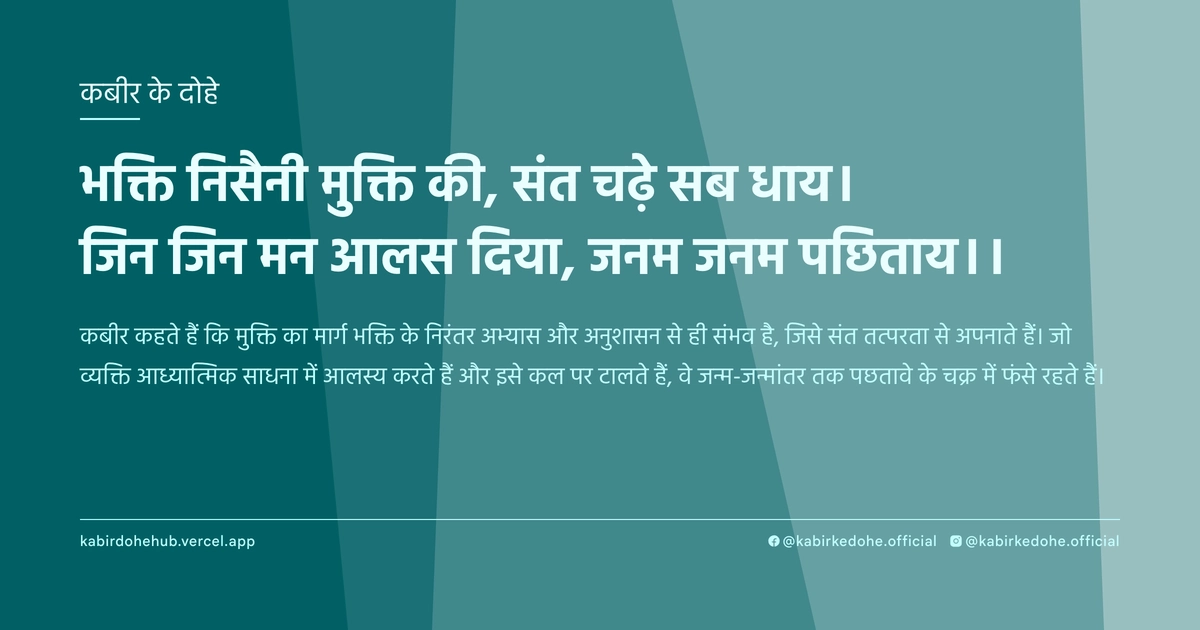
भक्ति निसैनी मुक्ति की, संत चढ़े सब धाय।
जिन जिन मन आलस दिया, जनम जनम पछिताय।।
Bhakti nisaini mukti ki, sant chadhe sab dhaay. Jin jin man aalas diya, janam janam pachhitay.
इस पृष्ठ पर इस कबीर दोहे का अर्थ (meaning), हिंदी व्याख्या और अंग्रेज़ी अनुवाद, दार्शनिक विश्लेषण और व्यावहारिक जीवन सीख दी गई है। यह दोहा मुक्ति (Liberation) विषय से जुड़ा है — Kabir doha meaning and explanation in Hindi and English.
अर्थ (Meaning):
कबीर कहते हैं कि मुक्ति का मार्ग भक्ति के निरंतर अभ्यास और अनुशासन से ही संभव है, जिसे संत तत्परता से अपनाते हैं। जो व्यक्ति आध्यात्मिक साधना में आलस्य करते हैं और इसे कल पर टालते हैं, वे जन्म-जन्मांतर तक पछतावे के चक्र में फंसे रहते हैं।
Kabir asserts that the path to liberation is paved with the unwavering discipline of devotion, a path that saints pursue with utmost urgency. Those who succumb to spiritual lethargy and procrastinate their inner awakening are condemned to endure the cycle of regret across countless lifetimes.
व्याख्या (Interpretation):
यह दोहा भौतिक आलस्य के बजाय 'आध्यात्मिक जड़ता' की बात करता है। 'निसैनी' शब्द यहाँ निरंतरता और अनुशासन का संकेत देता है। इसका शाब्दिक अर्थ है कि मुक्ति कोई आकस्मिक घटना नहीं, बल्कि एक सचेत प्रयास है। रूपकात्मक रूप से, यह मन की उस स्थिति को दर्शाता है जहाँ जीव माया के मोह में फंसकर आत्म-साक्षात्कार को स्थगित कर देता है। निर्गुण भक्ति में, यह 'साधना' ही वह अग्नि है जो अहंकार को जलाती है। जब तक साधक में तीव्रता नहीं होती, वह अद्वैत की स्थिति—जहाँ आत्मा और ब्रह्म एक हो जाते हैं—को प्राप्त नहीं कर सकता। यह विरोधाभास है कि मुक्ति निःशुल्क है, फिर भी इसे पाने के लिए सबसे कठिन परिश्रम (अहंकार का त्याग) करना पड़ता है।
This couplet addresses 'spiritual inertia' rather than mere physical laziness. The term 'nisaaini' signifies a rigorous, disciplined continuity. Literally, it suggests that liberation is not a random occurrence but a conscious, urgent pursuit. Metaphorically, it describes the state of the soul trapped in the illusions of Maya, perpetually postponing its own awakening. In Nirgun Bhakti, this 'Sadhana' is the fire that incinerates the ego. Without an intense sense of urgency, the seeker cannot bridge the gap toward Advaita—the non-dual realization where Atman and Brahman merge. It presents a profound paradox: while liberation is the natural state of being and essentially free, it requires the most strenuous effort—the total annihilation of the self.
दार्शनिक विश्लेषण (Philosophical Analysis):
कबीर का यह संदेश उस युग की प्रतिक्रिया है जहाँ धर्म केवल कर्मकांडों और बाहरी दिखावे तक सीमित हो गया था। वे मंदिर-मस्जिद जाने के बजाय 'भीतर की यात्रा' पर जोर देते हैं। यहाँ 'आलस्य' का अर्थ है वह मानसिक स्थिति जो हमें यह विश्वास दिलाती है कि हमारे पास अभी बहुत समय है, जबकि सत्य यह है कि वर्तमान क्षण ही एकमात्र द्वार है।
अद्वैत वेदांत के परिप्रेक्ष्य में, यह दोहा अविद्या (अज्ञान) के विनाश की बात करता है। जब तक साधक यह सोचता है कि वह शरीर है, वह माया के प्रभाव में रहता है। यह आलस्य वास्तव में अहंकार की एक सूक्ष्म चाल है, जो उसे सत्य से दूर रखती है। कबीर यहाँ चेतावनी देते हैं कि आध्यात्मिक अवसर क्षणभंगुर होते हैं।
सूफी मत के 'नफ्स' (अहंकार) के विचार से जोड़कर देखें तो, यह दोहा नफ्स को मारने की प्रक्रिया है। सूफीवाद में 'मुजाहदा' या कठिन संघर्ष के बिना ईश्वर का मिलन असंभव है। कबीर इसी संघर्ष को 'भक्ति' कहते हैं, जो किसी बाहरी देवता की पूजा नहीं, बल्कि स्वयं के भीतर के अंधकार से युद्ध है।
सामाजिक स्तर पर, कबीर जाति और वर्ण व्यवस्था के उस आलस्य पर प्रहार करते हैं जहाँ लोग अपनी जन्मजात स्थिति को नियति मानकर बैठे रहते हैं। वे कहते हैं कि मुक्ति किसी विशेष जाति के लिए आरक्षित नहीं है, बल्कि उसके लिए उपलब्ध है जो तत्परता से अपने अहंकार को त्याग दे।
अंततः, यह मनोवैज्ञानिक रूपांतरण की बात है। पछतावा (Remorse) यहाँ एक उत्प्रेरक के रूप में है। जब मनुष्य को यह आभास होता है कि उसने अपना बहुमूल्य समय व्यर्थ गँवाया, तब वह वास्तविक जागृति की ओर बढ़ता है। कबीर का दर्शन 'अभी और यहीं' (Here and Now) के सिद्धांत पर आधारित है।
Kabir’s message is a visceral reaction to an era where religion had devolved into sterile rituals and outward displays of piety. He shifts the focus from the pilgrimage to temples and mosques toward the internal pilgrimage of the soul. Here, 'laziness' is not physical sloth but a psychological state of spiritual procrastination—the delusion that there is always more time to seek the Truth, whereas the present moment is the only available gateway.
From the lens of Advaita Vedanta, this couplet speaks to the eradication of Avidya (ignorance). As long as the seeker identifies with the physical body and the ego, they remain under the spell of Maya. This inertia is a subtle stratagem of the ego to keep the soul distanced from its non-dual nature. Kabir warns that spiritual windows of opportunity are fleeting and fragile.
Connecting this to the Sufi concept of 'Nafs' (the lower self), the doha describes the process of killing the ego. In Sufism, the union with the Divine is impossible without 'Mujahada' or intense spiritual struggle. Kabir defines 'Bhakti' not as the worship of an external deity, but as this relentless war against the internal darkness.
On a socio-cultural level, Kabir attacks the systemic inertia of the caste system, where individuals accepted their social stagnation as destiny. He asserts that liberation is not the monopoly of any high-born caste but is accessible to anyone who possesses the urgency to shed their identity and ego.
Ultimately, this is a study in psychological transformation. Remorse is presented as a catalyst. When a human realizes the magnitude of wasted time, the shock often triggers a genuine awakening. Kabir’s philosophy is rooted in the principle of 'Here and Now,' demanding an immediate shift in consciousness.
मूल संदेश (Core Message):
- आध्यात्मिक जड़ता ही मोक्ष के मार्ग में सबसे बड़ी बाधा है।
- भक्ति कोई बाहरी क्रिया नहीं, बल्कि आंतरिक अनुशासन है।
- कल का भ्रम अहंकार का सबसे सूक्ष्म और घातक हथियार है।
- मुक्ति की पात्रता केवल तत्परता और तीव्रता से आती है।
- वर्तमान क्षण ही एकमात्र द्वार है जहाँ आत्मा और परमात्मा मिलते हैं।
- Spiritual inertia is the greatest obstacle on the path to liberation.
- Devotion is not an external act, but a rigorous internal discipline.
- The illusion of 'tomorrow' is the ego's most subtle and lethal weapon.
- The eligibility for liberation comes only through urgency and intensity.
- The present moment is the only gateway where the soul meets the Divine.
व्यावहारिक उदाहरण (Practical Example):
एक समय की बात है, वाराणसी के घाटों पर माधव नाम का एक वृद्ध बुनकर रहता था। माधव अपनी कला में निपुण था, लेकिन उसका मन हमेशा इस बात से अशांत रहता था कि वह ईश्वर को कैसे प्राप्त करे। वह अक्सर बड़े-बड़े पंडितों की बातें सुनता, जो कहते थे कि मोक्ष के लिए कठिन तपस्या और वर्षों के अनुष्ठान चाहिए। माधव ने सोचा, 'मैं अभी युवा हूँ, कुछ साल और कमा लूँ, फिर शांति से साधना करूँगा।'
वर्ष बीतते गए। माधव की उम्र ढल गई, उसके हाथ कांपने लगे और उसकी आँखों की रोशनी कम होने लगी। वह अब भी उसी उम्मीद में था कि जब वह पूरी तरह सेवानिवृत्त हो जाएगा, तब वह अपनी आध्यात्मिक यात्रा शुरू करेगा। वह हर दिन सोचता कि कल से वह ध्यान लगाएगा, लेकिन उसकी आदत बन गई थी कि वह अपनी इच्छाओं को कल पर टाल दे।
एक दिन उसकी मुलाकात एक घुमक्कड़ फकीर से हुई, जिसने माधव की आँखों में छिपी उस गहरी उदासी और अधूरेपन को पहचान लिया। फकीर ने उससे पूछा, 'माधव, तुम किस चीज़ का इंतज़ार कर रहे हो?' माधव ने उत्तर दिया, 'मैं सही समय का इंतज़ार कर रहा हूँ ताकि मैं पूरी एकाग्रता से ईश्वर की खोज कर सकूँ।'
फकीर मुस्कुराया और उसने माधव को एक पुराना, फटा हुआ कपड़ा दिखाया जो सालों से नमी के कारण सड़ रहा था। फकीर ने कहा, 'देखो माधव, इस कपड़े ने भी सोचा होगा कि वह तब तक सुरक्षित रहेगा जब तक वह संदूक में है, लेकिन समय ने उसे अंदर ही अंदर खा लिया। तुम्हारा समय भी इसी कपड़े की तरह सड़ रहा है। तुम जिसे 'सही समय' कह रहे हो, वह वास्तव में तुम्हारा अहंकार है जो तुम्हें वर्तमान से दूर रख रहा है।'
यह बात माधव के हृदय में बिजली की तरह कौंधी। उसे अहसास हुआ कि उसने अपनी पूरी ज़िंदगी 'तैयारी' करने में बिता दी, लेकिन कभी 'शुरुआत' नहीं की। उसने महसूस किया कि उसका आलस्य कोई शारीरिक थकान नहीं थी, बल्कि एक मानसिक भ्रम था जिसने उसे यह विश्वास दिलाया कि मुक्ति कोई भविष्य का पुरस्कार है।
उस रात माधव ने अपनी सारी बाहरी उम्मीदें छोड़ दीं। उसने यह सोचना बंद कर दिया कि उसे किसी विशेष स्थान या विशेष स्थिति की आवश्यकता है। उसने अपने करघे पर काम करते हुए ही, हर धागे के साथ अपने श्वास को जोड़ना शुरू किया। उसने अपने काम को ही पूजा बना लिया।
अब वह पंडितों के चक्कर नहीं लगाता था, बल्कि हर सांस के साथ 'अनहद नाद' को सुनने का प्रयास करता था। उसने पाया कि जिस शांति की तलाश में वह दशकों तक टलता रहा, वह वास्तव में उसके भीतर ही थी, बस उसे जगाने के लिए 'तत्परता' की आवश्यकता थी।
माधव के जीवन में एक अद्भुत परिवर्तन आया। उसका काम और भी निखर गया, लेकिन अब वह परिणामों से नहीं जुड़ा था। उसने जान लिया कि मुक्ति किसी भविष्य की तारीख पर नहीं मिलती, बल्कि उस क्षण में मिलती है जब आप 'कल' के भ्रम को जला देते हैं।
Once in the ghats of Varanasi, there lived an elderly weaver named Madhav. Madhav was a master of his craft, yet his heart was perpetually restless with the question of how to attain God. He often listened to high priests who claimed that salvation required rigorous penance and years of complex rituals. Madhav thought, 'I am still relatively young; let me earn a bit more, and then I shall devote myself to spiritual practice in peace.'
Years drifted by. Madhav grew old, his hands began to tremble, and his eyesight dimmed. He was still clinging to the hope that once he was fully retired, he would begin his spiritual journey. He spent every day convincing himself that he would start meditating 'tomorrow,' making a habit of postponing his inner calling.
One day, he encountered a wandering fakir who recognized the deep melancholy and incompleteness hidden in Madhav's eyes. The fakir asked, 'Madhav, what are you waiting for?' Madhav replied, 'I am waiting for the right time, so that I may seek the Divine with absolute concentration.'
The fakir smiled and showed Madhav an old, tattered piece of cloth that had been rotting for years due to dampness. The fakir said, 'Look, Madhav, this cloth probably thought it would remain safe as long as it stayed in the chest, but time consumed it from within. Your time is rotting just like this cloth. What you call the "right time" is actually your ego keeping you distanced from the present.'
These words struck Madhav like a bolt of lightning. He realized he had spent his entire life 'preparing' but had never actually 'started.' He understood that his laziness was not physical fatigue, but a mental delusion that convinced him liberation was a reward for the future.
That night, Madhav abandoned all external expectations. He stopped believing that he needed a special place or a specific set of circumstances. He began to synchronize his breath with every thread he wove on his loom. He transformed his labor into a prayer.
He no longer chased the priests; instead, with every breath, he tried to listen to the 'Anhad Naad' (the unstruck sound). He discovered that the peace he had postponed for decades was already within him, waiting only for the spark of 'urgency' to be awakened.
An extraordinary transformation occurred in Madhav's life. His weaving became even more exquisite, but he was no longer attached to the results. He learned that liberation is not found on a future date, but in the moment you burn the illusion of 'tomorrow.'
अभ्यास मार्गदर्शन (Practice Guidance):
- प्रतिदिन 20 मिनट 'साक्षी भाव' का अभ्यास करें, जहाँ आप अपने विचारों को बिना किसी निर्णय के केवल देखें और यह पहचानें कि आप विचार नहीं, बल्कि दृष्टा हैं।
- एक 'आध्यात्मिक डायरी' लिखें जिसमें आप उन क्षणों को दर्ज करें जब आपने अपने आंतरिक विकास को 'कल' पर टाला। विश्लेषण करें कि उस समय कौन सा डर या मोह आपको रोक रहा था।
- व्यवहार परिवर्तन: किसी भी ऐसे कार्य को तुरंत पूरा करें जिसे आप मानसिक रूप से टाल रहे हैं, यह समझते हुए कि टालमटोल अहंकार का एक रूप है जो आपको वर्तमान से काटता है।
- निदान चेकलिस्ट: क्या मैं अभी भी 'सही समय' का इंतज़ार कर रहा हूँ? क्या मेरी साधना केवल बाहरी दिखावे तक सीमित है? क्या मैं अपनी गलतियों के लिए परिस्थितियों को दोष देता हूँ? यदि हाँ, तो आप आध्यात्मिक आलस्य में हैं।
- Practice 'Sakshi Bhav' (Witness Consciousness) for 20 minutes daily, observing your thoughts without judgment and recognizing that you are the observer, not the thought.
- Maintain a 'Spiritual Journal' to record moments where you postponed your inner growth to 'tomorrow.' Analyze which specific fear or attachment was driving that procrastination.
- Behavioral Shift: Immediately complete any task you are mentally avoiding, recognizing that procrastination is a form of ego that detaches you from the present moment.
- Diagnostic Checklist: Am I still waiting for the 'right time'? Is my practice limited to external rituals? Do I blame circumstances for my lack of progress? If yes, you are in a state of spiritual inertia.
चिंतन प्रश्न (Reflection Questions):
- मेरे जीवन का वह कौन सा 'कल' है जिसे मैं वर्षों से दोहरा रहा हूँ?
- क्या मेरी धार्मिकता वास्तव में सत्य की खोज है, या केवल एक सामाजिक सुरक्षा कवच?
- मैं अपनी डिजिटल पहचान (Social Media Ego) को बनाए रखने में कितना समय व्यर्थ करता हूँ, जबकि मेरा आंतरिक अस्तित्व प्यासा है?
- यदि मुझे पता चले कि यह मेरा अंतिम जन्म है, तो मेरी प्राथमिकताएं अभी इसी क्षण कैसे बदलेंगी?
- क्या मैं वास्तव में मुक्त होना चाहता हूँ, या मैं केवल मुक्ति के विचार से प्रेम करता हूँ?
- मेरे भीतर का वह कौन सा सूक्ष्म आलस्य है जो मुझे अपनी छाया (Shadow Self) का सामना करने से रोकता है?
- What is that 'tomorrow' in my life that I have been repeating for years?
- Is my religiosity a genuine search for Truth, or merely a social safety net?
- How much time do I waste maintaining my digital identity (Social Media Ego) while my internal existence remains starved?
- If I knew this was my final incarnation, how would my priorities shift in this very moment?
- Do I truly desire liberation, or am I merely in love with the idea of being liberated?
- What is the subtle inertia within me that prevents me from facing my own Shadow Self?