
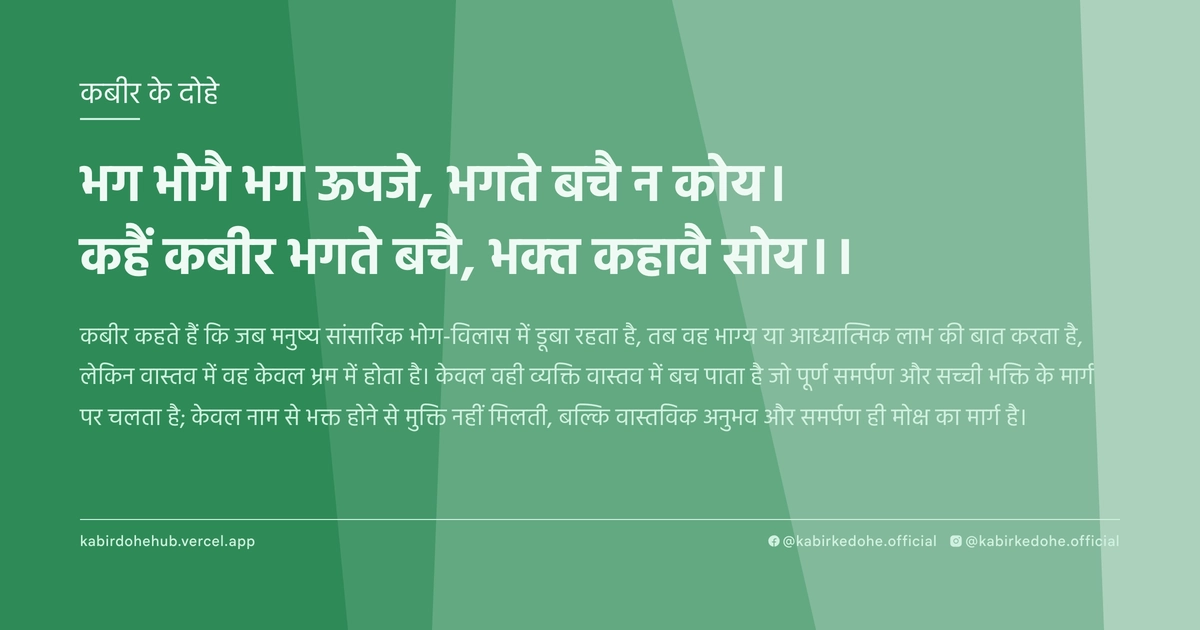
भग भोगै भग ऊपजे, भगते बचै न कोय।
कहैं कबीर भगते बचै, भक्त कहावै सोय।।
Bhag bhogai bhag oopje, bhagate bachai na koy. Kahen kabir bhagate bachai, bhakt kahavai soy.
इस पृष्ठ पर इस कबीर दोहे का अर्थ (meaning), हिंदी व्याख्या और अंग्रेज़ी अनुवाद, दार्शनिक विश्लेषण और व्यावहारिक जीवन सीख दी गई है। यह दोहा भक्ति (Bhakti) विषय से जुड़ा है — Kabir doha meaning and explanation in Hindi and English.
अर्थ (Meaning):
कबीर कहते हैं कि जब मनुष्य सांसारिक भोग-विलास में डूबा रहता है, तब वह भाग्य या आध्यात्मिक लाभ की बात करता है, लेकिन वास्तव में वह केवल भ्रम में होता है। केवल वही व्यक्ति वास्तव में बच पाता है जो पूर्ण समर्पण और सच्ची भक्ति के मार्ग पर चलता है; केवल नाम से भक्त होने से मुक्ति नहीं मिलती, बल्कि वास्तविक अनुभव और समर्पण ही मोक्ष का मार्ग है।
Kabir asserts that while humans chase worldly pleasures and attribute their success to luck or fate, such pursuits are illusory. True liberation is not found in the mere claim of being a devotee or through superficial rituals, but only through the actual practice of selfless devotion and the annihilation of the ego, which allows one to transcend the cycle of suffering.
व्याख्या (Interpretation):
इस दोहे का शाब्दिक अर्थ है कि भोग विलास से भाग्य नहीं बनता और केवल दिखावे की भक्ति से कोई नहीं बचता। रूपकात्मक रूप से, 'भोग' यहाँ माया का प्रतीक है जो आत्मा को शरीर और इंद्रियों के बंधन में जकड़े रखती है। कबीर निर्गुण भक्ति पर जोर देते हैं, जहाँ ईश्वर किसी मूर्ति में नहीं बल्कि स्वयं के भीतर स्थित है। जब तक 'मैं' (अहंकार) जीवित है, तब तक भक्ति केवल एक सामाजिक मुखौटा है। अद्वैत वेदांत के अनुसार, जब साधक यह जान लेता है कि वह और ब्रह्म एक ही हैं, तब वह माया के जाल से मुक्त हो जाता है। यह विरोधाभास है कि हम ईश्वर को बाहर खोजते हैं जबकि वह हमारे भीतर ही छिपा है। वास्तविक भक्त वह है जिसने अपनी इच्छाओं को जलाकर राख कर दिया है।
Literally, the verse suggests that sensual indulgence does not yield spiritual fortune and superficial piety offers no refuge. Metaphorically, 'Bhog' represents Maya, the cosmic illusion that binds the Atman to the physical realm and sensory cravings. Kabir emphasizes Nirgun Bhakti, where the Divine is formless and immanent within the self rather than externalized in idols. According to Advaita Vedanta, liberation occurs when the illusion of duality vanishes and the realization of Atman-Brahman non-duality emerges. The central paradox lies in the human tendency to seek the Infinite through finite desires. A true devotee is not one who recites scriptures, but one who has incinerated the ego in the fire of divine love. Only when the 'I' disappears does the true 'Bhakt' emerge.
दार्शनिक विश्लेषण (Philosophical Analysis):
कबीर का यह दोहा उस सामाजिक और धार्मिक परिवेश की प्रतिक्रिया है जहाँ कर्मकांड और बाहरी आडंबरों को ही धर्म मान लिया गया था। उन्होंने स्पष्ट रूप से कहा कि तिलक, माला या तीर्थयात्रा से मोक्ष संभव नहीं है। यह दृष्टिकोण सूफी मत के 'फना' (अहंकार का विनाश) और अद्वैत वेदांत के 'माया' सिद्धांत से गहराई से जुड़ा है। कबीर का तर्क है कि मनुष्य अक्सर धर्म का उपयोग अपने अहंकार को संतुष्ट करने के लिए करता है, जिसे वे 'मिथ्या भक्ति' कहते हैं।
ऐतिहासिक रूप से, कबीर ने जाति व्यवस्था और धार्मिक कट्टरता को चुनौती दी, क्योंकि उनके अनुसार ईश्वर किसी विशेष वर्ग या धर्म की बपौती नहीं है। उन्होंने 'सहज मार्ग' की बात की, जहाँ जीवन की साधारण गतिविधियों के बीच रहकर भी परमात्मा को पाया जा सकता है। यह दर्शन सिखाता है कि आध्यात्मिक प्रगति बाहरी बदलावों से नहीं, बल्कि आंतरिक मनोवैज्ञानिक रूपांतरण से आती है।
यहाँ 'भाग्य' शब्द का प्रयोग व्यंग्यात्मक है। लोग अपनी असफलताओं या सफलताओं को भाग्य पर छोड़ देते हैं, लेकिन कबीर कहते हैं कि वास्तविक भाग्य केवल आत्म-साक्षात्कार (Self-realization) है। वे भौतिक सुखों के प्रति पूर्ण विरक्ति का समर्थन नहीं करते, बल्कि उनके प्रति आसक्ति (Attachment) के त्याग की बात करते हैं।
सूफीवाद की तरह, कबीर का प्रेम मार्ग (Ishq) तर्क से परे है। जब एक व्यक्ति पूरी तरह से समर्पित होता है, तो वह 'भक्त' कहलाता है। यह समर्पण केवल ईश्वर के प्रति नहीं, बल्कि सत्य के प्रति है। यह प्रक्रिया अहंकार के पूर्ण विलीनीकरण की है, जहाँ व्यक्ति स्वयं को शून्य कर लेता है ताकि परमात्मा उसमें समा सके।
अंततः, यह विश्लेषण हमें यह समझने में मदद करता है कि भक्ति कोई क्रिया नहीं, बल्कि एक अवस्था है। जब व्यक्ति यह समझ जाता है कि संसार एक स्वप्न है और केवल वह चेतना सत्य है जो सर्वव्यापी है, तब वह वास्तव में 'बच' जाता है। यह मुक्ति केवल मृत्यु के बाद नहीं, बल्कि जीवित रहते हुए 'जीवन्मुक्ति' के रूप में प्राप्त की जा सकती है।
This Doha is a sharp critique of the socio-religious climate of Kabir's era, where ritualism and external piety were mistaken for spiritual maturity. Kabir argues that symbols like beads, tilaks, or pilgrimages are mere distractions. His philosophy aligns closely with the Sufi concept of 'Fana' (annihilation of the self) and the Advaita Vedanta principle of 'Maya' (illusion). He posits that humans often use religion as a tool to inflate their ego, creating a 'false devotion' that hinders actual growth.
Historically, Kabir challenged the rigid caste hierarchy and religious dogmatism, asserting that the Divine is not the monopoly of any specific sect or social class. He advocated for the 'Sahaja Marg' (the Natural Path), suggesting that enlightenment is accessible through the simple, honest living of a householder, provided there is internal detachment.
The mention of 'fortune' or 'luck' is used satirically. While common people attribute their life outcomes to fate, Kabir redefines true fortune as the realization of the Self. He does not necessarily demand a complete abandonment of the world, but rather a cessation of attachment to its transient pleasures.
Similar to the Sufi tradition of Divine Love (Ishq), Kabir’s path is one of total surrender. This surrender is not to a personified deity but to the Absolute Truth. It is a psychological transformation where the individual ego is dissolved, creating a void that the Divine can then fill. The 'Bhakt' is not a title one earns, but a state of being one achieves.
Ultimately, this analysis reveals that devotion is not an act but a state of consciousness. When the seeker realizes that the material world is a fleeting dream and only the universal consciousness is real, they achieve liberation. This is not a post-mortem reward but 'Jivanmukti'—liberation while still inhabiting the physical body.
मूल संदेश (Core Message):
- बाहरी आडंबर केवल आत्मा की बेड़ियाँ हैं, मुक्ति का मार्ग नहीं।
- सच्ची भक्ति अहंकार का विसर्जन है, न कि ईश्वर की याचना।
- जब तक 'मैं' है, तब तक सत्य का अनुभव असंभव है।
- मानवता की सेवा ही सबसे बड़ा और वास्तविक मंदिर है।
- भाग्य वह नहीं जो मिलता है, बल्कि वह है जो हम भीतर पाते हैं।
- External rituals are shackles for the soul, not the path to liberation.
- True devotion is the dissolution of the ego, not a plea to the Divine.
- As long as the 'I' exists, the experience of Truth remains impossible.
- Selfless service to humanity is the only authentic temple.
- Fortune is not what we acquire, but the purity we discover within.
व्यावहारिक उदाहरण (Practical Example):
वाराणसी के एक पुराने घाट पर माधव नाम का एक वृद्ध नाविक रहता था। माधव का जीवन केवल नाव चलाने और पर्यटकों को घुमाने तक सीमित था, लेकिन वह खुद को बहुत बड़ा धार्मिक मानता था। वह हर सुबह गंगा में डुबकी लगाता, माथे पर बड़ा सा तिलक लगाता और घंटों मंदिर में बैठकर जोर-जोर से मंत्र पढ़ता था। उसे गर्व था कि वह शहर का सबसे बड़ा 'भक्त' है, और वह अक्सर अन्य नाविकों को उनके 'पाप' और 'कम भक्ति' के बारे में उपदेश देता था।
माधव का अहंकार उसकी धार्मिकता के पीछे छिपा था। वह मानता था कि उसके इन कर्मकांडों के कारण उसका 'भाग्य' चमक रहा है और वह मोक्ष के करीब है। वह गरीबों को दान तो देता था, लेकिन उस दान में दया नहीं, बल्कि श्रेष्ठता का भाव होता था। वह चाहता था कि लोग उसे एक महान भक्त के रूप में पहचानें।
एक दिन, एक फटे-पुराने कपड़ों में लिपटे एक घुमक्कड़ साधु उसकी नाव पर सवार हुए। साधु ने देखा कि माधव मंत्र पढ़ते समय भी अपने मन में इस बात का हिसाब लगा रहा था कि कितने लोग उसे देख रहे हैं। साधु ने मुस्कुराते हुए कहा, 'माधव, तुम्हारी नाव तो पानी पर तैर रही है, लेकिन तुम्हारा मन अहंकार के बोझ से डूब रहा है। तुम जिसे भक्ति कह रहे हो, वह केवल एक प्रदर्शन है।'
माधव को पहले तो गुस्सा आया, लेकिन साधु की आँखों में एक ऐसी शांति थी जिसने उसे सोचने पर मजबूर कर दिया। साधु ने पूछा, 'यदि तुम वास्तव में भक्त हो, तो क्या तुम उस ईश्वर को देख सकते हो जो उस प्यासे कुत्ते में है जिसे तुम अभी डाँटकर भगा रहे थे?'
माधव स्तब्ध रह गया। उसने महसूस किया कि वह मंदिर में तो ईश्वर को खोज रहा था, लेकिन अपने सामने खड़े जीवित प्राणियों में उसे देख नहीं पा रहा था। उसकी सारी पूजा-पाठ केवल उसके स्वयं के अहंकार को संतुष्ट करने का एक साधन बन गई थी।
अगले कुछ महीनों तक, माधव ने दिखावे की भक्ति छोड़ दी। उसने जोर-जोर से मंत्र पढ़ना बंद कर दिया और मौन रहना शुरू किया। उसने महसूस किया कि असली शांति तब मिलती है जब वह दूसरों की मदद बिना किसी प्रशंसा की इच्छा के करता है।
एक दिन, एक गरीब मजदूर की नाव पलट गई और वह डूबने लगा। माधव ने बिना सोचे अपनी जान जोखिम में डालकर उसे बचाया। जब उस मजदूर ने उसे धन्यवाद दिया, तो माधव को पहली बार वह आनंद मिला जो उसे हजारों मंत्रों के जाप में नहीं मिला था।
उसने महसूस किया कि 'बचना' केवल मंदिर जाने में नहीं, बल्कि अहंकार को मिटाकर मानवता की सेवा करने में है। अब वह खुद को 'भक्त' नहीं कहता था, लेकिन उसके व्यवहार में वह करुणा आ गई थी जिसे दुनिया वास्तव में भक्ति कहती है।
माधव की नाव अब केवल यात्रियों को नहीं ले जाती थी, बल्कि वह उन लोगों के लिए एक सहारा बन गया था जिन्हें समाज ने ठुकरा दिया था। उसने जान लिया था कि असली भाग्य बाहरी आडंबरों में नहीं, बल्कि आंतरिक शुद्धता में है।
उसका जीवन अब एक प्रदर्शन नहीं, बल्कि एक प्रार्थना बन गया था। वह समझ गया था कि जब तक 'मैं' रहता हूँ, तब तक ईश्वर नहीं मिलता, और जब 'मैं' मिट जाता है, तब केवल प्रेम शेष रहता है।
On an ancient ghat in Varanasi lived an elderly boatman named Madhav. Madhav's life revolved around rowing tourists, but he considered himself a paragon of piety. Every morning, he bathed in the Ganges, applied a prominent tilak on his forehead, and spent hours chanting mantras loudly in the temple. He took immense pride in being the city's 'greatest devotee' and frequently lectured other boatmen on their 'sins' and 'lack of faith.'
Madhav's ego was cleverly hidden behind his religiosity. He believed that his rituals were polishing his 'fortune' and bringing him closer to salvation. While he gave alms to the poor, his charity was devoid of compassion; it was an exercise in superiority. He craved the recognition of others as a holy man.
One day, a wandering ascetic in tattered clothes boarded his boat. The ascetic noticed that even while chanting, Madhav was mentally calculating how many people were watching him. The ascetic smiled and said, 'Madhav, your boat floats on the water, but your soul is sinking under the weight of your ego. What you call devotion is merely a performance.'
Initially, Madhav was offended, but the profound peace in the ascetic's eyes forced him to reflect. The ascetic asked, 'If you are truly a devotee, can you see the Divine in that thirsty dog you just shooed away with a curse?'
Madhav was stunned. He realized that while he searched for God in the temple, he was blind to the Divine presence in the living beings before him. His entire spiritual practice had become a tool to feed his own narcissism.
Over the next few months, Madhav abandoned his performative piety. He stopped the loud chanting and embraced silence. He discovered that true peace came not from recognition, but from helping others without the desire for praise.
One afternoon, a poor laborer's boat capsized, and he began to drown. Without a second thought, Madhav risked his own life to save him. When the laborer thanked him, Madhav felt a surge of joy that thousands of mantras had never provided.
He understood that 'salvation' was not found in visiting temples, but in eradicating the ego through selfless service. He stopped calling himself a 'Bhakt,' yet his behavior radiated the very compassion that defines true devotion.
Madhav's boat no longer just carried tourists; it became a sanctuary for those discarded by society. He learned that true fortune does not lie in external ornaments, but in internal purity.
His life ceased to be a performance and became a living prayer. He realized that as long as the 'I' persists, the Divine remains hidden, and only when the 'I' vanishes does only Love remain.
This transformation shifted his focus from the destination of heaven to the journey of kindness, proving that the only way to 'survive' the illusions of life is to dissolve the self into the service of others.
अभ्यास मार्गदर्शन (Practice Guidance):
- दैनिक आत्म-निरीक्षण: प्रतिदिन 15 मिनट मौन बैठें और विचार करें कि आज आपने कितनी बार अपनी श्रेष्ठता सिद्ध करने के लिए धर्म या नैतिकता का सहारा लिया।
- अहंकार का विसर्जन: दिन में कम से कम एक ऐसा कार्य करें जिससे किसी की मदद हो, लेकिन शर्त यह हो कि उस कार्य के बारे में किसी को पता न चले।
- साक्षी भाव का अभ्यास: जब भी आप किसी की आलोचना करें, तुरंत रुकें और पूछें—'क्या मैं वास्तव में उसकी गलती देख रहा हूँ या अपनी श्रेष्ठता महसूस करना चाहता हूँ?'
- डायरी लेखन: उन क्षणों को लिखें जब आपने 'भक्त' या 'अच्छा इंसान' होने का मुखौटा पहना। विश्लेषण करें कि उस मुखौटे के पीछे कौन सा डर या असुरक्षा छिपी थी।
- डायग्नोस्टिक चेकलिस्ट: यदि आप दूसरों की मदद के बाद प्रशंसा की उम्मीद करते हैं, या अपनी धार्मिक पहचान पर गर्व करते हैं, तो समझें कि आप अभी भी 'भोग' (अहंकार) के दायरे में हैं।
- Daily Self-Inquiry: Spend 15 minutes in silence daily, reflecting on how many times you used religion or morality as a tool to prove your superiority over others.
- Ego Dissolution: Perform at least one act of selfless service daily with the strict condition that no one, including the recipient, knows you were the benefactor.
- Witness Consciousness: Whenever you find yourself judging someone, pause and ask—'Am I seeing their flaw, or am I merely trying to feel superior to them?'
- Shadow Journaling: Document moments where you wore the mask of a 'devotee' or a 'good person.' Analyze the fear or insecurity that necessitated that mask.
- Diagnostic Checklist: If you feel a void when your kindness goes unacknowledged, or if you feel pride in your spiritual identity, recognize that you are still operating within the realm of 'Bhog' (Ego).
चिंतन प्रश्न (Reflection Questions):
- क्या मेरी धार्मिकता वास्तव में मुझे विनम्र बना रही है, या यह मेरे अहंकार को एक नया और 'पवित्र' आधार दे रही है?
- यदि समाज से मेरी सभी पहचान (पद, धर्म, जाति) छीन ली जाएं, तो मेरे भीतर क्या बचेगा?
- मैं ईश्वर को खोजने के लिए किन बाहरी प्रतीकों का सहारा लेता हूँ, और क्या वे प्रतीक मुझे सत्य से दूर ले जा रहे हैं?
- क्या मैं दूसरों की मदद इसलिए करता हूँ क्योंकि मुझे करुणा महसूस होती है, या इसलिए क्योंकि मैं खुद को 'दाता' महसूस करना चाहता हूँ?
- मेरे जीवन का वह कौन सा हिस्सा है जिसे मैं दुनिया से छिपाता हूँ, और क्या वह हिस्सा ही मेरी वास्तविक मुक्ति की कुंजी है?
- क्या मैं वास्तव में सत्य की खोज में हूँ, या मैं केवल सत्य के बारे में बात करने का आनंद ले रहा हूँ?
- Is my religiosity truly making me humble, or is it providing a 'sacred' foundation for my ego to grow?
- If all my social identities—rank, religion, caste—were stripped away, what would remain of me?
- Which external symbols do I rely on to find God, and are these symbols actually distancing me from the Truth?
- Do I help others because of genuine compassion, or because I enjoy the feeling of being the 'provider'?
- What part of my life do I hide from the world, and could that hidden shadow be the key to my liberation?
- Am I genuinely searching for the Truth, or am I merely enjoying the act of talking about the Truth?