
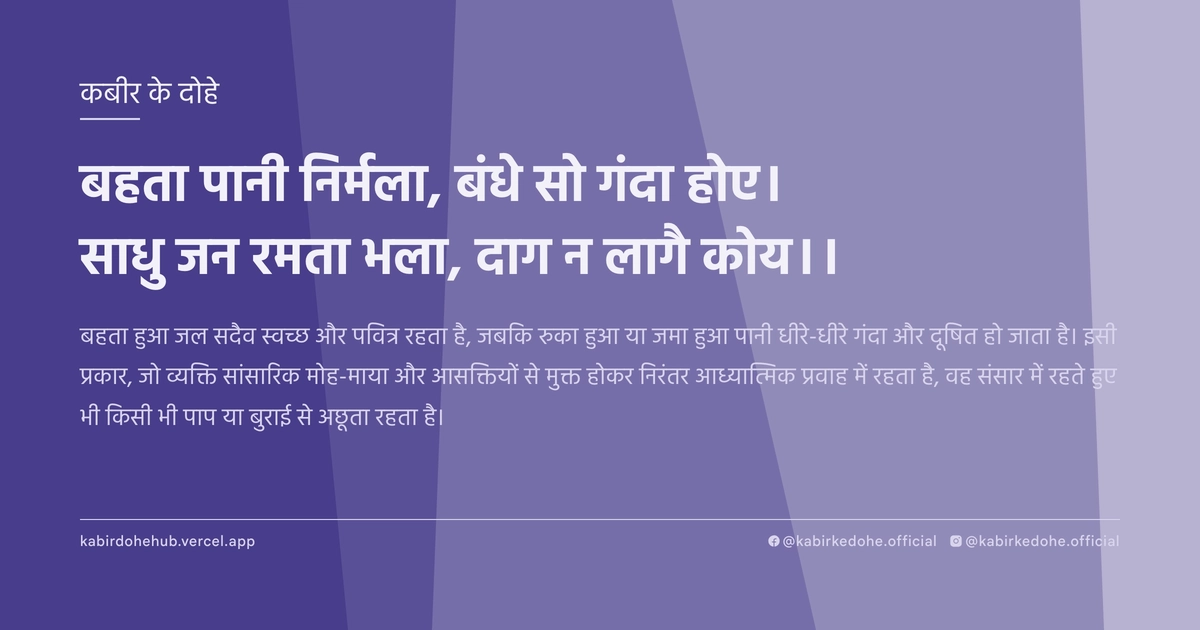
बहता पानी निर्मला, बंधे सो गंदा होए।
साधु जन रमता भला, दाग न लागै कोय।।
Behta paani nirmala, bandhe so ganda hoye. Sadhu jan ramta bhala, daag na laagai koy.
इस पृष्ठ पर इस कबीर दोहे का अर्थ (meaning), हिंदी व्याख्या और अंग्रेज़ी अनुवाद, दार्शनिक विश्लेषण और व्यावहारिक जीवन सीख दी गई है। यह दोहा वैराग्य (Detachment) विषय से जुड़ा है — Kabir doha meaning and explanation in Hindi and English.
अर्थ (Meaning):
बहता हुआ जल सदैव स्वच्छ और पवित्र रहता है, जबकि रुका हुआ या जमा हुआ पानी धीरे-धीरे गंदा और दूषित हो जाता है। इसी प्रकार, जो व्यक्ति सांसारिक मोह-माया और आसक्तियों से मुक्त होकर निरंतर आध्यात्मिक प्रवाह में रहता है, वह संसार में रहते हुए भी किसी भी पाप या बुराई से अछूता रहता है।
Flowing water remains eternally pure and crystal clear, whereas stagnant water inevitably becomes murky and contaminated. Similarly, a realized soul who remains in a state of constant spiritual flow, detached from worldly attachments, moves through the world without being stained by its impurities or vices.
व्याख्या (Interpretation):
इस दोहे में कबीर 'प्रवाह' और 'ठहराव' के माध्यम से जीवन की मौलिक सच्चाई को समझाते हैं। शाब्दिक अर्थ में यह जल की प्रकृति है, लेकिन रूपक के तौर पर 'बहता पानी' उस चेतना का प्रतीक है जो किसी एक विचार, व्यक्ति या वस्तु से नहीं चिपकी है। जब हम किसी चीज़ से अत्यधिक मोह करते हैं, तो हम मानसिक रूप से 'बंध' जाते हैं, जिससे अहंकार और ईर्ष्या जैसे विकार जन्म लेते हैं। निर्गुण भक्ति के अनुसार, ईश्वर किसी मंदिर या मूर्ति में नहीं, बल्कि इस निरंतर प्रवाह में है। अद्वैत वेदांत के परिप्रेक्ष्य में, जब आत्मा स्वयं को शरीर या सामाजिक पहचान से अलग कर ब्रह्म के अनंत प्रवाह में विलीन कर देती है, तो वह माया के प्रभाव से मुक्त हो जाती है। यहाँ 'साधु' का अर्थ केवल गेरुआ वस्त्र पहनने वाला नहीं, बल्कि वह है जिसकी बुद्धि स्थिर है और हृदय विरक्त है।
In this couplet, Kabir utilizes the metaphor of 'flow' versus 'stagnation' to illustrate a fundamental spiritual truth. Literally, it describes the nature of water, but metaphorically, 'flowing water' represents a consciousness that refuses to cling to any single thought, person, or material possession. When we attach ourselves deeply to the ephemeral, we become 'bound,' creating a psychic stagnation where ego, jealousy, and greed fester. From the perspective of Nirgun Bhakti, the Divine is not found in static idols but in the dynamic flow of existence. In Advaita Vedanta, when the Atman ceases to identify with the limited ego and recognizes its non-duality with Brahman, it transcends the illusions of Maya. The 'Sadhu' mentioned here is not merely a religious ascetic, but anyone whose intellect remains fluid and whose heart is detached, allowing them to exist in the world without being consumed by it.
दार्शनिक विश्लेषण (Philosophical Analysis):
कबीर का यह दर्शन उस समय के कट्टरपंथी धार्मिक ढांचे पर एक गहरा प्रहार था, जहाँ पवित्रता को बाहरी कर्मकांडों, जैसे स्नान या मंत्रोच्चार, से जोड़ा जाता था। कबीर तर्क देते हैं कि पवित्रता बाहरी क्रिया में नहीं, बल्कि आंतरिक गतिशीलता में है। यदि मन संकीर्ण है, तो गंगा स्नान भी उसे शुद्ध नहीं कर सकता। यह विचार सूफी मत के 'फना' (अहंकार का विनाश) के करीब है, जहाँ साधक अपनी व्यक्तिगत पहचान को ईश्वर की इच्छा के प्रवाह में समर्पित कर देता है।
ऐतिहासिक रूप से, कबीर ने जाति व्यवस्था और सामाजिक श्रेणीबद्धता को चुनौती दी, क्योंकि ये व्यवस्थाएं मनुष्य को एक निश्चित 'खाने' में बांध देती हैं। जब व्यक्ति खुद को केवल एक जाति का सदस्य मानता है, तो वह 'बंधा हुआ पानी' बन जाता है। प्रवाह का अर्थ है—सभी सीमाओं को तोड़कर सार्वभौमिक सत्य की ओर बढ़ना।
अद्वैत वेदांत के अनुसार, संसार एक माया है। जो व्यक्ति इस माया को सत्य मानकर उससे चिपक जाता है, वह दुख और अशुद्धि का अनुभव करता है। लेकिन जो यह जान लेता है कि वह स्वयं शुद्ध चैतन्य है, वह संसार की गंदगी के बीच रहकर भी कमल के पत्ते की तरह अछूता रहता है।
मनोवैज्ञानिक स्तर पर, यह दोहा 'संलग्नता' (Attachment) और 'जुड़ाव' (Connection) के बीच अंतर स्पष्ट करता है। जुड़ाव प्रेम है, जबकि संलग्नता बंधन है। जब हम किसी से प्रेम करते हैं लेकिन उसे नियंत्रित करने की कोशिश नहीं करते, तो हम बहते रहते हैं। जब हम स्वामित्व की भावना लाते हैं, तो हम ठहर जाते हैं और मानसिक तनाव का शिकार होते हैं।
अंततः, कबीर यह समझाते हैं कि मोक्ष कहीं बाहर नहीं, बल्कि वर्तमान क्षण में पूर्णतः उपस्थित रहने और बिना किसी अपेक्षा के जीवन को जीने में है। जो व्यक्ति 'कर्ता' होने के अहंकार को त्याग कर स्वयं को केवल एक माध्यम (instrument) मान लेता है, वह आध्यात्मिक रूप से निर्मल हो जाता है।
Kabir’s philosophy serves as a profound critique of the rigid religious structures of his era, which equated purity with external rituals such as ceremonial bathing or the recitation of mantras. He argues that true purity is not found in ritualistic action but in internal dynamism. If the mind remains narrow and clinging, even a dip in the Ganges cannot cleanse the soul. This resonates deeply with the Sufi concept of 'Fana' (the annihilation of the self), where the seeker surrenders their individual ego to the overarching will of the Divine flow.
Historically, Kabir challenged the caste system and social hierarchies because these structures forced individuals into static identities. When a person identifies solely with a caste or a social rank, they become like 'stagnant water.' To flow is to break these artificial boundaries and move toward a universal truth that transcends social labels.
From the lens of Advaita Vedanta, the world is Maya—an illusion. One who mistakes this illusion for the ultimate reality and clings to it experiences suffering and spiritual impurity. However, the one who realizes their identity as pure consciousness remains untouched by the world's impurities, much like a lotus leaf that stays dry despite being submerged in water.
Psychologically, this couplet distinguishes between 'Attachment' and 'Connection.' Connection is rooted in love and freedom, while attachment is rooted in ownership and fear. When we love without the desire to possess, we maintain our spiritual fluidity. The moment we seek ownership, we stagnate, leading to psychological distress and emotional decay.
Ultimately, Kabir suggests that liberation is not a destination but a way of being. By relinquishing the ego of the 'doer' and viewing oneself as a mere instrument of the cosmic flow, an individual achieves a state of primordial purity. The goal is to exist in the world, but not be of the world.
मूल संदेश (Core Message):
- आसक्ति ही मानसिक अशुद्धि का मूल कारण है।
- निरंतरता और प्रवाह ही आध्यात्मिक जीवंतता की कुंजी है।
- अहंकार का त्याग ही वास्तविक पवित्रता का मार्ग है।
- संसार में रहें, पर संसार को अपने भीतर न बसने दें।
- मुक्ति बाहरी बदलाव में नहीं, आंतरिक विरक्ति में है।
- Attachment is the root cause of all mental impurity.
- Continuity and flow are the keys to spiritual vitality.
- The relinquishment of ego is the only path to true purity.
- Live in the world, but do not let the world reside within you.
- Liberation lies not in external change, but in internal detachment.
व्यावहारिक उदाहरण (Practical Example):
वाराणसी के घाटों पर रहने वाली एक वृद्ध विधवा, जानकी, का जीवन अत्यंत कठिन था। वह दूसरों के घरों में छोटे-मोटे काम करके अपना गुजारा करती थी। शहर के कई लोग उसे उसकी सामाजिक स्थिति के कारण उपेक्षा करते थे, और कुछ उसे दया की दृष्टि से देखते थे। जानकी के मन में लंबे समय तक इस अन्याय के प्रति गहरा क्रोध और कड़वाहट जमा रही थी। वह खुद को एक पीड़ित मानती थी और समाज से नफरत करने लगी थी। उसका मन उस ठहरे हुए गंदे पानी की तरह हो गया था, जिसमें केवल शिकायतें और दुख तैर रहे थे।
एक दिन, वह एक पुराने मंदिर की सीढ़ियों पर बैठी थी, जहाँ उसने एक फकीर को सुना जो कबीर के इसी दोहे का पाठ कर रहा था। फकीर ने कहा, 'जो पकड़ कर बैठता है, वही सड़ता है; जो छोड़ देता है, वही निखरता है।' जानकी को अचानक महसूस हुआ कि उसका क्रोध उसे ही अंदर से खोखला कर रहा है। वह समाज को बदलने की कोशिश कर रही थी, लेकिन खुद को उस नफरत के बंधन में जकड़े हुए था।
उसने तय किया कि वह अब अपनी पहचान एक 'पीड़ित' के रूप में नहीं, बल्कि एक 'सेवा करने वाली' के रूप में करेगी। उसने अपने मन के उस ठहरे हुए पानी को बहाना शुरू किया। उसने उन लोगों की भी मदद करना शुरू किया जिन्होंने उसे दुत्कारा था, लेकिन बिना किसी उम्मीद या बदले की भावना के। उसने यह स्वीकार कर लिया कि लोग जैसे हैं, वैसे ही रहेंगे, लेकिन वह अपनी शांति को उनके व्यवहार का बंधक नहीं बनाएगी।
धीरे-धीरे, जानकी के चेहरे पर एक ऐसी चमक आई जो पहले कभी नहीं थी। वह अब शिकायतें नहीं करती थी। जब लोग उससे पूछते कि वह इतनी खुश कैसे है, तो वह बस मुस्कुरा देती। उसका जीवन अब एक प्रवाह बन गया था।
एक बार शहर में भारी बाढ़ आई। जानकी ने अपनी छोटी सी झोपड़ी की परवाह किए बिना, कई अजनबियों की जान बचाई और उन्हें सुरक्षित स्थान पर पहुँचाया। लोग हैरान थे कि जिस महिला को उन्होंने कभी सम्मान नहीं दिया, वह उनके लिए इतना बड़ा त्याग कैसे कर सकती है।
उसने महसूस किया कि जब उसने अपनी 'अहंकारित पहचान' और 'दुख की कहानी' को छोड़ दिया, तो वह वास्तव में स्वतंत्र हो गई। वह अब उस बहते पानी की तरह थी जिसे कोई भी गंदगी स्थायी रूप से गंदा नहीं कर सकती थी।
उसका परिवर्तन केवल बाहरी नहीं था; उसका आंतरिक द्वंद्व समाप्त हो गया था। उसने पाया कि क्षमा करना वास्तव में दूसरे पर उपकार नहीं, बल्कि स्वयं को मुक्त करना है।
अंत में, जानकी वाराणसी की गलियों में एक ऐसी मिसाल बन गई, जहाँ लोग शांति की तलाश में उसके पास आने लगे। उसने साबित कर दिया कि पवित्रता किसी कुल या स्थिति में नहीं, बल्कि मन के विरक्त भाव में होती है।
Janaki, an elderly widow living on the ghats of Varanasi, led a life of immense hardship. She survived by doing menial chores in various households. Many in the city ignored her due to her social standing, while others looked at her with a condescending pity. For years, a deep reservoir of anger and bitterness had accumulated within Janaki. She viewed herself as a victim and grew to resent the society that had marginalized her. Her mind had become like stagnant water, where only complaints and sorrow floated on the surface.
One day, while sitting on the steps of an ancient temple, she overheard a wandering fakir reciting this very doha of Kabir. The fakir remarked, 'He who clings, decays; he who lets go, shines.' Suddenly, Janaki realized that her anger was not harming her oppressors, but was hollowing her own soul. She had been trying to change the world, while remaining shackled by her own hatred.
She decided to stop identifying as a 'victim' and instead began to identify as a 'servant of humanity.' She started letting the stagnant water of her heart flow. She began helping even those who had once scorned her, but she did so without any expectation of gratitude or reward. She accepted that people might never change, but she refused to let her peace be a hostage to their behavior.
Gradually, a radiance appeared on Janaki's face that had never been there before. She stopped complaining. When people asked how she remained so serene despite her circumstances, she would simply smile.
One year, a devastating flood hit the city. Without a second thought for her own meager hut, Janaki risked her life to save several strangers, guiding them to safety. The townspeople were stunned that a woman they had never respected could show such profound selflessness.
Janaki realized that by letting go of her 'injured identity' and her 'story of suffering,' she had finally become free. She was now like the flowing water, which no amount of external filth could permanently stain.
Her transformation was not merely behavioral; her internal conflict had ceased. She discovered that forgiveness is not a favor done for another, but a liberation granted to oneself.
Eventually, Janaki became a beacon of peace in the alleys of Varanasi. People began seeking her out for spiritual solace. She proved that purity does not reside in one's lineage or social status, but in the detached state of the mind.
अभ्यास मार्गदर्शन (Practice Guidance):
- प्रतिदिन 20 मिनट 'साक्षी भाव' का अभ्यास करें: अपने विचारों को बिना किसी निर्णय के केवल आते-जाते देखें, जैसे आप नदी के किनारे खड़े होकर पानी को बहते देख रहे हों।
- आत्म-पूछताछ जर्नल: हर रात लिखें कि आज आपने किस बात या व्यक्ति के प्रति 'पकड़' (attachment) महसूस की और उस पकड़ को छोड़ने के लिए आप क्या कर सकते हैं।
- व्यवहार परिवर्तन: दिन में कम से कम एक ऐसा कार्य करें जिसके लिए आप बदले में किसी प्रशंसा या फल की अपेक्षा न करें, ताकि 'कर्ता' का अहंकार कम हो सके।
- निदान चेकलिस्ट: यदि आप छोटी बातों पर चिढ़ रहे हैं, दूसरों की सफलता से जल रहे हैं, या अतीत की गलतियों को याद कर दुखी हो रहे हैं, तो समझें कि आपका मानसिक जल 'ठहर' गया है और उसे प्रवाह की आवश्यकता है।
- Practice 'Witness Consciousness' for 20 minutes daily: Observe your thoughts passing by without judgment, as if you are standing on a riverbank watching the water flow.
- Self-Inquiry Journaling: Every night, record instances where you felt a 'clinging' (attachment) to a person or outcome, and explore how you can release that grip.
- Behavioral Shift: Perform at least one act of service daily without any expectation of praise or reward, specifically to dissolve the ego of the 'doer.'
- Diagnostic Checklist: If you find yourself irritated by trivialities, envious of others' success, or ruminating on past mistakes, recognize that your mental waters have become 'stagnant' and require the movement of detachment.
चिंतन प्रश्न (Reflection Questions):
- मेरे जीवन का वह कौन सा 'ठहरा हुआ पानी' है—वह कौन सी पुरानी याद या नफरत है जिसे मैं अब तक पकड़ कर बैठा हूँ?
- क्या मेरी सामाजिक पहचान (पद, प्रतिष्ठा, जाति) मुझे एक सीमित दायरे में बांध रही है, जिससे मैं दूसरों को वास्तव में नहीं देख पा रहा?
- जब मैं दूसरों की मदद करता हूँ, तो क्या मैं वास्तव में निस्वार्थ होता हूँ, या मैं अपनी 'अच्छे इंसान' वाली छवि को पुष्ट कर रहा होता हूँ?
- मेरे डिजिटल जीवन (सोशल मीडिया) में मैं किस तरह की 'छवि' को बनाए रखने के लिए संघर्ष कर रहा हूँ, और यह संघर्ष मुझे कितना तनाव दे रहा है?
- यदि आज मेरी सारी उपलब्धियाँ और पहचान छीन ली जाएँ, तो क्या मेरे भीतर कुछ ऐसा बचेगा जो अभी भी निर्मल और शांत है?
- What is the 'stagnant water' in my life—which old memory or grudge am I still clinging to?
- Is my social identity (rank, prestige, caste) confining me to a narrow box, preventing me from seeing others as they truly are?
- When I help others, am I truly selfless, or am I merely reinforcing my image as a 'good person'?
- What 'persona' am I struggling to maintain in my digital life, and how much stress does this performance cause me?
- If all my achievements and identities were stripped away today, would there be something within me that remains pure and serene?