
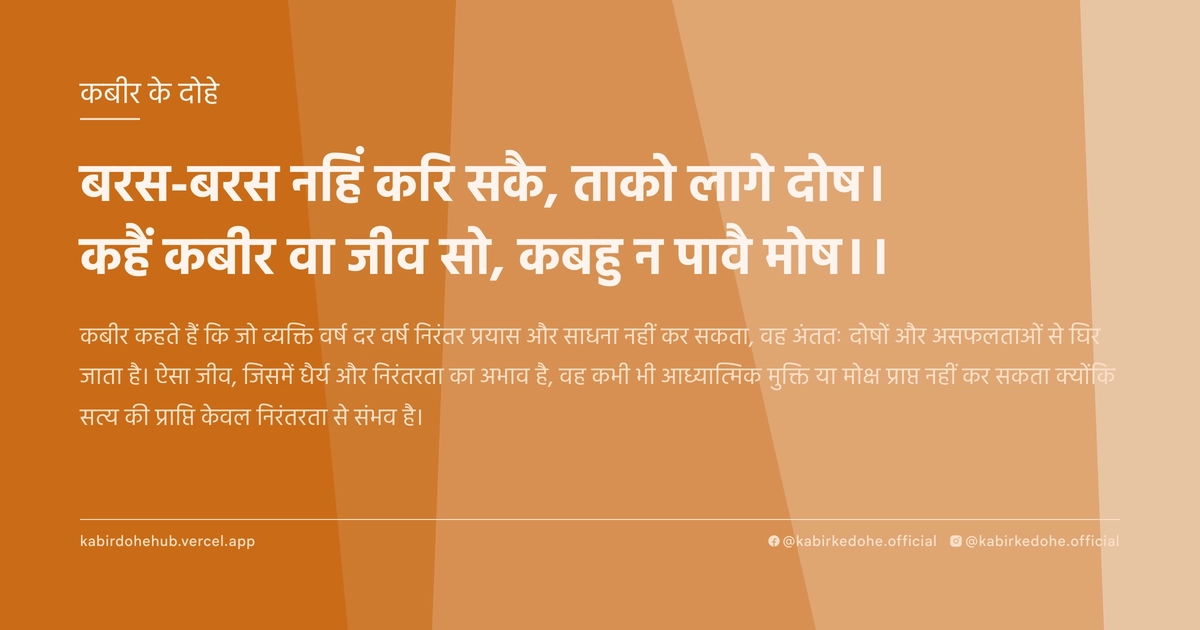
बरस-बरस नहिं करि सकै, ताको लागे दोष।
कहैं कबीर वा जीव सो, कबहु न पावै मोष।।
Baras-baras nahin kari sakai, taako laage dosh. Kahein Kabir va jeev so, kabhu na paave mosh.
इस पृष्ठ पर इस कबीर दोहे का अर्थ (meaning), हिंदी व्याख्या और अंग्रेज़ी अनुवाद, दार्शनिक विश्लेषण और व्यावहारिक जीवन सीख दी गई है। यह दोहा समय का महत्व (The Value of Time) विषय से जुड़ा है — Kabir doha meaning and explanation in Hindi and English.
अर्थ (Meaning):
कबीर कहते हैं कि जो व्यक्ति वर्ष दर वर्ष निरंतर प्रयास और साधना नहीं कर सकता, वह अंततः दोषों और असफलताओं से घिर जाता है। ऐसा जीव, जिसमें धैर्य और निरंतरता का अभाव है, वह कभी भी आध्यात्मिक मुक्ति या मोक्ष प्राप्त नहीं कर सकता क्योंकि सत्य की प्राप्ति केवल निरंतरता से संभव है।
Kabir asserts that an individual who lacks the capacity for consistent, year-after-year spiritual practice and discipline inevitably falls prey to flaws and failures. Such a soul, devoid of perseverance and steadfastness, can never attain liberation (moksha), for the realization of Truth requires an unwavering and continuous commitment.
व्याख्या (Interpretation):
इस दोहे का शाब्दिक अर्थ है कि बिना निरंतर अभ्यास के लक्ष्य प्राप्त नहीं होता। रूपक के स्तर पर, 'बरस-बरस' केवल समय नहीं, बल्कि साधक की तपस्या और धैर्य का प्रतीक है। यह निर्गुण भक्ति के उस मार्ग को दर्शाता है जहाँ ईश्वर किसी बाहरी कर्मकांड से नहीं, बल्कि आंतरिक निरंतरता से मिलता है। माया मनुष्य को विचलित करती है, जिससे वह बीच में ही प्रयास छोड़ देता है। जब तक आत्मा (Atman) अपने अहंकार को मिटाकर ब्रह्म (Brahman) के साथ एकाकार होने के लिए निरंतर प्रयास नहीं करती, तब तक द्वैत बना रहता है। मोक्ष कोई गंतव्य नहीं, बल्कि निरंतरता की एक अवस्था है।
Literally, the verse warns that without persistent effort, one cannot succeed. Metaphorically, 'year after year' symbolizes the spiritual endurance and patience required of a seeker. This aligns with Nirgun Bhakti, where the Divine is reached not through sporadic rituals, but through a constant internal state of remembrance. Maya acts as a disruptive force, causing the seeker to waver and abandon the path. Until the Atman (soul) consistently works to dissolve the ego to merge with Brahman, the illusion of duality persists. Liberation is not a destination to be reached suddenly, but a state achieved through the alchemy of unwavering persistence.
दार्शनिक विश्लेषण (Philosophical Analysis):
कबीर का यह विचार उनके समय के उस सामाजिक और धार्मिक परिवेश की प्रतिक्रिया है जहाँ लोग केवल दिखावे के लिए तीर्थयात्रा या व्रत करते थे। वे 'क्षणिक भक्ति' का खंडन करते हैं और 'निरंतर साधना' पर जोर देते हैं। यह दृष्टिकोण अद्वैत वेदांत के उस सिद्धांत से मेल खाता है जहाँ अज्ञान (Avidya) को मिटाने के लिए निरंतर विवेक की आवश्यकता होती है।
सूफी मत के 'इश्क-ए-हकीकी' (दिव्य प्रेम) में भी यही धैर्य माँगा गया है; प्रेमी को अपने महबूब (ईश्वर) के लिए जलना पड़ता है, जो एक लंबी प्रक्रिया है। कबीर यहाँ कर्मकांडीय धर्म की आलोचना कर रहे हैं, जो दावा करता है कि कुछ विशेष मंत्रों या अनुष्ठानों से तुरंत मोक्ष मिल जाएगा।
मनोवैज्ञानिक स्तर पर, यह दोहा 'संज्ञानात्मक अनुशासन' की बात करता है। अहंकार अक्सर शॉर्टकट खोजता है, लेकिन आध्यात्मिक रूपांतरण एक धीमी, दर्दनाक और निरंतर प्रक्रिया है। जो व्यक्ति अपनी आदतों और वासनाओं को धीरे-धीरे नहीं बदलता, वह केवल मानसिक भ्रम में रहता है।
कबीर का 'दोष' शब्द यहाँ केवल पाप नहीं, बल्कि वह मानसिक जड़ता है जो आलस्य और असंतोष से पैदा होती है। जब हम प्रयास छोड़ते हैं, तो हमारा चित्त मलिन हो जाता है, जिससे सत्य का प्रतिबिंब धुंधला पड़ जाता है।
अंततः, यह दोहा इस सत्य को स्थापित करता है कि मोक्ष कोई पुरस्कार नहीं है जो किसी बाहरी शक्ति द्वारा दिया जाता है, बल्कि यह स्वयं के निरंतर परिष्कार का परिणाम है। बिना अनुशासन के भक्ति केवल एक भावना है, साधना नहीं।
Kabir’s insight is a direct critique of the socio-religious climate of his era, where spiritual practice was often reduced to performative acts like sporadic pilgrimages or temporary fasts. He rejects 'momentary devotion' in favor of 'sustained discipline.' This mirrors the Advaita Vedanta principle that removing the veil of ignorance (Avidya) requires a persistent application of discernment (Viveka).
In the Sufi tradition of 'Ishq-e-Haqiqi' (Divine Love), a similar endurance is demanded; the lover must endure the long, burning process of longing for the Beloved. Kabir is dismantling the fallacy of ritualistic religion, which promises instant salvation through specific mantras or ceremonies.
Psychologically, this verse addresses 'cognitive discipline.' The ego always seeks shortcuts, but spiritual transformation is a slow, often painful, and continuous process. Those who fail to gradually dismantle their ingrained habits and desires remain trapped in mental delusions.
The term 'dosh' (fault/defect) here refers not just to sin, but to the mental inertia born of laziness and discontent. When effort ceases, the consciousness becomes clouded, obscuring the reflection of the Ultimate Truth.
Ultimately, the verse establishes that liberation is not a reward bestowed by an external deity, but the inevitable result of one's own continuous refinement. Without discipline, devotion is merely an emotion, not a spiritual practice (Sadhana).
मूल संदेश (Core Message):
- अस्थिरता ही आत्मा की सबसे बड़ी बाधा है।
- सत्य की प्राप्ति तीव्रता से नहीं, निरंतरता से होती है।
- अनुशासन के बिना भक्ति केवल एक मानसिक लहर है।
- अहंकार शॉर्टकट चाहता है, जबकि आत्मा धैर्य मांगती है।
- निरंतर प्रयास ही द्वैत से अद्वैत की ओर ले जाता है।
- मोक्ष कोई गंतव्य नहीं, बल्कि एक निरंतर चलने वाली प्रक्रिया है।
- Inconsistency is the greatest obstacle to the soul.
- Truth is realized through persistence, not intensity.
- Devotion without discipline is merely a mental ripple.
- The ego seeks shortcuts; the soul demands patience.
- Continuous effort is the bridge from duality to non-duality.
- Liberation is not a destination, but a continuous process of becoming.
व्यावहारिक उदाहरण (Practical Example):
वाराणसी के एक पुराने घाट पर रहने वाली एक वृद्ध विधवा, जानकी, का जीवन अत्यंत कठिन था। वह दूसरों के घरों में बर्तन मांजकर अपना गुजारा करती थी। उसके मन में ईश्वर के प्रति गहरी श्रद्धा थी, लेकिन वह अक्सर निराश हो जाती थी क्योंकि उसे लगता था कि उसकी प्रार्थनाओं का कोई फल नहीं मिल रहा है। वह कभी घंटों रोती, तो कभी हफ्तों के लिए मौन धारण कर लेती, लेकिन उसकी साधना में निरंतरता नहीं थी।
एक दिन उसकी मुलाकात एक घुमक्कड़ संत से हुई, जिसने उसे कबीर का यह दोहा सुनाया। संत ने उसे समझाया कि ईश्वर कोई ऐसी मशीन नहीं है जिसमें एक बार सिक्का डालने पर फल मिल जाए, बल्कि यह एक पौधे की तरह है जिसे रोज पानी देना पड़ता है।
जानकी ने अपनी जीवनशैली बदली। उसने तय किया कि वह चाहे कितनी भी थकी हो, हर सुबह केवल दस मिनट शांत बैठकर अपने भीतर के प्रकाश को देखेगी। शुरू में उसे लगा कि कुछ नहीं बदल रहा। कई महीने बीत गए, और उसकी गरीबी वैसी ही रही।
लेकिन धीरे-धीरे, उसके भीतर एक अद्भुत बदलाव आया। अब उसे दूसरों की कड़वी बातें परेशान नहीं करती थीं। उसका मन शांत रहने लगा। वह अब केवल मोक्ष की इच्छा नहीं करती थी, बल्कि वर्तमान क्षण में जीना सीख गई थी।
एक समय ऐसा आया जब उसकी इसी शांति और धैर्य को देखकर मोहल्ले के लोग उसके पास सलाह लेने आने लगे। वह अब केवल एक बर्तन मांजने वाली महिला नहीं, बल्कि एक मार्गदर्शक बन गई थी।
उसने महसूस किया कि उसकी 'दोष' उसकी गरीबी नहीं, बल्कि उसकी अस्थिरता थी। जब उसने निरंतरता को अपनाया, तो उसका जीवन स्वयं में एक मोक्ष बन गया।
उसकी कहानी यह सिखाती है कि आध्यात्मिक प्रगति छलाँग लगाने से नहीं, बल्कि छोटे-छोटे लेकिन निरंतर कदमों से होती है।
अंततः, जानकी ने पाया कि जिस मोक्ष को वह मृत्यु के बाद खोज रही थी, वह तो उसके दैनिक अनुशासन की शांति में ही छिपा था।
In the ancient ghats of Varanasi lived Janaki, an elderly widow whose life was a struggle. She earned a meager living scrubbing pots in other people's homes. Though she possessed deep faith, she was often plagued by despair, feeling that her prayers yielded no fruit. Her spiritual attempts were erratic—sometimes she would weep for hours in devotion, other times she would fall into a void of silence for weeks, lacking any steady rhythm.
One day, she encountered a wandering ascetic who recited this specific Doha of Kabir to her. The saint explained that the Divine is not a vending machine where a single coin guarantees a reward, but rather a seed that requires daily watering to grow.
Janaki decided to change her approach. She committed to sitting in silence for just ten minutes every morning, observing the inner light, regardless of how exhausted she was. Initially, it felt as though nothing was changing. Months passed, and her poverty remained unchanged.
However, a subtle transformation began to unfold within her. The harsh words of her employers no longer wounded her. Her mind attained a rare stillness. She stopped craving a distant liberation and began to inhabit the present moment fully.
Eventually, the people of her neighborhood, drawn by her radiating peace and patience, began seeking her guidance. She was no longer seen merely as a woman who scrubbed pots, but as a beacon of wisdom.
She realized that her 'dosh' (defect) was not her poverty, but her inconsistency. Once she embraced persistence, her very existence became a form of liberation.
Her story illustrates that spiritual progress is not achieved through sudden leaps, but through small, consistent steps taken with awareness.
In the end, Janaki discovered that the moksha she had been seeking for the afterlife was hidden within the stillness of her daily discipline.
अभ्यास मार्गदर्शन (Practice Guidance):
- दैनिक अभ्यास: प्रतिदिन एक निश्चित समय (जैसे ब्रह्म मुहूर्त) में 15-20 मिनट मौन बैठें। लक्ष्य फल प्राप्त करना नहीं, बल्कि केवल उस समय में उपस्थित रहना है।
- आत्म-पूछताछ जर्नल: हर रात लिखें कि आज आपने कहाँ धैर्य खोया और किस बिंदु पर आपकी निरंतरता टूटी। इसे बिना किसी निर्णय के केवल एक साक्षी की तरह देखें।
- व्यवहारिक परिवर्तन: किसी भी एक छोटे कार्य (जैसे सुबह उठकर बिस्तर ठीक करना या कृतज्ञता व्यक्त करना) को बिना किसी चूक के 40 दिनों तक करें। यह मानसिक अनुशासन विकसित करेगा।
- डायग्नोस्टिक चेकलिस्ट: क्या आप केवल संकट के समय प्रार्थना करते हैं? क्या आप नई आध्यात्मिक पुस्तकों को शुरू तो करते हैं पर पूरा नहीं पढ़ते? क्या आपकी शांति आपकी मनोदशा (mood) पर निर्भर है? यदि हाँ, तो आप 'दोष' की स्थिति में हैं।
- Daily Practice: Sit in silence for 15-20 minutes at a fixed time (such as Brahmamuhurta). The goal is not to achieve a specific result, but simply to be present in that moment.
- Self-Inquiry Journal: Every night, record where you lost patience and at what point your consistency broke. Observe this as a witness, without judgment.
- Behavioral Shift: Choose one small task (e.g., making your bed or practicing gratitude) and perform it without fail for 40 consecutive days to build mental discipline.
- Diagnostic Checklist: Do you pray only during crises? Do you start new spiritual books but never finish them? Is your peace dependent on your mood? If yes, you are operating within the 'dosh' (defect) of inconsistency.
चिंतन प्रश्न (Reflection Questions):
- मैं अपनी आध्यात्मिक यात्रा में 'शॉर्टकट' कहाँ खोज रहा हूँ?
- क्या मेरी भक्ति केवल तब जागती है जब मैं दुखी होता हूँ, या यह मेरी स्वाभाविक स्थिति है?
- मेरे जीवन का वह कौन सा क्षेत्र है जहाँ मैं निरंतरता के अभाव के कारण बार-बार असफल हो रहा हूँ?
- क्या मैं वास्तव में सत्य की खोज कर रहा हूँ, या मैं केवल 'खोजने का नाटक' करने के सुख में हूँ?
- मेरे भीतर का वह कौन सा डर है जो मुझे एक ही मार्ग पर टिके रहने से रोकता है?
- यदि मोक्ष एक लंबी और धीमी प्रक्रिया है, तो क्या मैं उस बोरियत को सहने के लिए तैयार हूँ?
- Where am I seeking 'shortcuts' in my spiritual journey?
- Does my devotion awaken only during times of distress, or is it my natural state of being?
- In which area of my life am I repeatedly failing due to a lack of consistency?
- Am I truly seeking the Truth, or am I merely enjoying the 'act of seeking'?
- What is the fear within me that prevents me from staying on a single path?
- If liberation is a long and slow process, am I prepared to endure the boredom of consistency?