
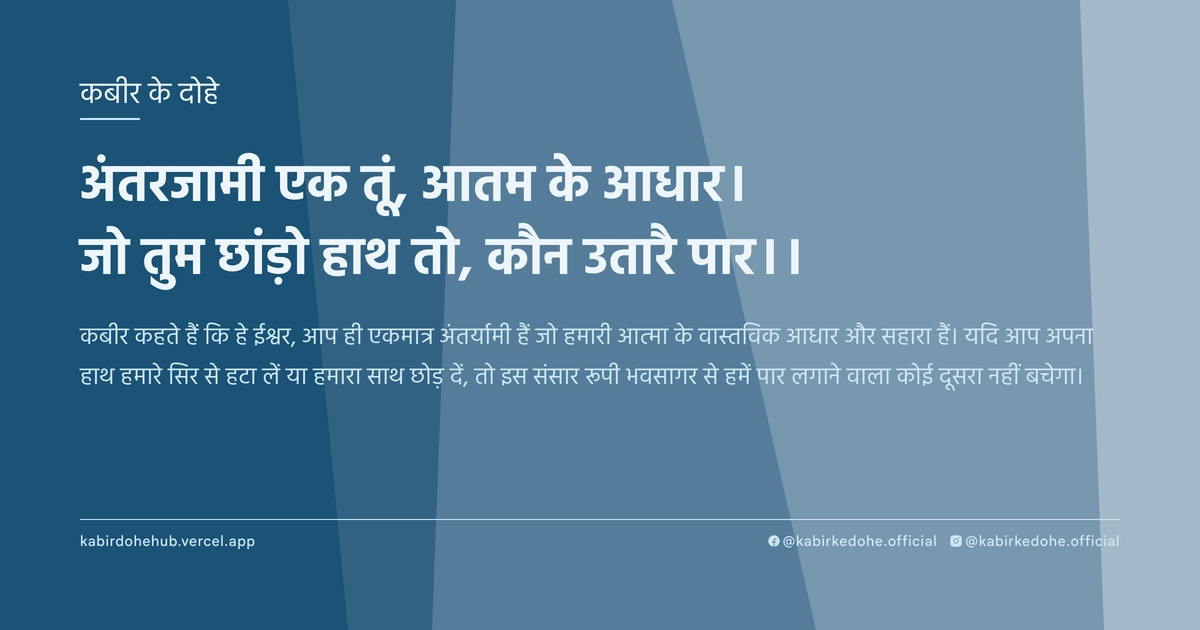
अंतरजामी एक तूं, आतम के आधार।
जो तुम छांड़ो हाथ तो, कौन उतारै पार।।
Antarjami ek tun, aatam ke adhaar. Jo tum chhando haath to, kaun utarai paar.
इस पृष्ठ पर इस कबीर दोहे का अर्थ (meaning), हिंदी व्याख्या और अंग्रेज़ी अनुवाद, दार्शनिक विश्लेषण और व्यावहारिक जीवन सीख दी गई है। यह दोहा प्रपत्ति (Surrender) विषय से जुड़ा है — Kabir doha meaning and explanation in Hindi and English.
अर्थ (Meaning):
कबीर कहते हैं कि हे ईश्वर, आप ही एकमात्र अंतर्यामी हैं जो हमारी आत्मा के वास्तविक आधार और सहारा हैं। यदि आप अपना हाथ हमारे सिर से हटा लें या हमारा साथ छोड़ दें, तो इस संसार रूपी भवसागर से हमें पार लगाने वाला कोई दूसरा नहीं बचेगा।
Kabir addresses the Divine, stating that You alone are the Inner Witness and the fundamental support of the soul. If You were to release Your grip or withdraw Your grace, there is no other power in existence capable of ferrying the soul across the turbulent ocean of worldly existence.
व्याख्या (Interpretation):
इस दोहे का शाब्दिक अर्थ है कि परमात्मा ही एकमात्र रक्षक है। गहरे स्तर पर, यह 'निर्गुण भक्ति' की उस अवस्था को दर्शाता है जहाँ साधक यह अनुभव करता है कि बाहरी दुनिया एक माया है और केवल आंतरिक चेतना (ब्रह्म) ही सत्य है। यहाँ 'हाथ छोड़ना' अहंकार के विसर्जन और पूर्ण समर्पण का प्रतीक है। यह अद्वैत वेदांत के उस सिद्धांत को पुष्ट करता है कि आत्मा और परमात्मा अलग नहीं हैं, बल्कि आत्मा परमात्मा का ही अंश है। जब तक मनुष्य स्वयं को अलग मानता है, वह डूबता रहता है, लेकिन जब वह इस आधार को पहचान लेता है, तो वह मुक्त हो जाता है। यह विरोधाभास है कि जिसे हम बाहर खोजते हैं, वह वास्तव में हमारे भीतर का ही आधार है।
Literally, the verse asserts that God is the sole savior. Metaphorically, it delves into the depths of Nirgun Bhakti, where the seeker realizes that the external world is Maya (illusion) and only the inner consciousness (Brahman) is real. The act of 'releasing the hand' symbolizes the surrender of the ego and the necessity of divine grace. This aligns with Advaita Vedanta, suggesting the non-duality of Atman and Brahman; the soul is not separate from the Divine but is supported by it. The central paradox lies in the human condition: we seek a savior externally while ignoring the very foundation of our existence within. Liberation occurs only when the individual identity dissolves into this universal support.
दार्शनिक विश्लेषण (Philosophical Analysis):
कबीर का यह दोहा उनके समय के कर्मकांडीय और बाहरी आडंबरों के विरुद्ध एक सशक्त प्रहार है। जहाँ उस समय लोग तीर्थों, मूर्तियों और बाहरी गुरुओं में मोक्ष खोज रहे थे, कबीर ने 'अंतरजामी' (Inner Witness) पर जोर दिया। यह दृष्टिकोण सूफी मत के 'इन्सान-ए-कामिल' और वेदांत के 'साक्षी भाव' का संगम है। कबीर तर्क देते हैं कि यदि ईश्वर हमारे भीतर है, तो बाहरी अनुष्ठान व्यर्थ हैं।
दार्शनिक रूप से, यह दोहा 'शरणागति' (Surrender) के मनोविज्ञान पर आधारित है। जब मनुष्य यह स्वीकार करता है कि उसकी अपनी बुद्धि और अहंकार उसे पार नहीं लगा सकते, तब वह वास्तविक आध्यात्मिक यात्रा शुरू करता है। यह अहंकार का विलोपन है, जिसे सूफी परंपरा में 'फना' कहा गया है।
यहाँ 'आधार' शब्द अत्यंत महत्वपूर्ण है। यह केवल एक सहारे की बात नहीं है, बल्कि उस तत्व की बात है जिससे सब कुछ उत्पन्न हुआ है। यह अद्वैतवाद की वह स्थिति है जहाँ द्वैत (मैं और तू) समाप्त हो जाता है और केवल एक ही सत्ता शेष रहती है।
कबीर जाति और धर्म की सीमाओं को तोड़ते हुए यह संदेश देते हैं कि ईश्वर किसी विशेष समुदाय का नहीं, बल्कि हर उस आत्मा का है जो अपनी आंतरिक गहराई में उतरने का साहस रखती है। यह सामाजिक समानता का एक आध्यात्मिक आधार प्रस्तुत करता है।
अंततः, यह दोहा चेतावनी देता है कि मानवीय अहंकार सबसे बड़ा अवरोध है। जब तक हम सोचते हैं कि हम अपनी मेहनत या ज्ञान से 'पार' उतर जाएंगे, हम वास्तव में डूब रहे होते हैं। केवल उस अंतर्यामी के प्रति पूर्ण समर्पण ही वास्तविक मुक्ति का मार्ग है।
This couplet is a potent critique of the ritualistic and external pomposity prevalent during Kabir's era. While contemporaries sought salvation in pilgrimages, idols, and external intermediaries, Kabir emphasizes the 'Antarjami' (Inner Witness). This perspective merges the Sufi concept of the 'Perfect Man' with the Vedantic 'Sakshi' (Witness) consciousness. Kabir argues that if the Divine resides within, external rituals are redundant.
Philosophically, the verse is rooted in the psychology of 'Sharanagati' (Total Surrender). When a human accepts that their own intellect and ego are insufficient to cross the ocean of existence, the true spiritual journey begins. This is the annihilation of the ego, termed 'Fana' in Sufi traditions.
The term 'Aadhar' (Foundation/Support) is crucial here. It does not merely refer to a helping hand but to the primordial element from which all existence emanates. This reflects the state of Advaita (non-duality), where the distinction between the seeker and the sought dissolves, leaving only one Absolute Reality.
By transcending caste and religious boundaries, Kabir posits that the Divine belongs not to a specific community, but to every soul brave enough to dive into its own depths. He provides a spiritual foundation for social equality, stripping away the labels of the world.
Ultimately, the verse warns that the human ego is the primary obstacle. As long as we believe our own effort or knowledge can 'ferry' us across, we remain submerged. Only absolute surrender to the Inner Witness constitutes the path to genuine liberation.
मूल संदेश (Core Message):
- अहंकार की झूठी पकड़ को छोड़ना ही वास्तविक सुरक्षा है।
- परमात्मा केवल बाहर नहीं, बल्कि आत्मा के सबसे गहरे आधार में है।
- जब 'मैं' मिटता है, तभी 'वह' (आधार) प्रकट होता है।
- पूर्ण समर्पण ही संसार रूपी सागर से पार उतरने का एकमात्र सेतु है।
- आंतरिक साक्षी को पहचानना ही जीवन की सर्वोच्च उपलब्धि है।
- Releasing the false grip of ego is the only true security.
- The Divine is not merely external but the deepest foundation of the soul.
- Only when the 'I' dissolves does the 'Foundation' reveal itself.
- Total surrender is the only bridge to cross the ocean of existence.
- Recognizing the Inner Witness is the highest achievement of life.
व्यावहारिक उदाहरण (Practical Example):
एक समय की बात है, वाराणसी के घाटों पर माधव नाम का एक वृद्ध बुनकर रहता था। वह अपनी कला में निपुण था, लेकिन उसका मन हमेशा इस बात की चिंता में रहता था कि उसके बाद उसके परिवार का क्या होगा। वह दिन-रात मेहनत करता, अधिक धन संचित करने की कोशिश करता और हर छोटी बात पर क्रोधित हो जाता क्योंकि उसे लगता था कि सब कुछ उसके अपने कंधों पर टिका है।
माधव का अहंकार उसकी मेहनत में छिपा था। वह सोचता था, "मेरे बिना यह घर बिखर जाएगा, मेरी कुशलता ही इस परिवार का आधार है।"
एक दिन वह एक संत के पास गया और अपनी मानसिक अशांति का कारण बताया। संत ने उसे एक नदी के किनारे ले जाकर कहा, "इस बहती धारा में अपना हाथ डालो और उसे रोकने की कोशिश करो।"
माधव ने पूरी ताकत लगाई, लेकिन पानी उसकी उंगलियों के बीच से बहता रहा। वह थक कर चूर हो गया। तब संत ने मुस्कुराते हुए कहा, "जैसे यह नदी अपनी गति से बह रही है और तुम उसे नियंत्रित नहीं कर सकते, वैसे ही जीवन का प्रवाह भी है। तुम खुद को आधार मान बैठे हो, जबकि आधार वह शक्ति है जो इस नदी को भी चला रही है।"
माधव को एक गहरा झटका लगा। उसे समझ आया कि वह जिसे अपना 'नियंत्रण' समझ रहा था, वह वास्तव में उसका 'अहंकार' था। उसने महसूस किया कि वह केवल एक माध्यम है, कर्ता नहीं।
उस रात माधव ने पहली बार गहरी नींद ली। उसने यह स्वीकार किया कि वह और उसका परिवार उस 'अंतरजामी' के हाथ में हैं। उसने अपनी चिंताएं उस परम आधार को सौंप दीं।
अगले दिन से माधव का व्यवहार बदल गया। वह अब भी मेहनत करता था, लेकिन उसके मन में यह विश्वास था कि परिणाम उसके हाथ में नहीं, बल्कि उस ईश्वर के हाथ में है।
उसने देखा कि जब उसने 'पकड़ने' की कोशिश छोड़ दी, तो जीवन अधिक सहज हो गया। उसका क्रोध शांत हो गया और उसके परिवार में प्रेम बढ़ गया क्योंकि अब वह उन पर नियंत्रण नहीं, बल्कि उनका साथ दे रहा था।
यह माधव का 'कबीर ट्विस्ट' था—कर्ता होने के भ्रम से हटकर, केवल एक निमित्त बन जाना। उसने जाना कि जब हम अपना हाथ उस परम सत्ता के हाथ में देते हैं, तभी हम वास्तव में सुरक्षित होते हैं।
अंततः, माधव ने अपनी सारी संपत्ति का एक हिस्सा गरीबों में बांटना शुरू किया, यह जानते हुए कि असली आधार धन नहीं, बल्कि वह करुणा है जो ईश्वर का स्वरूप है।
Once, on the ghats of Varanasi, lived an elderly weaver named Madhav. He was a master of his craft, yet his mind was perpetually clouded by anxiety over his family's future. He worked tirelessly, obsessively accumulating wealth, and often reacted with anger, believing that everything rested solely on his shoulders.
Madhav's ego was hidden within his diligence. He believed, "Without me, this home would crumble; my skill is the only foundation of this family."
One day, he approached a wandering saint to discuss his mental unrest. The saint led him to the banks of a river and told him, "Place your hand in this flowing current and try to stop the water."
Madhav exerted all his strength, but the water continued to slip through his fingers. He became exhausted and defeated. The saint smiled and said, "Just as this river flows by its own momentum and you cannot control it, so is the flow of life. You have mistaken yourself for the foundation, while the true foundation is the Power that moves the river itself."
Madhav felt a profound shock. He realized that what he perceived as 'control' was actually his 'ego'. He understood that he was merely an instrument, not the ultimate doer.
That night, for the first time in years, Madhav slept deeply. He accepted that he and his family were held in the hands of the 'Antarjami' (Inner Witness).
From the next day, Madhav's behavior transformed. He continued to work hard, but with the conviction that the results were not in his hands, but in the hands of the Divine.
He noticed that once he stopped trying to 'grip' life, existence became more fluid. His anger subsided, and love flourished in his home because he was no longer controlling his family, but supporting them.
This was Madhav's 'Kabir Twist'—shifting from the illusion of being the 'Doer' to becoming a mere 'Instrument'. He learned that we are truly secure only when we place our hand in the hand of the Supreme Power.
Eventually, Madhav began sharing his wealth with the poor, knowing that the real foundation is not money, but the compassion that mirrors the Divine.
अभ्यास मार्गदर्शन (Practice Guidance):
- प्रतिदिन 20 मिनट मौन बैठें और यह अनुभव करें कि आपका अस्तित्व किसी बाहरी प्रयास से नहीं, बल्कि एक आंतरिक शक्ति (आधार) से संचालित है।
- एक 'समर्पण जर्नल' लिखें: दिन भर में उन घटनाओं को नोट करें जहाँ आपने नियंत्रण करने की कोशिश की और असफल रहे, फिर उन्हें 'ईश्वर' या 'प्रकृति' को समर्पित करें।
- व्यवहार परिवर्तन: जब भी क्रोध या चिंता आए, स्वयं से पूछें, "क्या मैं अभी खुद को इस स्थिति का एकमात्र आधार मान रहा हूँ?"
- नैदानिक चेकलिस्ट: यदि आप अत्यधिक तनाव में हैं, नींद नहीं आ रही, या दूसरों को नियंत्रित करने की तीव्र इच्छा है, तो समझें कि आप 'आधार' को भूलकर अहंकार में जी रहे हैं।
- Sit in silence for 20 minutes daily, experiencing that your existence is not driven by external effort, but by an internal Power (the Foundation).
- Maintain a 'Surrender Journal': Note instances where you tried to control a situation and failed, then consciously surrender those events to the Divine or Nature.
- Behavioral Shift: Whenever anger or anxiety arises, ask yourself, "Am I currently pretending to be the sole foundation of this situation?"
- Diagnostic Checklist: If you are experiencing chronic stress, insomnia, or an intense urge to control others, recognize that you are living in ego, having forgotten the True Foundation.
चिंतन प्रश्न (Reflection Questions):
- मेरे जीवन का वह कौन सा क्षेत्र है जहाँ मैं नियंत्रण खोने से सबसे ज्यादा डरता हूँ?
- क्या मेरी 'परिश्रम' की भावना वास्तव में भक्ति है, या यह मेरे अहंकार को पुष्ट करने का एक तरीका है?
- यदि आज मेरी सारी उपलब्धियाँ और पहचान छीन ली जाएँ, तो क्या मैं उस 'आधार' को महसूस कर पाऊँगा?
- मैं अपनी डिजिटल पहचान (सोशल मीडिया) के माध्यम से किस 'झूठे आधार' को दुनिया के सामने पेश कर रहा हूँ?
- मेरे भीतर का वह कौन सा डर है जो मुझे पूर्ण समर्पण करने से रोकता है?
- In which area of my life am I most terrified of losing control?
- Is my sense of 'hard work' truly devotion, or is it a mechanism to reinforce my ego?
- If all my achievements and identities were stripped away today, would I still be able to feel that 'Foundation'?
- What 'false foundation' am I projecting to the world through my digital identity (social media)?
- What is the specific fear within me that prevents me from surrendering completely?