
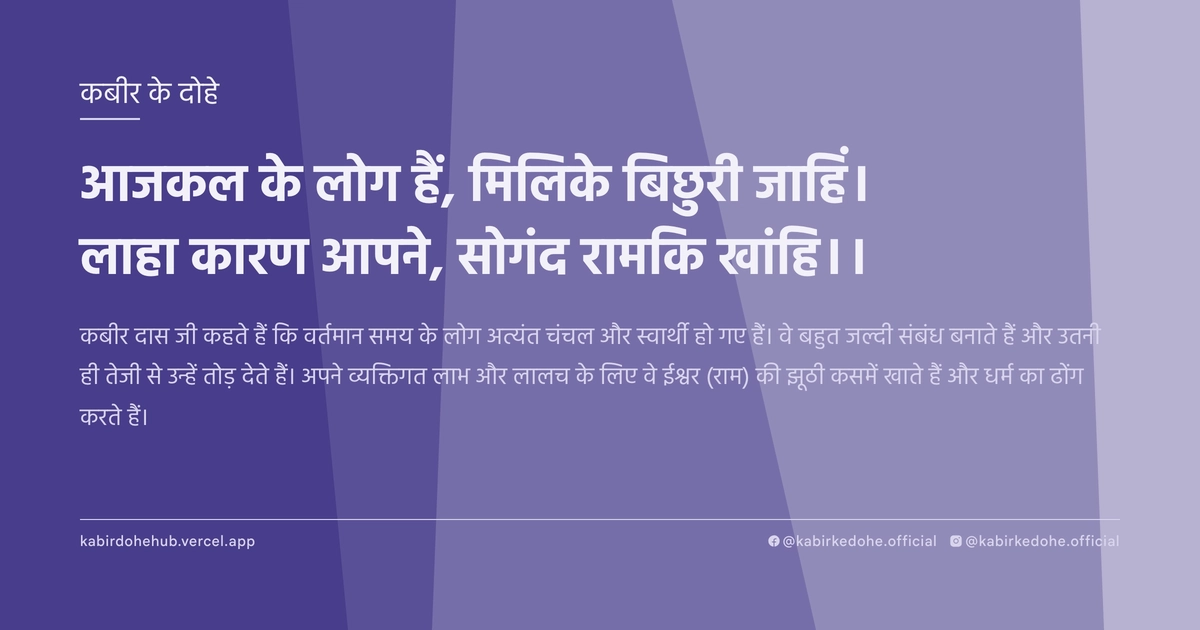
आजकल के लोग हैं, मिलिके बिछुरी जाहिं।
लाहा कारण आपने, सोगंद रामकि खांहि।।
Aajkal ke log hain, milike bichhuri jaahin. Laaha kaaran aapne, sogand ramki khaahin.
इस पृष्ठ पर इस कबीर दोहे का अर्थ (meaning), हिंदी व्याख्या और अंग्रेज़ी अनुवाद, दार्शनिक विश्लेषण और व्यावहारिक जीवन सीख दी गई है। यह दोहा मोह (Attachment) विषय से जुड़ा है — Kabir doha meaning and explanation in Hindi and English.
अर्थ (Meaning):
कबीर दास जी कहते हैं कि वर्तमान समय के लोग अत्यंत चंचल और स्वार्थी हो गए हैं। वे बहुत जल्दी संबंध बनाते हैं और उतनी ही तेजी से उन्हें तोड़ देते हैं। अपने व्यक्तिगत लाभ और लालच के लिए वे ईश्वर (राम) की झूठी कसमें खाते हैं और धर्म का ढोंग करते हैं।
Kabir observes that people of the current age have become profoundly fickle and self-centered. They form bonds rapidly only to sever them just as quickly. Driven by personal greed and material gain, they hypocritically swear oaths in the name of the Divine (Ram) to validate their deceit.
व्याख्या (Interpretation):
यह दोहा मानवीय संबंधों की क्षणभंगुरता और नैतिक पतन पर प्रहार करता है। 'मिलिके बिछुरी जाहिं' केवल शारीरिक अलगाव नहीं, बल्कि विश्वास का टूटना है। यहाँ 'राम' का नाम लेना भक्ति नहीं, बल्कि एक उपकरण है जिसका उपयोग पाखंडी लोग अपने झूठ को सच साबित करने के लिए करते हैं। यह स्थिति 'माया' के प्रभाव को दर्शाती है, जहाँ व्यक्ति अपनी आत्मा के शाश्वत सत्य को भूलकर क्षणिक लाभ (लाहा) के पीछे भागता है। कबीर यहाँ यह समझा रहे हैं कि जब तक अहंकार और लोभ जीवित है, तब तक ईश्वर का नाम केवल एक मुखौटा बना रहेगा। यह द्वैतवाद की पराकाष्ठा है जहाँ मनुष्य स्वयं को ईश्वर से अलग मानकर सांसारिक लाभ को प्राथमिकता देता है।
This couplet strikes at the fragility of human relationships and the erosion of moral integrity. 'Meeting and parting' here refers not merely to physical separation, but to the betrayal of trust. The invocation of 'Ram' is not an act of devotion but a tool used by the hypocritical to lend credibility to their lies. This state exemplifies the grip of 'Maya' (illusion), where the individual forgets the eternal truth of the Atman and chases transient gains (Laaha). Kabir illustrates that as long as the ego and greed persist, the name of God remains a mere mask. This is the peak of duality, where the human perceives themselves as separate from the Divine and prioritizes worldly profit over spiritual truth.
दार्शनिक विश्लेषण (Philosophical Analysis):
कबीर का यह प्रहार उनके युग के सामाजिक और धार्मिक पाखंड के विरुद्ध एक विद्रोह था। वे देखते थे कि कैसे धर्म के नाम पर लोग एक-दूसरे को ठगते थे। यह विश्लेषण 'निर्गुण भक्ति' के मूल सिद्धांतों से जुड़ा है, जहाँ बाहरी कर्मकांडों और शपथों के बजाय आंतरिक शुद्धता पर बल दिया जाता है। कबीर के अनुसार, जो व्यक्ति ईश्वर को केवल अपनी सुविधा के लिए याद करता है, वह वास्तव में ईश्वर को नहीं जानता।
अद्वैत वेदांत के परिप्रेक्ष्य में, यह दोहा 'अविद्या' (अज्ञानता) का वर्णन करता है। जब व्यक्ति यह मानता है कि वह दूसरों से अलग है और उसका लाभ दूसरे की हानि से जुड़ा है, तो वह माया के जाल में फँसा होता है। यहाँ 'लाहा' (लाभ) वह पर्दा है जो आत्मा को उसके वास्तविक स्वरूप से अलग करता है।
सूफी मत के 'नफ्स' (अहंकार) की अवधारणा यहाँ स्पष्ट है। कबीर उस 'नफ्स' की बात कर रहे हैं जो व्यक्ति को स्वार्थी बनाता है। जब तक यह अहंकार नहीं मिटता, तब तक प्रेम और सत्य का अनुभव असंभव है। कबीर का उद्देश्य केवल आलोचना करना नहीं, बल्कि व्यक्ति को उसकी इस निम्न चेतना से जगाना है।
यह दोहा जाति और वर्ग से ऊपर उठकर मानवीय स्वभाव की एक सार्वभौमिक कमजोरी को उजागर करता है। कबीर यह तर्क देते हैं कि धार्मिक पहचान (जैसे राम की शपथ लेना) तब तक व्यर्थ है जब तक कि वह व्यवहार में ईमानदारी और करुणा के रूप में प्रकट न हो।
अंततः, यह मनोवैज्ञानिक रूपांतरण की मांग करता है। कबीर चाहते हैं कि मनुष्य 'बाहरी राम' (नाम) से हटकर 'भीतरी राम' (चेतना) की खोज करे। जब व्यक्ति यह जान लेता है कि दूसरा भी वही आत्मा है, तो वह लाभ के लिए धोखा देने की प्रवृत्ति को त्याग देता है।
Kabir's critique is a rebellion against the social and religious hypocrisy of his era. He witnessed how people used the cloak of religion to deceive others. This analysis is rooted in the principles of 'Nirgun Bhakti', which emphasizes internal purity over external rituals and oaths. According to Kabir, one who remembers God only for convenience does not truly know the Divine.
From the perspective of Advaita Vedanta, this couplet describes 'Avidya' (ignorance). When an individual believes they are separate from others and that their gain necessitates another's loss, they are trapped in the web of Maya. Here, 'Laaha' (profit) is the veil that separates the Atman from its true nature.
The Sufi concept of 'Nafs' (the lower ego) is evident here. Kabir speaks of the ego that drives selfishness. Until this ego is annihilated, the experience of true love and truth remains impossible. Kabir's intent is not merely to criticize but to awaken the individual from this low state of consciousness.
This couplet transcends caste and class to highlight a universal human frailty. Kabir argues that religious identity (such as swearing by Ram) is futile unless it manifests as honesty and compassion in one's behavior.
Ultimately, this calls for a psychological transformation. Kabir urges the seeker to move from the 'External Ram' (the name) to the 'Internal Ram' (the consciousness). Once a person realizes that the other is also the same soul, the impulse to deceive for profit vanishes.
मूल संदेश (Core Message):
- बाहरी शपथ केवल पाखंड है, आंतरिक सत्य ही वास्तविक धर्म है।
- स्वार्थ पर आधारित संबंध रेत के घर की तरह ढह जाते हैं।
- लालच आत्मा की दृष्टि को धुंधला कर देता है, जिससे सत्य ओझल हो जाता है।
- ईश्वर का नाम लेना और ईश्वर जैसा आचरण करना दो अलग बातें हैं।
- सच्चा लाभ वह है जो आत्मा की शांति और ईमानदारी से प्राप्त हो।
- External oaths are mere hypocrisy; internal truth is the only real religion.
- Relationships built on selfishness collapse like houses made of sand.
- Greed clouds the vision of the soul, obscuring the ultimate truth.
- Invoking the name of God and acting with Divine integrity are two different things.
- True profit is that which is gained through peace of soul and honesty.
व्यावहारिक उदाहरण (Practical Example):
वाराणसी के एक पुराने घाट पर माधव नाम का एक वृद्ध बुनकर रहता था। वह अपनी ईमानदारी के लिए जाना जाता था, लेकिन उसके साथ काम करने वाले अन्य बुनकर अक्सर ग्राहकों को घटिया धागा देकर ऊँचे दाम वसूलते थे और कसम खाते थे कि यह सबसे शुद्ध रेशम है। माधव उन्हें चेतावनी देता, लेकिन वे उसका मजाक उड़ाते।
एक दिन, शहर का एक बड़ा व्यापारी आया जिसने बहुत बड़ा ऑर्डर दिया। अन्य बुनकरों ने लालच में आकर माधव के साथ साझेदारी की, लेकिन गुप्त रूप से उन्होंने घटिया माल मिला दिया और व्यापारी के सामने ईश्वर की सौगंध खाई कि काम पूरी ईमानदारी से हुआ है।
व्यापारी चतुर था। उसने माल की जांच करवाई और पाया कि धागा मिलावटी था। उसने न केवल ऑर्डर रद्द कर दिया, बल्कि उन बुनकरों को पूरे बाजार में बदनाम कर दिया। उनकी साख खत्म हो गई और वे दाने-दाने को मोहताज हो गए।
माधव, जिसने अपनी छोटी सी दुकान में ईमानदारी बनाए रखी थी, अब उस व्यापारी की नजर में एकमात्र विश्वसनीय व्यक्ति था। व्यापारी ने माधव को अपना मुख्य आपूर्तिकर्ता बना लिया।
जब वे अन्य बुनकर माधव के पास मदद मांगने आए, तो माधव ने उन्हें कोई उपदेश नहीं दिया। उसने बस कबीर का यह दोहा सुनाया। उसने बताया कि उन्होंने राम की शपथ नहीं ली थी, बल्कि अपने लालच को राम का नाम दिया था।
उन बुनकरों को पहली बार अहसास हुआ कि 'लाभ' (लाहा) ने उनकी आँखों पर पट्टी बांध दी थी। उन्होंने महसूस किया कि जिस ईश्वर की उन्होंने कसम खाई, वह उनके भीतर की सच्चाई को देख रहा था।
धीरे-धीरे, उन बुनकरों ने अपने काम करने का तरीका बदला। उन्होंने मुनाफे से ज्यादा महत्व विश्वास को देना शुरू किया।
वर्षों बाद, वह घाट फिर से ईमानदारी का केंद्र बना, जहाँ लोग केवल सामान खरीदने नहीं, बल्कि भरोसे का अनुभव करने आते थे। यह बदलाव एक छोटे से अहसास से शुरू हुआ था कि झूठ की बुनियाद पर खड़ा लाभ अंततः विनाश लाता है।
On an old ghat in Varanasi lived an elderly weaver named Madhav. He was renowned for his honesty, while other weavers often cheated customers by selling inferior thread at high prices, swearing oaths that it was the purest silk. Madhav warned them, but they mocked him.
One day, a wealthy merchant arrived and placed a massive order. Driven by greed, the other weavers partnered with Madhav but secretly mixed inferior materials into the fabric. In front of the merchant, they swore by God that the work was done with absolute integrity.
The merchant was astute. He had the fabric tested and discovered the adulteration. He not only cancelled the order but blacklisted those weavers across the entire market. Their reputation vanished, and they were left in dire poverty.
Madhav, who had maintained honesty in his small shop, became the only trustworthy person in the merchant's eyes. The merchant appointed Madhav as his primary supplier.
When the other weavers came to Madhav seeking help, he did not lecture them. He simply recited this couplet by Kabir. He explained that they hadn't sworn by Ram; they had merely given the name of Ram to their own greed.
The weavers realized for the first time that 'Laaha' (profit) had blinded them. They understood that the Divine they had sworn by was witnessing the truth within them.
Gradually, those weavers changed their way of working. They began to value trust more than profit margins.
Years later, that ghat became a center of integrity again, where people came not just to buy goods, but to experience trust. This transformation began with the realization that profit built on a foundation of lies eventually leads to ruin.
अभ्यास मार्गदर्शन (Practice Guidance):
- दैनिक आत्म-निरीक्षण: हर रात सोने से पहले यह लिखें कि आज आपने किस लाभ के लिए अपनी नैतिकता से समझौता किया या किसके प्रति अ誠ाई दिखाई।
- मौन चिंतन: दिन में 15 मिनट मौन बैठें और विचार करें कि क्या आपके शब्द आपके आंतरिक सत्य से मेल खाते हैं या आप केवल सामाजिक मुखौटा पहन रहे हैं।
- व्यवहार परिवर्तन: अगले 30 दिनों तक, किसी भी सौदे या वादे में 'ईश्वर' या 'कसम' का उपयोग न करें। केवल अपनी जिम्मेदारी और सत्यता पर भरोसा करें।
- निदान चेकलिस्ट: यदि आप किसी के साथ संबंध केवल इसलिए बना रहे हैं क्योंकि वह आपके काम आ सकता है, तो पहचानें कि आप 'मिलिके बिछुरी' वाली श्रेणी में हैं।
- Daily Self-Inquiry: Every night before sleep, journal about any instance where you compromised your ethics for profit or were insincere toward someone.
- Silent Contemplation: Spend 15 minutes in silence daily, reflecting on whether your words align with your internal truth or if you are merely wearing a social mask.
- Behavioral Shift: For the next 30 days, avoid using 'God' or 'oaths' to validate any deal or promise. Rely solely on your personal responsibility and truthfulness.
- Diagnostic Checklist: If you find yourself forming relationships solely because the other person is useful to your goals, recognize that you are operating in the 'meeting to part' cycle.
चिंतन प्रश्न (Reflection Questions):
- क्या मैं उन लोगों के साथ संबंध बनाए रखता हूँ जिन्हें मैं पसंद नहीं करता, केवल इसलिए क्योंकि वे मेरे करियर या सामाजिक स्थिति में सहायक हैं?
- जब मैं किसी को विश्वास दिलाने के लिए 'भगवान' या 'सत्य' की कसम खाता हूँ, तो क्या मैं वास्तव में सत्य बोल रहा होता हूँ या केवल सामने वाले के डर का उपयोग कर रहा होता हूँ?
- मेरे जीवन में 'लाभ' की परिभाषा क्या है—क्या यह केवल भौतिक संचय है या मानसिक संतोष?
- कितनी बार मैंने अपनी छवि को 'धार्मिक' दिखाने के लिए ऐसे शब्दों का प्रयोग किया है जो मेरे वास्तविक कार्यों के विपरीत थे?
- यदि मेरे सभी सामाजिक और व्यावसायिक लाभ छीन लिए जाएं, तो मेरे पास कौन से सच्चे संबंध बचेंगे?
- Do I maintain relationships with people I dislike solely because they are beneficial to my career or social standing?
- When I swear by 'God' or 'Truth' to convince someone, am I actually speaking the truth, or am I merely leveraging the other person's fear?
- What is my definition of 'profit'—is it merely material accumulation or mental contentment?
- How often have I used religious language to project a 'pious' image that contradicts my actual actions?
- If all my social and professional advantages were stripped away, which genuine relationships would remain?