
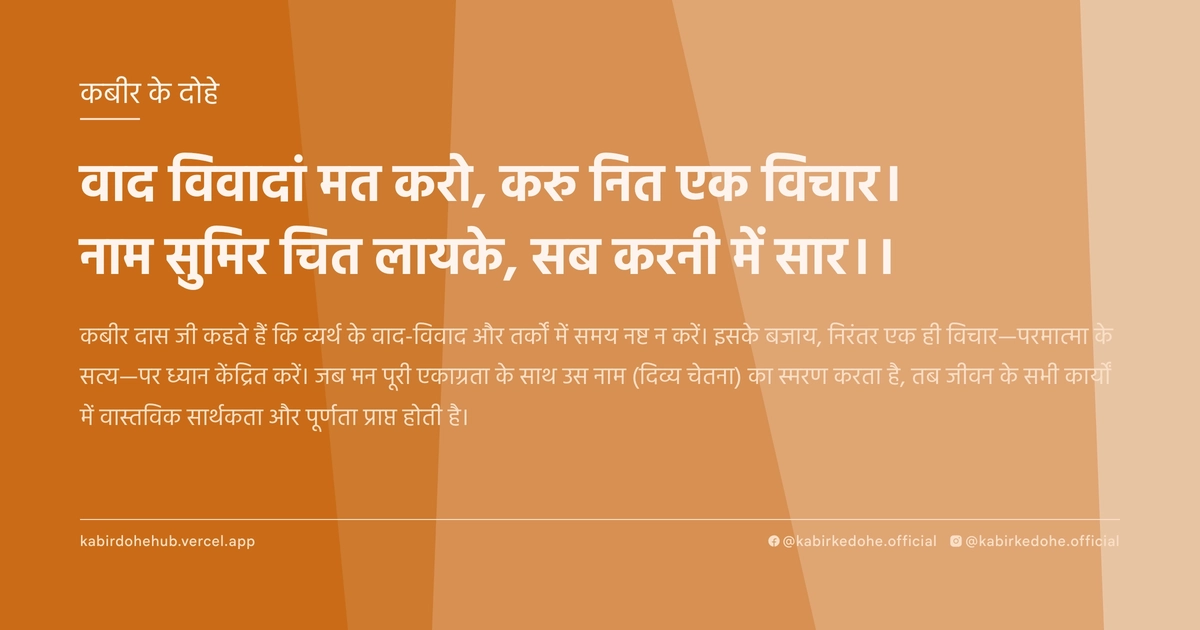
वाद विवादां मत करो, करु नित एक विचार।
नाम सुमिर चित लायके, सब करनी में सार।।
Vaad vivaadan mat karo, karu nit ek vichaar. Naam sumir chit laayke, sab karni me saar.
इस पृष्ठ पर इस कबीर दोहे का अर्थ (meaning), हिंदी व्याख्या और अंग्रेज़ी अनुवाद, दार्शनिक विश्लेषण और व्यावहारिक जीवन सीख दी गई है। यह दोहा मन नियंत्रण (Mind Control) विषय से जुड़ा है — Kabir doha meaning and explanation in Hindi and English.
अर्थ (Meaning):
कबीर दास जी कहते हैं कि व्यर्थ के वाद-विवाद और तर्कों में समय नष्ट न करें। इसके बजाय, निरंतर एक ही विचार—परमात्मा के सत्य—पर ध्यान केंद्रित करें। जब मन पूरी एकाग्रता के साथ उस नाम (दिव्य चेतना) का स्मरण करता है, तब जीवन के सभी कार्यों में वास्तविक सार्थकता और पूर्णता प्राप्त होती है।
Kabir urges us to cease engaging in futile arguments and intellectual disputes. Instead, cultivate a singular, unwavering focus on the Divine Truth. By anchoring the consciousness in the remembrance of the 'Naam' (the Eternal Name/Sound), every action performed in life attains its true essence and spiritual purpose.
व्याख्या (Interpretation):
इस दोहे का शाब्दिक अर्थ है कि बौद्धिक अहंकार से प्रेरित बहस को त्यागकर ईश्वर के नाम का जाप करना चाहिए। गहरे स्तर पर, 'वाद-विवाद' उस मानसिक शोर का प्रतीक है जो माया द्वारा निर्मित है और हमें सत्य से दूर रखता है। 'एक विचार' का अर्थ है अद्वैत की स्थिति, जहाँ ज्ञाता और ज्ञेय का भेद समाप्त हो जाता है। निर्गुण भक्ति के संदर्भ में, यह नाम किसी व्यक्ति विशेष का नहीं, बल्कि उस निराकार चेतना का बोध है जो कण-कण में व्याप्त है। जब साधक अपने चित्त को इस केंद्र पर स्थिर करता है, तो उसकी बाहरी गतिविधियाँ केवल शारीरिक क्रियाएँ नहीं रह जातीं, बल्कि एक निरंतर प्रार्थना बन जाती हैं। यह विरोधाभास है कि मौन रहकर ही सबसे शक्तिशाली संवाद संभव है।
Literally, the verse advises abandoning intellectual disputes in favor of divine remembrance. Metaphorically, 'Vaad-Vivaad' represents the mental noise and fragmentation created by Maya, which keeps the seeker trapped in duality. 'Ek Vichaar' (one thought) signifies the state of Advaita, where the distinction between the observer and the observed dissolves. In the context of Nirgun Bhakti, 'Naam' is not a label for a deity but the vibration of the Formless Consciousness pervading all existence. When the seeker anchors their consciousness here, external actions cease to be mere chores and become a continuous prayer. It presents the paradox that the most profound communication occurs only through the silence of the ego.
दार्शनिक विश्लेषण (Philosophical Analysis):
कबीर का यह संदेश उस कालखंड का है जब धर्म के नाम पर कट्टरता और शास्त्रार्थ का बोलबाला था। उन्होंने देखा कि पंडित और मौलवी शब्दों के जाल में उलझे थे, जबकि सत्य अनुभव का विषय था। यह दोहा कर्मकांड और बौद्धिक अहंकार के प्रति एक कड़ा प्रहार है। कबीर यहाँ 'शून्य' की अवस्था की बात कर रहे हैं, जहाँ तर्क समाप्त होता है और अनुभव प्रारंभ होता है।
अद्वैत वेदांत के दृष्टिकोण से, वाद-विवाद 'अविद्या' का परिणाम है, जो हमें यह विश्वास दिलाता है कि हम अलग-अलग इकाइयाँ हैं। जब हम 'एक विचार' की ओर बढ़ते हैं, तो हम वास्तव में अपनी आत्मा का ब्रह्म के साथ मिलन कर रहे होते हैं। यह सूफी मत के 'फना' (अहंकार का विनाश) के समान है, जहाँ प्रेमी अपने अस्तित्व को प्रिय में विलीन कर देता है।
मनोवैज्ञानिक स्तर पर, निरंतर विवाद मन में विक्षेप (distraction) पैदा करता है, जिससे ऊर्जा का क्षय होता है। कबीर 'नाम सुमिरन' को एक मानसिक उपकरण के रूप में प्रस्तुत करते हैं जो बिखरी हुई चेतना को एकत्रित करता है। यह केवल धार्मिक जाप नहीं, बल्कि एक 'माइंडफुलनेस' अभ्यास है जो वर्तमान क्षण में उपस्थिति सुनिश्चित करता है।
कबीर का तर्क है कि यदि आपकी करनी (actions) में 'सार' (essence) नहीं है, तो आपकी सारी विद्वत्ता व्यर्थ है। वास्तविक ज्ञान वह है जो व्यवहार में उतरे, न कि वह जो केवल पुस्तकालयों या चर्चाओं तक सीमित रहे। वे बाहरी आडंबरों के बजाय आंतरिक रूपांतरण पर बल देते हैं।
अंततः, यह दोहा हमें सिखाता है कि सत्य तर्क से सिद्ध नहीं किया जा सकता, उसे केवल जिया जा सकता है। जब अहंकार का शोर शांत होता है, तभी अंतरात्मा की धीमी आवाज़ सुनाई देती है। यही वह बिंदु है जहाँ मनुष्य अपनी सीमित पहचान को छोड़कर सार्वभौमिक चेतना का हिस्सा बन जाता है।
Kabir’s message emerges from an era dominated by religious dogmatism and sterile scholastic debates. He observed that the learned were trapped in linguistic webs, while Truth remained a matter of direct experience. This verse is a sharp critique of ritualism and the intellectual vanity that prioritizes winning an argument over realizing the Truth.
From the perspective of Advaita Vedanta, disputes are the byproduct of 'Avidya' (ignorance), which sustains the illusion of separation. By moving toward 'Ek Vichaar' (one thought), the seeker is effectively aligning the Atman with Brahman. This mirrors the Sufi concept of 'Fana' (annihilation), where the lover dissolves their individual ego into the Beloved.
Psychologically, constant conflict creates mental fragmentation and depletes spiritual energy. Kabir presents 'Naam Sumiran' as a cognitive tool to gather the scattered consciousness. It is not merely a religious chant but a practice of profound mindfulness that anchors the practitioner in the eternal present.
Kabir argues that if one's 'Karni' (actions) lacks 'Saar' (essence), then all scholarship is futile. True knowledge is that which is embodied in behavior, not that which is confined to libraries or debates. He emphasizes internal transformation over external performance.
Ultimately, the verse teaches that Truth cannot be proven through logic; it can only be lived. When the noise of the ego subsides, the subtle voice of the soul becomes audible. This is the threshold where the human transcends a limited identity to become one with the universal consciousness.
मूल संदेश (Core Message):
- बौद्धिक अहंकार सत्य के मार्ग में सबसे बड़ी बाधा है।
- तर्क मन को विभाजित करता है, जबकि सुमिरन उसे एकीकृत करता है।
- बाहरी शोर को शांत करना ही आंतरिक संगीत को सुनने की शर्त है।
- कार्य की सार्थकता उसकी मात्रा में नहीं, बल्कि उसमें निहित चेतना में है।
- अद्वैत का अनुभव शब्दों से नहीं, बल्कि मौन के समर्पण से होता है।
- Intellectual vanity is the primary obstacle on the path to Truth.
- Logic fragments the mind, while remembrance integrates it.
- Silencing external noise is the prerequisite for hearing the internal music.
- The essence of action lies not in quantity, but in the consciousness infused within it.
- The experience of non-duality is achieved through the surrender of silence, not words.
व्यावहारिक उदाहरण (Practical Example):
वाराणसी के एक पुराने घाट पर रामदीन नाम का एक वृद्ध नाविक रहता था। वह स्वभाव से अत्यंत क्रोधी था और अक्सर अन्य नाविकों के साथ इस बात पर लड़ता था कि किसका तरीका नाव चलाने का सबसे सही है या कौन सा घाट सबसे पवित्र है। उसके जीवन का अधिकांश समय चिल्लाने और दूसरों को नीचा दिखाने में बीतता था, जिससे वह मानसिक रूप से हमेशा अशांत रहता था।
एक दिन उसकी मुलाकात एक मौन साधु से हुई। रामदीन ने उनसे अपनी श्रेष्ठता सिद्ध करने के लिए तर्क करना शुरू किया। साधु ने केवल मुस्कुराकर उसे एक छोटा सा पत्थर दिया और कहा, 'जब तक यह पत्थर तुम्हारे हाथ में स्थिर रहे, बस अपनी सांसों के आने-जाने पर ध्यान दो और मन में एक ही शब्द दोहराओ—शांति।'
शुरुआत में रामदीन को यह मूर्खतापूर्ण लगा, लेकिन उसने जिज्ञासावश ऐसा किया। जैसे ही उसने बाहरी विवादों को छोड़कर अपने भीतर के शोर को सुनना शुरू किया, उसे महसूस हुआ कि उसकी सारी लड़ाइयाँ वास्तव में उसकी अपनी आंतरिक रिक्तता को भरने का प्रयास थीं।
उसने देखा कि जब वह दूसरों से बहस करता था, तो वह नाव चलाने की कला को भूल जाता था और अक्सर उसकी नाव किनारे से टकरा जाती थी। लेकिन जब उसने 'एक विचार' (शांति) को अपनाया, तो उसकी एकाग्रता बढ़ गई।
अब वह नाव चलाते समय केवल लहरों की लय और अपनी सांसों के तालमेल पर ध्यान देता। उसने पाया कि जब मन शांत होता है, तो काम में एक अद्भुत प्रवाह (flow) आ जाता है।
वह अब अन्य नाविकों से नहीं लड़ता था। जब कोई उससे बहस करने आता, तो वह बस मंद मुस्कान के साथ अपना काम करता रहता। उसकी इस शांति ने दूसरों को भी प्रभावित करना शुरू किया।
लोग अब उससे केवल नाव की सवारी के लिए नहीं, बल्कि उसकी मानसिक शांति का रहस्य जानने के लिए आने लगे। रामदीन ने महसूस किया कि उसकी 'करनी' (नाव चलाना) अब केवल पैसा कमाने का साधन नहीं, बल्कि एक ध्यान बन गई थी।
उसने सीखा कि सत्य किसी तर्क में नहीं, बल्कि उस स्थिरता में है जो विवादों के अंत के बाद आती है। उसका जीवन अब संघर्ष से मुक्त होकर एक सहज संगीत में बदल गया था।
रामदीन की कहानी यह दिखाती है कि कैसे एक व्यक्ति बौद्धिक और भावनात्मक युद्ध को छोड़कर आंतरिक मौन के माध्यम से अपने साधारण कार्य को भी आध्यात्मिक साधना बना सकता है।
अंततः, उसने जाना कि जिस 'सार' की वह खोज कर रहा था, वह बाहर की जीत में नहीं, बल्कि भीतर के समर्पण में छिपा था।
On an ancient ghat in Varanasi lived an elderly boatman named Ramdeen. He was temperamental and spent most of his days arguing with other boatmen about whose technique of rowing was superior or which ghat was the most sacred. His life was a cycle of shouting and belittling others, leaving him in a state of perpetual mental unrest.
One day, he encountered a silent monk. Ramdeen began arguing with the monk to prove his own superiority. The monk simply smiled, handed him a small pebble, and said, 'As long as you hold this stone, focus only on the coming and going of your breath and repeat one word in your mind—Peace.'
Initially, Ramdeen found this absurd, but out of curiosity, he complied. As he shifted his focus from external disputes to the internal noise, he realized that his arguments were merely attempts to fill an inner void.
He noticed that whenever he engaged in conflict, he lost focus on the river, and his boat often collided with the banks. However, when he adopted 'Ek Vichaar' (one thought/peace), his concentration sharpened.
Now, while rowing, he focused only on the rhythm of the waves and the synchronization of his breath. He discovered that when the mind is still, a divine flow enters the work.
He stopped fighting with the other boatmen. When someone approached him to argue, he would simply respond with a gentle smile and continue his work. This stillness began to influence others around him.
People started coming to him not just for a boat ride, but to understand the secret of his tranquility. Ramdeen realized that his 'Karni' (action of rowing) was no longer just a means of earning money, but had become a form of meditation.
He learned that truth is not found in winning a debate, but in the stability that arrives after the end of all disputes.
His life, once a battlefield of ego, transformed into a seamless melody of existence.
Ramdeen's story illustrates how an individual can transform a mundane profession into a spiritual practice by abandoning intellectual warfare in favor of internal silence.
Ultimately, he discovered that the 'Saar' (essence) he sought was not in external victory, but in internal surrender.
अभ्यास मार्गदर्शन (Practice Guidance):
- दैनिक अभ्यास: दिन में तीन बार 10 मिनट के लिए 'मौन अंतराल' लें, जहाँ किसी भी विचार का न्याय न करें, केवल एक शब्द (जैसे 'ॐ' या 'शांति') पर ध्यान केंद्रित करें।
- आत्म-निरीक्षण जर्नल: जब भी आप किसी से बहस करें, बाद में लिखें कि उस समय आपका उद्देश्य 'सत्य की खोज' था या 'स्वयं को सही सिद्ध करना' (अहंकार)।
- व्यवहारिक परिवर्तन: किसी भी विवाद में प्रतिक्रिया देने से पहले तीन गहरी सांसें लें और स्वयं से पूछें, 'क्या इस तर्क से मेरी आत्मा की शांति बढ़ेगी?'
- डायग्नोस्टिक चेकलिस्ट: यदि आप दूसरों की राय बदलने के लिए व्याकुल हैं, या बहस के बाद मानसिक थकान महसूस करते हैं, तो आप 'वाद-विवाद' के जाल में हैं। यदि आप विपरीत विचारों के बीच भी स्थिर हैं, तो आप 'एक विचार' की ओर बढ़ रहे हैं।
- Daily Practice: Implement three 10-minute 'Silence Intervals' daily, where you judge no thought and focus solely on a single seed-word (e.g., 'Om' or 'Peace').
- Self-Inquiry Journal: Whenever you engage in a dispute, record whether your intention was 'the pursuit of Truth' or 'the validation of the Ego' (proving yourself right).
- Behavioral Shift: Before reacting in a conflict, take three deep breaths and ask yourself, 'Will this argument increase the peace of my soul?'
- Diagnostic Checklist: If you feel an urgent need to change others' opinions or experience mental exhaustion after a debate, you are trapped in 'Vaad-Vivaad'. If you remain centered despite opposing views, you are aligning with 'Ek Vichaar'.
चिंतन प्रश्न (Reflection Questions):
- मेरे जीवन के वे कौन से तर्क हैं जिन्हें मैं सत्य मानकर ढो रहा हूँ, जबकि वे केवल मेरी पहचान (Identity) को सुरक्षित रखने के साधन हैं?
- जब मैं किसी से असहमत होता हूँ, तो मुझे क्रोध क्यों आता है? क्या वह मेरी धारणा का अपमान है या मेरी आत्मा का?
- क्या मेरा 'डिजिटल व्यक्तित्व' (सोशल मीडिया पर बहस) मेरी वास्तविक शांति को निगल रहा है?
- यदि आज मेरे सभी विचार और मान्यताएं छीन ली जाएं, तो मेरे पास 'स्वयं' के रूप में क्या बचेगा?
- मैं कितनी बार 'सही' होने की इच्छा को 'शांत' होने की इच्छा पर प्राथमिकता देता हूँ?
- क्या मेरी भक्ति केवल शब्दों का दोहराव है, या यह मेरे व्यवहार में करुणा के रूप में प्रकट होती है?
- Which arguments in my life am I carrying as 'Truth', when they are actually just tools to protect my constructed identity?
- Why do I feel anger when I disagree with someone? Is it an insult to my beliefs or an insult to my soul?
- Is my 'digital persona' (debating on social media) consuming my actual inner peace?
- If all my beliefs and opinions were stripped away today, what would remain of 'Me'?
- How often do I prioritize the desire to be 'right' over the desire to be 'at peace'?
- Is my devotion merely a repetition of words, or does it manifest as compassion in my behavior?